Stadtkirche Olbernhau: A Lutheran Church in Germany
Site at a Glance
- Popularity
- Very Low
- Country
- Germany
- Primary era
- Early Modern
- Eras represented
- Early Modern, Modern
- Civilizations
- Electorate of Saxony, German, Holy Roman Empire
- Site type
- Religious
- Remains
- Church
On this page12 sections
History
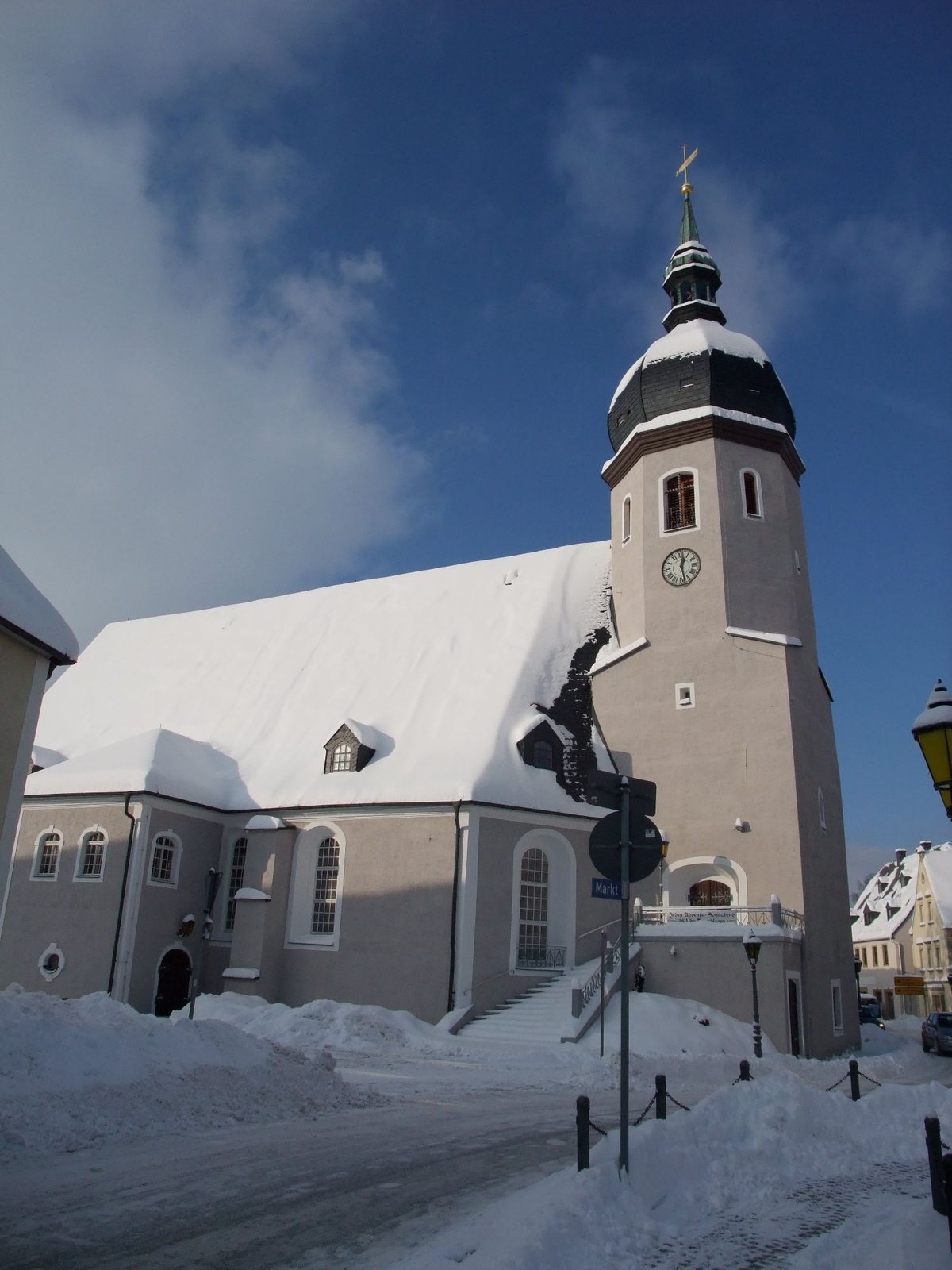
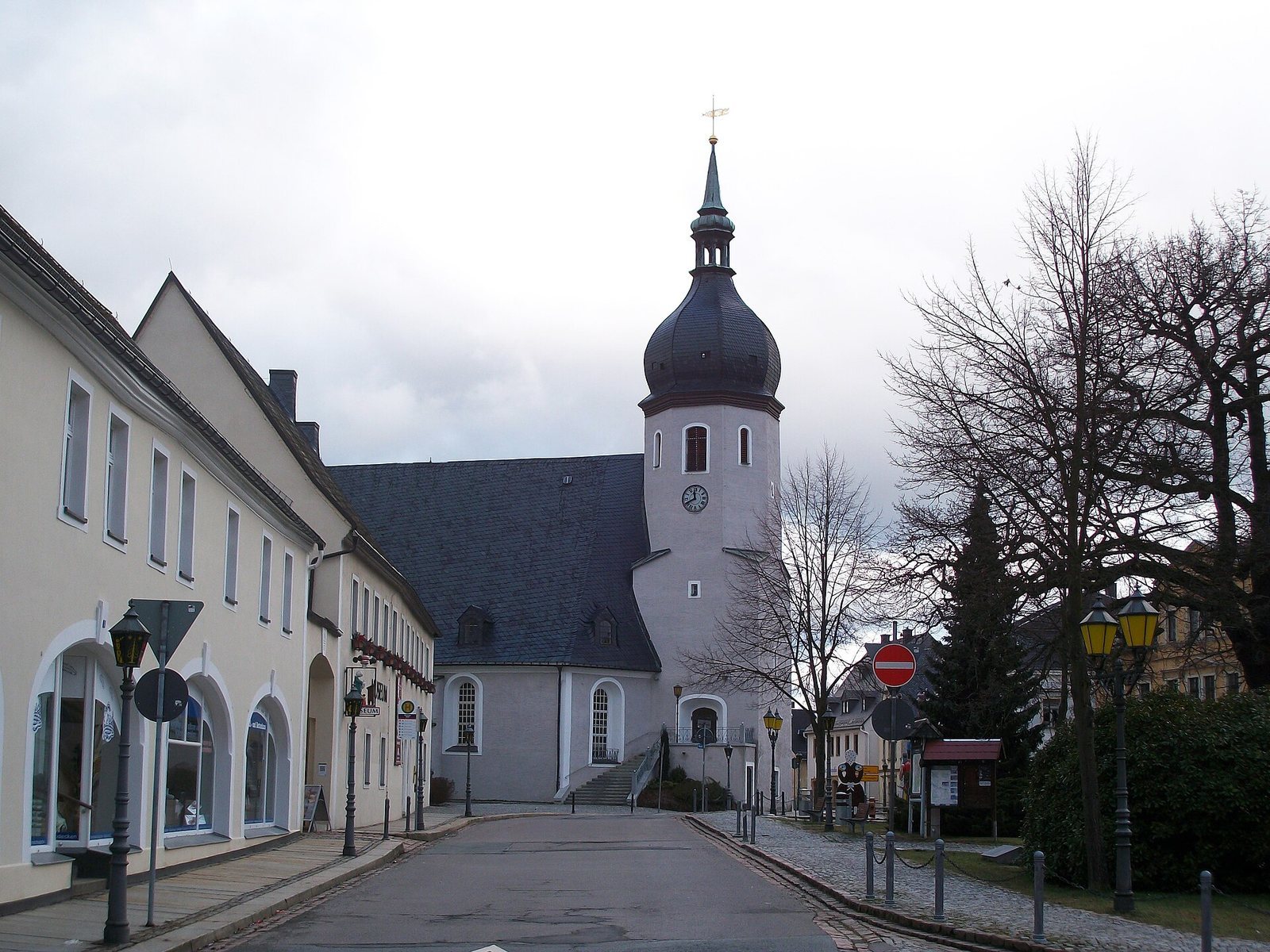
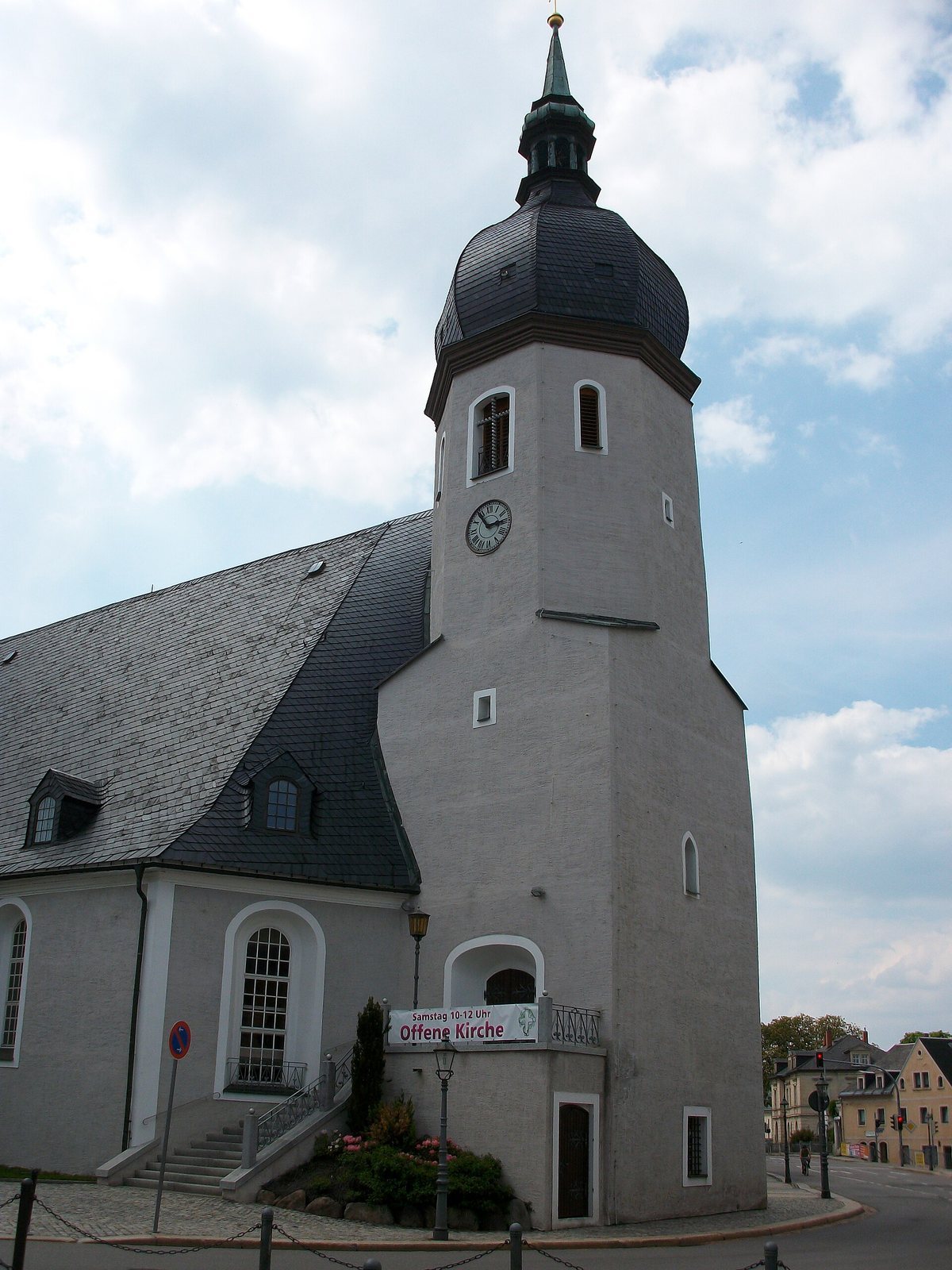
Stadtkirche Olbernhau is an Evangelical Lutheran church on the market square in Olbernhau, Germany, built between 1584 and 1590 and dedicated in 1590. It belongs to Olbernhau parish, a local church community within the Evangelical Lutheran Church of Saxony, the regional Lutheran church body. Although known as the town church, it acquired that name after Olbernhau received town rights in 1902.
Origins and rebuilding
On 7 May 1639, Swedish cavalry set fire to many buildings in Olbernhau during the Thirty Years’ War, a major European conflict fought from 1618 to 1648. The church burned down to its foundations. It was rebuilt in 1648 using the earlier enclosing walls.
Churchyard and successive organs
The churchyard was established in the late sixteenth century and served as a cemetery from 1596 to 1862. An organ installed in 1621 was soon lost amid the conflicts of the period. A replacement followed in 1656, but lightning destroyed it in 1783. Johann Christian Kayser built the present organ in 1790; organ builder Georg Wünning restored it in 1996.
Twentieth-century commemoration and restoration
In 1922, Olbernhau formed a committee to create a memorial to those killed or missing in the First World War. Chemnitz sculptor Bruno Ziegler designed its wall and made the central relief figures. The memorial was dedicated on 20 September 1925.
Extensive restoration took place from 1985 to 1993, and the church was ceremonially rededicated on 9 November 1993.
Remains
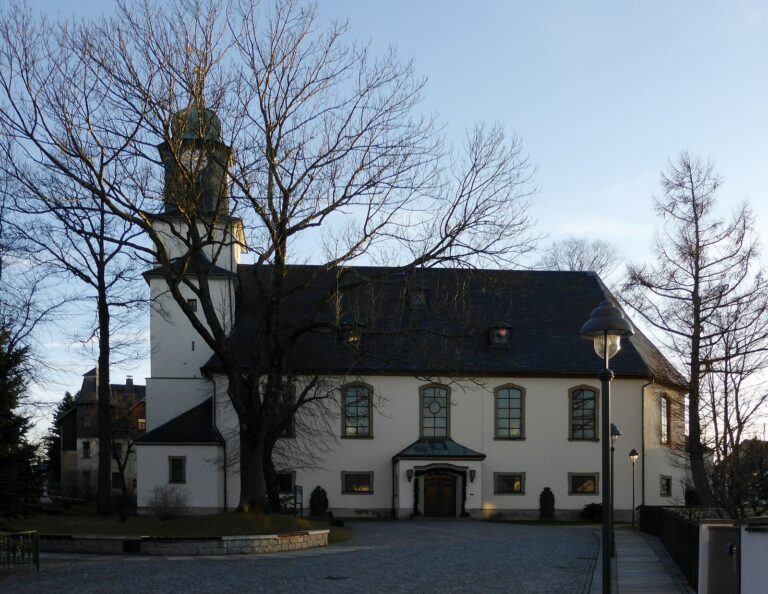
The church is a simple hall-shaped building made of plastered rubble stone. Its north and south ends are multi-sided. The tower has a square base and an eight-sided upper portion above the roof, topped by an onion-shaped dome and a small lantern structure.
Interior and furnishings
Interior and patron’s box
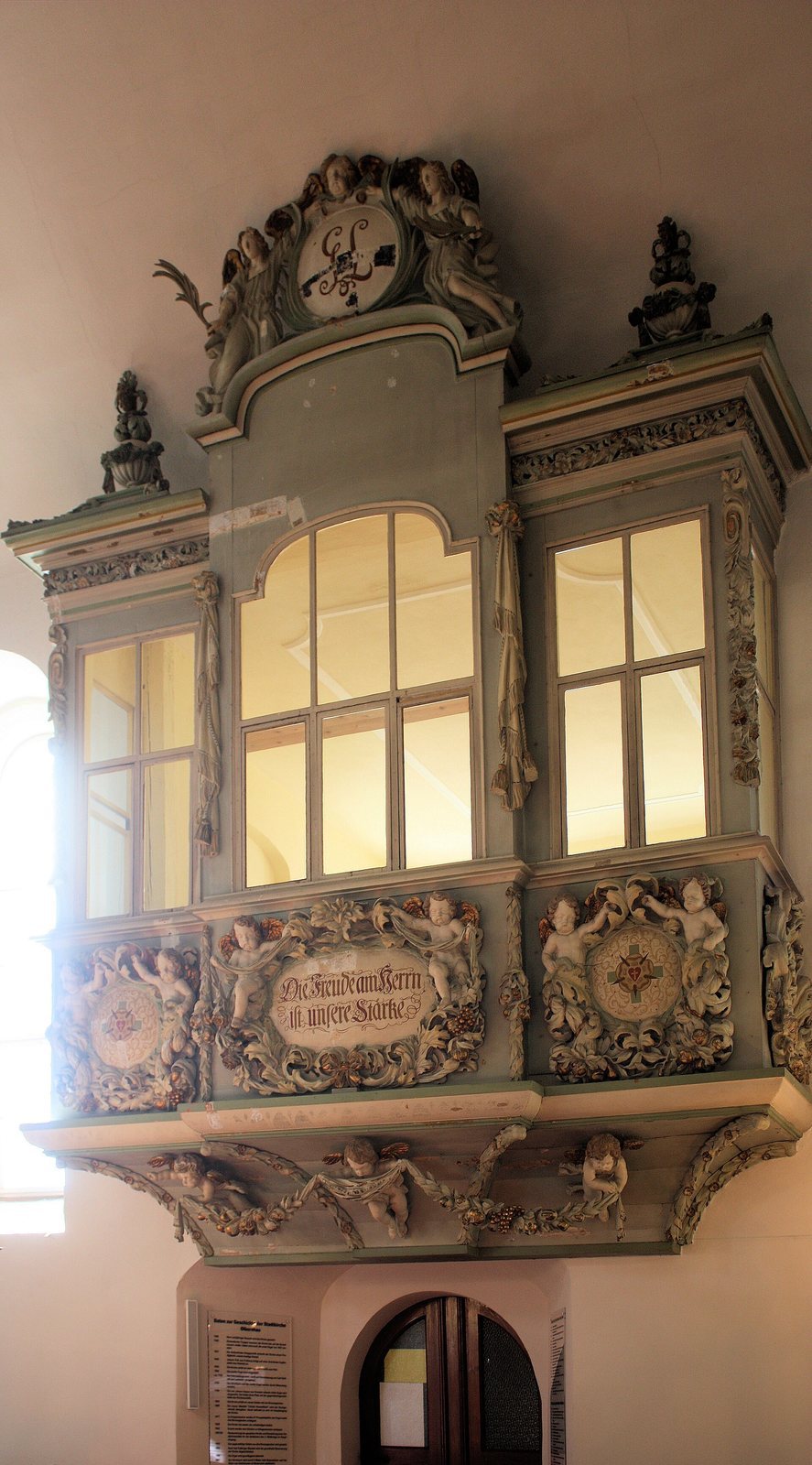
A curved, half-cylinder-shaped ceiling spans the interior, while galleries extend around almost all of it. The walls and ceiling were originally painted in color and are now white. On the east side, an elaborate patron’s box, a reserved enclosure for the church’s patron and family, can be entered only from outside. The patronage family used it until the 1930s.
Altar and other furnishings
The altar is dated to either 1641 or 1648 and carries an oil painting of the Last Supper. The painting copies a work by Albrecht Dürer, the German Renaissance painter and printmaker. Freiberg painter Johann Finck made it on a copper plate supplied by August Rothe, a manager at the Grünthal silver-and-copper separation works. Other furnishings include a baptismal font dated 1790, a pulpit from the period when the present church was built, and two seventeenth-century crucifixes.
Organ
Kayser’s organ has 21 stops, which control the sounds available from the instrument, two hand-operated keyboards, and a foot-operated pedal. Its features include a sliding coupler linking the Great and Upper divisions, a bass coupling connecting the pedal to the Great, and an undulating stop that produces a wavering tone.
Churchyard and memorials
Family graves and tomb pavilion
The churchyard includes the former cemetery, graves, and several monuments. Graves of the Olbernhau manor-owning Oemichen family, also spelled Oehmichen, date from 1584. The family’s free-standing tomb pavilion, an elaborately designed structure, dates to 1685. Carl Gottlob von Leubnitz was buried in the churchyard in 1741.
War memorials
The First World War memorial consists of a wall built from roughly hewn stone, with relief figures at its center. Bronze plaques on either side list 372 Olbernhau victims of the war. A nearby plaque commemorates victims of the Second World War without naming them individually.