Cremna: An Ancient City of Pisidia in Turkey
Site at a Glance
- Popularity
- Medium
- Country
- Turkey
- Primary era
- Classical
- Eras represented
- Classical, Medieval
- Civilizations
- Roman
- Site type
- City
On this page13 sections
History
Amyntas and Roman rule
Cremna was an important ancient city of Pisidia in present-day Turkey, on a high ridge in the Taurus Mountains. Its name means “cliffs.” Amyntas, a Galatian ruler who commanded auxiliary troops for the Roman republican leaders Brutus and Cassius, first captured the city. In 39 BC, he subdued Pisidia.
After joining Mark Antony, a Roman leader then competing with Octavian for power, Amyntas became king of Galatia and Pisidia. Octavian, later known as Augustus, allowed him to remain king until his death in 25 BC. Cremna then became a Roman colony, a settlement organized under Roman authority, with the formal name Colonia Iulia Augusta Cremnena. An expanded version of the name sometimes includes Felix. Coins bearing the colony’s name were struck there, and its earliest coinage appears to date to Hadrian’s reign.
Prosperity and the siege of 276
Cremna prospered during the second and third centuries, when public buildings were erected. Emperor Aurelian, who ruled from 270 to 275, promised a generous contribution toward building works in the city.
In 276, an Isaurian raider named Lydius and his followers took refuge at Cremna and used it as a base for raids in the surrounding region. Roman forces besieged the city for an extended period before retaking it. Emperor Marcus Claudius Tacitus visited the region during the crisis, the only recorded visit there by a Roman emperor. Cremna did not recover from the siege.
Byzantine era and later history
Cremna later became part of the Roman province of Pamphylia Secunda. During the Byzantine period, the medieval eastern Roman Empire, the city belonged to the province of Pamphylia and had a bishopric under the Patriarchate of Constantinople, a major Christian church jurisdiction based in Constantinople. Bishop Theodorus attended the Second Council of Nicaea in 787, a major Christian council. The former diocese is now listed by the Catholic Church as a titular see, a title for a diocese that no longer functions as a residential bishopric.
The ancient city was gradually abandoned in the late Middle Ages, and its population moved to the village of Çamlık. The village was known as Germe until 1912; that name derived from Cremna.
A dedicatory inscription naming Cremna led to the identification of the ancient city’s location in 1874. Local residents looted the archaeological site. Turkish archaeologist Jale İnan directed rescue excavations there from 1970 to 1973.
Remains
Setting and street plan
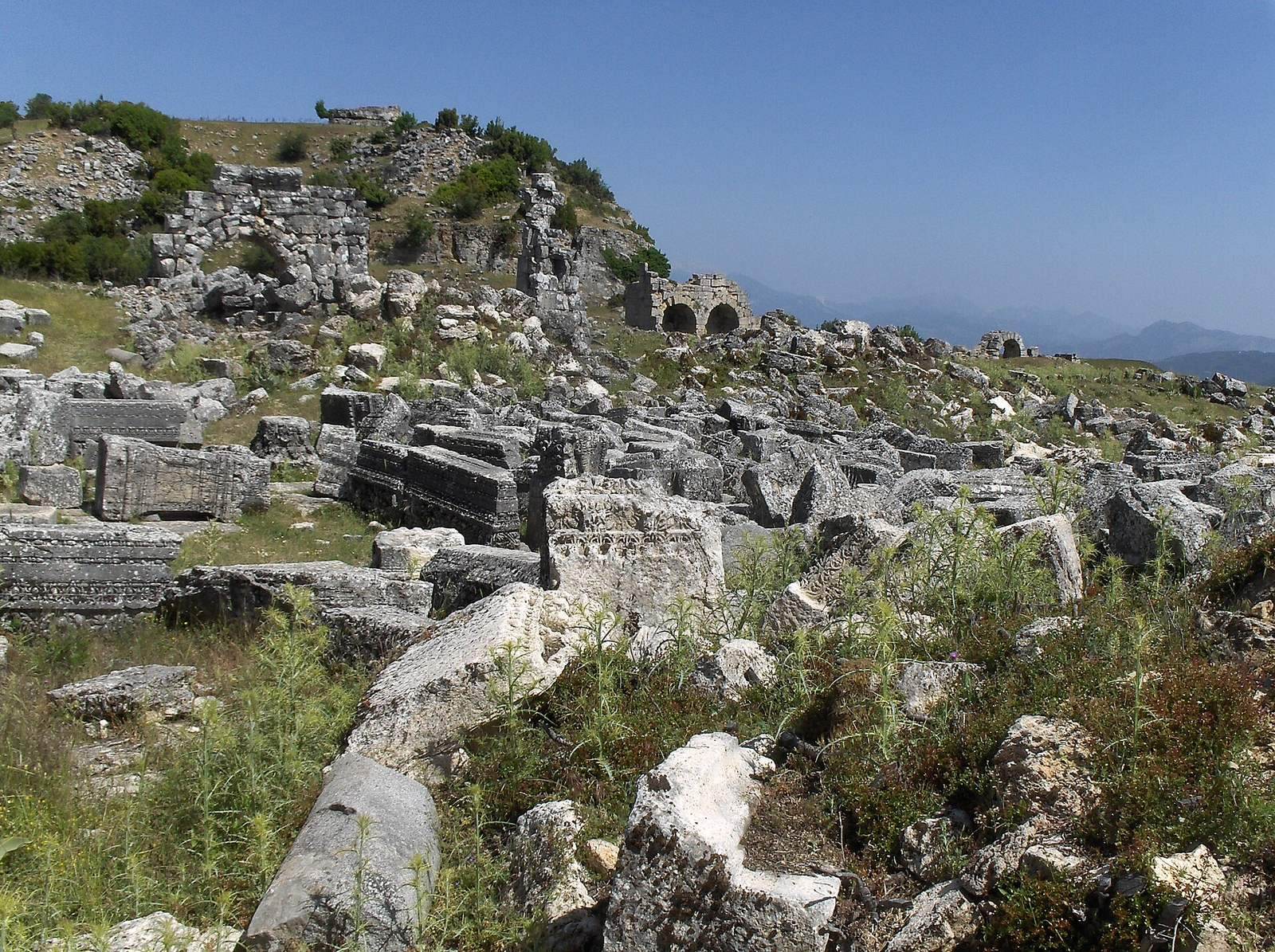
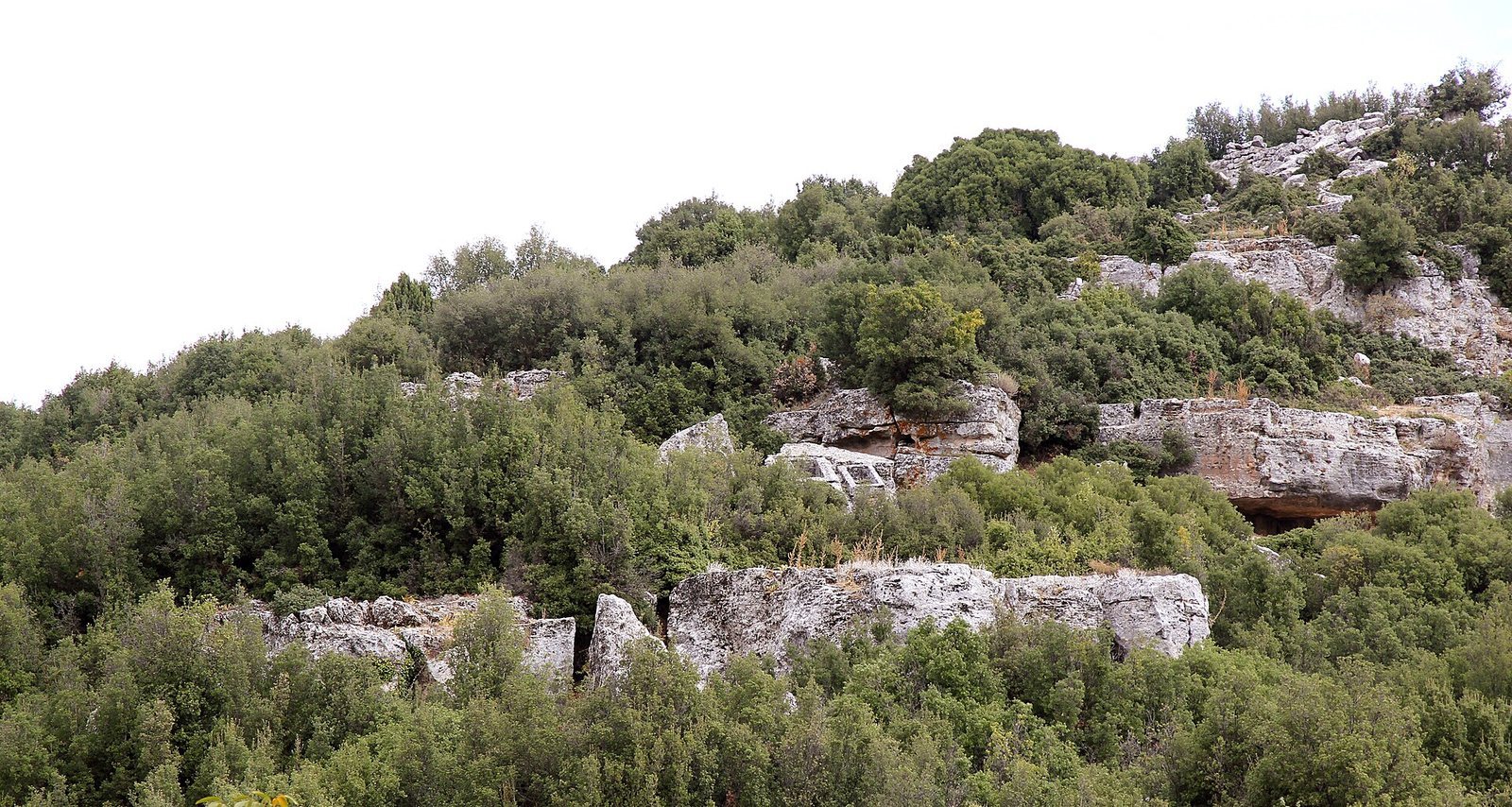
Cremna occupied a high plateau on a Taurus Mountains ridge above the valley of the ancient Cestrus River, now called the Aksu. The ridge rises about 250 metres above its surroundings. The plateau falls steeply to the east, south, and north; to the west, a gentler approach is protected by a deep ravine. The city’s central elevated area followed the irregular ground rather than a levelled surface. Its planned street grid was poorly suited to this uneven terrain. The surviving ruins mainly date to the second and third centuries and later Roman times.
Public buildings and water supply
Basilica and theatres
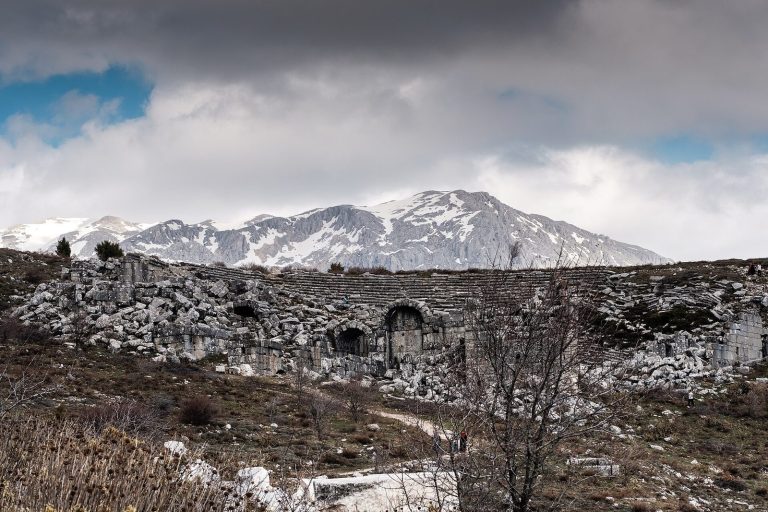
Public construction in the second and third centuries included a basilica, a large hall used for civic or commercial purposes, and two theatres.
Bath, library, and gallery
A public bath was later converted into a library and gallery. The library is among the identified remains of the city.
Aqueduct
Supplying water to the bath required an aqueduct that incorporated complex engineering solutions.
Evidence of the siege
Physical traces associated with the Roman siege include two siege walls, numerous projectiles, and a defensive mound. An inscription dedicated to Emperor Probus is also connected with this evidence.
Gateways and carved stone
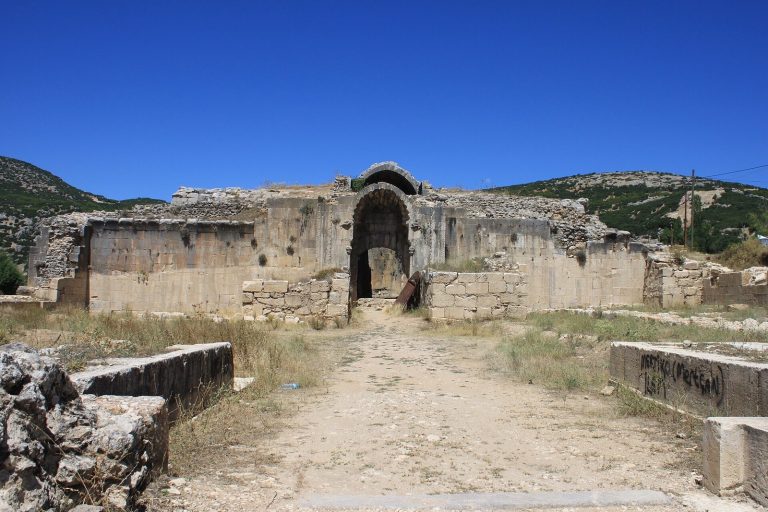
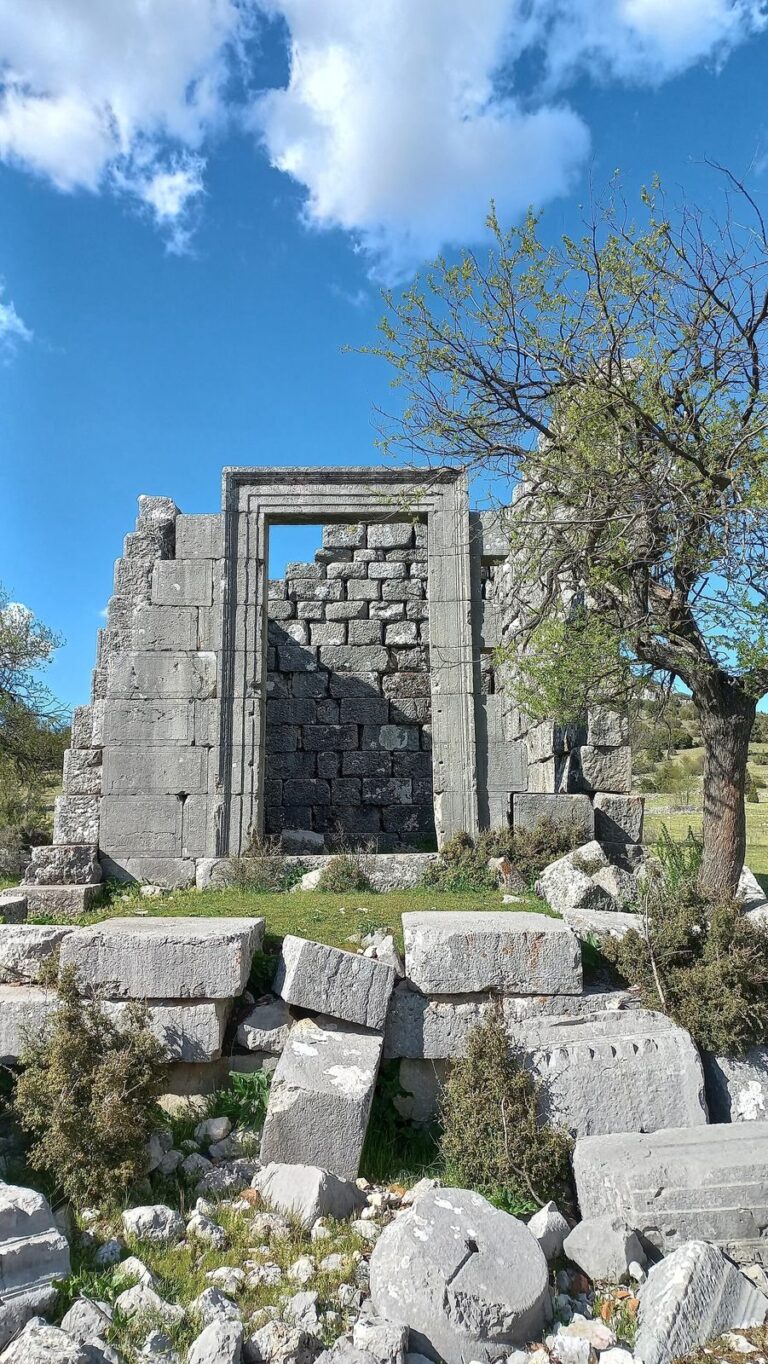
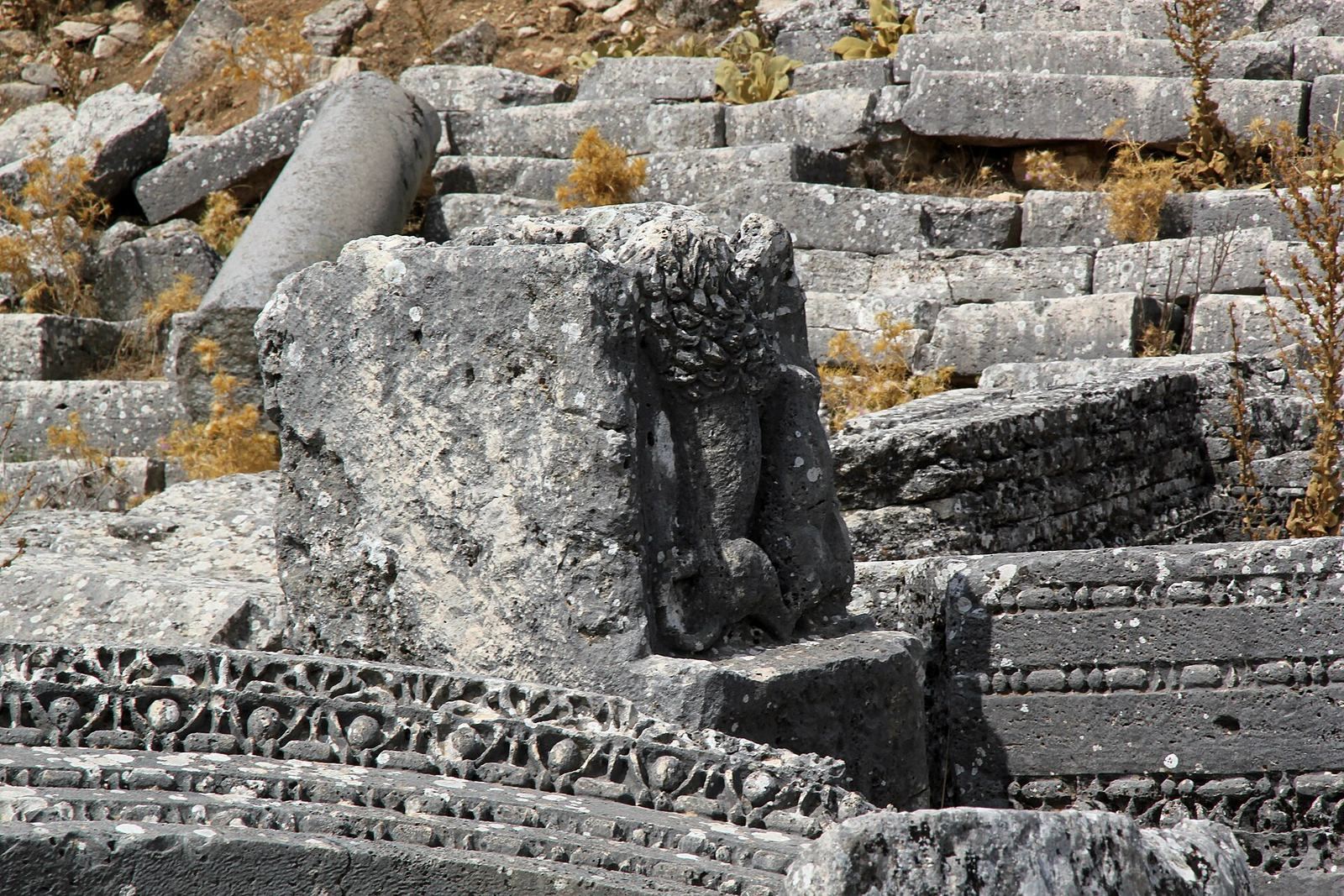
The southern gate survives among the remains of the city walls. Another identified feature is a propylaeum, a monumental gateway, with a relief bust above it. A separate stone bears carved lion reliefs.
Finds
Sculptures and coins from Cremna are held at the Burdur Archaeological Museum.