Vitcos: An Inca Royal Residence and Ceremonial Center in Peru
Site at a Glance
- Popularity
- High
- Country
- Peru
- Primary era
- Medieval
- Eras represented
- Medieval
- Civilizations
- Inca
- Site type
- Domestic
- Remains
- Palace
On this page12 sections
History
Vitcos, also known as Rosaspata, is an Inca royal residence and ceremonial center in the Vilcabamba region of Peru. The Incas occupied the region from about 1450 and established major centers there, including Vitcos. During the Neo-Inca State, the polity that maintained Inca rule from Vilcabamba after the Spanish conquest of the Inca heartland, Vitcos was a frequent home of its rulers and a setting for religious ceremonies.
Royal residence in Vilcabamba
The palace’s origins are disputed. One interpretation is that Manco Inca ordered it built as a refuge, with a cooler climate closer to the Andean highlands than that of Vilcabamba. Many Inca specialists instead favor the view that Pachacuti built Vitcos as a summer residence and that Manco later used it. They consider its careful construction unlikely to have been undertaken amid the pressures of the Spanish conquest. Titu Cusi Yupanqui’s account says Manco had a residence built there, while associating other houses at Vitcos with earlier rulers, including Pachacuti, Topa Inca Yupanqui, and Huayna Capac. Their bodies had been placed at the site.
Vitcos’s higher elevation and cooler climate, more like the Incas’ highland homeland than Vilcabamba’s, made it a favored royal residence. The nearby shrine of Ñusta Hispana hosted many ceremonies. Although Manco developed Vilcabamba as a more remote refuge, Vitcos continued to serve as a royal residence.
Spanish incursions and Manco’s death
After defeating Spanish forces and their Indigenous allies at Ollantaytambo in January 1537, Manco withdrew to Vitcos because Ollantaytambo was too close to Spanish-controlled Cusco. Diego de Almagro sent his lieutenant Rodrigo Orgóñez after him with 300 Spaniards and numerous Indigenous allies. Orgóñez occupied and sacked Vitcos in July, taking many prisoners, but Manco escaped.
In 1539, a force led by Gonzalo Pizarro fought the Incas at Huayna Pukara, west of Vitcos. It included 300 Spanish soldiers and Indigenous allies. Several Spaniards and Indigenous people were killed, but Manco escaped again. Pizarro searched for him for more than two months without success and captured Manco’s principal wife, Cura Ocllo. Steep mountains, forests, jungles, and deep river canyons made travel through Vilcabamba difficult and Spanish campaigns costly. Vitcos remained accessible to Spanish forces, encouraging Manco to develop Vilcabamba as a more secluded refuge.
In 1544, seven Spanish renegades sought shelter with Manco, including the man who had assassinated Francisco Pizarro. They killed Manco at Vitcos in an attempt to regain favor with the Spanish Crown. His guards pursued and killed them. The following decades were mostly peaceful for the Incas in the remaining territory of their state.
The conquest and rediscovery of Vitcos
In 1570, two Catholic friars were allowed to settle in villages near Vitcos. They led members of their congregation in an attack that burned the shrine of Ñusta Hispana. One friar was expelled; the other was killed by the Incas after being accused of poisoning Titu Cusi Yupanqui. Titu Cusi’s brother Tupac Amaru became ruler. After Tupac Amaru’s supporters killed an envoy of Francisco de Toledo, the viceroy of Peru, Toledo ordered an invasion of Vilcabamba. Two armies, together numbering more than 300 Spaniards and 2,000 allies, including 500 Cañari, entered the region. In June 1572 the Spanish captured Vitcos, Vilcabamba, and Tupac Amaru, ending the Neo-Inca State. Vitcos was abandoned that year.
After the conquest, the location of Vitcos was forgotten. During an expedition in 1911, Hiram Bingham III identified the ruins known locally as Rosaspata as Vitcos and identified the nearby oracle of Ñusta Hispana. After mapping the sites, he continued his search and rediscovered Vilcabamba. In the 1980s, Vincent Lee’s research extended the study of the wider complex between Vitcos and Chuquipalta.
Remains
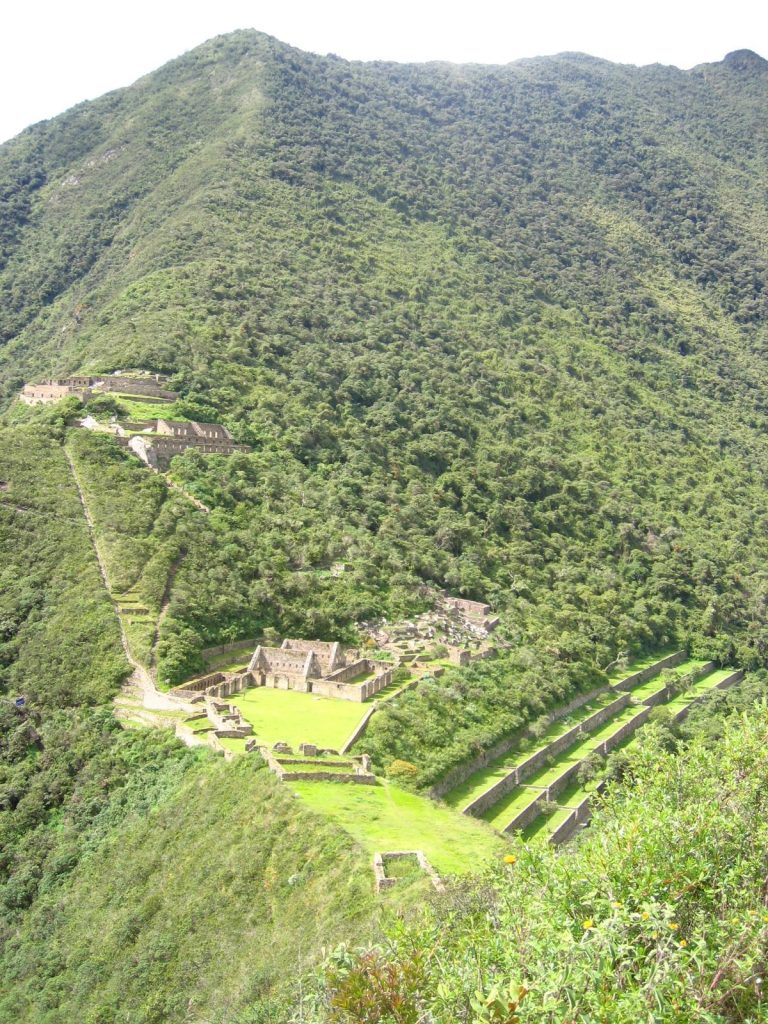
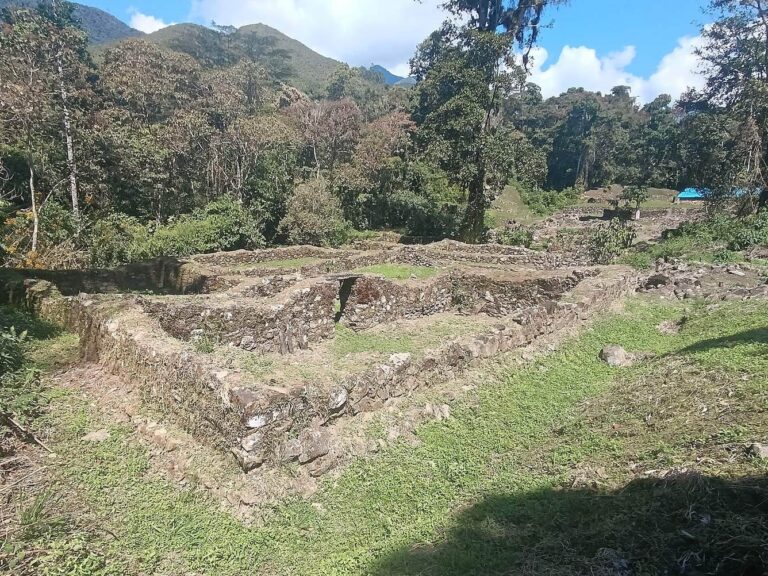
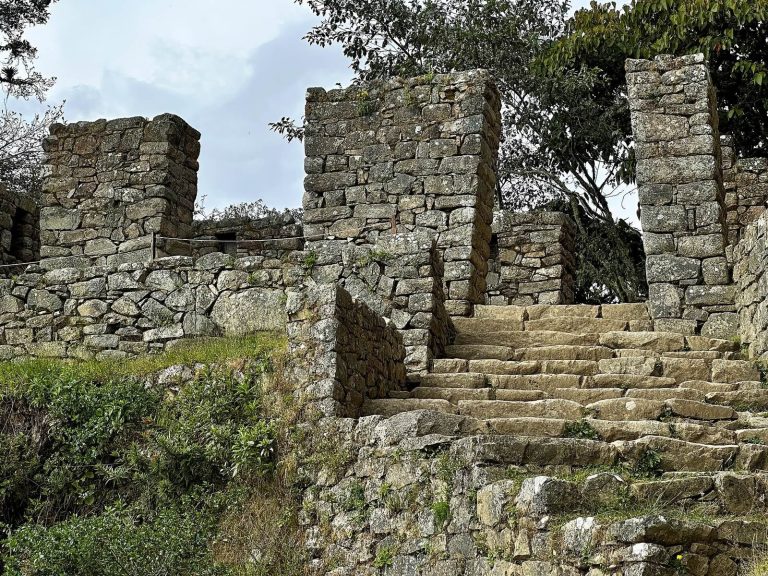
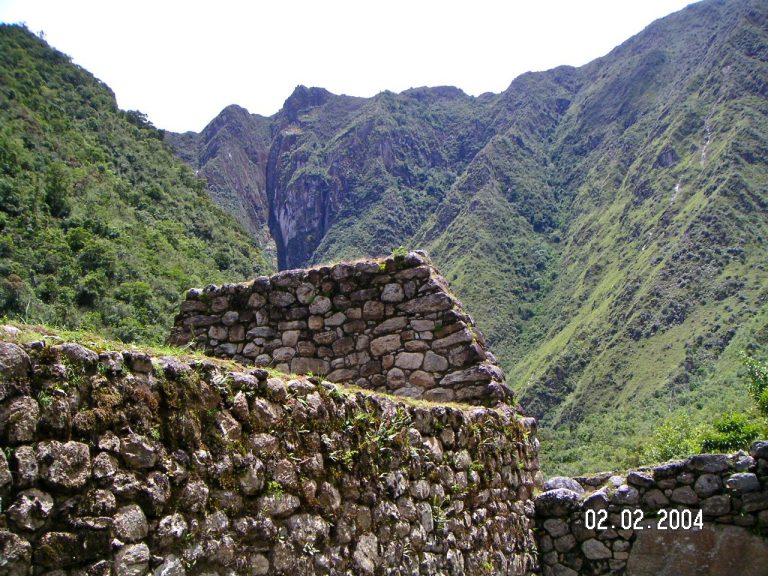
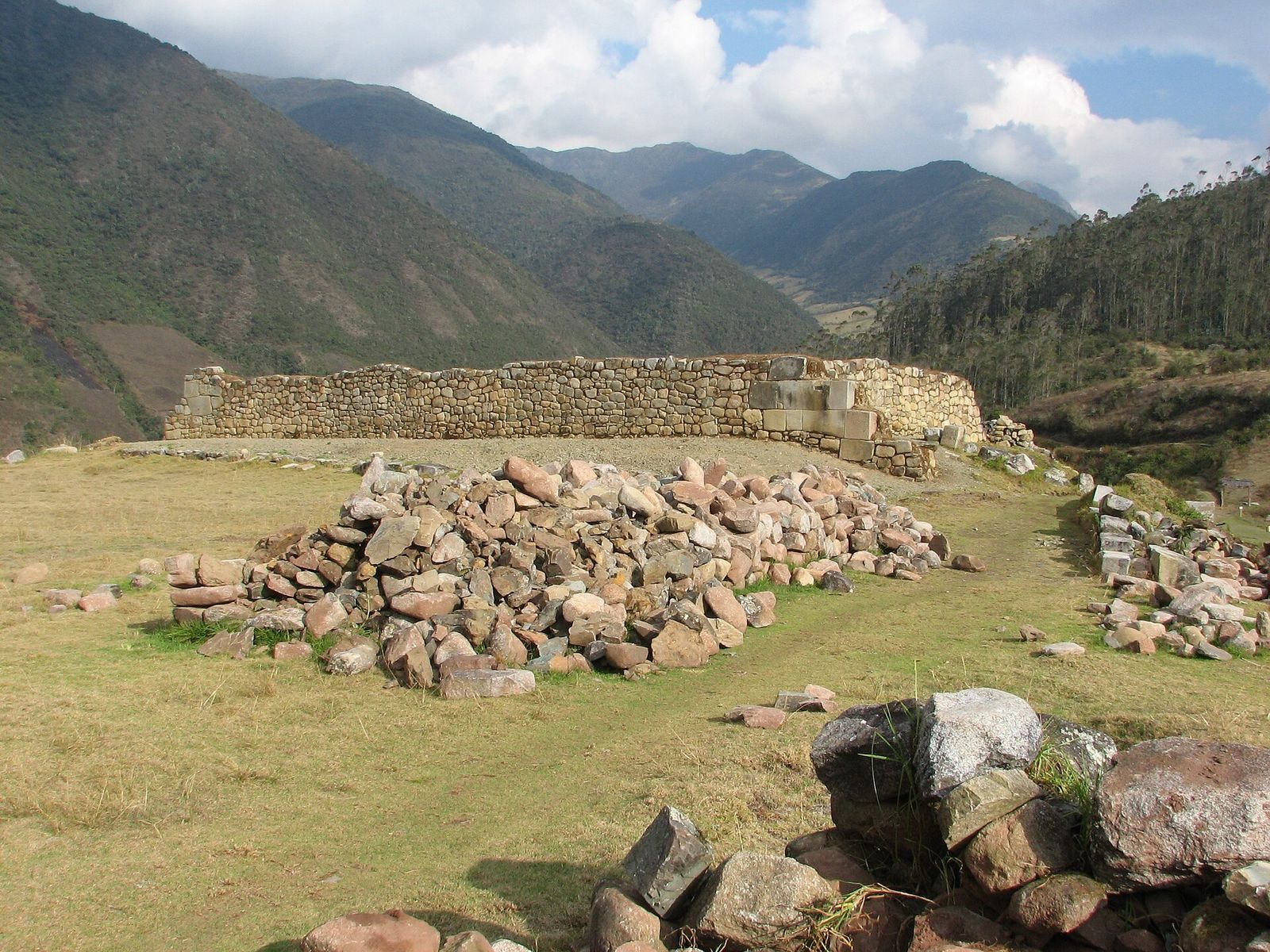
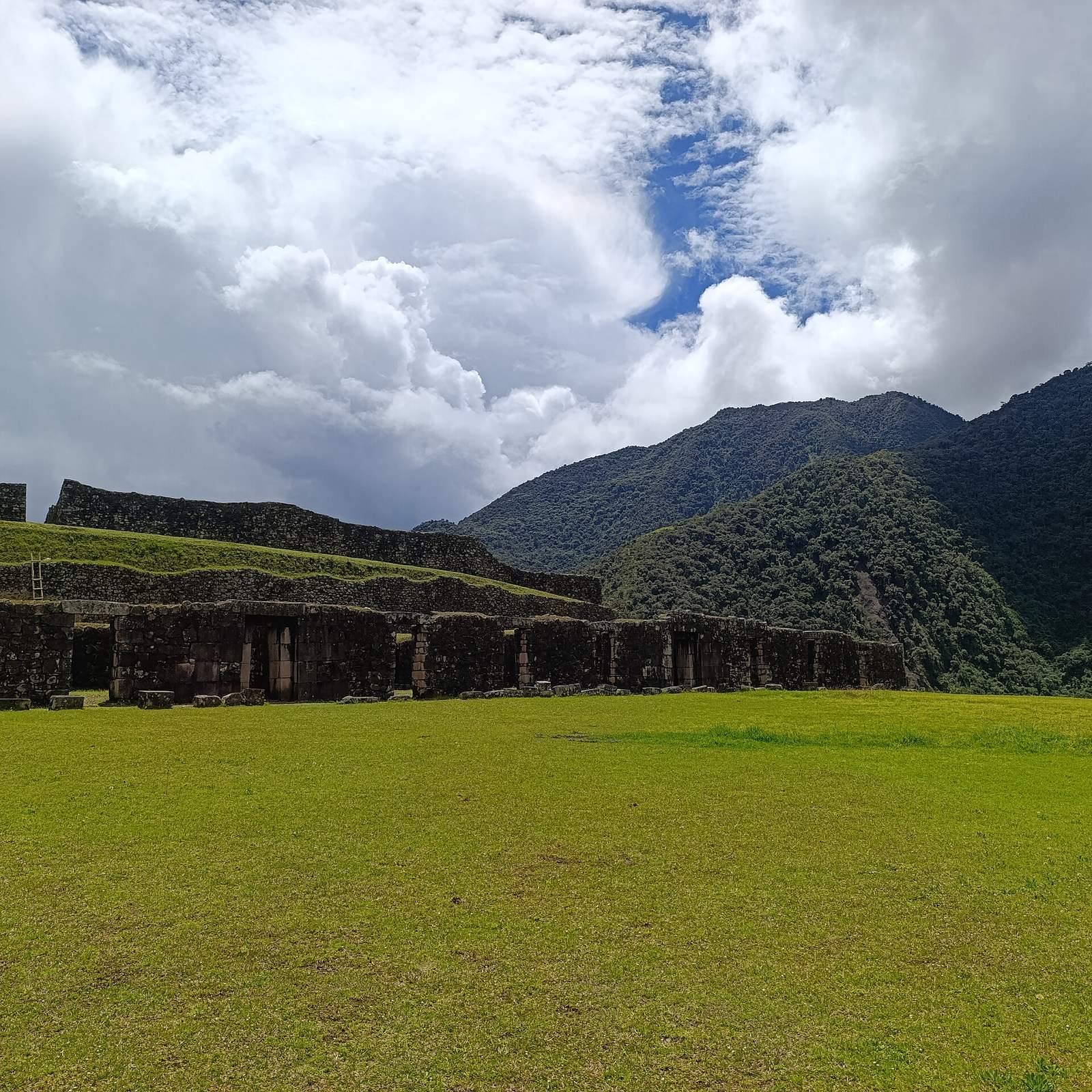
The remains occupy a ridge at an elevation of 2,980 metres, overlooking the meeting of two small rivers and the village of Pucyura. Vitcos lies on the northern side of a hill between the modern villages of Huancacalle and Pucyara. The palace forms the principal part of a complex that extends across the hill and into parts of the valleys to the south and east.
Palace buildings
Upper palace group
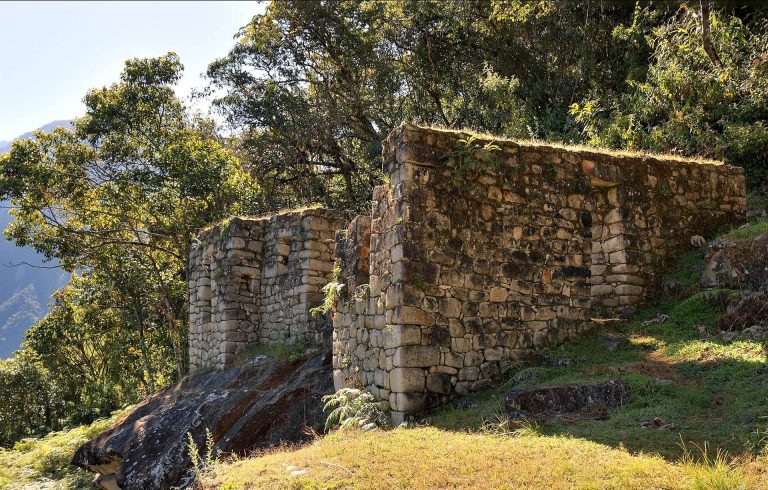
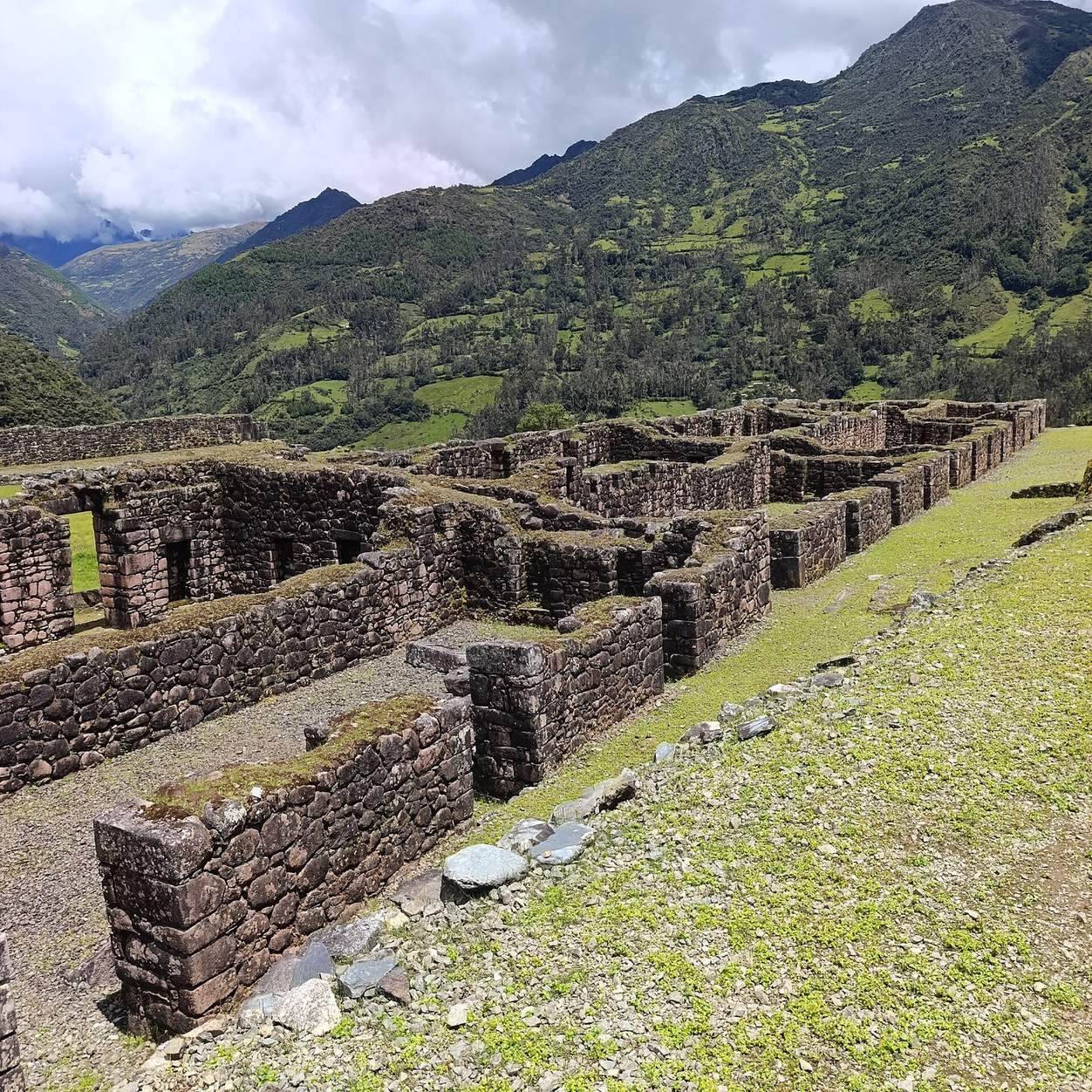
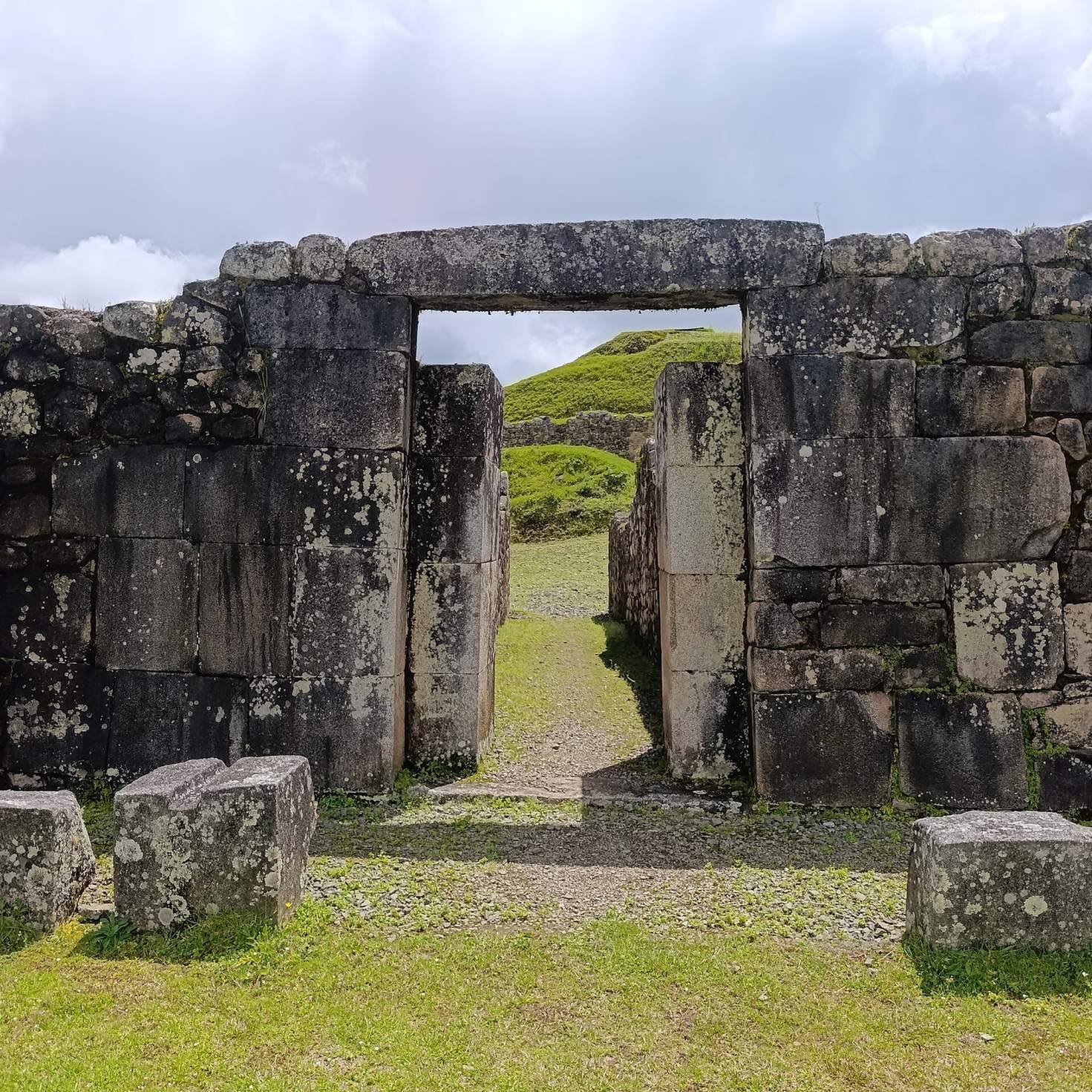
The upper group consists of eight large rooms in four back-to-back pairs, joined by a shared outer wall. Openings in that wall lead to passages between the pairs. Each room has three doorways to the exterior, and the rooms in each pair shared a roof. Hiram Bingham measured the royal residence at 245 feet (74.6 metres) long and 43 feet (13.1 metres) wide. His description counted ten large rooms and three corridors running from front to rear, and noted thirty doorways, fifteen at the front and fifteen at the back. The lintels were solid blocks of white granite.
Lower group
Below a terrace wall, north of the upper group, a dozen or more buildings are arranged around an open courtyard. The group is in considerably poorer condition than the upper buildings.
Separate building
Opposite the long palace stands a separate structure that Bingham measured at 78 feet (23.7 metres) long and 25 feet (7.62 metres) wide. It has doorways on both sides.
Ceremonial center and eastern slope
Ñusta Hispana and White Rock
About one kilometre south of the palace is the ceremonial center of Ñusta Hispana, also called Chuqip’allta. It includes a large carved stone known as the White Rock, or Yurak Rumi, said to have served as an Inca oracle, a sacred place or object believed to convey divine guidance.
Terraces and eastern-slope structures
Terraces run along the eastern side of the hill within the valley and are thought to have formed ornamental or ceremonial gardens. More than thirty buildings and engineered features extend along the eastern slope between Vitcos and Chuquipalta. These include meeting houses, storehouses, a large religious observation platform, terraces, and constructed paths.