Palace of Sultan Mas’ud III: A Ghaznavid Royal and Ceremonial Complex
Site at a Glance
- Popularity
- Medium
- Country
- Afghanistan
- Primary era
- Unclassified
- Eras represented
- Unclassified
- Civilizations
- Unclassified
- Site type
- Domestic
- Remains
- Palace
On this page13 sections
History
Ghaznavid foundation
The Palace of Sultan Mas’ud III was built in 1112 in Ghazni, Afghanistan, as a Persian-style royal residence and ceremonial and administrative center. Mas’ud III, a sultan of the Muslim Ghaznavid dynasty, ruled from 1099 to 1114 or 1115 and was the son of Ibrahim of Ghazna. The palace’s scale and decoration conveyed the authority and cultural prestige of the court.
The complex is regarded as one of the most important examples of Ghaznavid architecture. Its design departed from local building traditions while drawing on wider Islamic architectural practices. The style associated with the palace later developed across Afghanistan and northern India.
Destruction and later damage
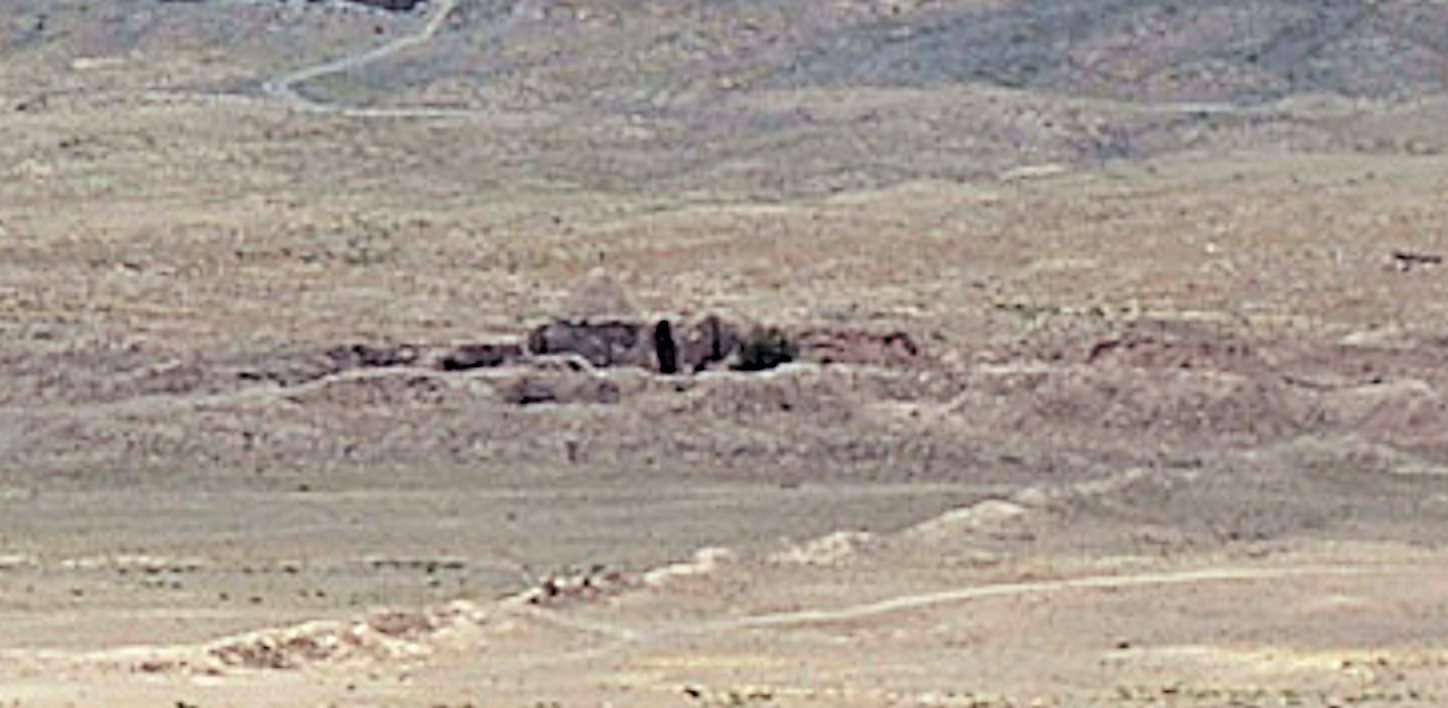
Mongol forces invaded and looted the palace during the latter half of the 13th century, destroying much of it. The ruins later suffered extensive damage and looting during the Afghan Civil War and the Soviet invasion of Afghanistan. In 2005, the Society for the Preservation of Afghanistan’s Cultural Heritage (SPACH) assessed the palace as completely destroyed.
Excavations
Archaeologists selected an excavation area in 1956 that extended about four kilometres across the Rauza suburb. The Italian Institute for the Middle and Far East (IsMEO) excavated the palace in campaigns during the summers and autumns of 1957 and 1958, with further work by the Italian mission in the 1960s. Alessio Bombaci led the 1957 campaign, and Umberto Scerrato directed the 1958 work.
Remains
Compound and plan
The palace stood within a walled compound, set apart from the rest of Ghazni. Archaeologists estimated that its rectangular, symmetrical plan measured more than 100 metres on each side. Perimeter walls, gates, and entrances framed a complex intended for processions, gatherings, and court events. A large open courtyard occupied the center, serving for ceremonies and as the principal route through the building. Four iwans, vaulted halls open on one side, faced onto the courtyard and linked it to suites of rooms, audience areas, service spaces, and smaller courts. The palace was probably a single-storey building, with much of its height expressed by the vaulted halls.
Construction and decoration
Brickwork and vaulting
Builders used baked brick and lime mortar, with large brick vaults finished in plaster or stucco. Marble, terracotta, and stucco also formed part of the palace’s architectural finish. Carved reliefs and decorated pillars contributed to its ornament.
Marble and inscriptions
White carved marble at doorways and column bases contrasted with the stucco surfaces. Its shallow carvings included geometric and plant forms. Inscription bands in Arabic and Persian praised kingship and divine support for the Ghaznavid dynasty. A marble dado, the lower portion of an interior wall treated as a separate decorative surface, carried a Persian poem in Kufic, an angular style of Arabic script, as well as an Arabic inscription. An arch of marble bore Mas’ud III’s name.
Excavated rooms and finds
Courtyard and interior spaces
Excavations fully uncovered only some of the rooms; other rooms, the courtyard, numerous passageways, and the remains of an iwan were explored only in part. Hall II yielded many terracotta basins. Reuse of the palace’s building materials, heavy winter snow, and spring rain contributed to the deterioration of the ruins.
Wall panels and fragments
Excavators found a doorframe and 44 marble dado panels in place, along with about 400 further fragments of the dado frieze across the excavation area. Palace panels later entered collections in Europe and North America. The Museum of Arts and Crafts in Hamburg returned a panel on 8 October 2021; it had belonged to a frieze in the inner courtyard. The Asian Art Museum in San Francisco agreed to return its panel, with physical transfer conditional on cooperation between Afghan consulates and the United States. The Brooklyn Museum has not indicated a return and has made one conditional on recognition of Afghanistan’s government.
Other finds included ceramic fragments and architectural pieces of brick, stucco, and marble. Afghan authorities legally transferred some fragments to the Italian archaeological mission, which keeps them in a museum warehouse in Italy for study. Other palace pieces were believed to be held at the National Museum of Afghanistan in Kabul; whether any were among works later destroyed by the Taliban remains uncertain.
West-side cemetery and shrine
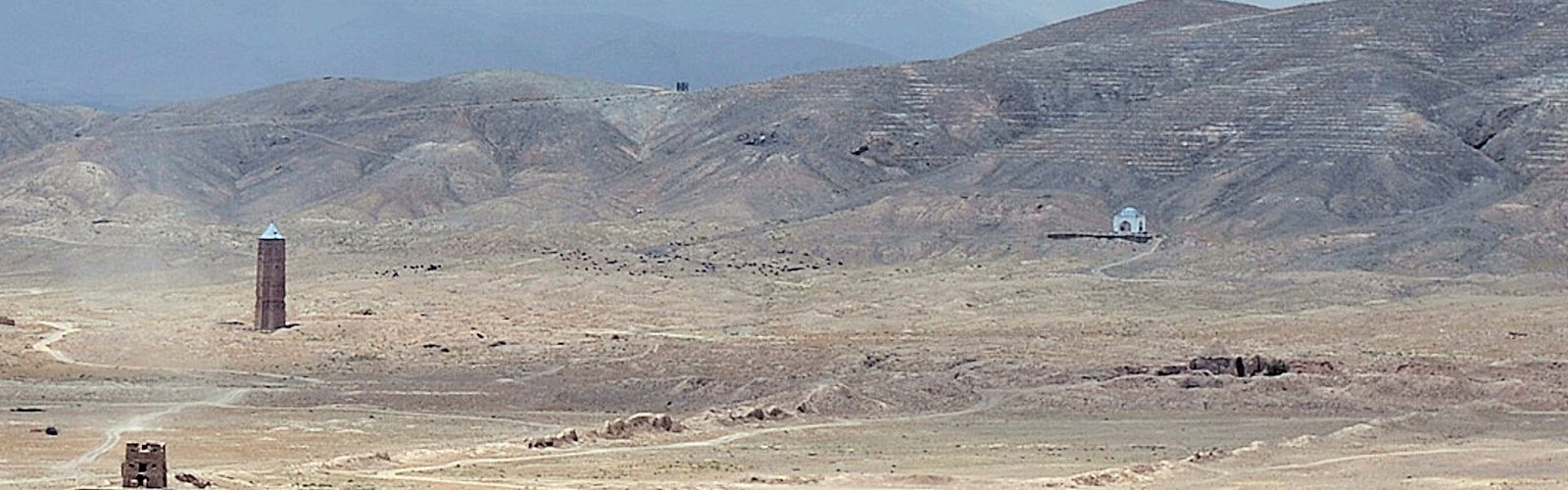
A small cemetery lies west of the palace. It includes the domed shrine of Ibrahim of Ghazna, whose dome has a beehive shape.