Schloss Oberhöflein: A Moated Castle in Austria
Site at a Glance
- Rating
- 3.5
- Popularity
- Very Low
- Country
- Austria
- Primary era
- Early Modern
- External website
- Open
- Eras represented
- Early Modern
- Civilizations
- Habsburg, Holy Roman Empire
- Site type
- Military
- Remains
- Castle
On this page9 sections
History
Schloss Oberhöflein is a former water castle in Oberhöflein, Austria. It was first recorded in the thirteenth century, although its construction dates to the sixteenth century.
Sixteenth-century castle and ownership
Alterations took place during the sixteenth century. In 1578, the castle belonged to Andreas Kielman von Kielmannsegg. Ernst Ferdinand Baron von Breuner purchased it in 1658.
In 1724, Matthias Baron von Suttner carried out further work. The castle has belonged to the Barons von Suttner since that time.
Fire damage
A fire in 1945 damaged the castle, including its hall.
Remains
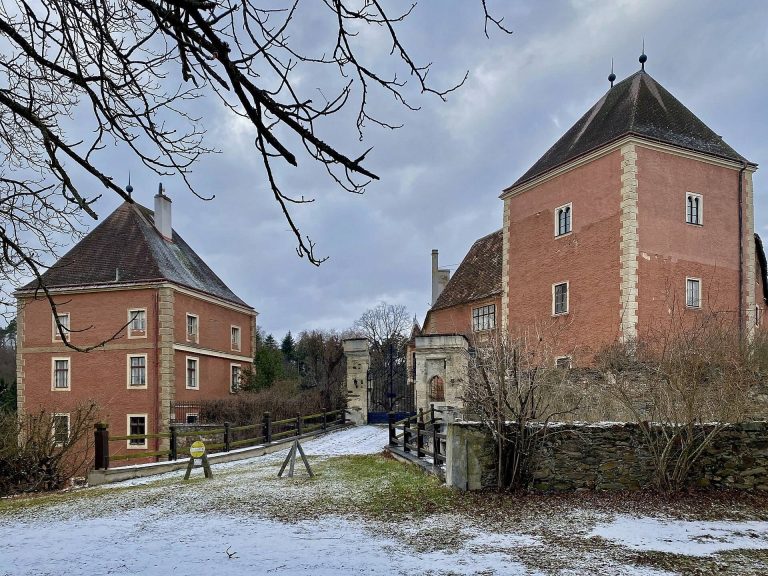
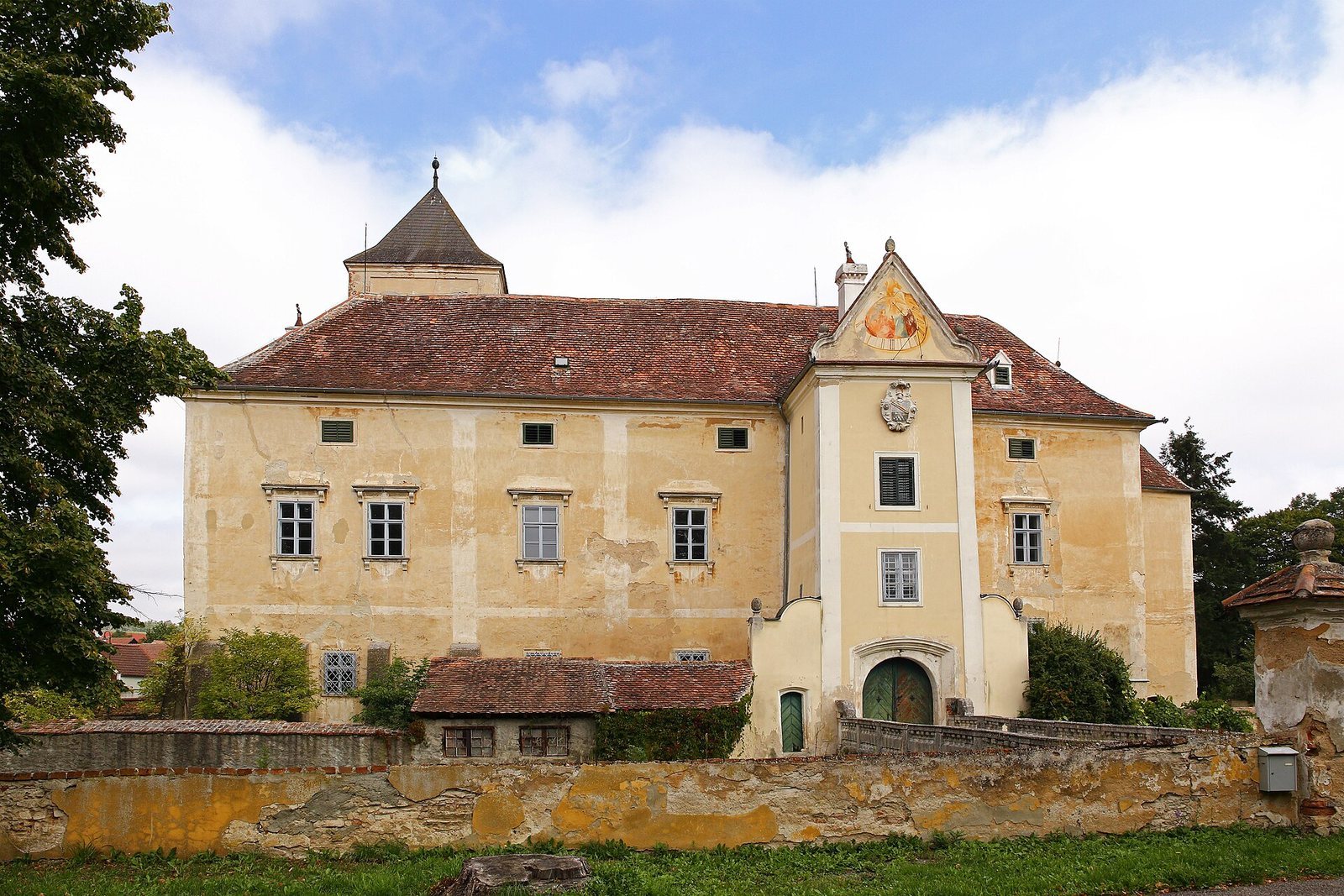
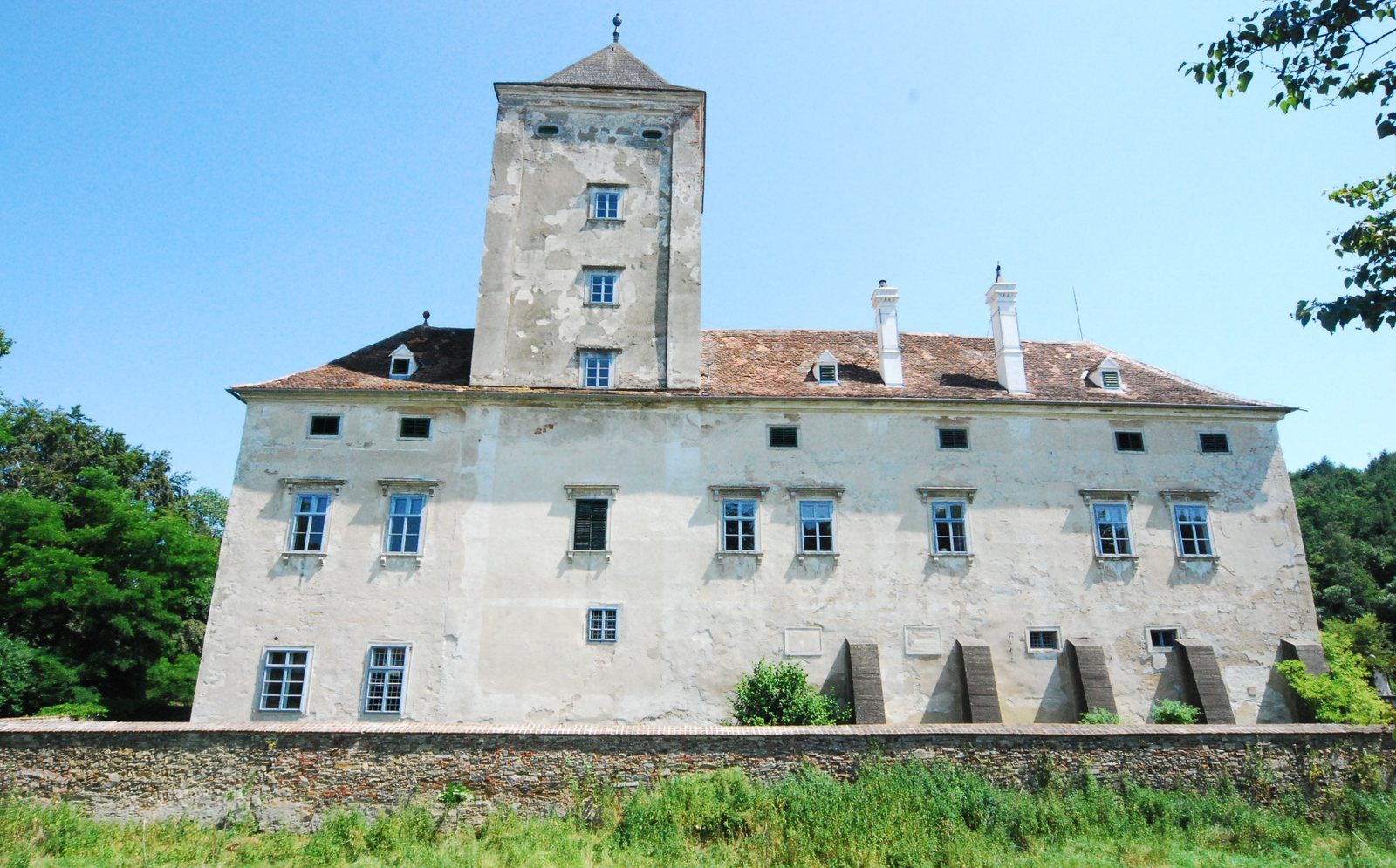
The substantially preserved castle is a lowland water castle, built on low-lying terrain and arranged in four wings around a courtyard. Two tall towers form part of the complex. It was described as very dilapidated in 2016.
Moat, towers and entrance
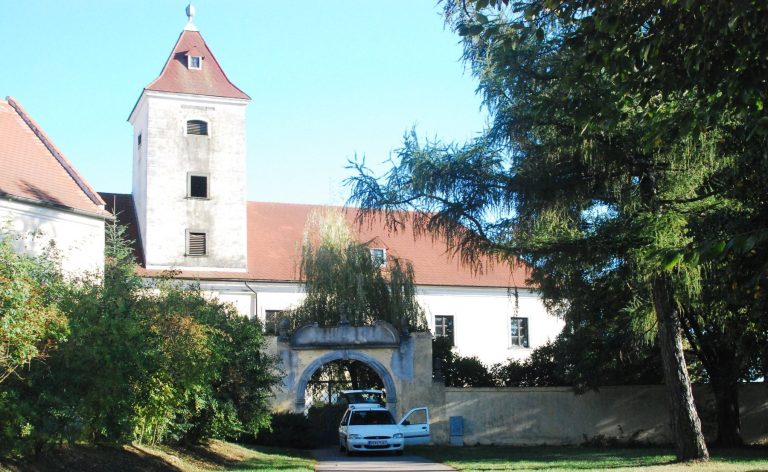
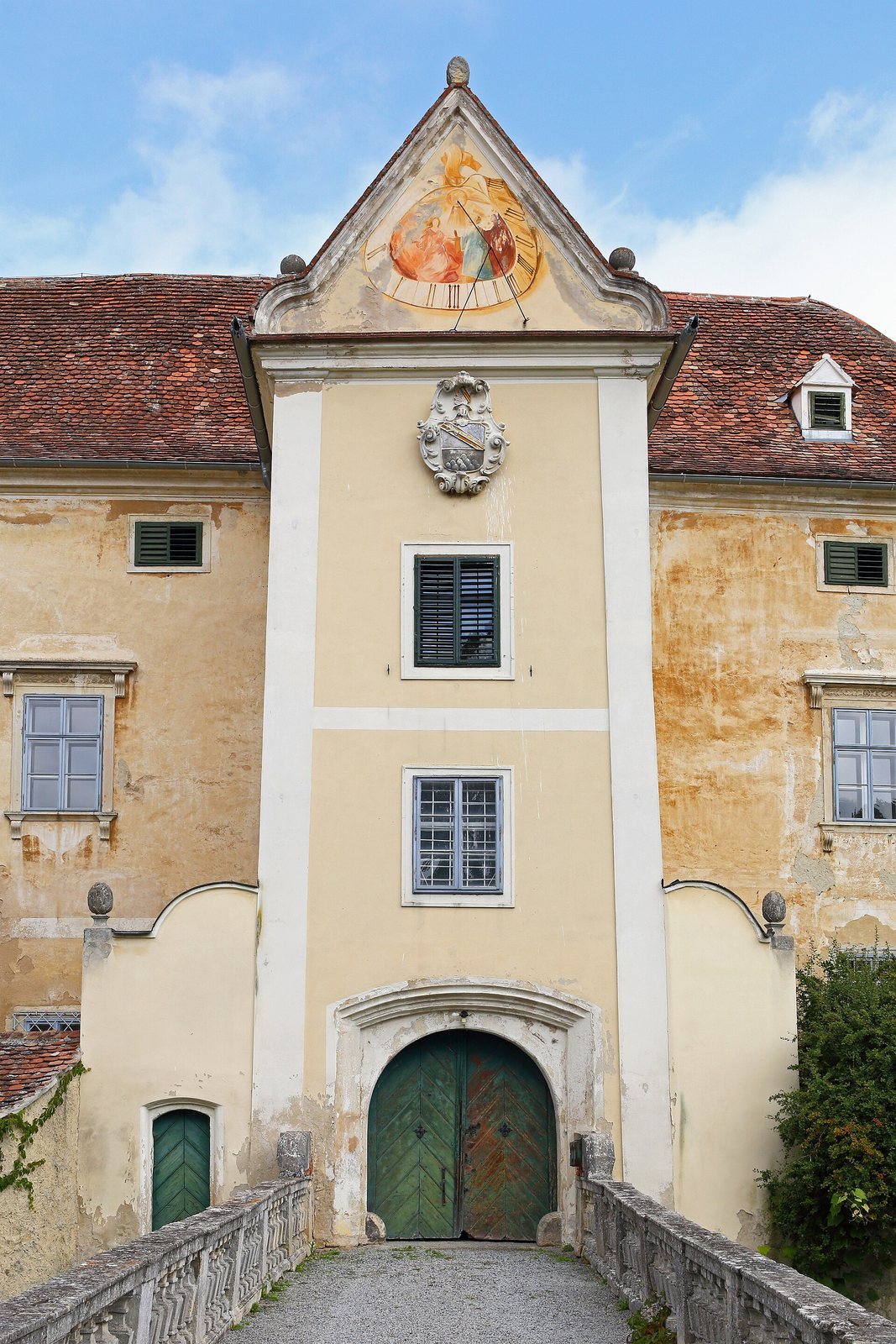
A ring moat encircles the castle. A stone bridge crosses it to the entrance, where a tower contains a round-arched doorway decorated with a sundial. A second, square tower stands at the northwest corner.
Courtyard and interior
Renaissance arcades
Rows of arches supported by columns, reflecting renewed interest in classical forms, run along three sides of the courtyard.
Painted southeast room
A room in the southeast part of the castle contains illusionistic wall paintings, which use perspective and detail to suggest depth. Johann Bergl, an Austrian painter associated with Baroque decoration, and Martin von Molitor, an Austrian landscape painter, created the paintings around 1770.
Outbuildings and inn
An outbuilding and the Black Eagle Inn stand beside the castle. A former secret passage is said to have linked the castle and the inn.