Dobele Castle: A Livonian Order Fortress in Latvia
Site at a Glance
- Rating
- 4.6
- Popularity
- Medium
- Country
- Latvia
- Primary era
- Medieval
- External website
- Open
- Eras represented
- Medieval, Early Modern
- Civilizations
- Duchy of Courland and Semigallia, Livonian Order
- Site type
- Military
- Remains
- Castle
On this page11 sections
History
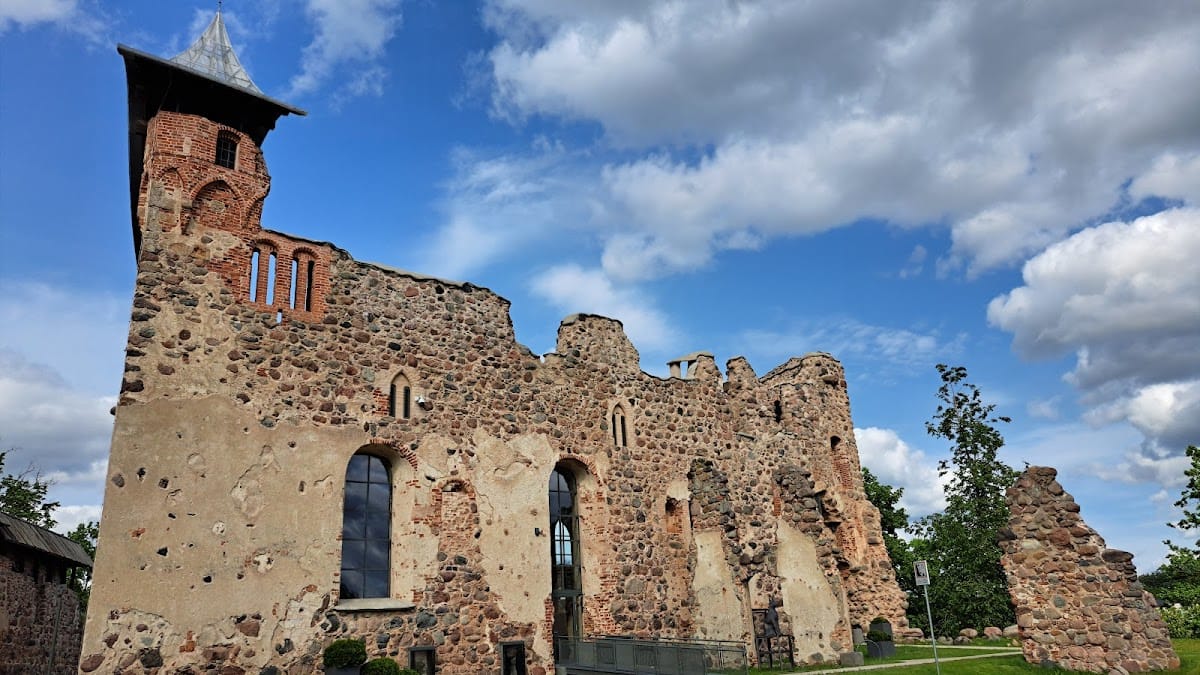
Dobele Castle is a medieval fortress in Dobele, Latvia, built by the Livonian Order on the site of an earlier Semigallian hillfort. The stone castle was begun in 1335 and completed in 1347, creating a fortified administrative and residential center on the right bank of the Bērze River.
The Semigallian Hillfort and Livonian Conquest
The earlier stronghold was a fortified Semigallian hillfort, an elevated settlement or defensive site, first mentioned in 1254. It served as the administrative center of the Semigallian district of Dobele. The Semigallians, a Baltic people whose territory included Zemgale in present-day southern Latvia and northern Lithuania, resisted the German crusaders during the Livonian Crusade.
Between 1279 and 1289, the hillfort withstood six sieges by the Livonian Order, a Catholic military order that controlled territories in medieval Latvia and Estonia. After the surrounding district had been devastated, the Semigallians burned the stronghold themselves in 1289 and withdrew into the territory of the Grand Duchy of Lithuania.
The Livonian Order began constructing a stone castle on the abandoned site in 1335. Master Eberhard von Monheim, who led the order from 1328 to 1340, is associated with the initial development. His successor, Goswin von Herike, completed and strengthened the fortress between 1345 and 1359. A settlement of merchants and craftspeople gradually grew around the castle.
An attack on Dobele may have taken place during the Lithuanian campaigns in Zemgale in 1345 and 1346. During those campaigns, Algirdas and Kestutis, rulers of the Grand Duchy of Lithuania, captured Tervete, burned Jelgava Castle, and destroyed Mezotne.
Livonian Order Administration
From 1376 to 1562, Dobele Castle was the residence of the local komtur, an order official who governed a commandery and its fortress, together with the associated garrison. This period ended when the Livonian Order’s territories were secularized. In 1566, Gotthard Kettler, the first duke of Courland and Semigallia, seized the castle after a conflict with its last komtur, von der Recke, and compelled him to surrender.
Courland, Swedish Occupation, and Decline
Under the Duchy of Courland and Semigallia, an early-modern state ruled by the Kettler dynasty in western Latvia, the castle remained a place of government. The Courland Landtags, representative assemblies of the territory’s estates, met there in 1579, 1613, and 1628. After the duchy adopted its governmental constitution in 1617, a local captain or Hauptmann, a military-administrative official with judicial authority, administered justice at Dobele.
Swedish forces serving King Gustav II Adolf occupied the castle in 1620 or 1621 and again in 1625. From 1643 to 1649, Dobele was the residence of Elisabeth Magdalena of Pomerania, widow of Duke Friedrich Kettler. She lived there with her foster son, the future Duke Jakob Kettler.
During Jakob’s captivity in 1658, Swedish troops occupied Dobele once more. Courland and Polish forces tried to recover the castle but were driven out again. After the Peace of Oliva in 1660, Jakob regained control and ordered a long auxiliary building along the eastern wall. The main fortifications were not restored.
Swedish forces occupied Dobele again in 1701 during the Great Northern War, the conflict of 1700 to 1721 in which Sweden fought a coalition led by Russia, Denmark-Norway, and the Polish-Lithuanian Commonwealth for control of the Baltic region. King Charles XII of Sweden stayed at the castle for six days, while the town and fortress suffered heavy devastation during the war.
A plague epidemic affected Dobele and its surroundings during the first quarter of the eighteenth century and greatly reduced the local population. The castle remained inhabited until 1736, when its roof collapsed. It was then abandoned.
Ruins and Conservation
The ruins later became a setting for public historical events. On 24 June 1870, they hosted a Courland Latvian Song and Dance Festival, one of the earliest events of its kind in Latvia. The first general Latvian Song Festival followed in 1873. In 1915, German Emperor Wilhelm II inspected a military parade at the foot of the castle hill.
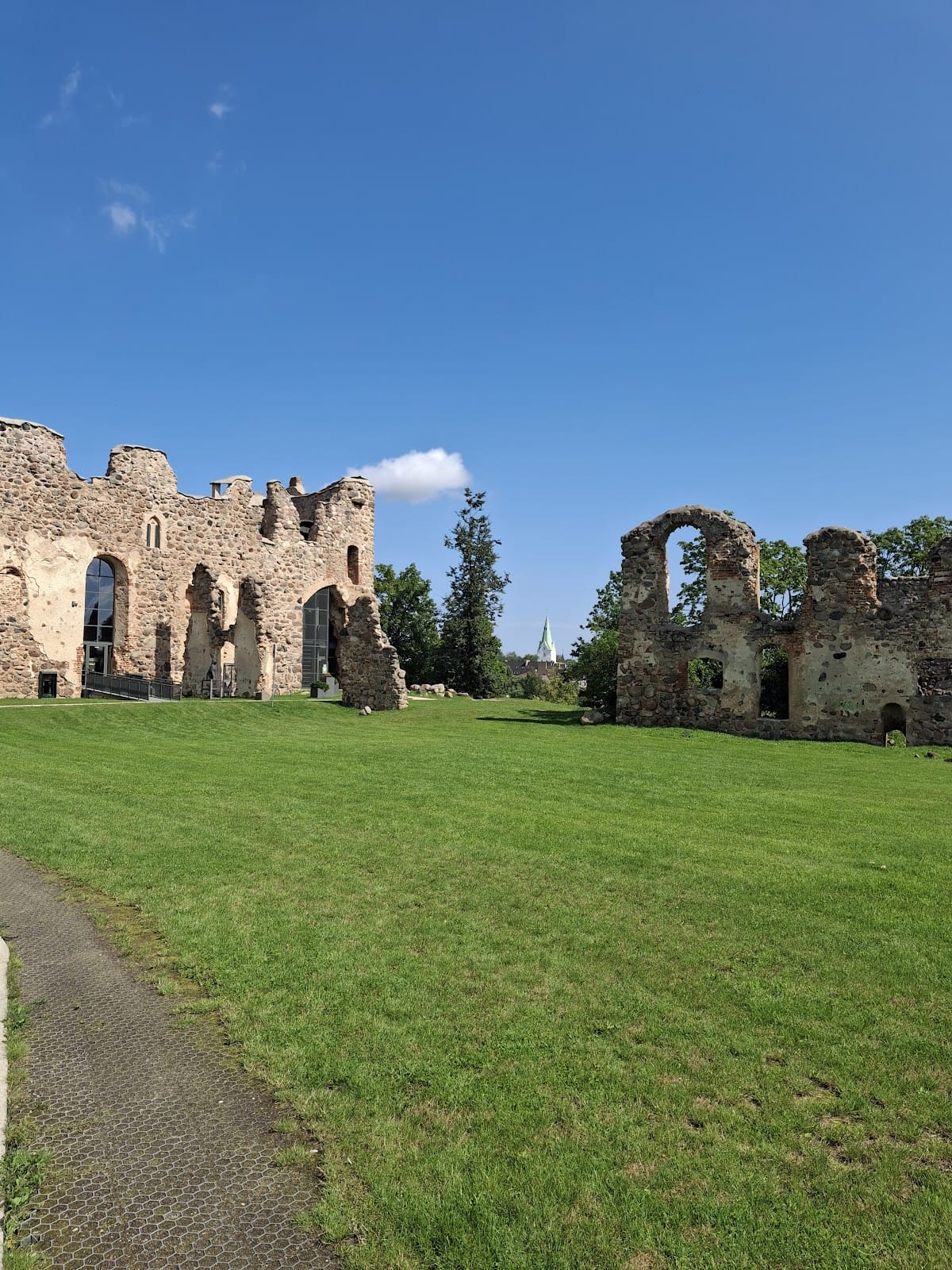
Conservation began in 2002. Major restoration and development work launched in 2018 included the treatment of ancient masonry, restoration of part of the convent building, and construction of a multifunctional exhibition hall, exhibition spaces, and a viewing platform. During these works, an undisturbed cultural layer containing Semigallian-period objects was found at the entrance to the chapel basement. Restoration of the chapel building was completed on 8 December 2020. The castle is preserved as ruins under conservation.
Remains
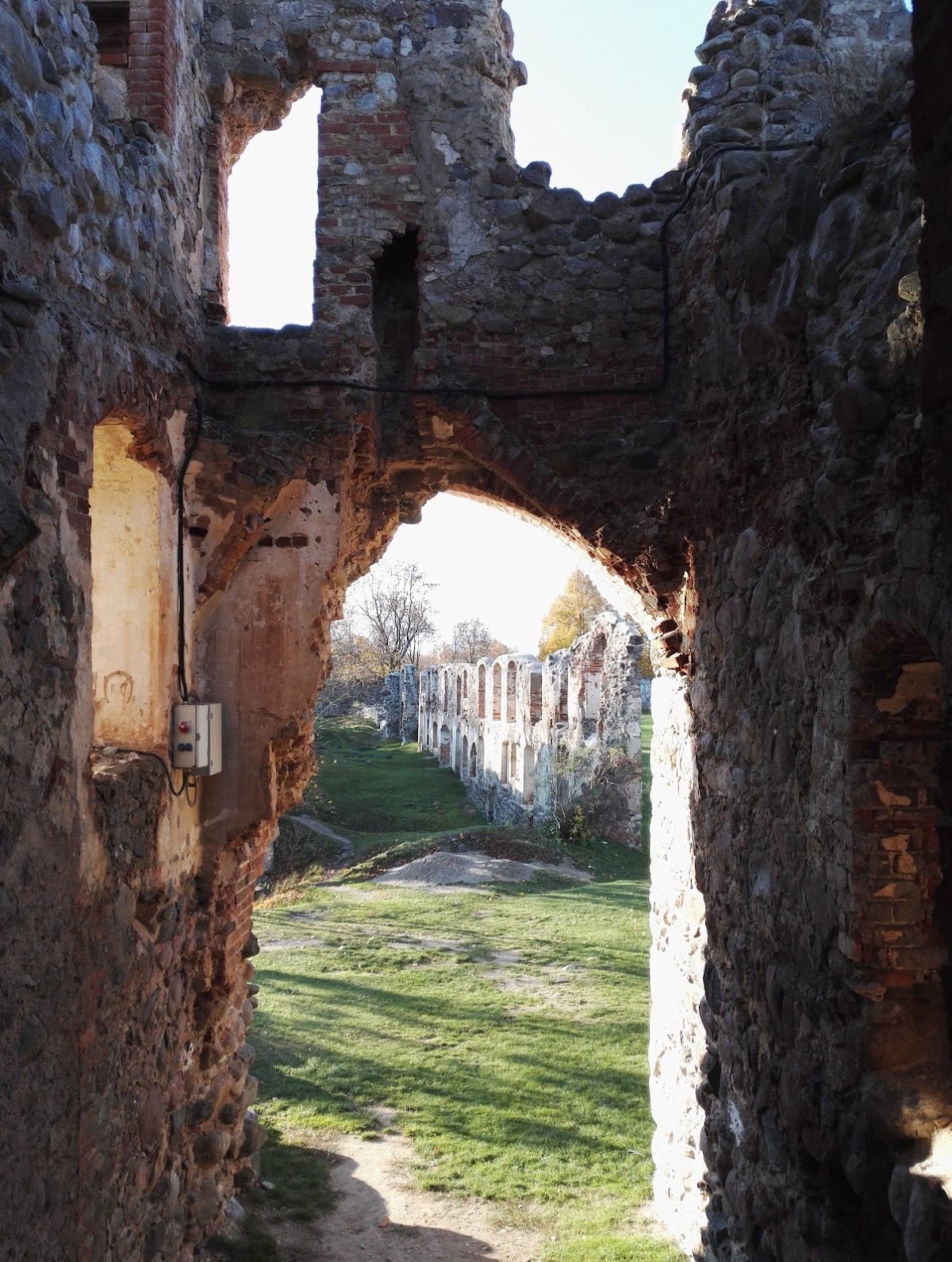
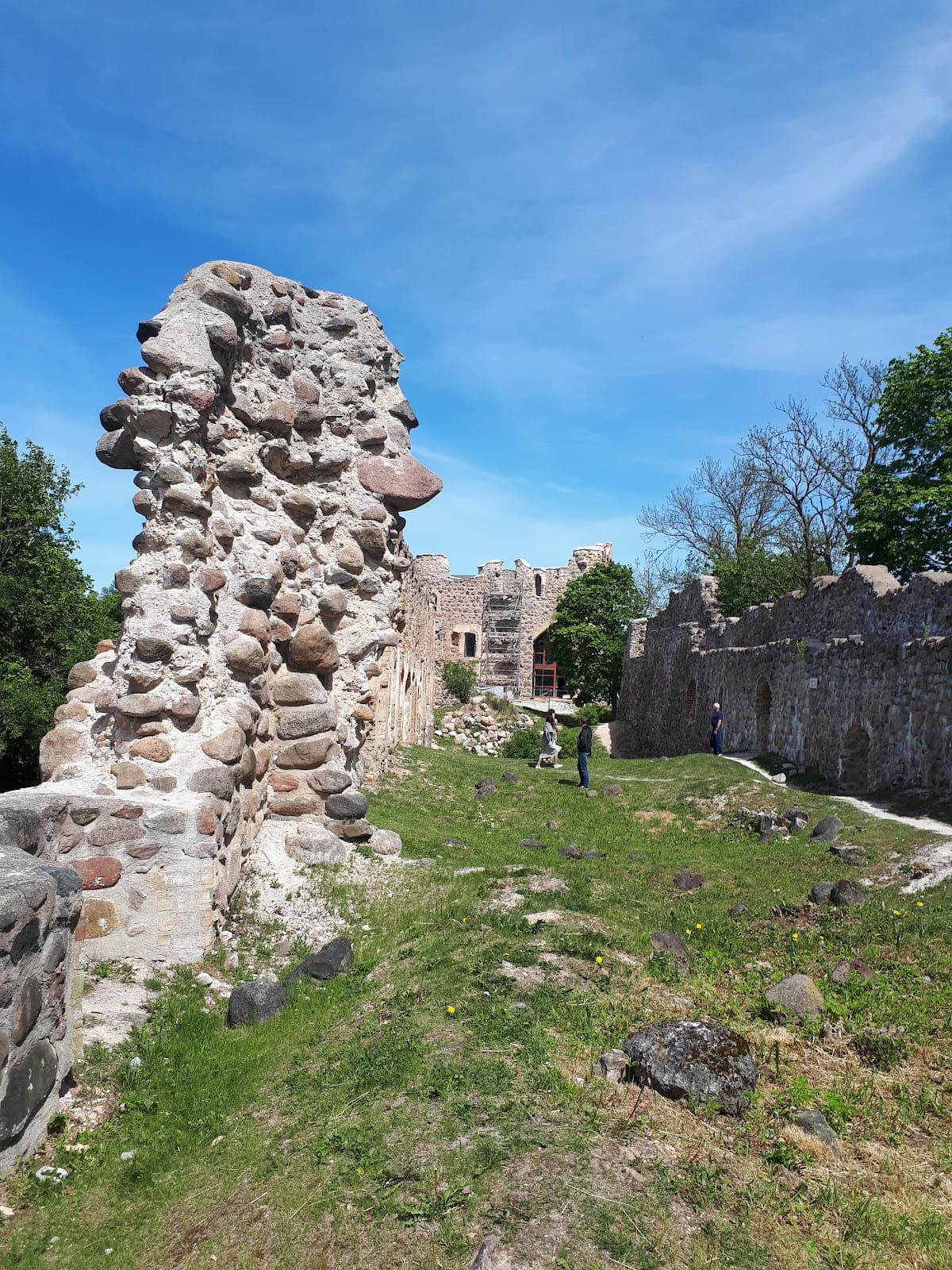
Dobele Castle occupies the top of the approximately 15-metre-high Dobele Castle Hill on the right bank of the Bērze River. Slopes protect two sides of the hill, while a deep ditch formerly surrounded the castle area. The stone fortress formed a trapezoidal enclosure elongated from north to south. Its sides measured approximately 16, 176, 90, and 180 metres, and surviving wall sections rise about 3 to 4 metres high.
Fortress Layout
The eastern side contained the principal entrance gate and a tower. A smaller exit stood at the level of the main building, and additional structures extended along almost the entire eastern wall. A small passage through this side led outside the enclosure to the area known as the Magdalena Garden. After Duke Jakob recovered Dobele in 1660, a long auxiliary building was added beside the eastern wall, while the defensive works themselves remained unrestored.
Local tradition associates the castle with two underground passages. One was said to have run beneath the Bērze River to its left bank, and the other to Lielberze. These stories form part of the castle’s later local tradition, while the passages’ historical status remains uncertain.
Residential and Religious Buildings
Convent Building
The northern part of the fortress contained the convent building, the communal and administrative structure of a religious military stronghold. Farther south stood the main building, whose roof carried four small corner towers. The castle is classified architecturally as both a hilltop fortress and a residential castle related to the tower-castle type.
Chapel and Church
A small chapel was built into the southern wall. It was later enlarged and converted into a church, with service buildings and other outbuildings nearby. Its restoration formed part of the modern conservation program, and the chapel building was completed on 8 December 2020.
Decorative Features and Archaeological Finds
The castle’s characteristic architectural details include four brick oriel towers, small projecting turrets or bay-like towers supported above the main wall, together with sequences of arches in the wall friezes. These elements belong to the surviving architectural character of the residential fortress.
Archaeological work in 2018 recovered a group of objects from the Semigallian-period cultural layer near the chapel basement entrance. The finds included rings, brooches, small bells, pendants, a spiral ornament, chain-jewelry fragments, part of a bracelet, beads, buckles, pins, spearheads, crossbow bolts, an awl, needles, a key, sandstone sharpening-stone fragments, a fishhook, lead weights, and hazelnuts.
Opposite the castle stands a monument erected in 1996 to commemorate the liberation of Dobele.