Sanctuary of the Madonna of Paitone: A Marian Shrine in Italy
Site at a Glance
- Popularity
- Low
- Country
- Italy
- Primary era
- Early Modern
- Eras represented
- Early Modern, Modern
- Civilizations
- Italian, Venetian
- Site type
- Religious
- Remains
- Sanctuary
On this page9 sections
History
The Sanctuary of the Madonna of Paitone is a Catholic shrine in Paitone, Italy, dedicated to the Virgin Mary, the mother of Jesus and a central figure in Christian devotion. The local community began building it in 1534 and completed it in 1536. Its Renaissance architecture and Baroque interior developed around a tradition of Marian worship and a reported apparition.
Foundation and apparition
Tradition places the apparition in August 1532, on the hills near Paitone. The Virgin is said to have appeared to Filippo Viotti, who was deaf and mute, and asked him to have a church built at the site. The story says Viotti was healed, after which the community resolved to establish a sanctuary dedicated to Mary.
The Diocese of Brescia authorized the foundation on 11 May 1534. Mattia Ugoni, an auxiliary to Bishop Andrea Corner, prepared the authorization. Building work began that year and was finished in 1536.
Moretto’s painting and later devotion
The sanctuary commissioned a painting from Moretto, the professional name of the sixteenth-century painter Alessandro Bonvicino, who was associated with Brescia. In his 1648 account, Italian writer Carlo Ridolfi recounted that Moretto initially struggled to portray the Virgin as Viotti had described her. Ridolfi said the painter reconciled himself with God and received the Eucharist before returning to the work, which he believed resembled the apparition. His telling presents the Virgin as a solemn woman in white who directed Viotti to ask the people to build a church on the summit and promised relief from an affliction troubling them.
Over later centuries, the sanctuary was embellished with an entrance portico and a broad forecourt. Further miracles associated with it were said to include sudden, unexplained healings. In 1893, art critic Gustavo Frizzoni praised Moretto’s painting for its delicacy and depth of feeling. In studies published in 1981 and 1986, art scholar Valerio Guazzoni interpreted the work as closely following Viotti’s account and conveying the sacred through everyday appearances. He also connected it with renewed devotion to Mary at the time, suggesting it may partly have answered Protestant criticism of Marian worship.
Remains
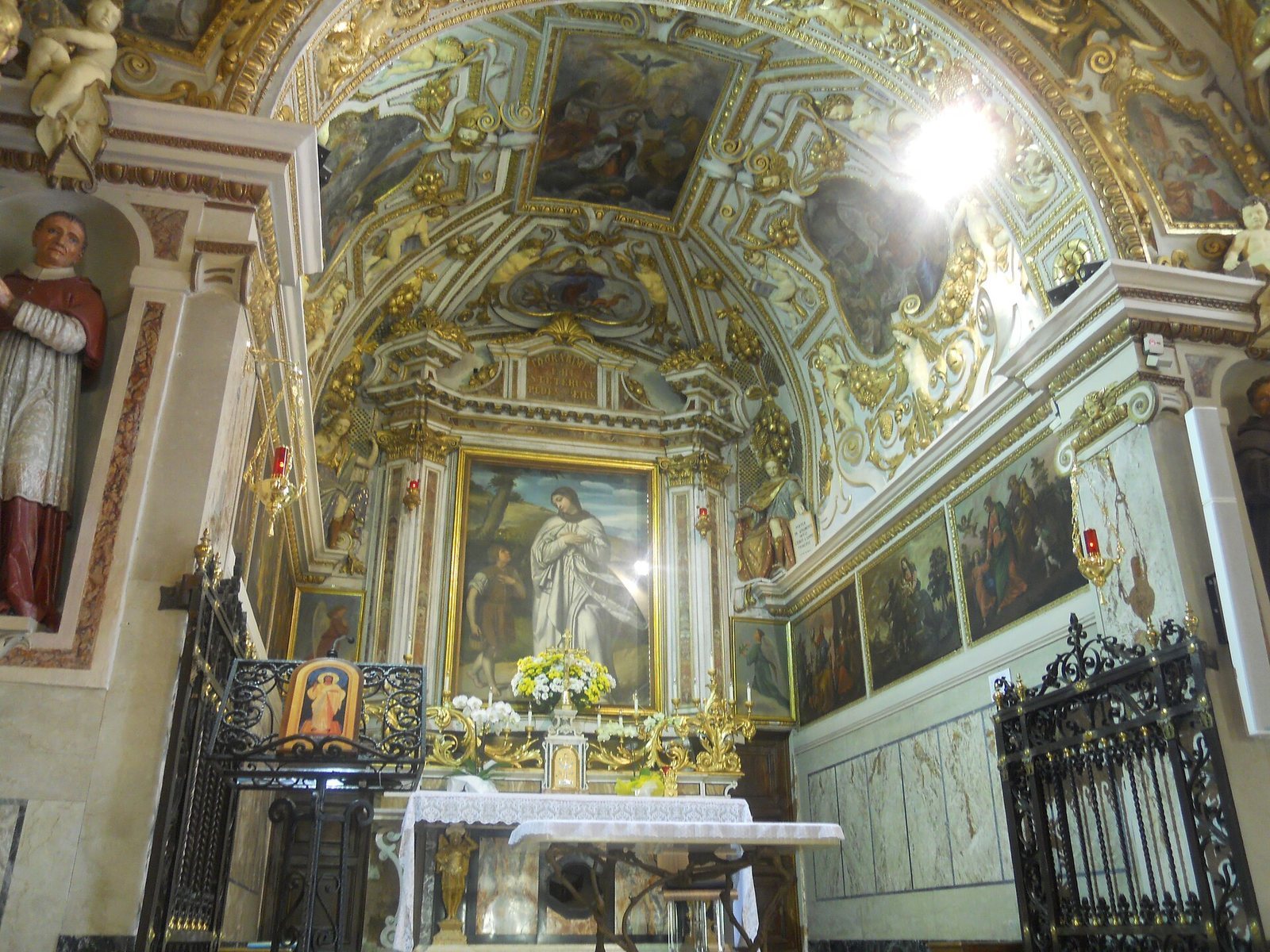
The sanctuary combines a simple Renaissance exterior with richly decorated Baroque interiors. Its building, forecourt, altar, painting, and organ form the principal surviving features.
Exterior
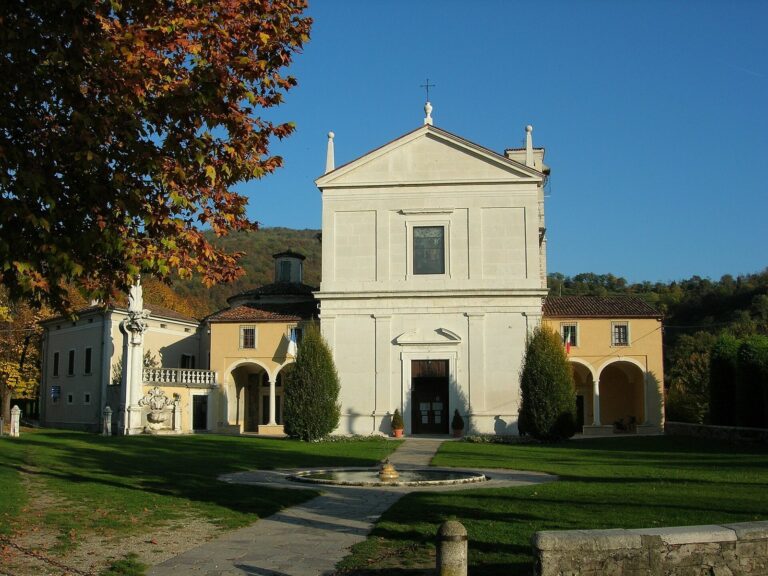
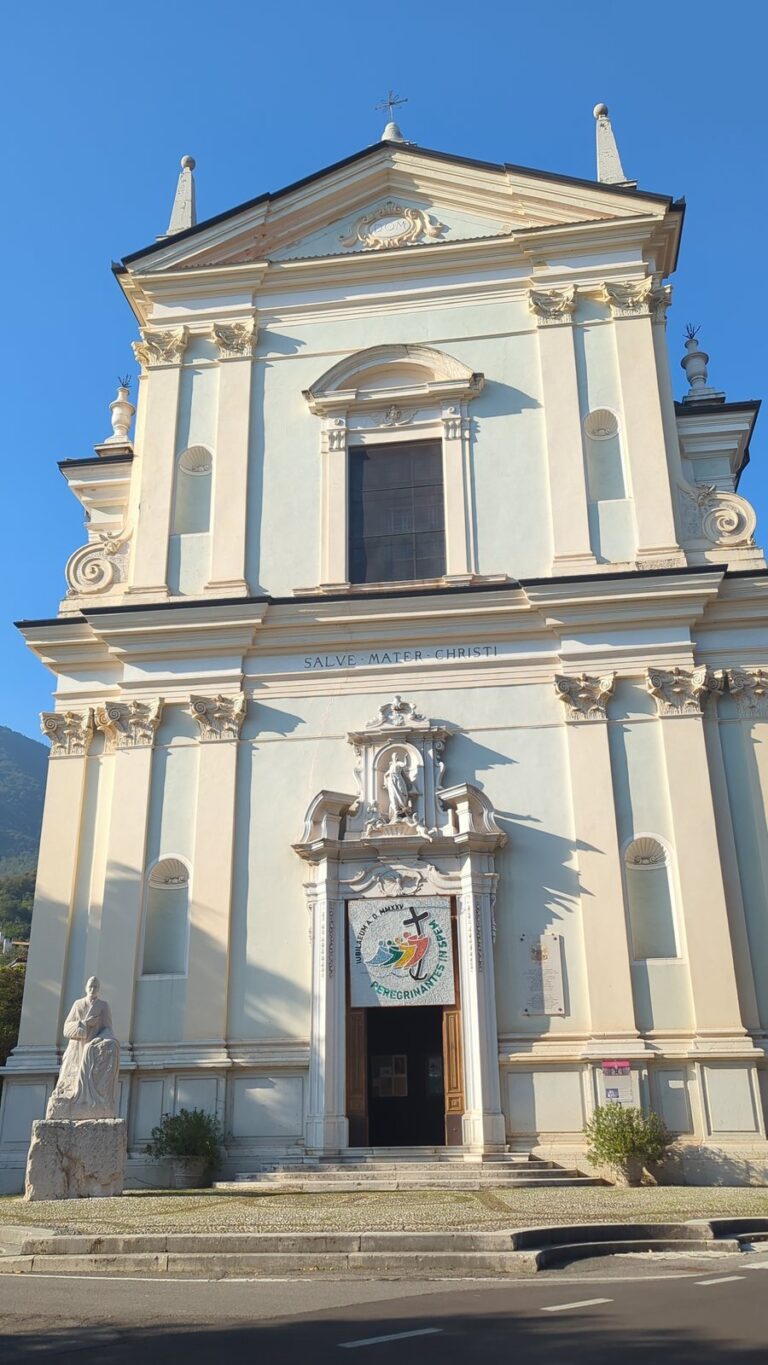
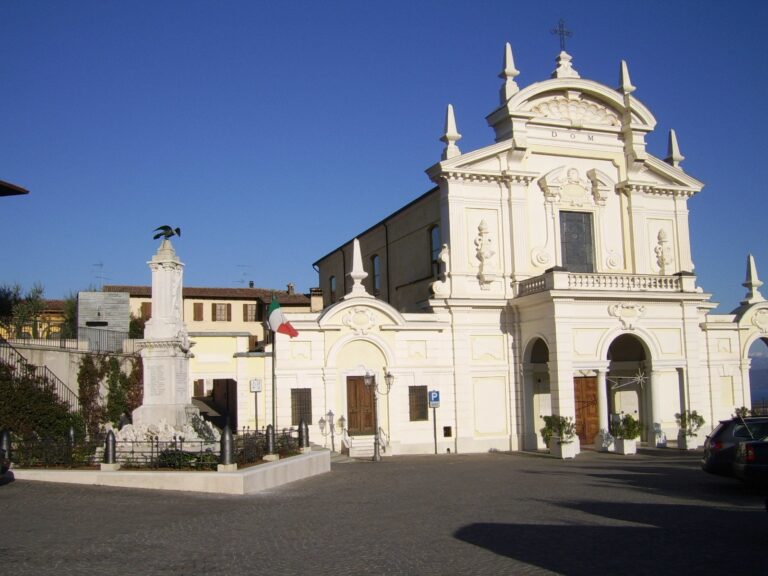
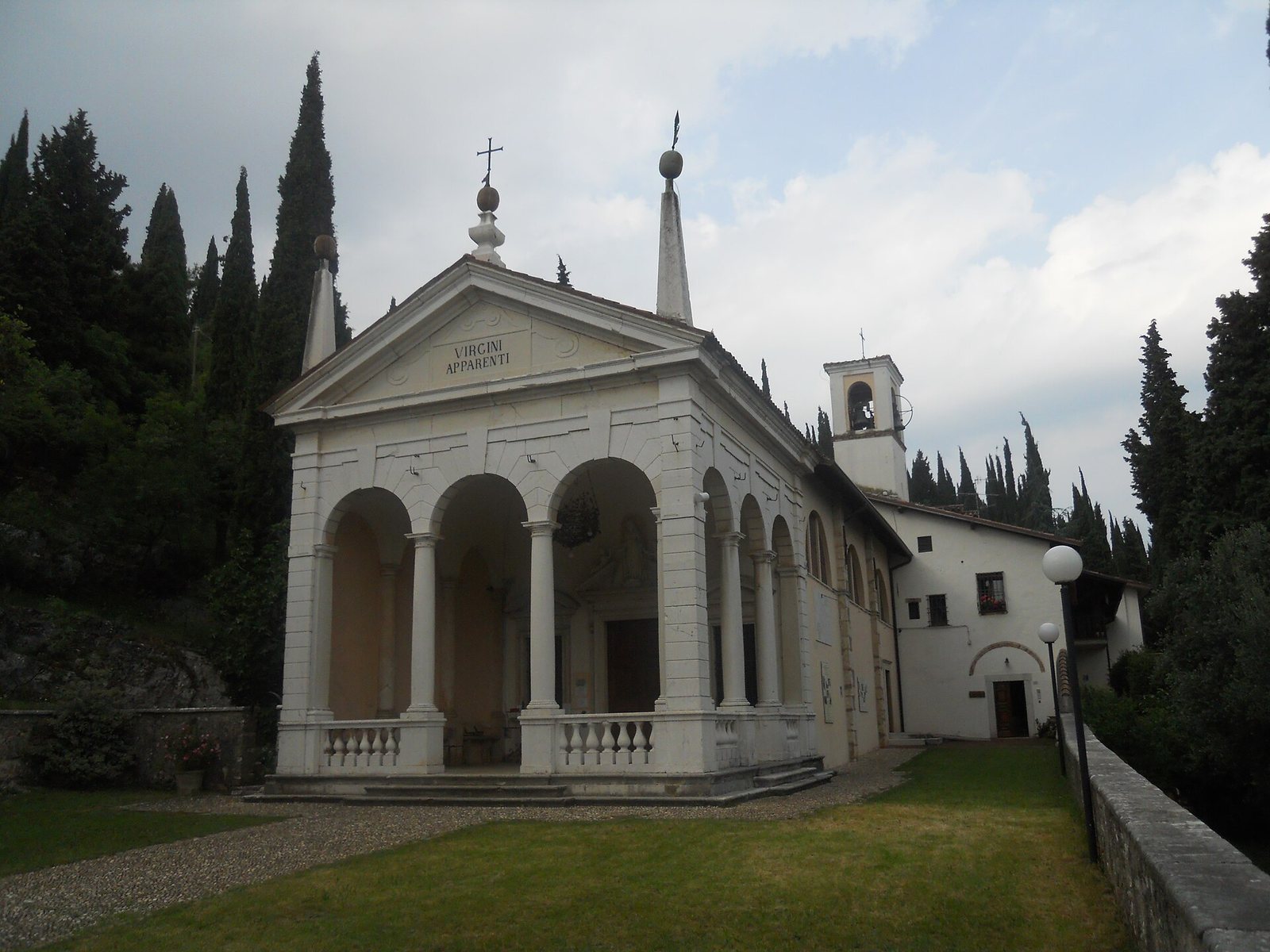
A regular arcade supported by Tuscan-style columns, a simple classical column design, surrounds the church. The front has three distinct sections and a triangular pediment, the triangular feature crowning the facade. A bell tower stands near the apse, the projecting area at the end of the church, while a large forecourt extends in front of the building.
Interior
Nave
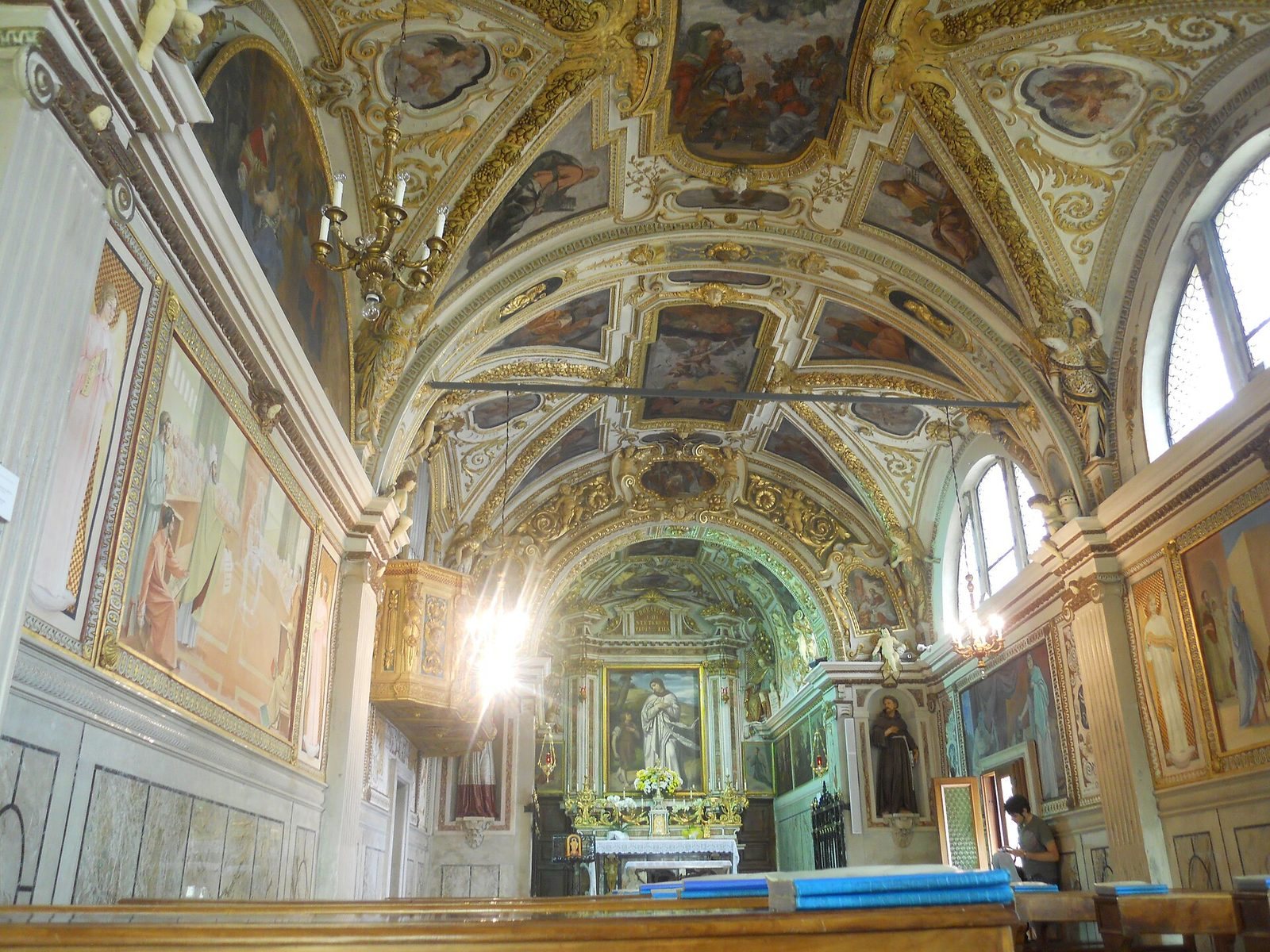
The church has a single nave, its principal interior space, richly ornamented with gilded stucco. Stucco and frescoes cover the ceiling.
Main altar and painting
At the back of the apse, a richly decorated marble altar rests on the stone associated with the apparition. The altar contains Moretto’s painting, executed around 1534, which depicts the encounter with Viotti at the Virgin’s feet and a basket of blackberries. The image includes the Virgin’s veil and presents the event through ordinary, tangible details rather than overt supernatural effects.
Organ
Giovanni Bianchetti of Brescia built the pipe organ in 1908. It stands on a choir loft against the left wall of the nave’s final section. Its mixed-action mechanism connects the keyboard and pedals to the pipes. The instrument has seven stops, each controlling a set of pipes, a 58-note keyboard, and a 17-note pedalboard.