Santa Maria Assunta: Parish Church of Botticino Sera
Site at a Glance
- Popularity
- Low
- Country
- Italy
- Primary era
- Early Modern
- Eras represented
- Medieval, Early Modern, Modern
- Civilizations
- Austrian Empire, Habsburg, Italian, Venetian
- Site type
- Religious
- Remains
- Church
On this page16 sections
History
Santa Maria Assunta is the Roman Catholic parish church of Botticino Sera, a hamlet of Botticino in Italy. It is dedicated to Mary under the Assumption, the Catholic belief that she was taken into heaven at the end of her earthly life, and belongs to the Rezzato pastoral zone, an administrative grouping of parishes in the Diocese of Brescia.
Foundation and later development
Devotion to Saint Nicholas of Tolentino, a medieval Augustinian friar, arose at the church after the plague of 1630. Construction of the present church began in 1699 at the initiative of parish priest Pietro Morari. Its design is attributed with considerable probability to a member of the Spazzi family, possibly Bartolomeo.
Marble altars and altarpieces were added over the seventeenth, eighteenth, nineteenth, and twentieth centuries. Decoration of the altar area and vaulted ceiling was not completed until the early twentieth century. Gaetano Cresseri, an Italian painter who lived from 1870 to 1933, began a decorative campaign that ended with his sudden death in 1933; Giovanni Bevilacqua, also an Italian painter, continued the work. In May 2009, the church received the honorary title of minor basilica and was designated a diocesan sanctuary, a church set apart by its diocese as a special place of worship, dedicated to Saint Arcangelo Tadini, an Italian priest recognized as a saint in the Catholic Church.
Remains
Plan and exterior
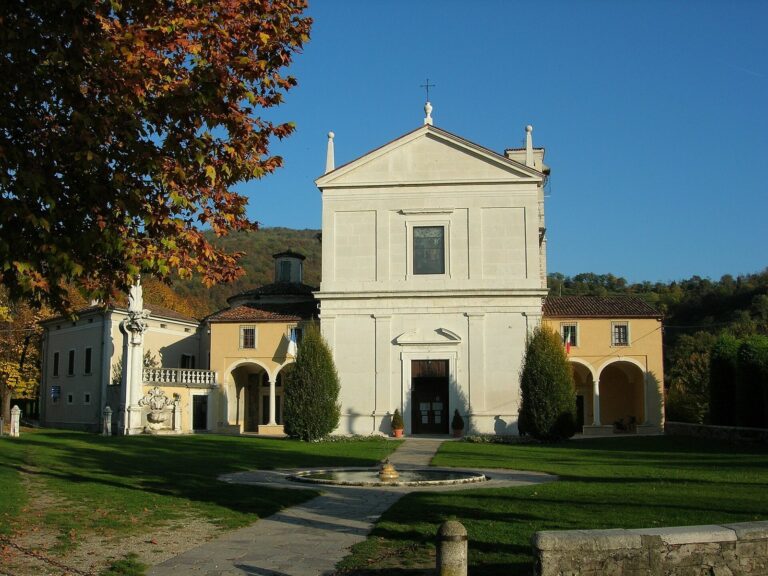
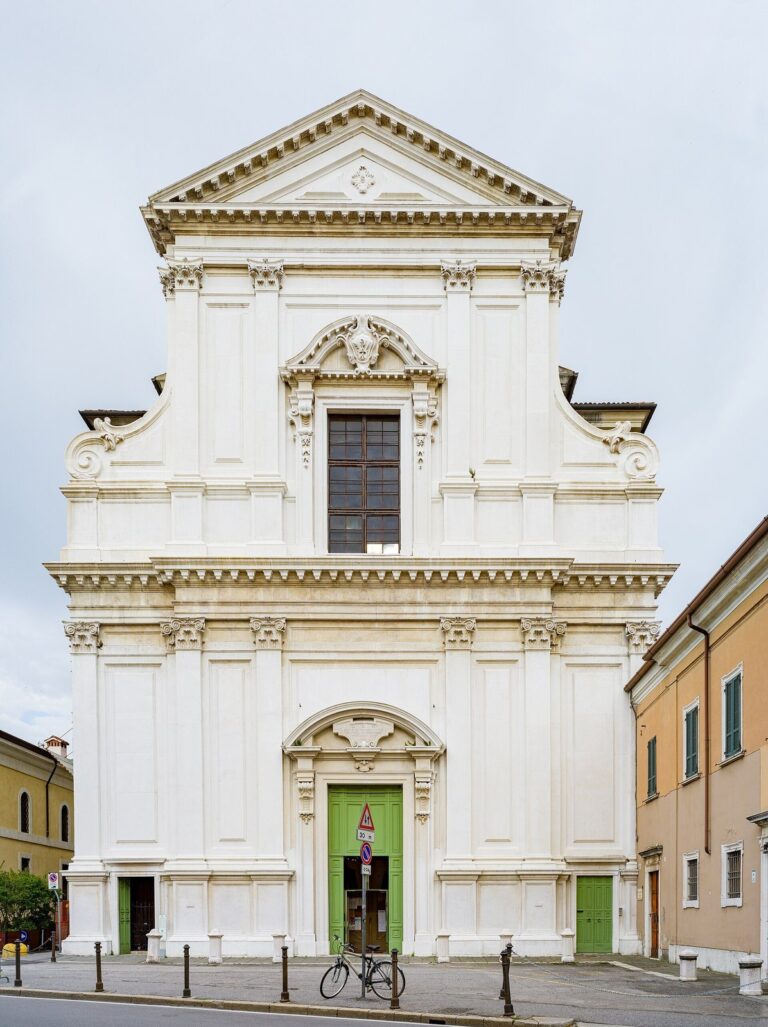
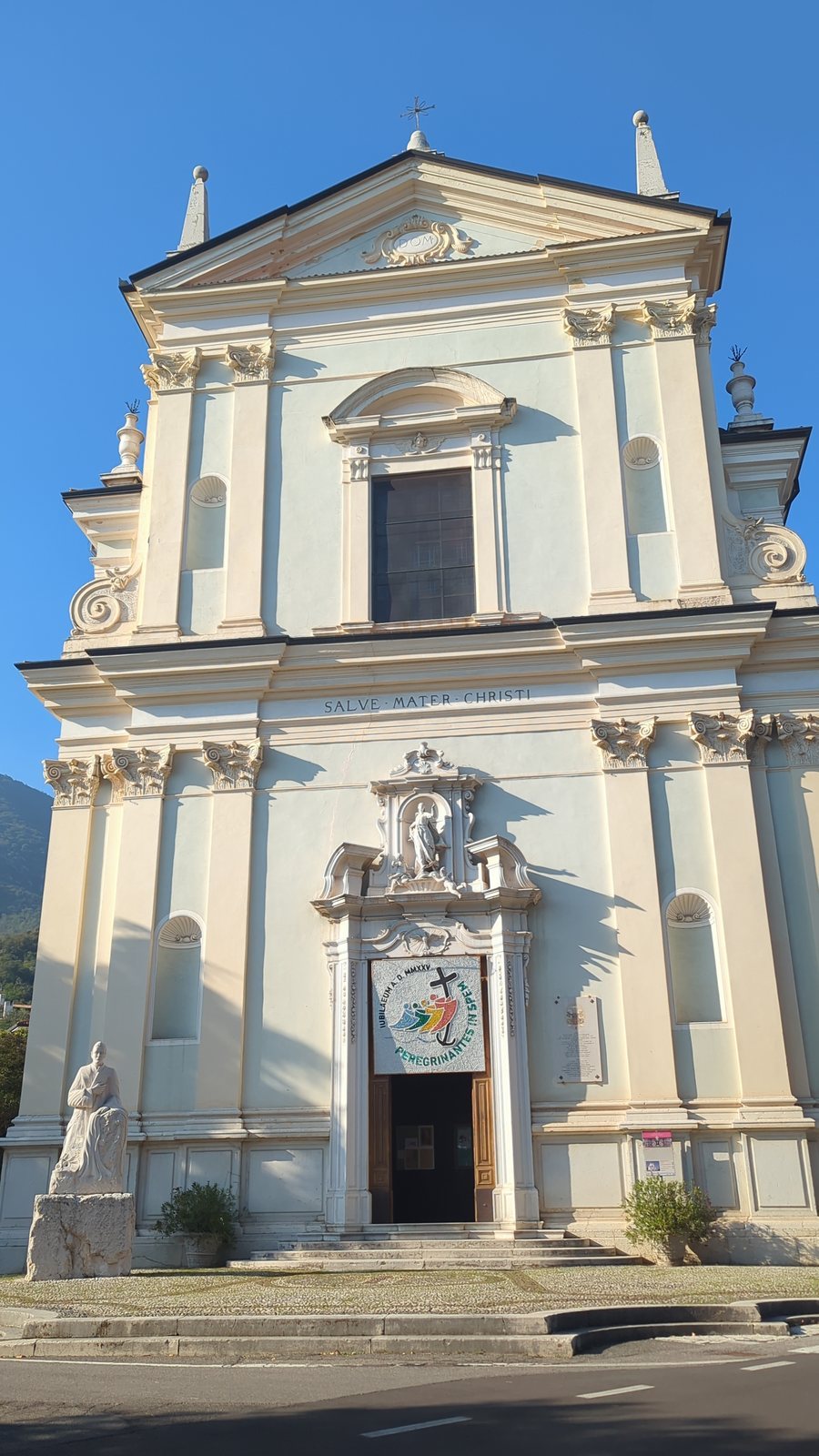
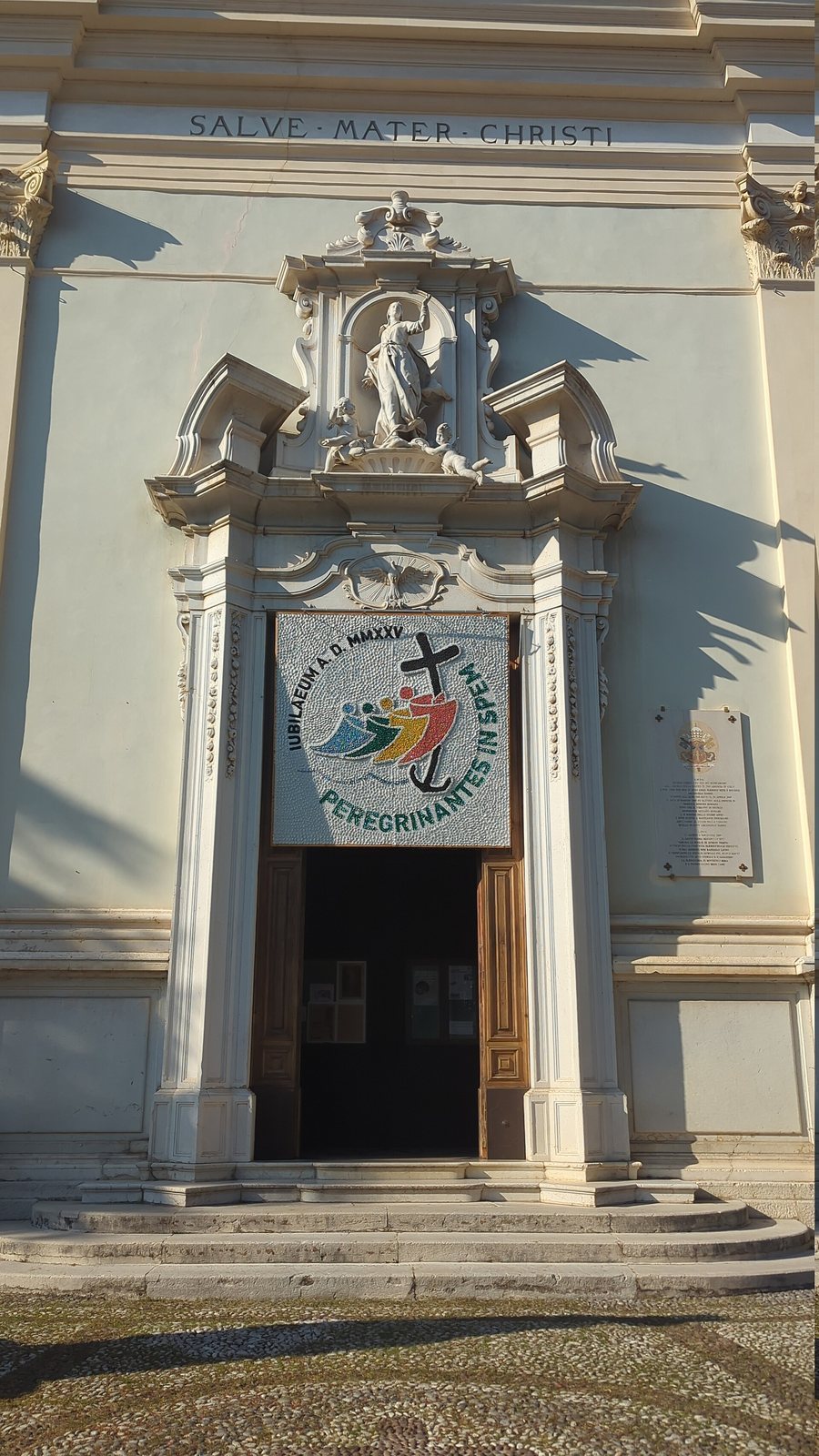
The church has a lengthwise plan and a single nave, the main hall for worship. It stands in the center of Botticino Sera, a short distance from the older parish church. A broad cornice divides the façade into two sections. Above the entrance, an elaborate marble frame surrounds a statue of the Virgin Mary at the Assumption, attributed to Antonio Ferretti, an eighteenth-century sculptor active in the Brescia area. The bell tower dates to the fifteenth century and was raised to its present height in 1822.
Altars and devotional sculpture
The church contains seven marble altars. Their inlays and sculptural decoration, together with the railing around the apse, are regarded as perhaps the finest ensemble of eighteenth-century art from Brescia. The work is attributed to the artistic circle of Antonio Calegari and Pietro Possenti.
Saint Anthony altar
The first side altar, on the east wall, is dedicated to Saint Anthony. Its eighteenth-century altarpiece, possibly by Angelo Paglia or Cifrondi, depicts the Madonna with Saints Anthony the Abbot, Anthony of Padua, Bernardino, and Francis of Paola.
Saint Nicholas of Tolentino altar
The sculptural work at the second altar, dedicated to Saint Nicholas of Tolentino, may be by Antonio Calegari. Its seventeenth-century altarpiece, probably painted by Bernardino Gandino, shows the saint with Saints John the Baptist and Francis of Assisi, alongside souls in purgatory.
Deposition altar
The third altar is dedicated to the Most Holy Sacrament and is now known as the Deposition altar. It holds The Three Theological Virtues, painted around 1720 by Giuseppe Tortelli of Chiari, who lived from 1662 to 1738.
Madonna of the Rosary altar
On the opposite side of the church, the altar of the Madonna of the Rosary has a niche surrounded by eighteenth-century panels depicting the Mysteries of the Rosary. Its marble decoration, including statues of Saint Dominic and Saint Rose, is almost certainly by Calegari or his school.
Saint Charles Borromeo altar
The altarpiece at the altar of Saint Charles Borromeo was painted in 1618 by Grazio Cossali of Orzinuovi. It was transferred from the altar of Saint Carlo in the older parish church.
Saint Joseph Calasanz altar
The last side altar is dedicated to Saint Joseph Calasanz. Its nineteenth-century canvas may be by Gabriele Rottini. An eighteenth-century marble tabernacle is set between two tiers of railings and statues of Saints Faustinus and Jovita, who are venerated as early Christian martyrs associated with Brescia.
Paintings, chapel, and furnishings
Main altar
The main altar in the altar area was made by sculptors in the early eighteenth century. Its patterns are formed by fitting together pieces of colored marble, a method considered especially desirable and costly at the time.
Nave and apse paintings
The Stations of the Cross paintings, by an unknown artist, date from the late eighteenth or early nineteenth century. Cresseri completed The Transfiguration and paintings of Saints John and Matthew placed at the corners of the nave. Bevilacqua painted The Ascension on the nave vault, the Assumption of the Virgin in the apse, and images of Saints Luke and Mark.
Baptismal chapel
A small chapel beyond the altar of Saint Joseph Calasanz contains a baptismal font and a sixteenth-century marble tabernacle brought from the older parish church.
Organ and sacristies
The present organ was made in 1896 by Cesare Bernasconi of Varese. It has two keyboards, 30 stops, which control groups of pipes, and about 1,500 pipes. The larger sacristy east of the apse has a built-in wall cabinet from the late eighteenth century. In the smaller sacristy to the west, an eighteenth-century ceiling painting depicts Saint Peter in Glory.