San Marziale: A Baroque Church in Venice
Site at a Glance
- Popularity
- Medium
- Country
- Italy
- Primary era
- Early Modern
- Eras represented
- Medieval, Early Modern, Modern
- Civilizations
- Austrian Empire, Habsburg, Venetian
- Site type
- Religious
- Remains
- Church
On this page10 sections
History
San Marziale is a Roman Catholic church in the Cannaregio district of Venice, Italy, dedicated to Saint Martial, an early Christian saint traditionally regarded as the first bishop of Limoges. Its foundation is traditionally placed in the ninth century, while the present Baroque church was built between 1693 and 1714. The church became a parish and remained part of the cathedral of San Pietro di Castello.
Foundation and medieval development
By 1133, the De Bocchi family had rebuilt the church as a three-aisled basilica with a three-part façade. It served as a parish church and was initially a collegiate church, meaning it was served by a chapter of clergy. That chapter comprised two priests, a deacon, and a subdeacon; later, administration passed to a single parish priest. The family’s wealth is reflected in Leonardo Boco’s contribution of 3,000 libra, a historical monetary unit, toward Venice’s war against Genoa in 1379.
Land reclamation in the surrounding area began in the twelfth century. From 1300 to 1360, the Venetian commune drained some canals and built embankments where boats could moor. In 1343, a canal was filled to create the broad Rio Terà della Maddalena, and the Fondamenta de la Misericordia, a waterside embankment, was laid out opposite the church. The Servite Order, a Catholic religious order, maintained a church in the area and built a bridge over the Canale di San Marzilian in 1353.
Worship and rebuilding
San Marziale retained a prominent place in Venice’s religious calendar in the sixteenth century. Processions for the feast of Misericordia, celebrated on the second Sunday after Easter, began at the church. Its prominence may have been linked to silk weavers from Lucca who lived nearby and maintained a chapel.
Pietro Barbarigo commissioned the present church, built between 1693 and 1714. The Scuola del Santissimo Sacramento, a confraternity devoted to the Blessed Sacrament, commissioned an altar for the chancel between 1691 and 1704. Patriarch Pietro Barbarigo consecrated the church on 28 September 1721.
Parish changes
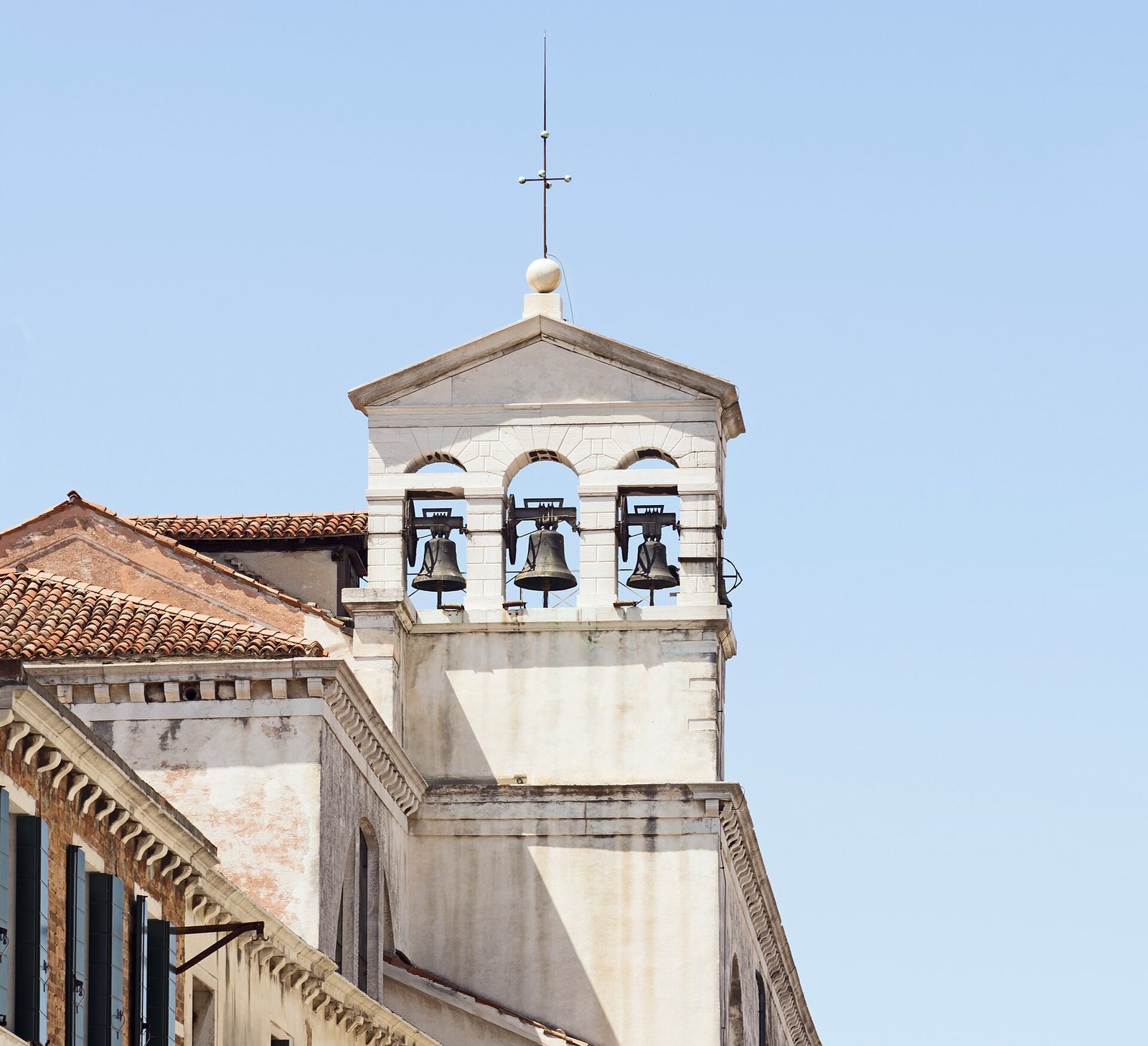
The monastery was suppressed in 1808, but the church survived the Napoleonic suppressions. In 1819, the parish expanded to include the territories of San Marcuola and Santa Sofia. During parish priest Domenico Bertucci’s tenure, from 1826 to 1843, a bell tower was built. In 1876, Patriarch Giuseppe Luigi Trevisanato authorized the parish’s transfer to Madonna dell’Orto, and San Marziale became a rector church, administered by a rector rather than serving as a parish seat. It is associated with the parish of Madonna dell’Orto and belongs to the Patriarchate of Venice.
Remains
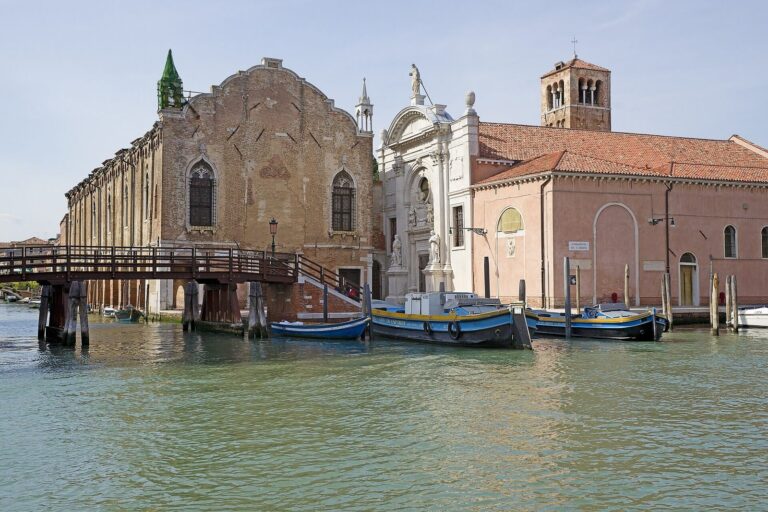
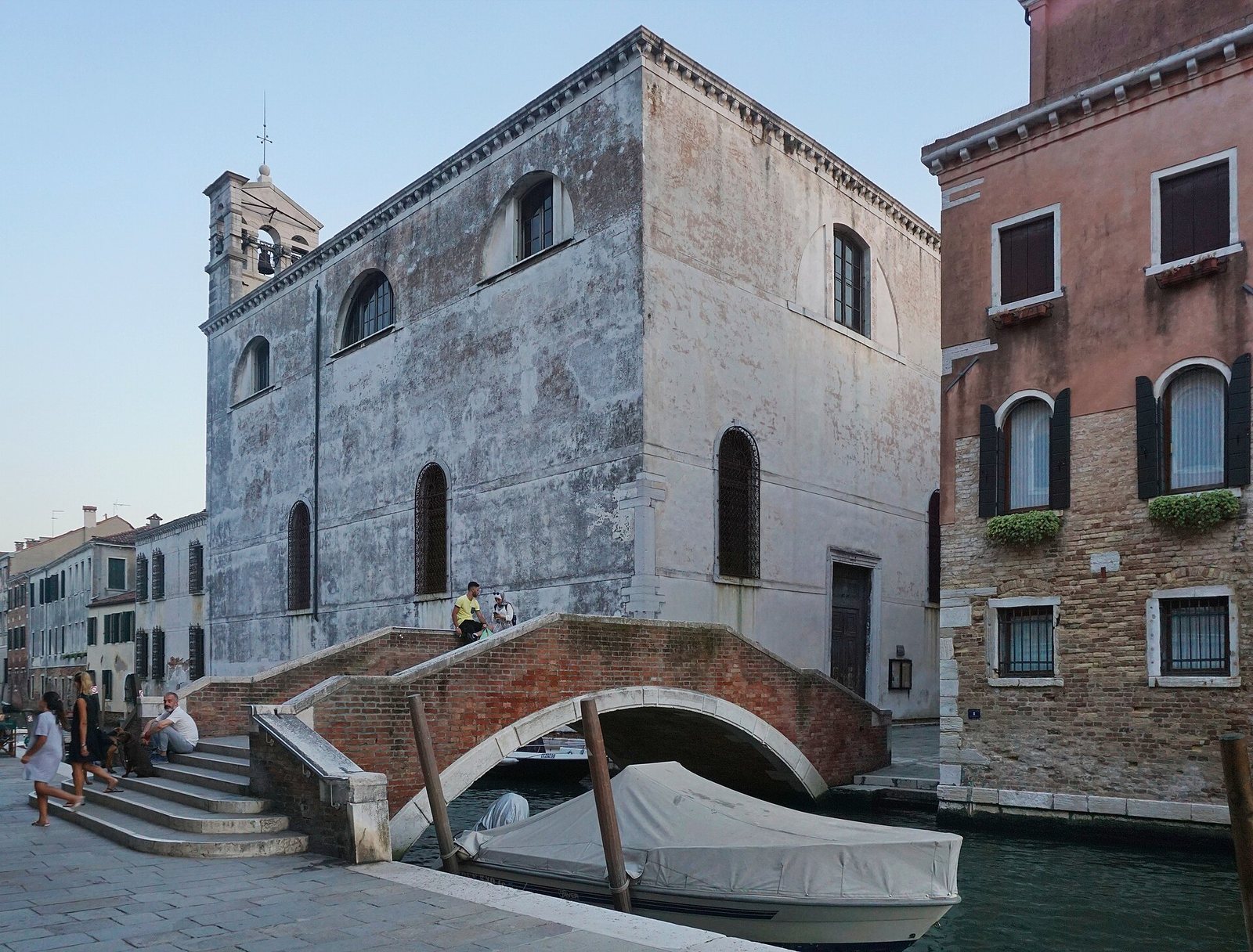
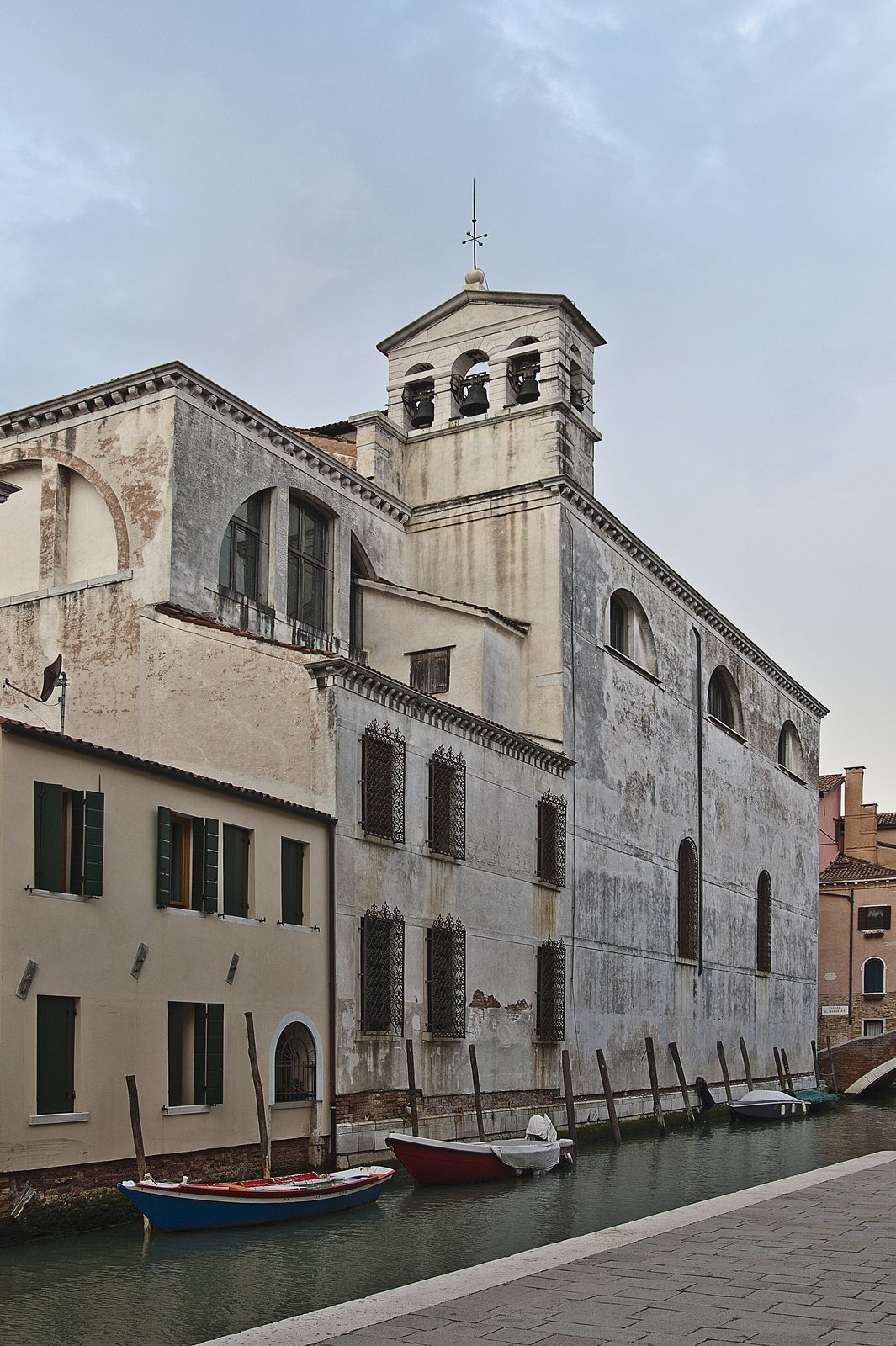
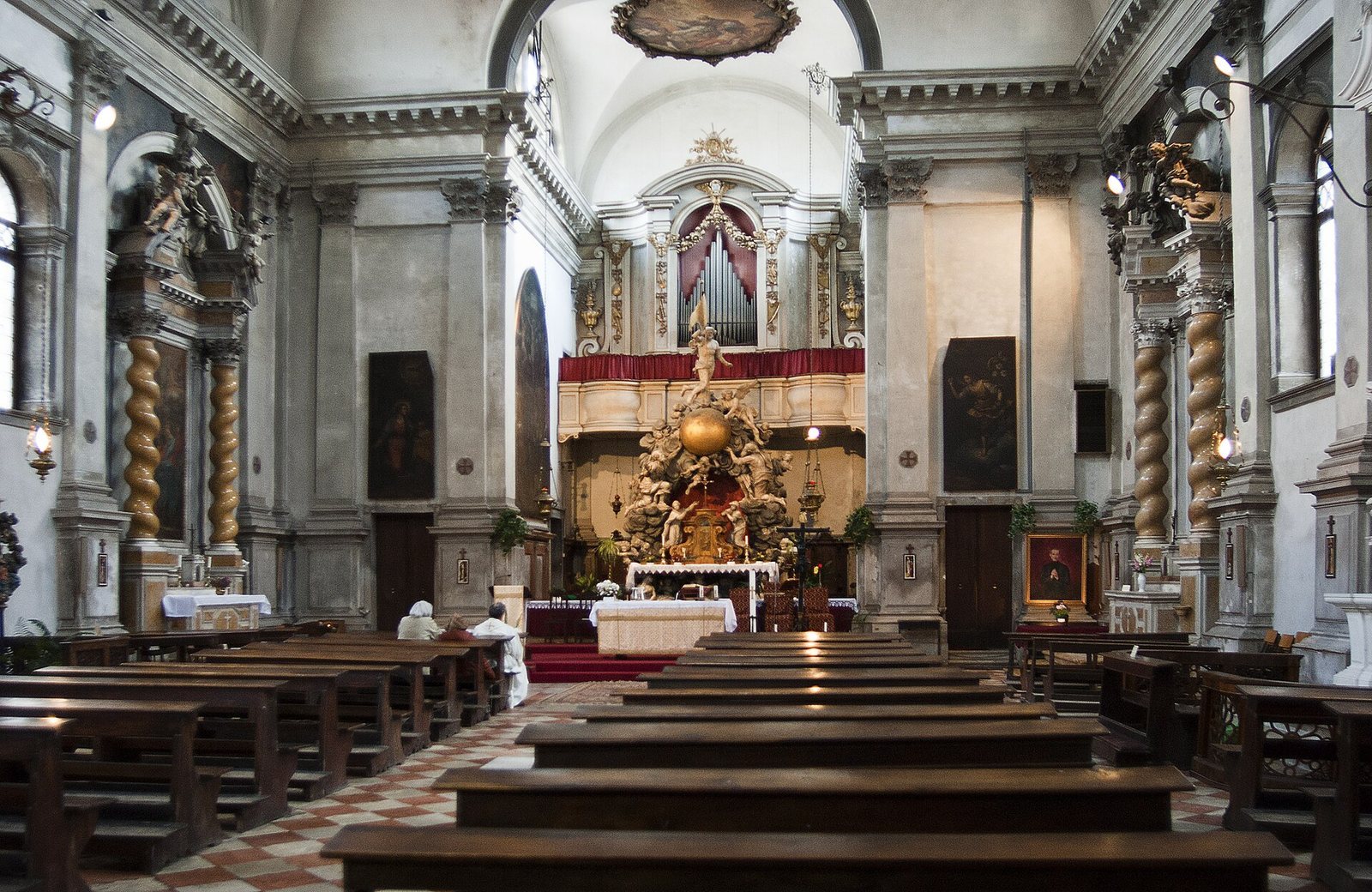
The present church has a single nave, the central space of a church, and a richly decorated Baroque interior. Its exterior is more restrained, with plastered, undecorated walls. The earlier basilica had three aisles and a three-part façade.
Exterior and bridge
The church’s simple bell tower rises about five metres above the roof. Nearby, Ponte San Marziale crosses the Canale di San Marzilian, continuing the connection between the church area and the canal recorded from 1353.
Interior decoration
Ceiling paintings
Sebastiano Ricci’s four ceiling paintings, made between 1700 and 1705, are set in gilded frames. Their subjects include the arrival of the Madonna’s image in Venice, the exaltation of Saint Martial to heavenly glory, the shepherd Rustico watching angels sculpt the Madonna’s statue, and God the Father with Angels in Glory. The last painting occupies the central part of the ceiling.
High altar
At the rear of the presbytery, the area around the altar, the high altar is dominated by a large marble group attributed to Tyrolean sculptor Tommaso Rues. It depicts Christ Ruler of the World with Saints and Angels, and the altar is dedicated to the Blessed Virgin of the Graces. The associated image is a copy of one traditionally said to have been sculpted in Rimini in 1286 by the shepherd Rustico and miraculously brought to Venice.
Other paintings
The church contains Saint Martial in Glory with Saints Peter and Paul, dated 1548–49 and attributed to Jacopo Tintoretto, as well as Antonio Vassilacchi’s Resurrection and works by Domenico Cresti. Four paintings by Giulia Lama include depictions of Saints Matthew and Mark. Titian’s Tobias and the Angel, made around 1530, was formerly kept in the sacristy and is now at Madonna dell’Orto.