Sanctuary of Ammon Zeus: An Ancient Greek Religious Complex in Kallithea
Site at a Glance
- Popularity
- Low
- Country
- Greece
- Primary era
- Classical
- Eras represented
- Iron Age, Classical, Medieval
- Civilizations
- Ancient Greek, Byzantine, Kingdom of Macedon, Roman
- Site type
- Religious
- Remains
- Sanctuary
On this page11 sections
History
The Sanctuary of Ammon Zeus is an ancient Greek religious complex at Kallithea, on the Kassandra peninsula in Greece. Finds from the Early Bronze Age mark the earliest activity at the site, while its sanctuary history began with a shrine to Dionysus established in the second half of the seventh century BCE. The complex was associated with nearby Afitis, an ancient Greek city.
The cults of Dionysus and Zeus Ammon
The sanctuary’s later cult of Zeus Ammon linked the Greek Zeus with the Egyptian god Ammon. The cult was connected to Ammon’s oracle at Siwa in Egypt, where people sought divine guidance. Cyreneans, inhabitants of an ancient Greek city in North Africa, brought the cult to Greece after encountering it in Egypt; it was also known in Sparta. The Greek poet Pindar helped popularize the cult by composing an ode to Zeus Ammon.
The cult was established at Afitis in the fourth century BCE, when an altar was built there. During the siege of the city in 403 BCE, the Spartan commander Lysander said that Ammon had appeared to him in a dream and urged him to end the siege. Afterward, Lysander advised the townspeople to build a sanctuary. Afitis also issued coins bearing the image of Zeus Ammon.
A temple to Zeus Ammon was constructed in the late Classical or Hellenistic period, the era after Alexander’s conquests when Greek culture spread among successor kingdoms. Its construction probably fell during the reign of Philip II, Alexander the Great, or Cassander, when the region belonged to the Kingdom of Macedon. Alexander considered himself a son of Zeus Ammon and visited the oracle at Siwa. The cult of Asclepius, the Greek god of healing, was present at the site by about 360 BCE.
Roman and Christian phases
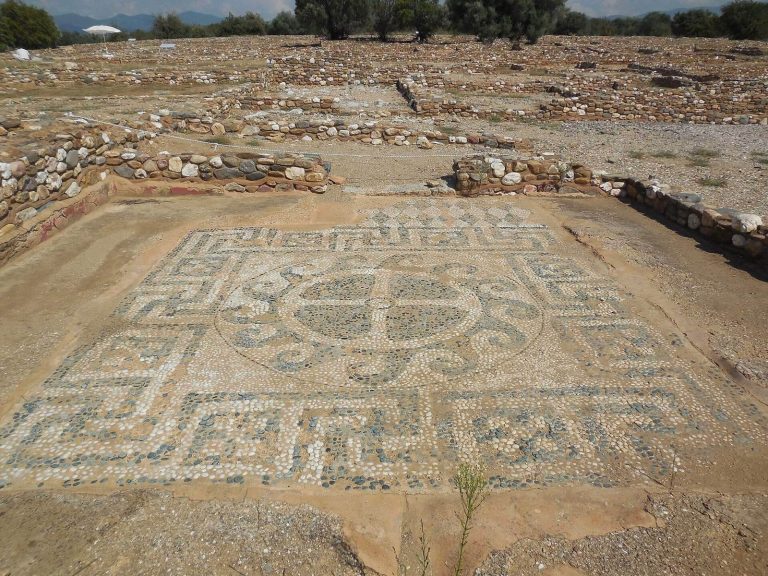
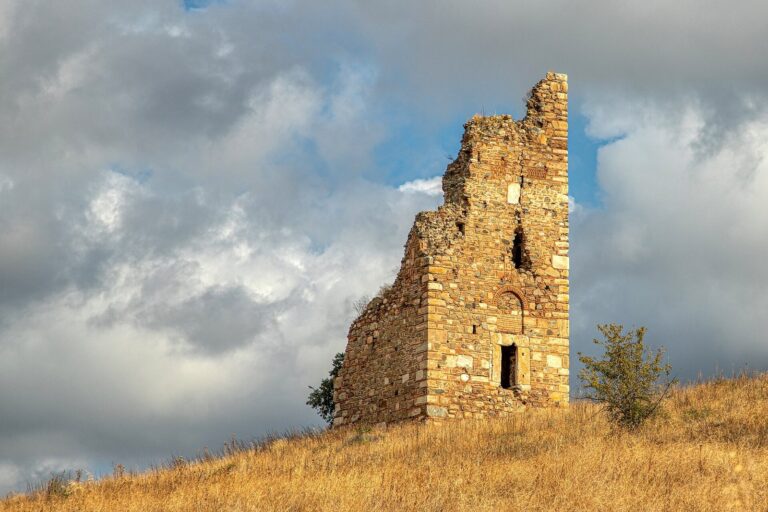
A small sanctuary was built during the Roman period. The sanctuaries had been abandoned by the third century CE at the latest. A basilica was built at the site during the early Christian period, followed in the eleventh century by a Byzantine monastery dedicated to Saint Panteleimon. Byzantine refers to the medieval Eastern Roman Empire.
Rediscovery and excavation
The sanctuary came to light during hotel construction in 1968 or 1969. Archaeological excavations followed in 1969–1970.
Remains
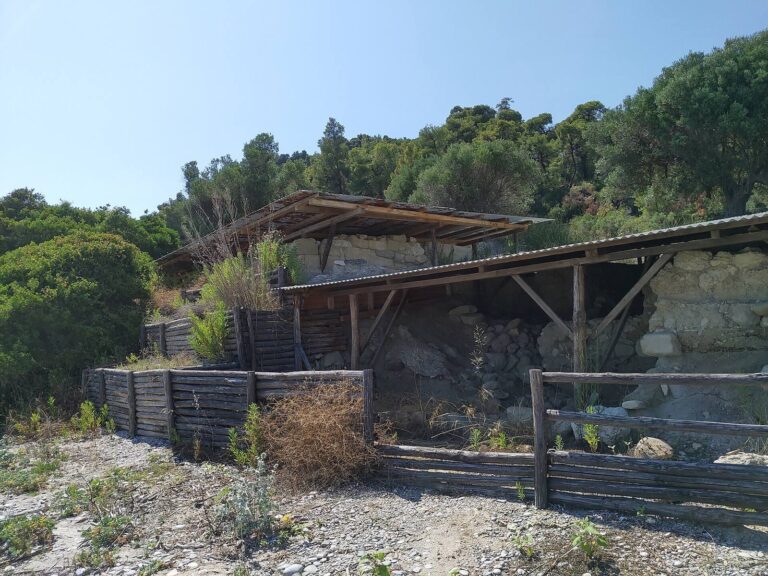
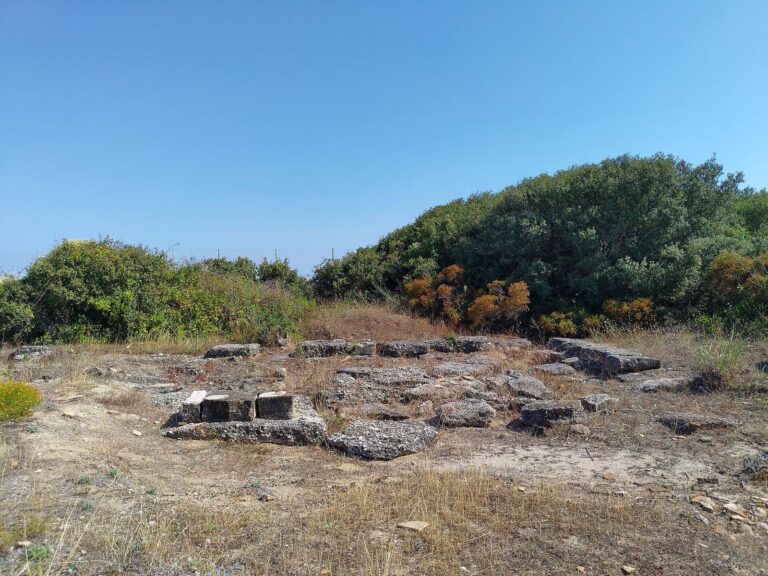
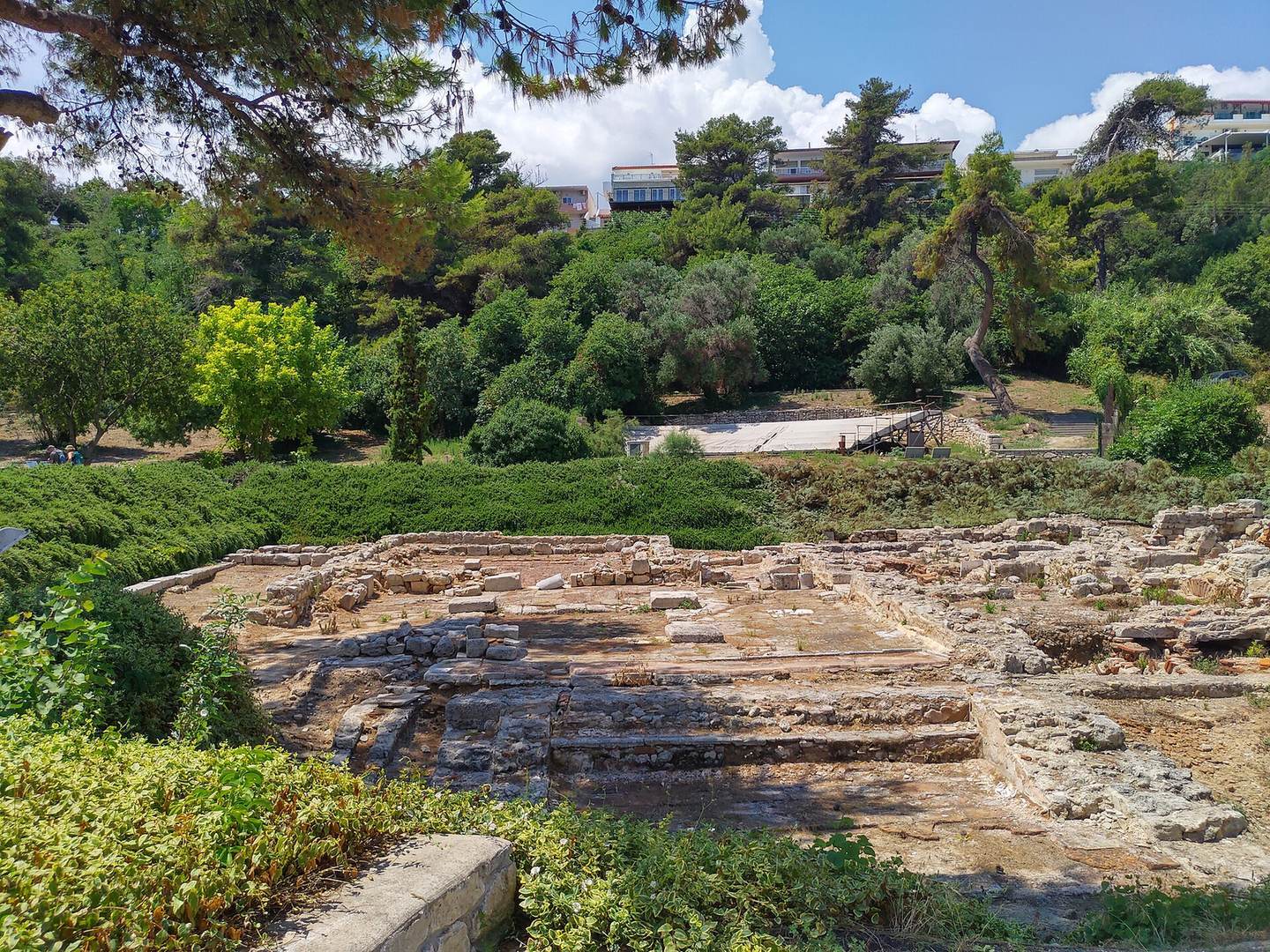
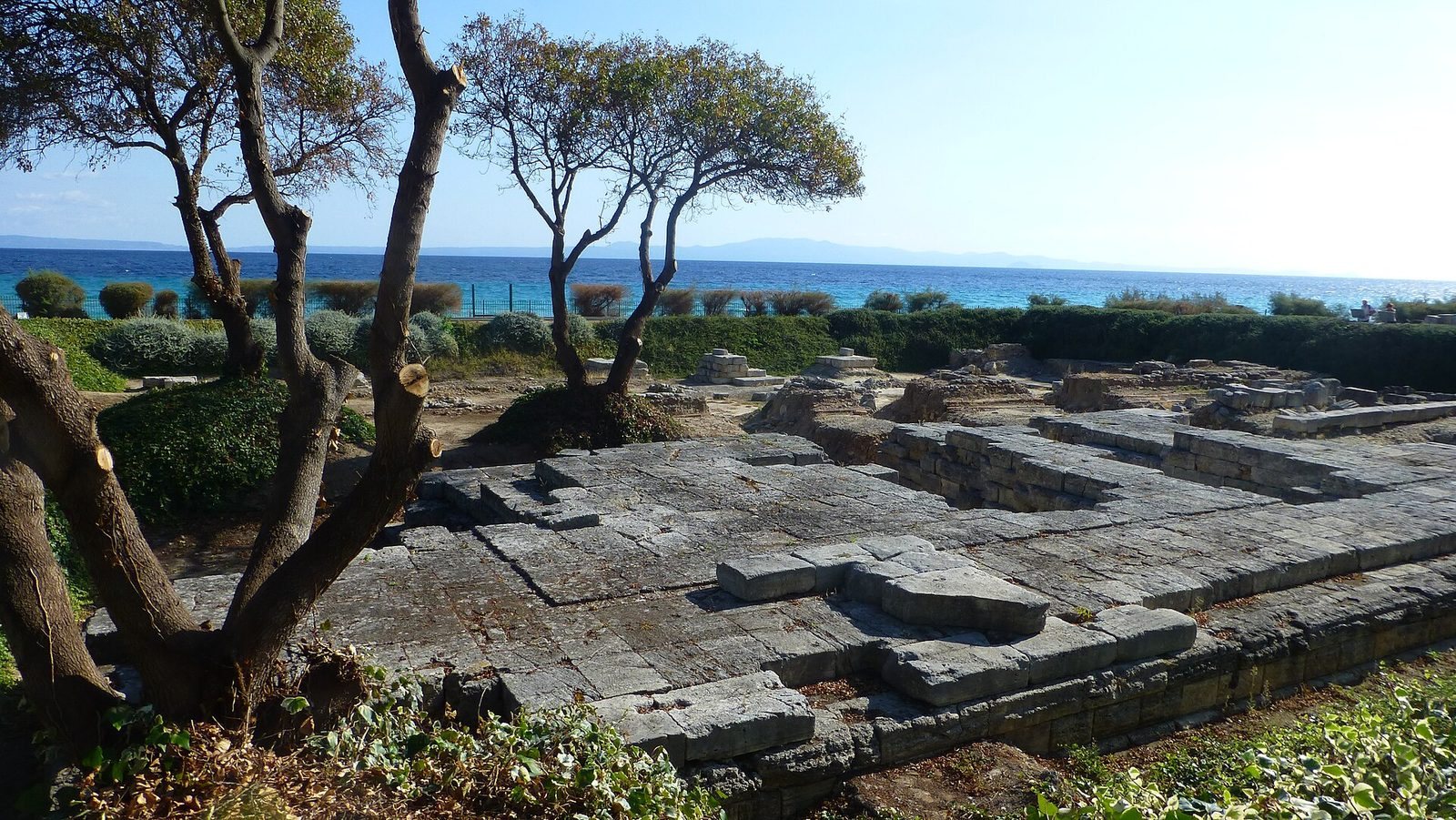
The ancient sanctuary occupied the coastal plain and comprised the Temple of Zeus Ammon, a cult area for Dionysus and the nymphs, and an Asclepius sanctuary with baths. Its ancient buildings were made of limestone and followed the Doric style.
Temple and cult sites
Temple of Zeus Ammon
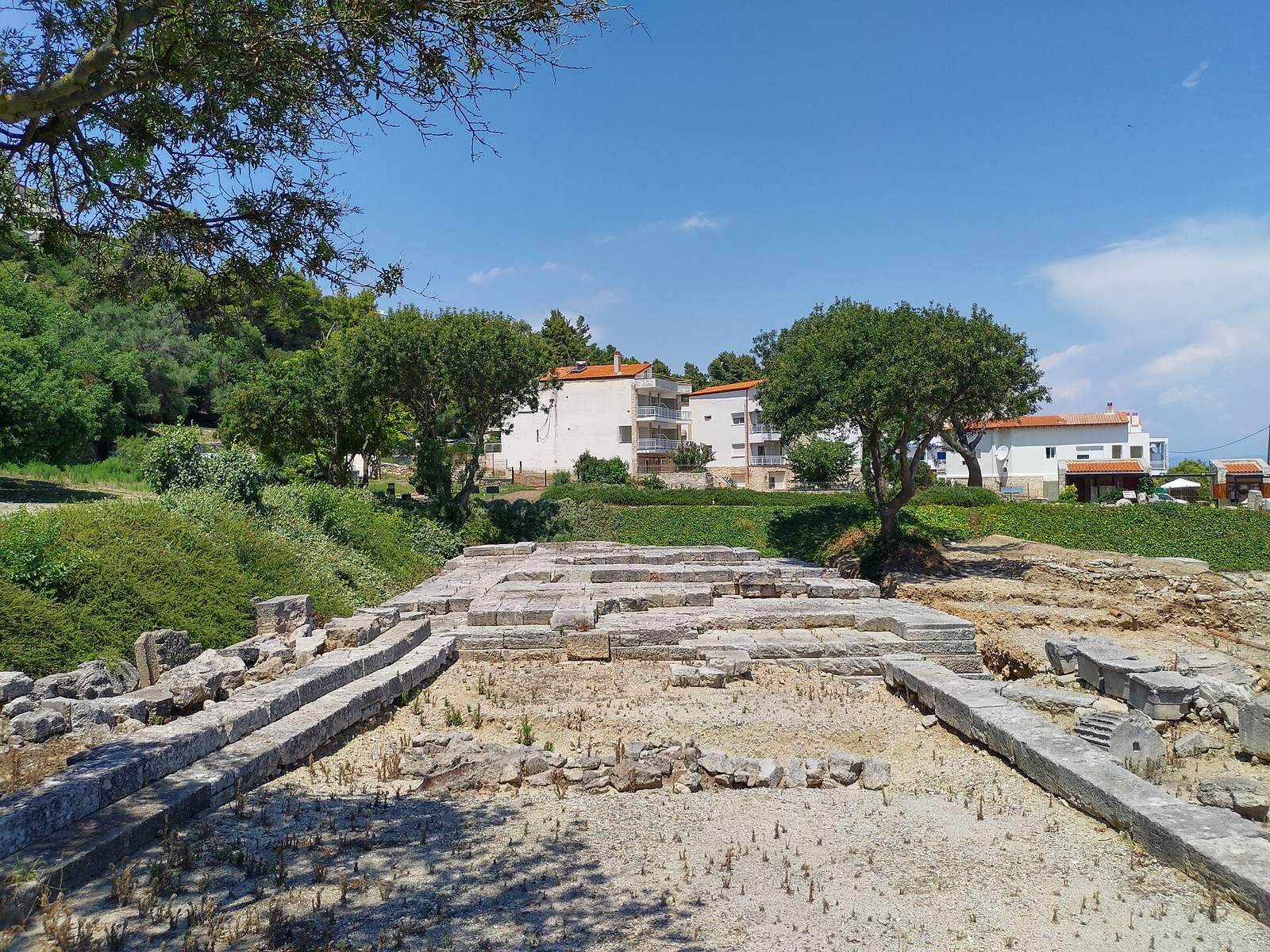
The temple stood north of the earlier Dionysus cult site. It was peripteral, meaning that a row of columns surrounded the building, and had a roof covered with terracotta tiles. An altar stood beside the temple. An inscription naming Zeus Ammon helped identify the building.
Dionysus and the nymphs
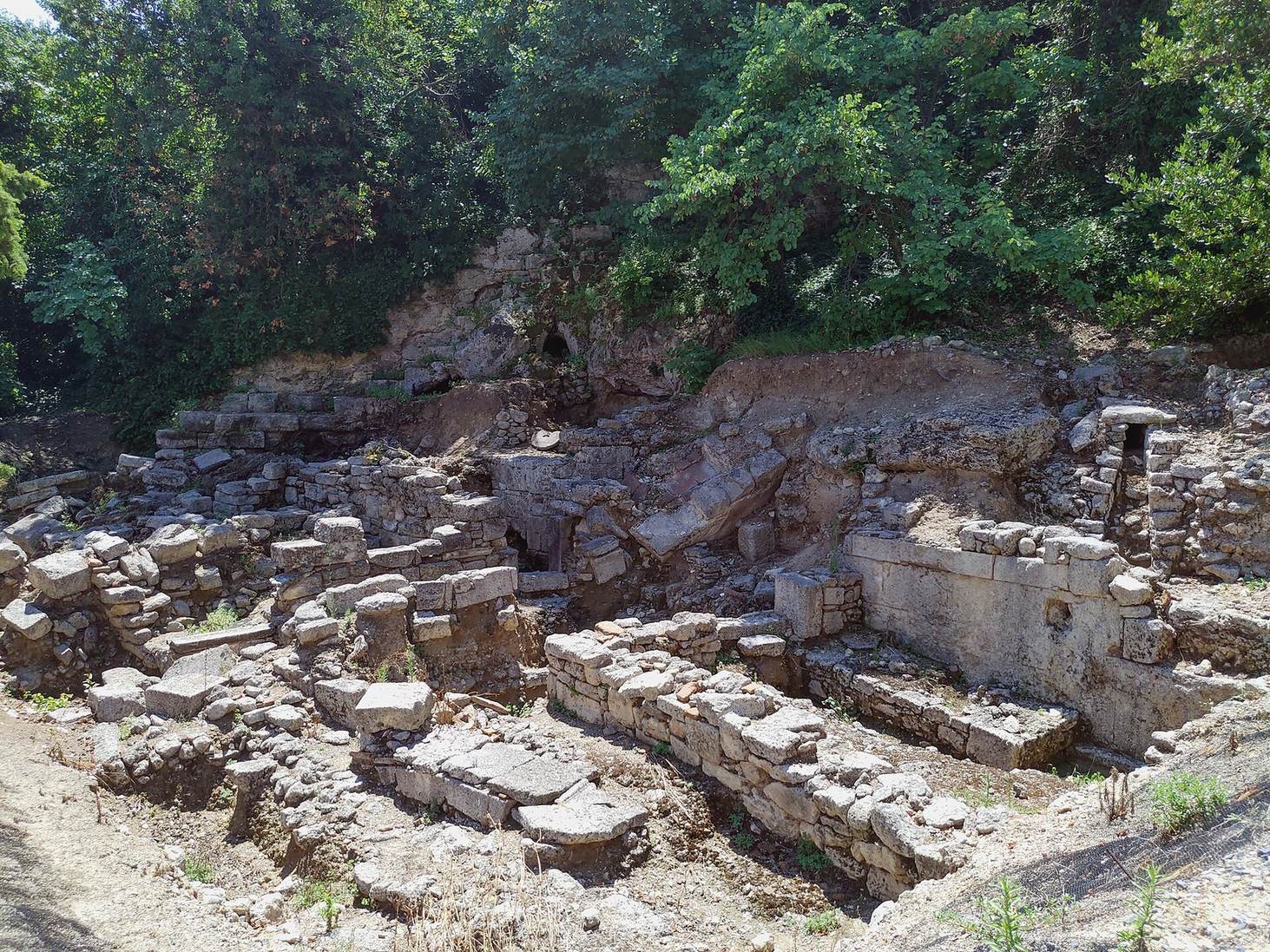
The sanctuary of Dionysus and the nymphs, female nature spirits, included caves and springs. This cult area lay south of the Temple of Zeus Ammon.
Asclepius sanctuary and baths
The sanctuary and bath building dedicated to Asclepius lay north of the Temple of Zeus Ammon.
Roman ceremonial sanctuary
The Roman-period sanctuary consisted of two terraced embankments that formed a viewing platform for ceremonies. A small altar stood between them.
Christian buildings
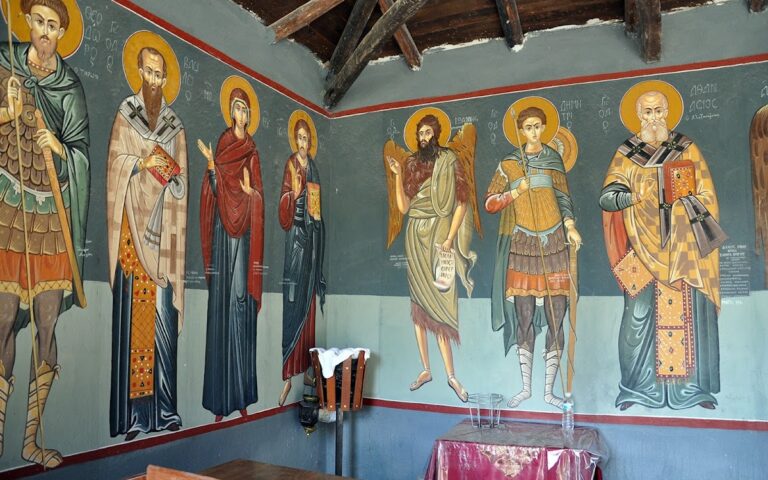
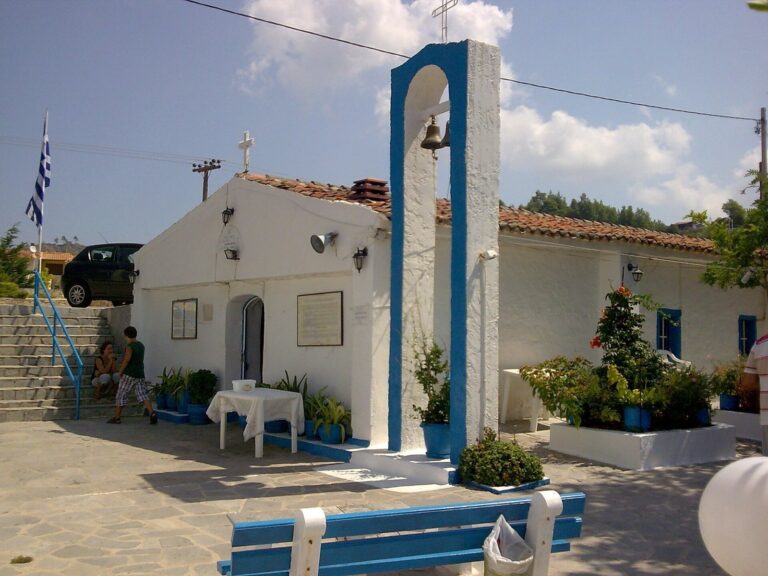
Later buildings at the site included a basilica, a church with a long central hall often flanked by aisles, and a monastery dedicated to Saint Panteleimon.