Mende: An Ancient Greek Trading City on Pallene
Site at a Glance
- Popularity
- Medium
- Country
- Greece
- Primary era
- Classical
- Eras represented
- Iron Age, Classical
- Civilizations
- Ancient Greek
- Site type
- City
On this page12 sections
History
Mende was an ancient Greek city on the western coast of Pallene, near modern Kalandra in Greece. Archaeological evidence indicates that people lived there by the 12th or 11th century BC, while the city flourished especially in the Archaic and Classical periods. Thucydides described it as a colony of Eretria, a Greek city on Euboea, meaning a settlement founded by people from another city. The date of that foundation is uncertain. Mende became an important northern Aegean trading city, particularly renowned for its wine.
Early settlement and maritime trade
Pottery, building forms, and evidence of worship point to strong Euboean influence at Mende. They do not, however, establish that one migration replaced an earlier population. Tradition regarded Mende as the oldest Greek city on the Chalkidikian peninsula. Its name has traditionally been linked to a kind of mint that grew in the area.
From the 6th century BC, Mende traded across the northern Aegean. Its maritime connections, timber, farm produce, and local silver, gold, and lead resources supported its prosperity. Estimates of its territory range from about 25 to 100 square kilometres. Wine was a major export: Mendean transport jars have been found at Greek centres and around the Mediterranean, including the Black Sea region, and the wine also reached Greek settlements in Italy. Mende established two colonies of its own, Neapolis on Pallene’s eastern coast and Eion somewhere in Thrace.
The sculptor Paeonius was born at Mende. Around 425–420 BC, he made a statue of Nike, the Greek personification of victory, for Olympia. The work connected the city with artistic activity beyond Pallene.
Persian Wars and alliance with Athens
In 480 BC, during the Persian Wars, the conflicts between Greek states and the Persian Empire, Mende was required to support the forces of Xerxes I, the Persian king invading Greece. In the 5th century BC, the city became an important Athenian ally and joined the Delian League, a maritime alliance led by Athens after the Persian Wars. Its annual payment ranged from six to fifteen Attic talents, a measure of monetary value based on silver weight.
Revolt during the Peloponnesian War
During the Peloponnesian War, the long conflict between Athens and Sparta and their allies, Mende revolted against Athenian rule in 423 BC. The Spartan general Brasidas encouraged the uprising, which was also led by Mende’s oligarchic faction. Before campaigning elsewhere with the Macedonian king Perdiccas, Brasidas arranged for women and children to be moved to Olynthus, though some may have remained. He left Polydamidas and allied troops to defend Mende and Scione. Their force included 500 heavily armed infantry and 300 more lightly armed troops from Chalkidiki.
Athenian forces arrived in 50 ships, with detachments associated with Nicias and Niceratus. They landed near a sanctuary of Poseidon and attacked along separate routes, but defenders, aided by troops from Scione, drove back both groups. The Athenians withdrew to their ships, camped south of Mende, damaged farmland, and occupied the suburb. Mende’s inhabitants stayed inside the city, while the Scionean garrison slipped away during the night. The Athenians then blocked the city from several directions.
When Polydamidas proposed a sortie, the Mendeans refused to take part. A confrontation between him and a local democratic leader was followed by an attack on the Spartan garrison and its supporters. Polydamidas and his men took shelter in the acropolis, the high part of the city, and the Athenians captured Mende amid the disorder. Looting followed. Although the Athenians initially condemned the Mendeans to death, they treated the population leniently on condition that the revolt’s leaders be tried, and allowed the existing government to remain. They built a wall to separate the acropolis from the rest of the city, but Polydamidas and his men broke through it at night and escaped to Scione. Mende thereafter remained loyal to Athens and regained its independence after the war.
Macedonian rule and decline
In the first half of the 4th century BC, Mende was among the regional cities that did not join the Chalkidian League, a political alliance centred on Olynthus. The city also sought to avoid Macedonian rule, but Philip II of Macedon took it around the middle of the century. Mende was not destroyed and continued to exist at least into the early Hellenistic period.
In 315 BC, Cassander founded Cassandreia on the site of former Potidaea and transferred inhabitants of Mende and other Chalkidikian cities there. Mende lost its independence, and its population and settlement declined. It came under Cassandreia’s authority and may eventually have ceased to function as an autonomous city.
Identification and excavation
William Martin Leake identified Mende near modern Kalandra in 1835. Later comparisons with ancient geographical descriptions, local place-names, and excavation finds supported the identification. From 1986 to 1994, Greece’s archaeological service for prehistoric and classical antiquities carried out systematic excavations under the direction of Julia Vokotopoulou. The work established occupation earlier than the conventional date for Greek colonial foundations. Finds from the excavations were transferred to museums in Polygyros and Thessaloniki.
Remains
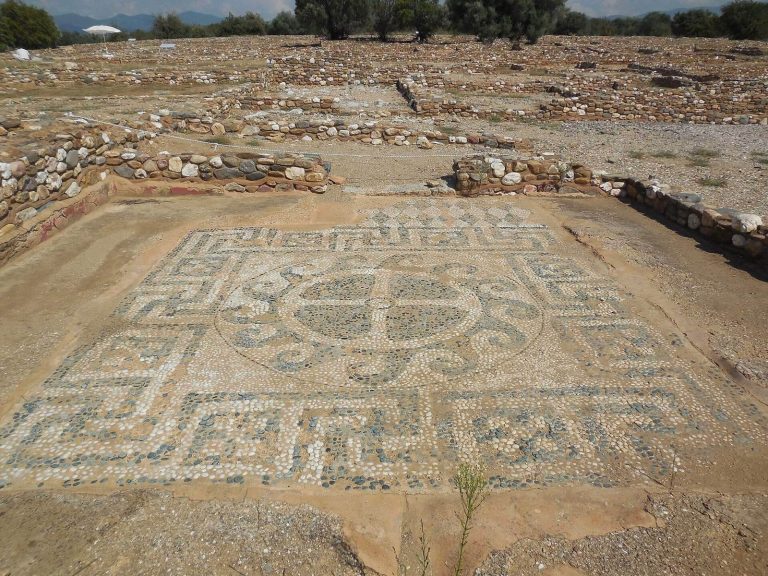
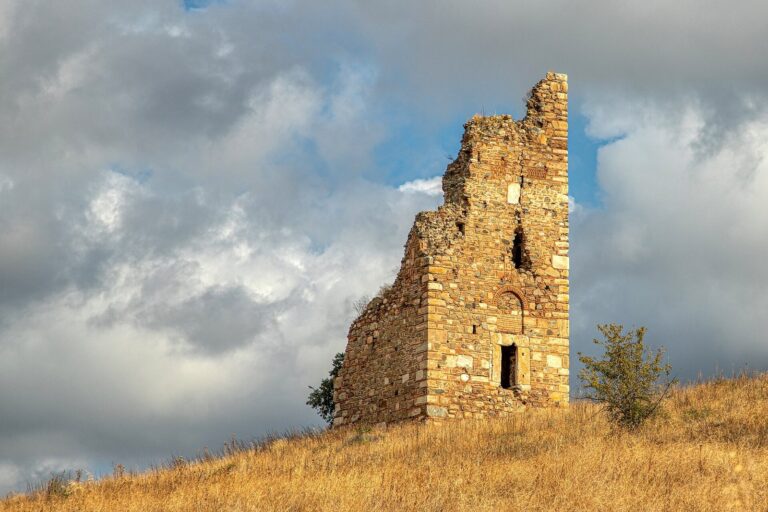
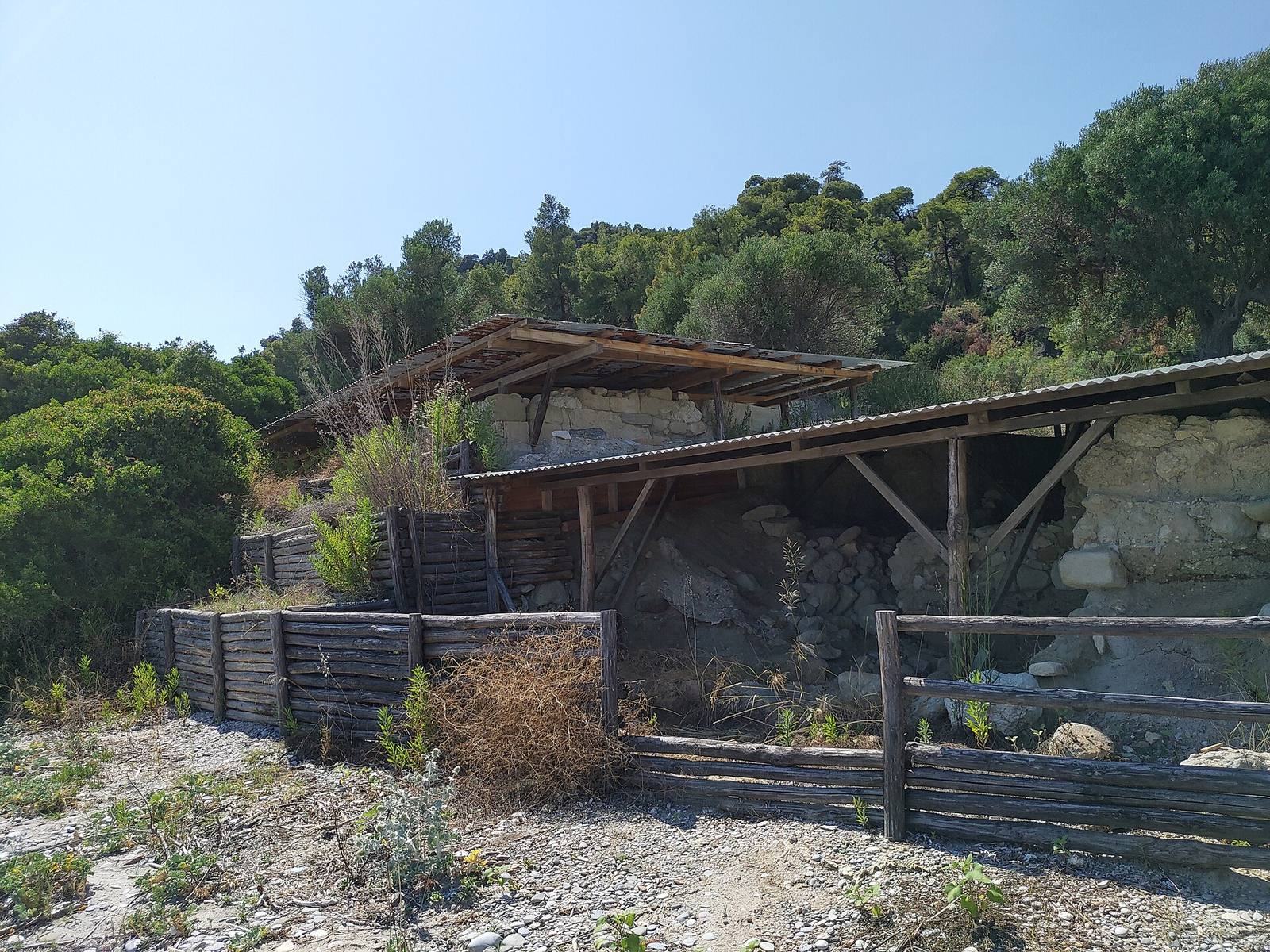
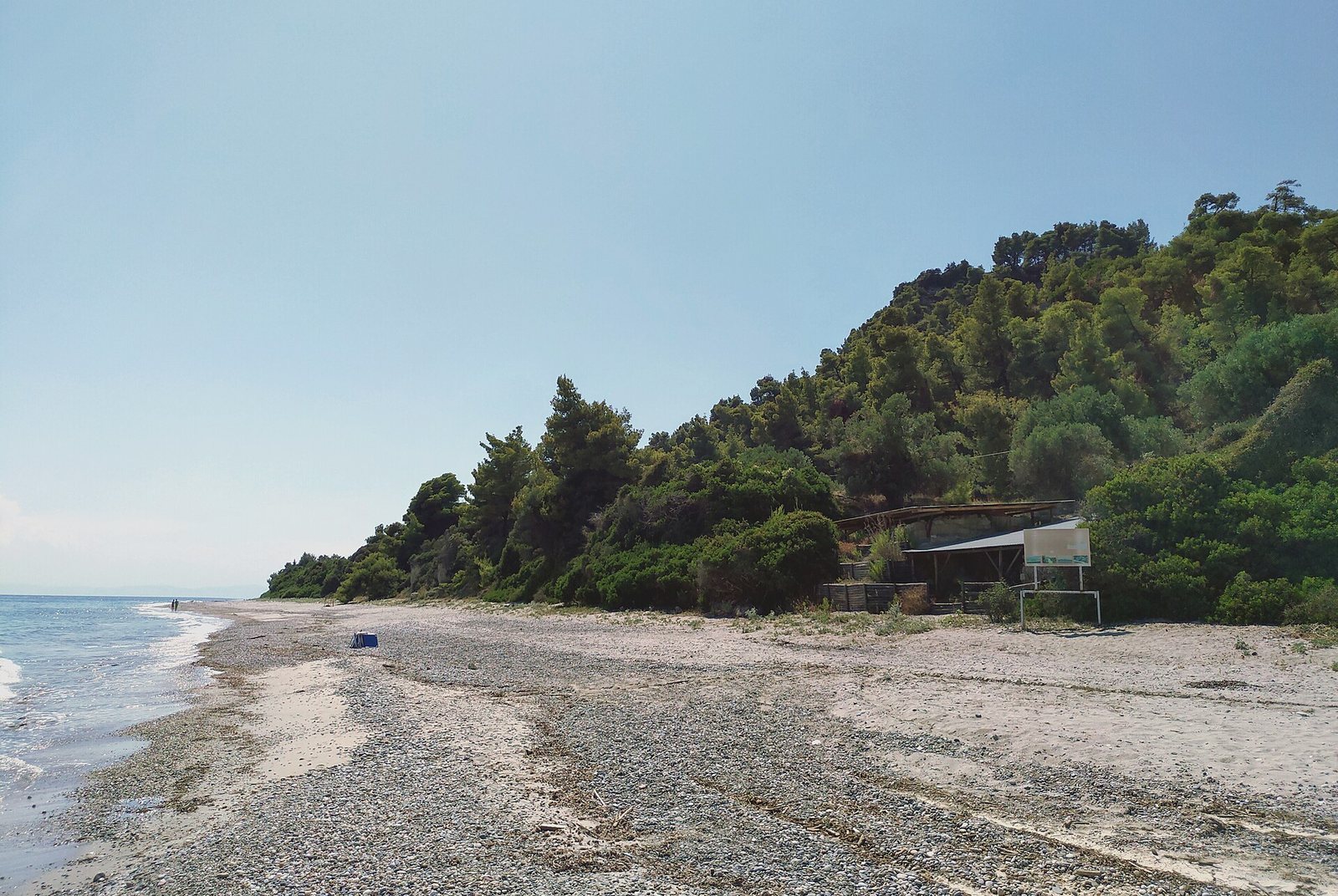
The archaeological area extends about 1,200 by 600 metres across a hill and its slopes toward the sea. It lies on western Pallene, facing Pieria across the Thermaic Gulf. The remains include the elevated city, a coastal settlement area, a cemetery to the south, and the sanctuary at Poseidi about four kilometres to the west.
Acropolis and lower city
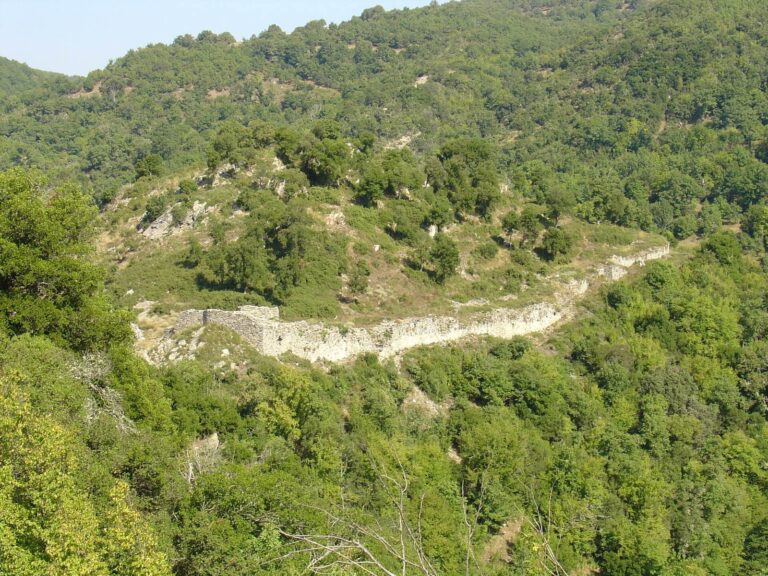
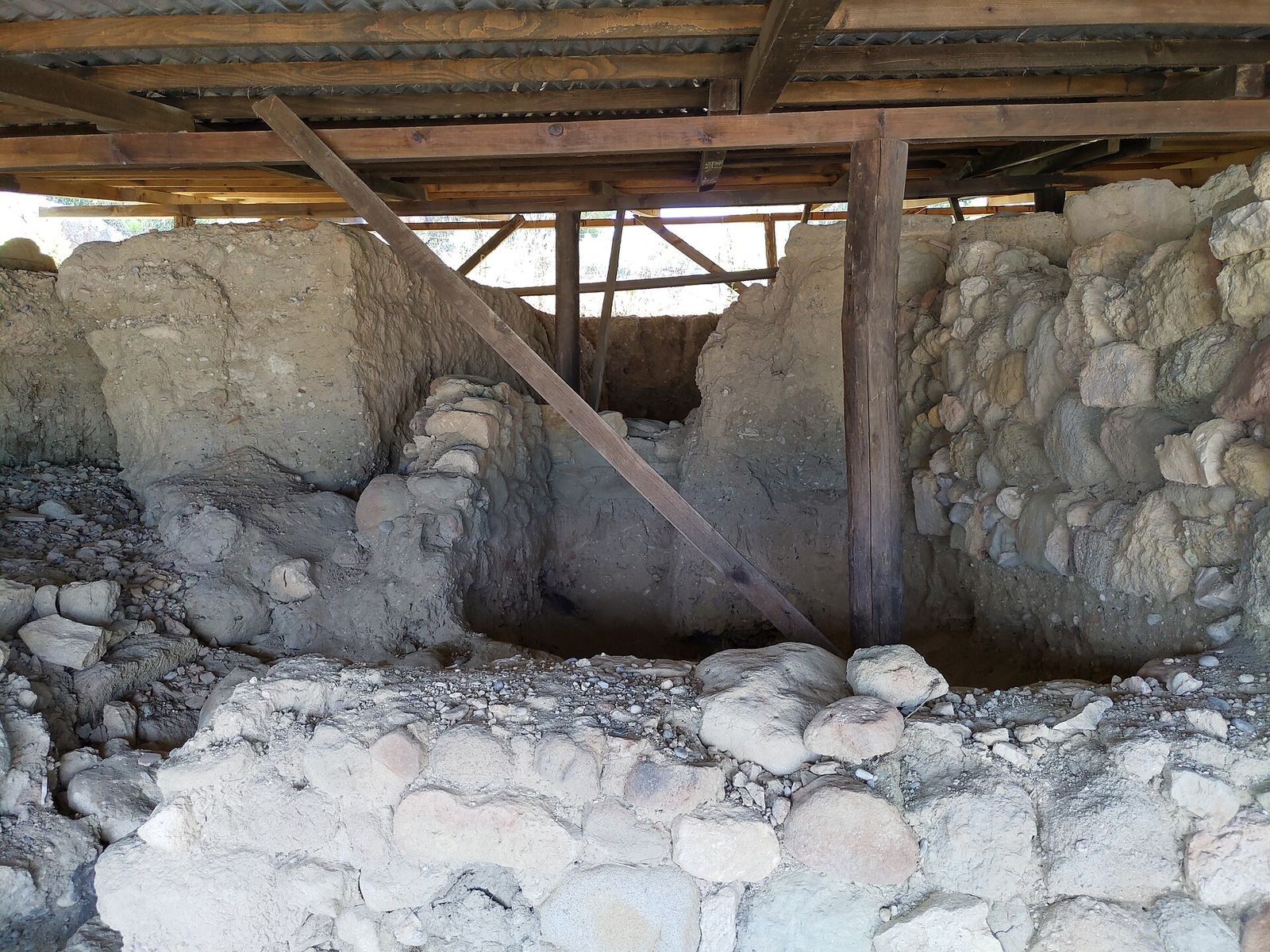
Vigla, the acropolis or high part of the settlement, occupies the hill’s highest point in its southern section. Storage pits found there vary in form: some have clay linings, while others have conical bottoms shaped to hold large storage jars. Pottery, loom weights, animal bones, and mud bricks were recovered from the pits. They indicate storage of agricultural goods and later reuse for discarded or deposited material. Farther down, excavations exposed house foundations, while settlement remains extend from the Geometric through the Hellenistic periods. Sections of the city’s enclosing walls, visible in the early 20th century, were later excavated.
Coastal settlement
The coastal suburb lay between the beach and the hill of the main city and was probably connected with the harbour and maritime trade. Its occupation layers span the 9th to 4th centuries BC. Excavations uncovered streets, floors, stone walls, buildings, and storage vessels, as well as part of a main avenue paved with pebbles. Some of the buildings may have served as shops or harbour structures.
Cemetery
South of the city, the coastal cemetery contained 241 excavated graves dated approximately to the 7th–5th centuries BC. Children were sometimes buried in ceramic vessels. Some grave vessels have geometric or floral decoration, or incised designs, and are associated with Chalkidikian pottery styles.
Sanctuary at Poseidi
The sanctuary at Poseidi includes an altar, pottery, inscriptions, and buildings with rounded ends. The altar was in use from the 12th century BC, and one rounded-end building dates to the 10th century BC. This structure belongs to Greece’s so-called Dark Ages, the period after the collapse of Mycenaean palace societies and before the Archaic period, and is among the few known buildings from that era used solely for worship. Other sanctuary ruins date to the 5th–4th centuries BC. Inscriptions on pottery identify the cult with Poseidon, the Greek god associated with the sea.
Coinage
Mende issued silver coins from the 6th century BC and bronze coins from the 4th century BC. Silver coins, especially those of the 5th and 4th centuries BC, include imagery associated with Dionysus, the god linked with wine and viticulture. One prominent design shows him reclining on a donkey and holding a deep, handled drinking cup, with a vine or clusters of grapes on the other side.