Suasa Archaeological Park: The Remains of a Roman Town
Site at a Glance
- Popularity
- Very Low
- Country
- Italy
- Primary era
- Classical
- Eras represented
- Classical
- Civilizations
- Roman
- Site type
- City
On this page13 sections
History
Suasa Archaeological Park preserves the remains of the Roman town of Suasa at Pian Volpello in Italy’s Cesano River valley. Rome founded Suasa in 232 BC as a colony, a settlement intended to extend Roman control, on territory taken from the Senones, a Celtic people who had settled in parts of Italy. Their defeat at the Battle of Sentinum in 295 BC was part of Rome’s wars in central Italy.
Roman foundation and civic development
Suasa first served as a prefecture, an administrative district governed by a Roman-appointed official. During the first century BC, it became a municipium, a community with Roman civic status and local administration, and gained greater autonomy. It was the only Roman colony established along the Cesano River.
In the first century AD, the town acquired public buildings that included a forum, theatre, and amphitheatre. Pliny the Elder, a Roman writer of that century, included Suasa among the towns of Umbria and the ager Gallicus, a central Italian territory associated with Gallic settlement.
Decline and abandonment
Suasa declined from the third century AD as economic and population crises affected Italy. In 409, forces led by Alaric I, king of the Visigoths, passed through the town on their march toward Rome. After the Gothic War between the Byzantines and Ostrogoths, Suasa was abandoned in the sixth century. Its valley was difficult to defend, and its inhabitants moved to nearby settlements.
Excavation and archaeological study
Excavations began in the mid-nineteenth century during public works and resumed in the 1950s under Gello Giorgi, who collected objects from the Roman town. His collection formed the first core of the present museum at San Lorenzo in Campo. In 1987, the University of Bologna and the Superintendency for Archaeological Heritage of the Marche began a new excavation programme. The municipality’s acquisition of nearby land in 1988 made it possible to investigate the town as a whole.
Remains
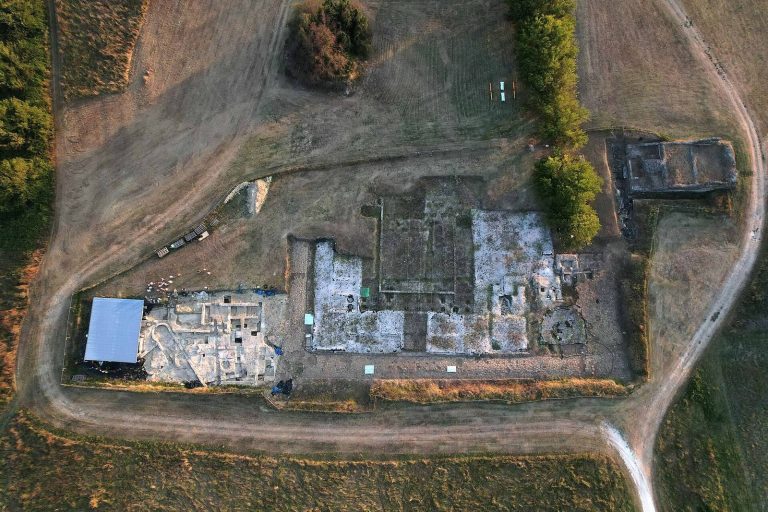
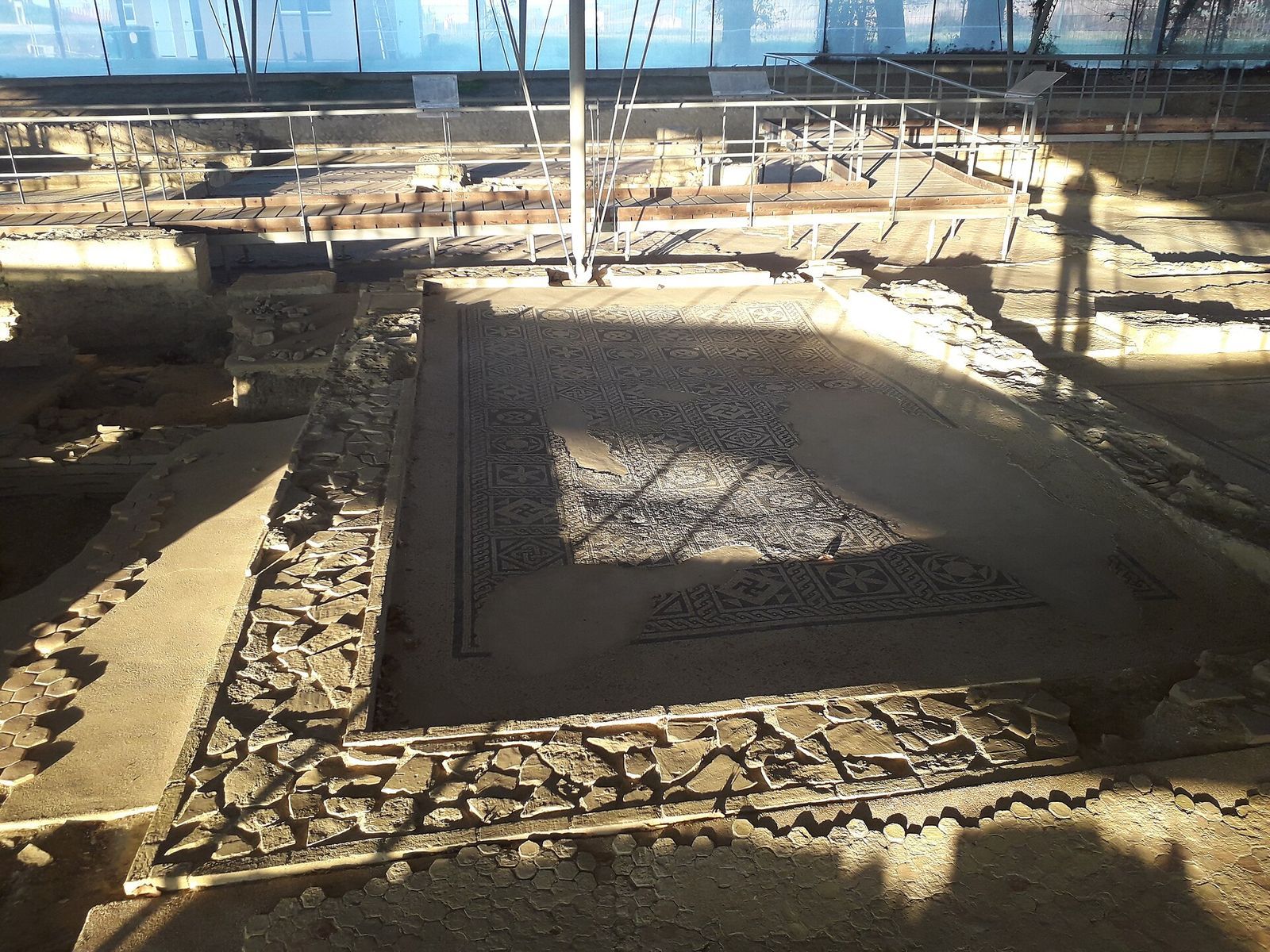
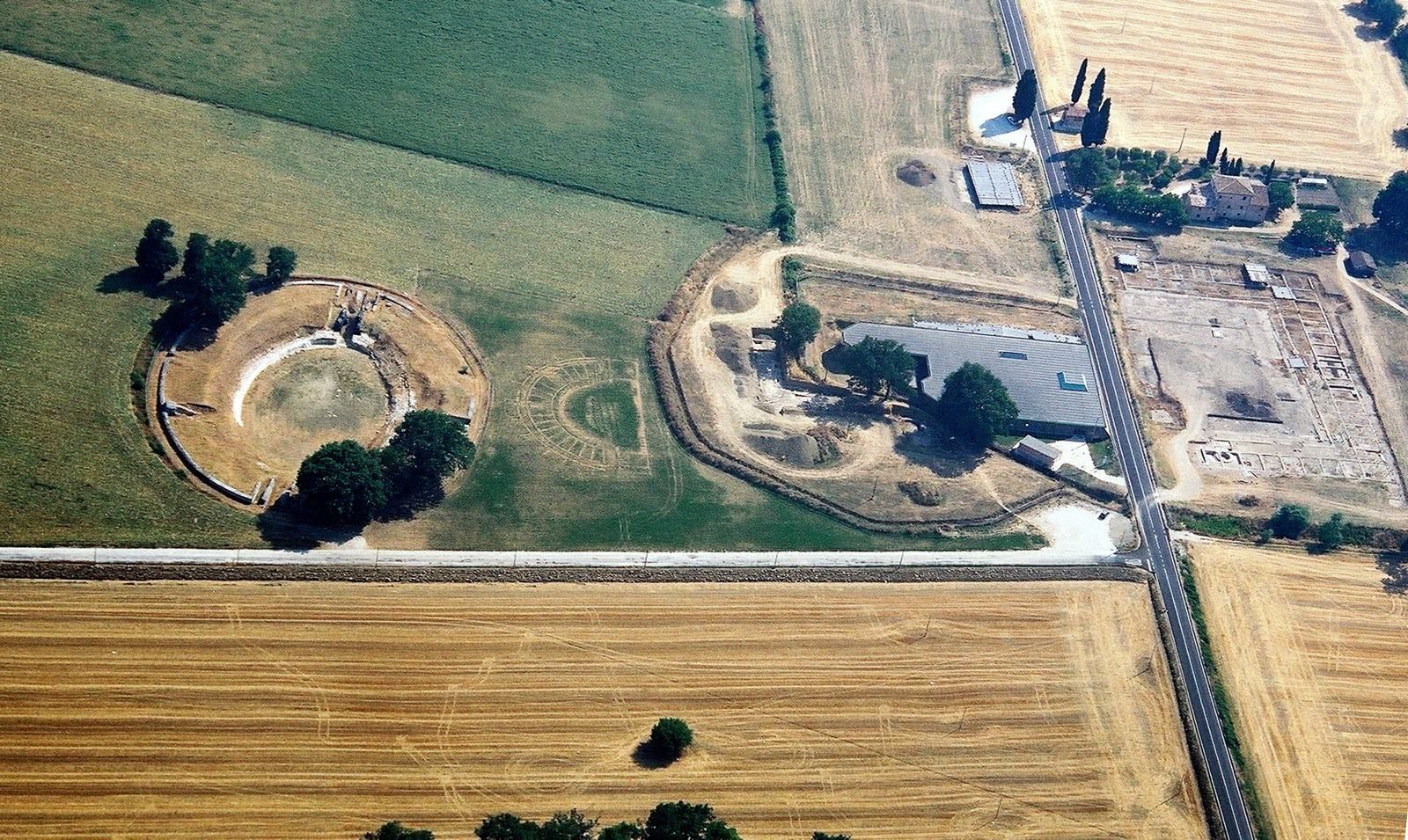
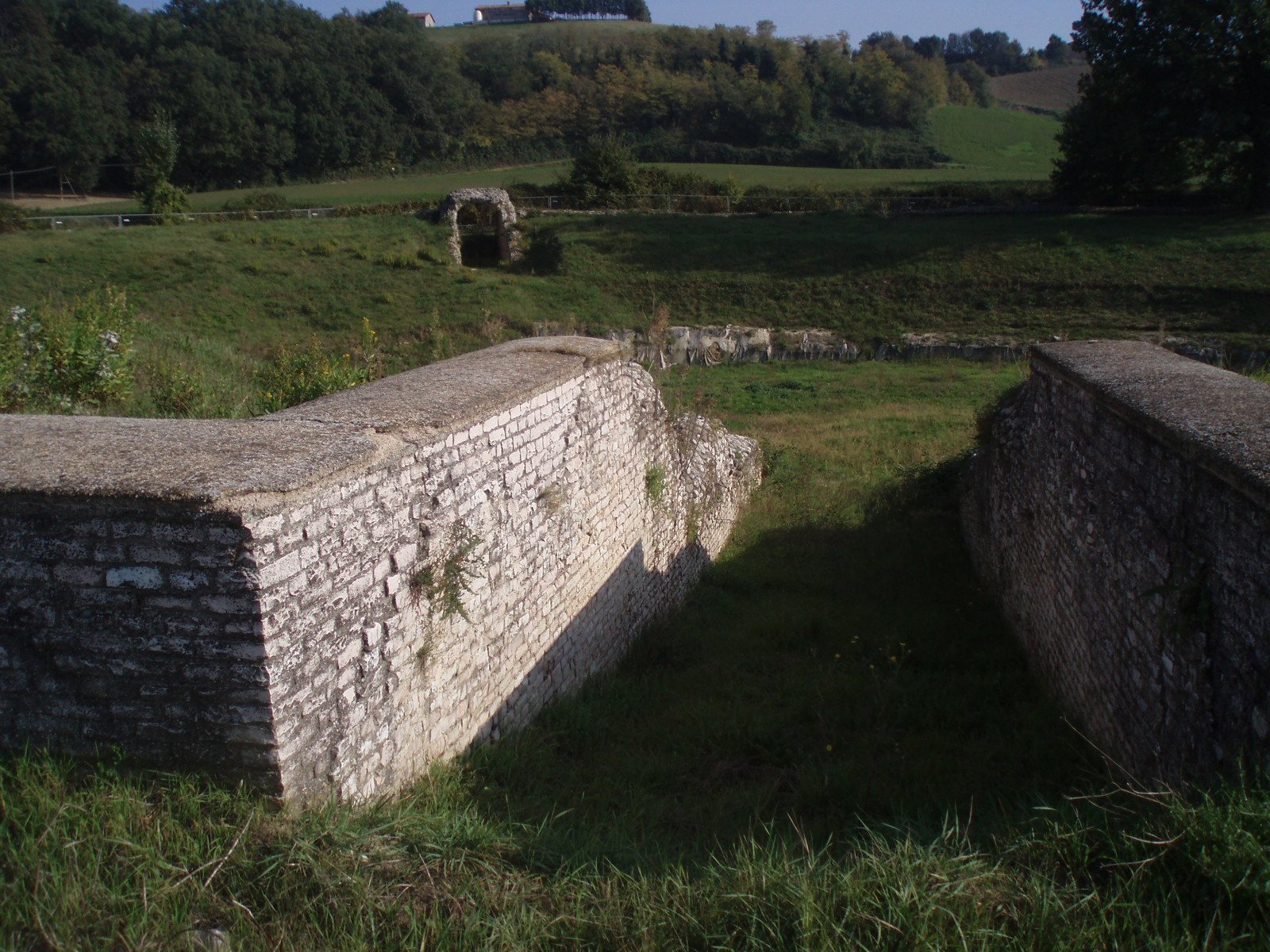
At Pian Volpello, on the right bank of the Cesano River about 30 km from its mouth, the remains include the town’s principal streets, public monuments, houses, and funerary areas. Part of the excavated site is protected by a roof, and a walkway passes through the covered area.
Streets and public buildings
Roads
A branch of the Via Flaminia, a major Roman road, and the Via Salaria Gallica crossed Suasa. The latter connected the town with Forum Sempronii, modern Fossombrone, and Ostra. Excavations have exposed an ancient roadway paved with basalt.
Forum, theatre, and amphitheatre
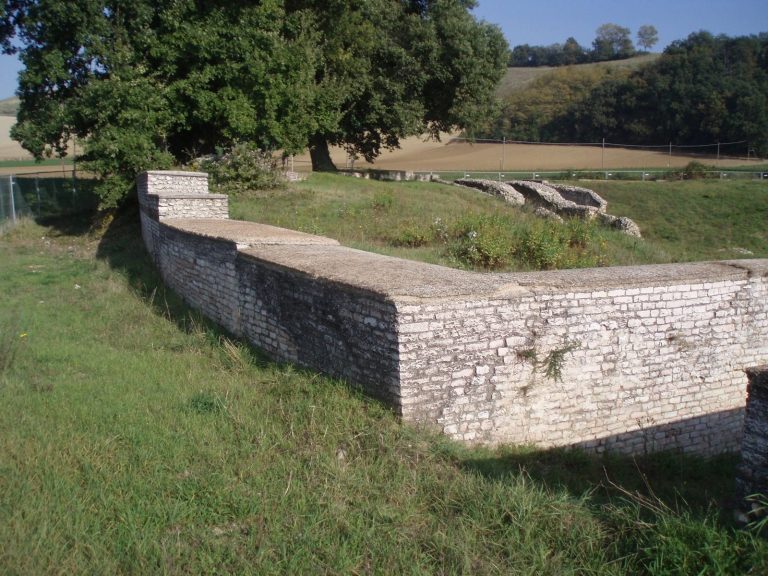
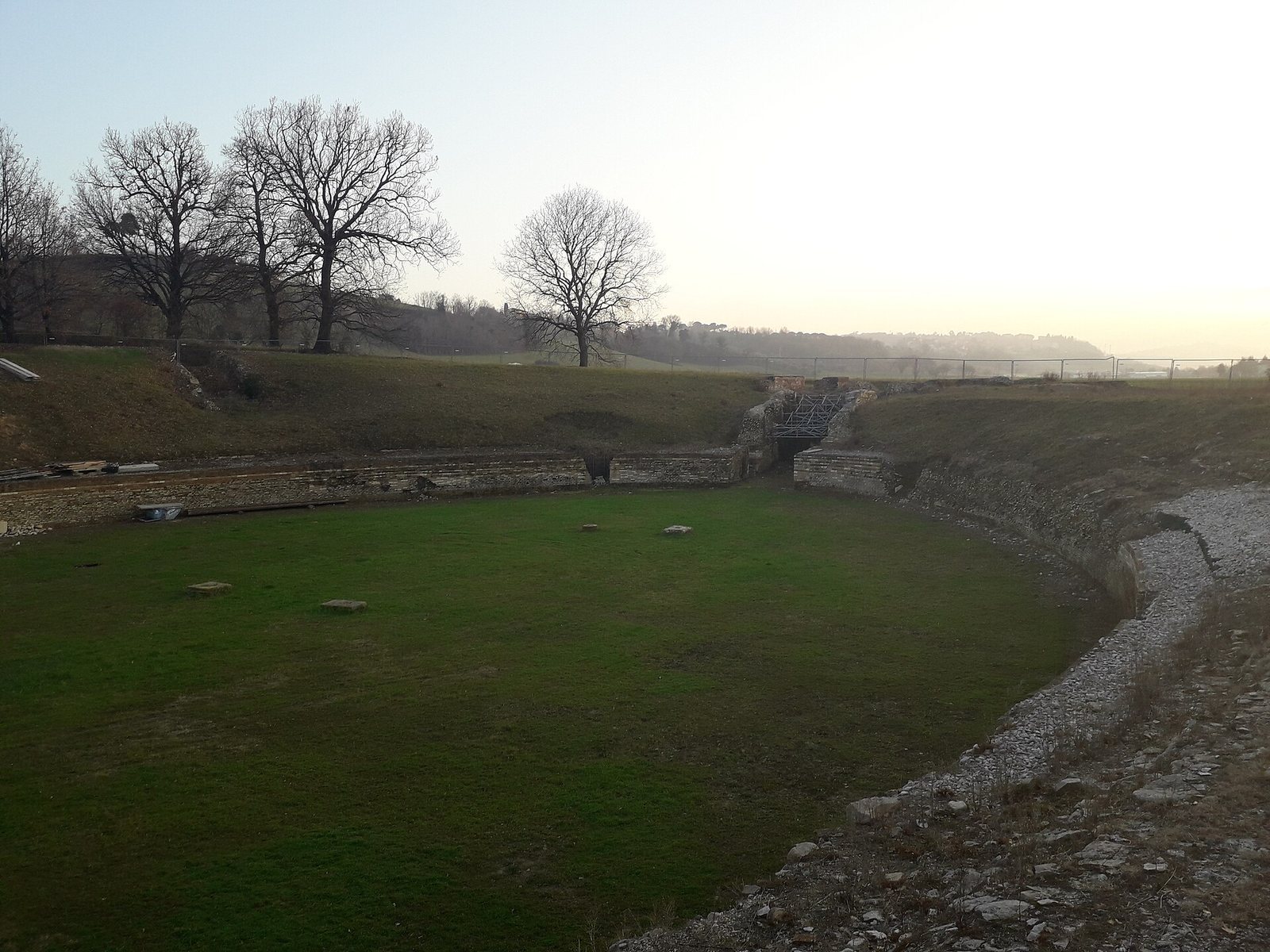
The excavated public buildings include the forum and theatre, as well as an amphitheatre at the foot of a hill. The amphitheatre was designed for public spectacles.
Residential remains
Domus of the Coiedii
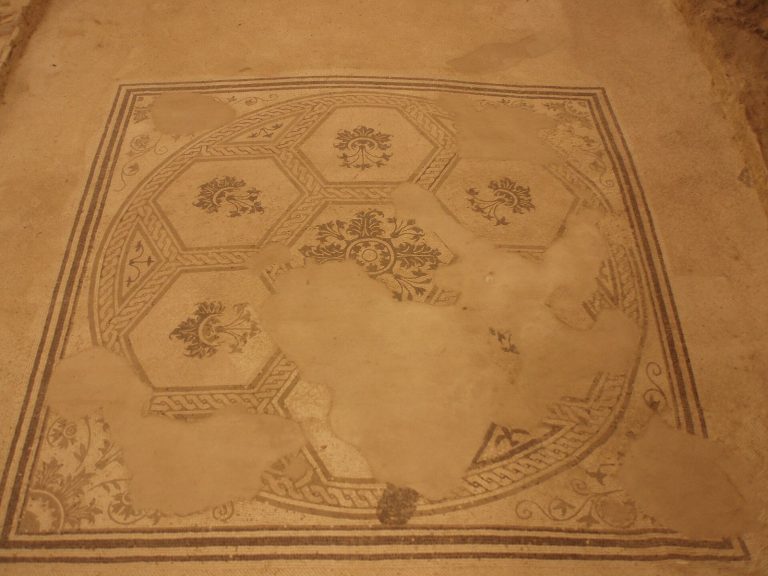
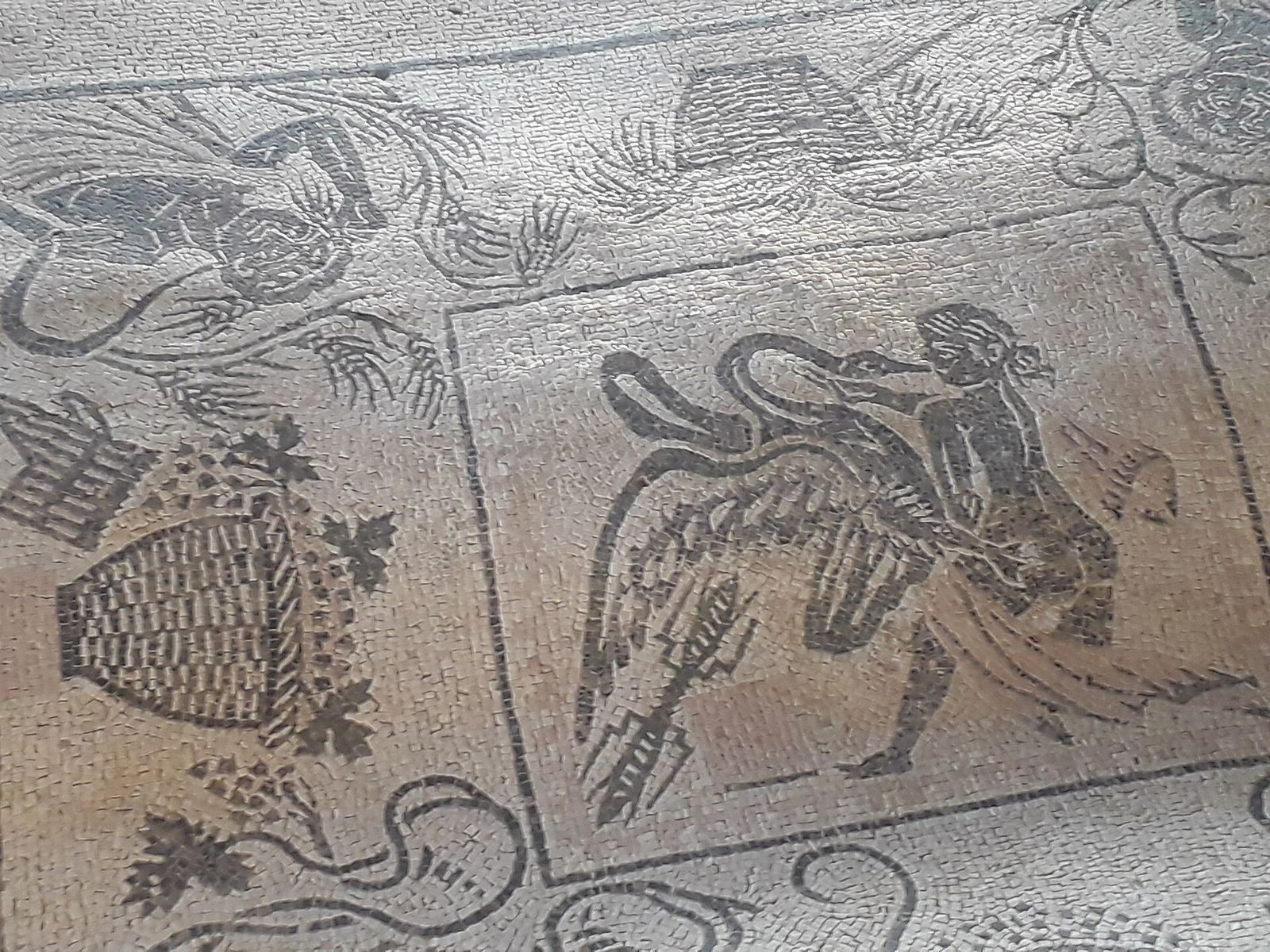
The Domus of the Coiedii is a large, richly decorated Roman private house with a complex architectural layout. It remained in use over an extended period and reached its greatest splendour in the second century AD. Its mosaics feature mythological, floral, and geometric designs. A marble pavement uses more than fifteen kinds of stone; together, the mosaics and pavement form the Marche region’s most important unified mosaic complex.
Republican House
The Republican House dates to the late Roman Republic.
Funerary remains
Excavations have uncovered two funerary areas and a necropolis, adding burial grounds to the known remains of the ancient town.
Excavated finds
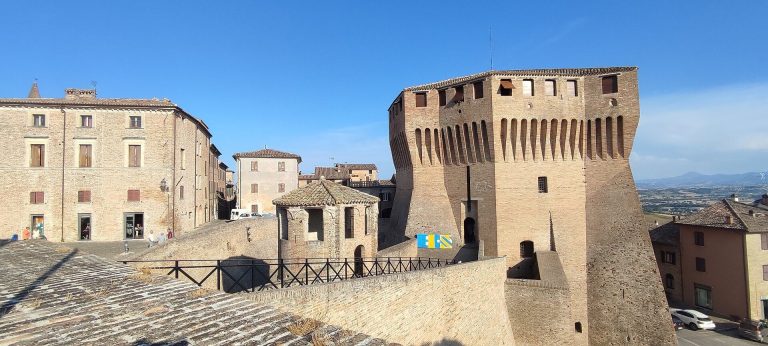
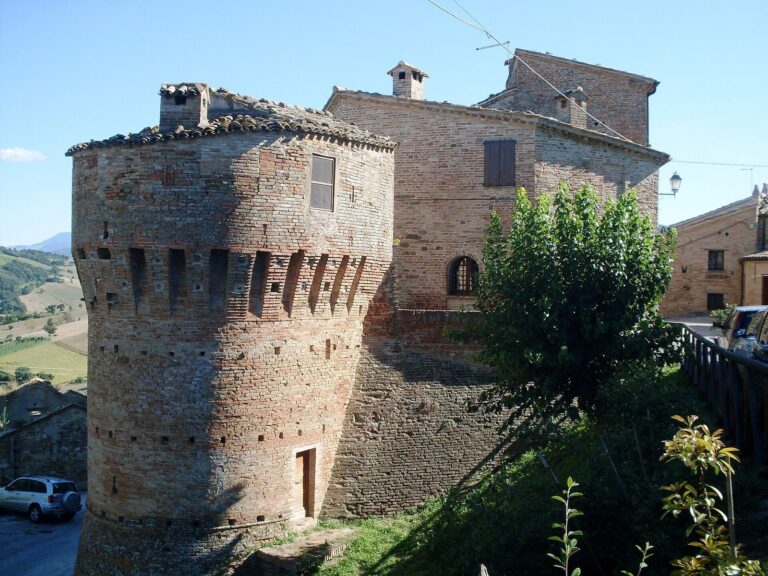
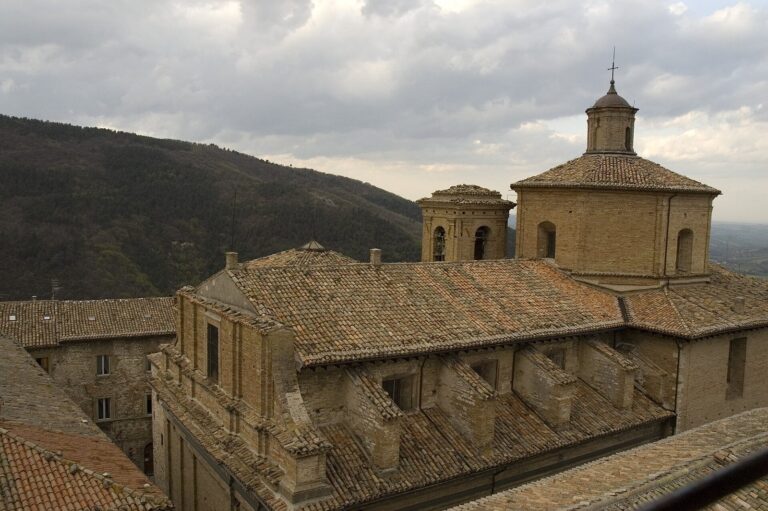
Many objects from the excavations are displayed in four thematic rooms in the former Palazzo Della Rovere at Castelleone di Suasa, now the archaeological museum of the Roman town of Suasa.