Loretello Castle: A Medieval Fortified Settlement in Italy


Site at a Glance
- Rating
- 4.6
- Popularity
- Low
- Country
- Italy
- Primary era
- Medieval
- External website
- Open
- Eras represented
- Medieval, Early Modern
- Civilizations
- Papal States
- Site type
- Military
- Remains
- Fortified Town
On this page10 sections
History
Loretello Castle is a medieval fortified settlement in Italy, located in the hamlet of Loretello within the municipality of Arcevia, near the border with San Lorenzo in Campo. It stands on a hill about 300 metres above sea level. Monks from the Fonte Avellana monastery built it alongside the church of Sant’Andrea in 1072.
Monastic and diocesan possession
In 1139, Loretello depended on Fonte Avellana, a historic monastic centre associated with the Camaldolese tradition, a Benedictine reform movement. A dispute with the Diocese of Fossombrone over possession began in 1159. The conflict ended in 1185, when a commission of five cardinals appointed by the pope mediated an agreement that divided possession equally between the two parties.
Transfer to Arcevia
Arcevia acquired rights to Loretello in 1255 after paying compensation to the Diocese of Fossombrone. In 1273, thirty-three families swore allegiance to Arcevia. The town obtained definitive possession in 1289 through an act issued by the rector of the March, a papal official responsible for governing the March, a territory of the Papal States.
Loretello was repeatedly attacked by Arcevia’s enemies. After these conflicts, the castle declined and eventually became depopulated, although a small settlement later remained within its walls. Its administration was handled by a Castle Council, while judicial duties and public security belonged to a captain. Following the transition to the Kingdom of Italy, all administrative functions passed to Arcevia. The castle is recognized as Italian national heritage.
Remains
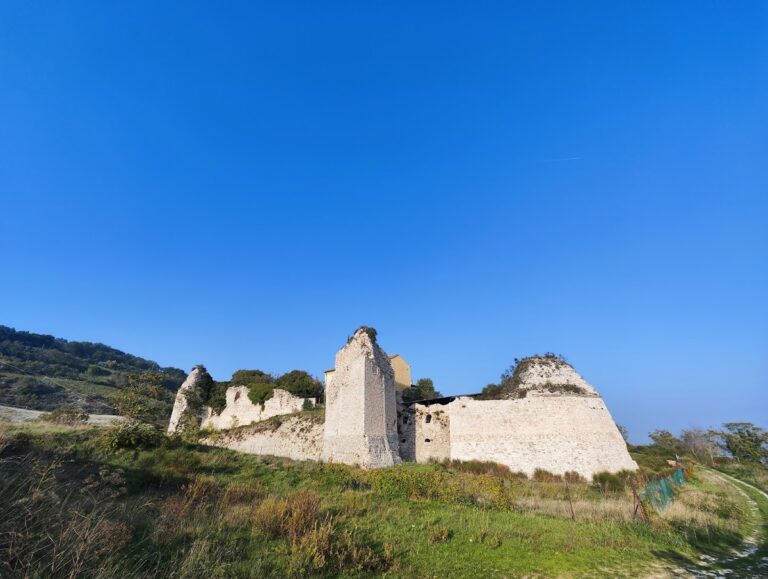
Loretello survives as a medieval fortified settlement whose present form developed through successive expansions during the fourteenth and fifteenth centuries. Its exterior walls retain walkable wall passages, defensive features, and entrances that reveal the changing military and civilian roles of the site.
Walls and entrance
Fortifications and former drawbridge gate
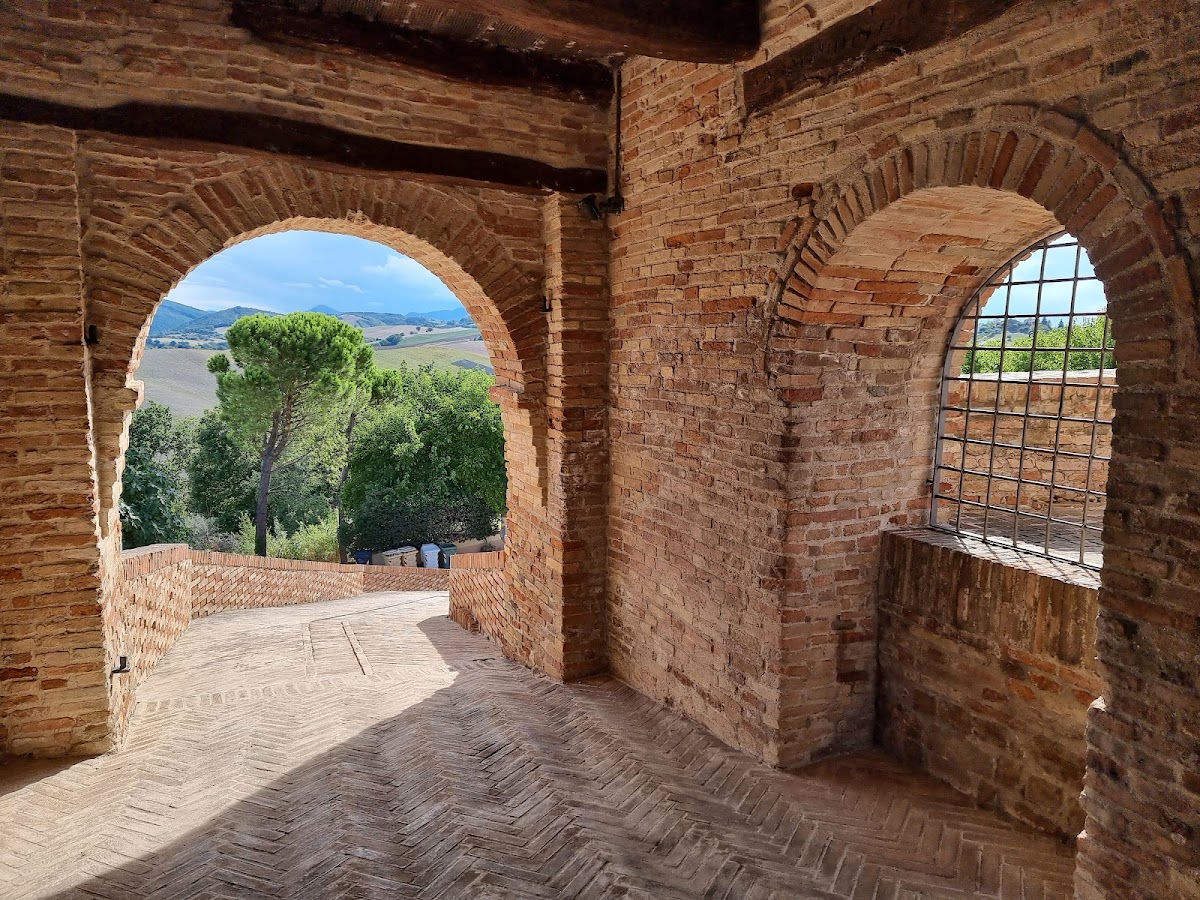
The exterior walls incorporate ravelins, detached defensive works placed before a fortification, and the gate of the former drawbridge. Wall passages remain walkable along the fortifications. An access bridge with three arches was added in the eighteenth century, after the castle had ceased to serve a military purpose.
Defensive towers
Guard Tower
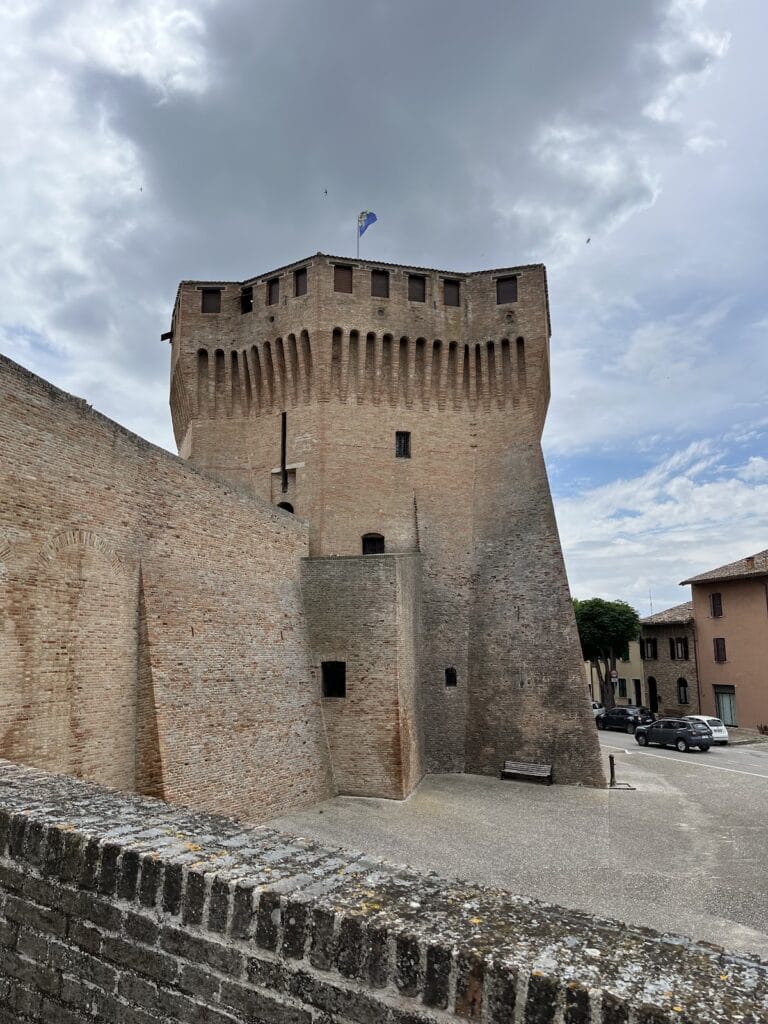
The Guard Tower is a three-storey watchtower connected by a gallery to nearby buildings. Its angled form was designed to withstand fire from bombards, large medieval gunpowder artillery pieces used against fortifications.
The Prison
The tower known as the Prison rises six storeys and contains narrow loopholes and Ghibelline-style crenellations, battlements traditionally associated with the imperial faction in medieval Italian political culture. It formerly served as a prison and continued to house private residents until relatively recently.
Inhabited centre
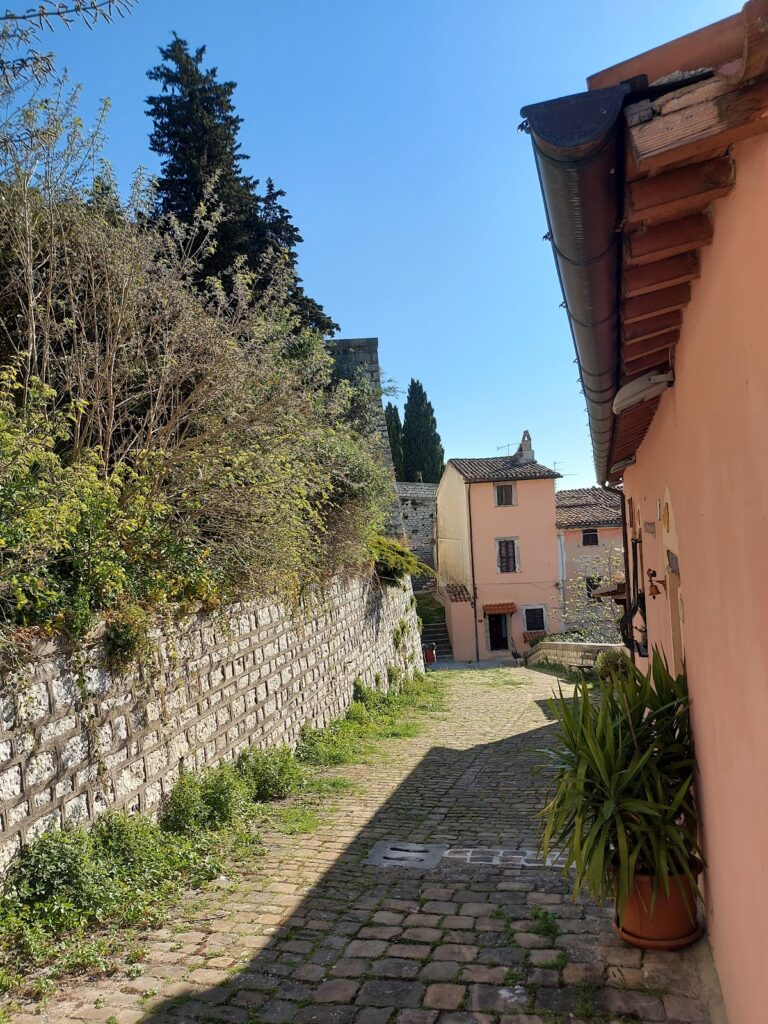
A small inhabited centre stands within the castle, continuing the settlement’s occupation after its earlier decline and depopulation.
Nearby sites