Saint Lawrence Church in Wonieść: A Late Gothic Parish Church in Poland
Site at a Glance
- Popularity
- Low
- Country
- Poland
- Primary era
- Modern
- Eras represented
- Medieval, Early Modern, Modern
- Civilizations
- German, Kingdom of Poland, Polish–Lithuanian Commonwealth
- Site type
- Religious
- Remains
- Church
On this page5 sections
History
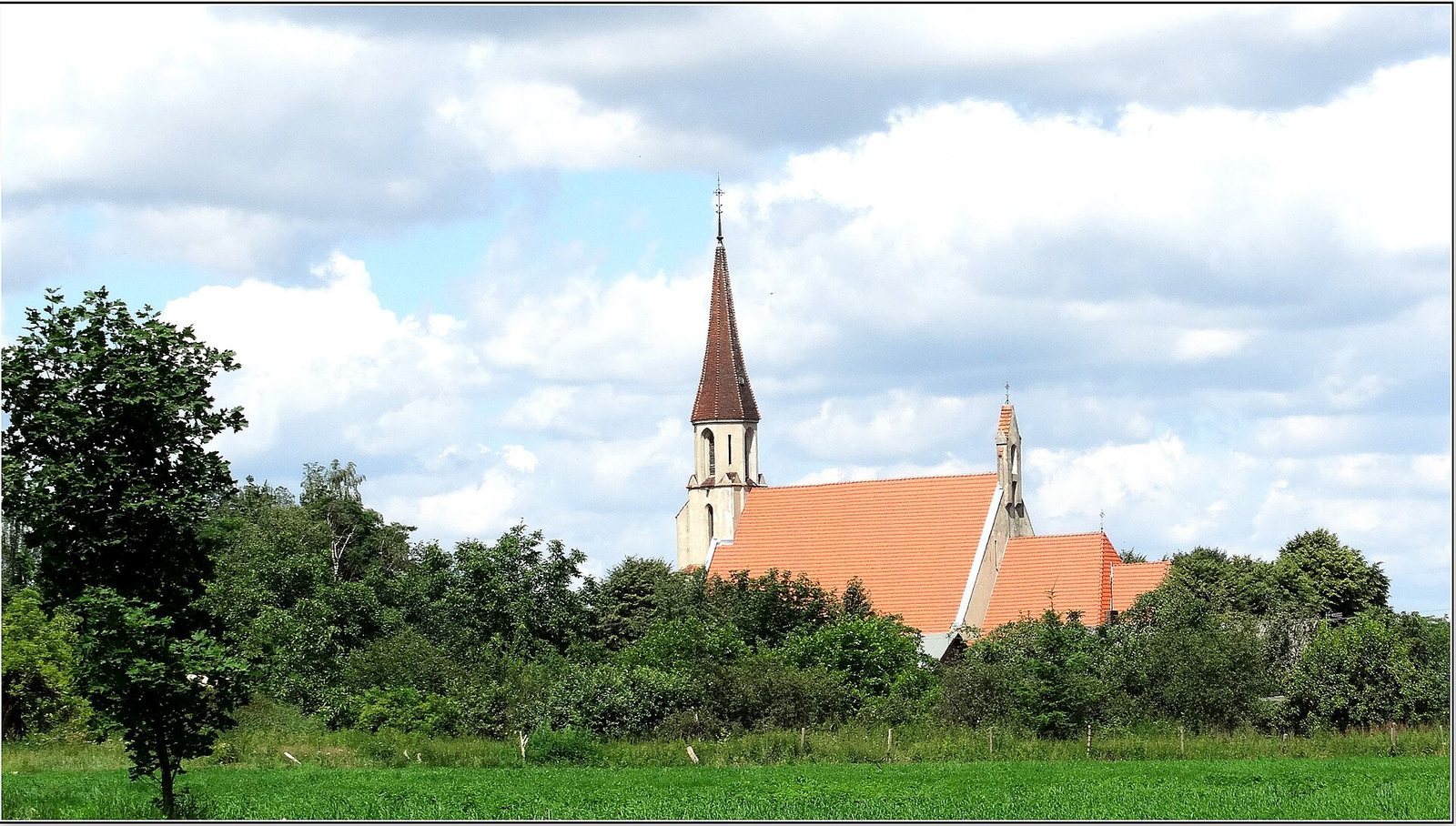
Saint Lawrence Church in Wonieść, Poland, was built in the fifteenth century in the Late Gothic style, a later phase of Gothic architecture. Its surviving form reflects several later rebuildings of the original church.
Rebuilding and parish life
The church was rebuilt in the seventeenth and eighteenth centuries, then substantially altered between 1887 and 1890. Those works enlarged and heightened the building, added a tower and a nave, and incorporated parts of the earlier Gothic structure. The rebuilding introduced Neo-Gothic features, a revival of Gothic forms. The church serves the Roman Catholic parish of Saint Lawrence in the Śmigiel deanery, a local grouping of parishes, within the Archdiocese of Poznań, a major Catholic jurisdiction headed by an archbishop. The feast day of its patron is August 10.
Remains
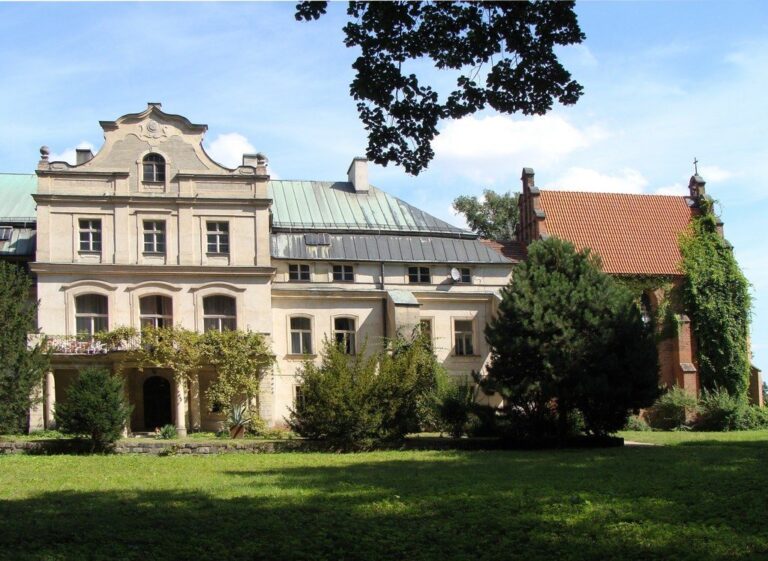
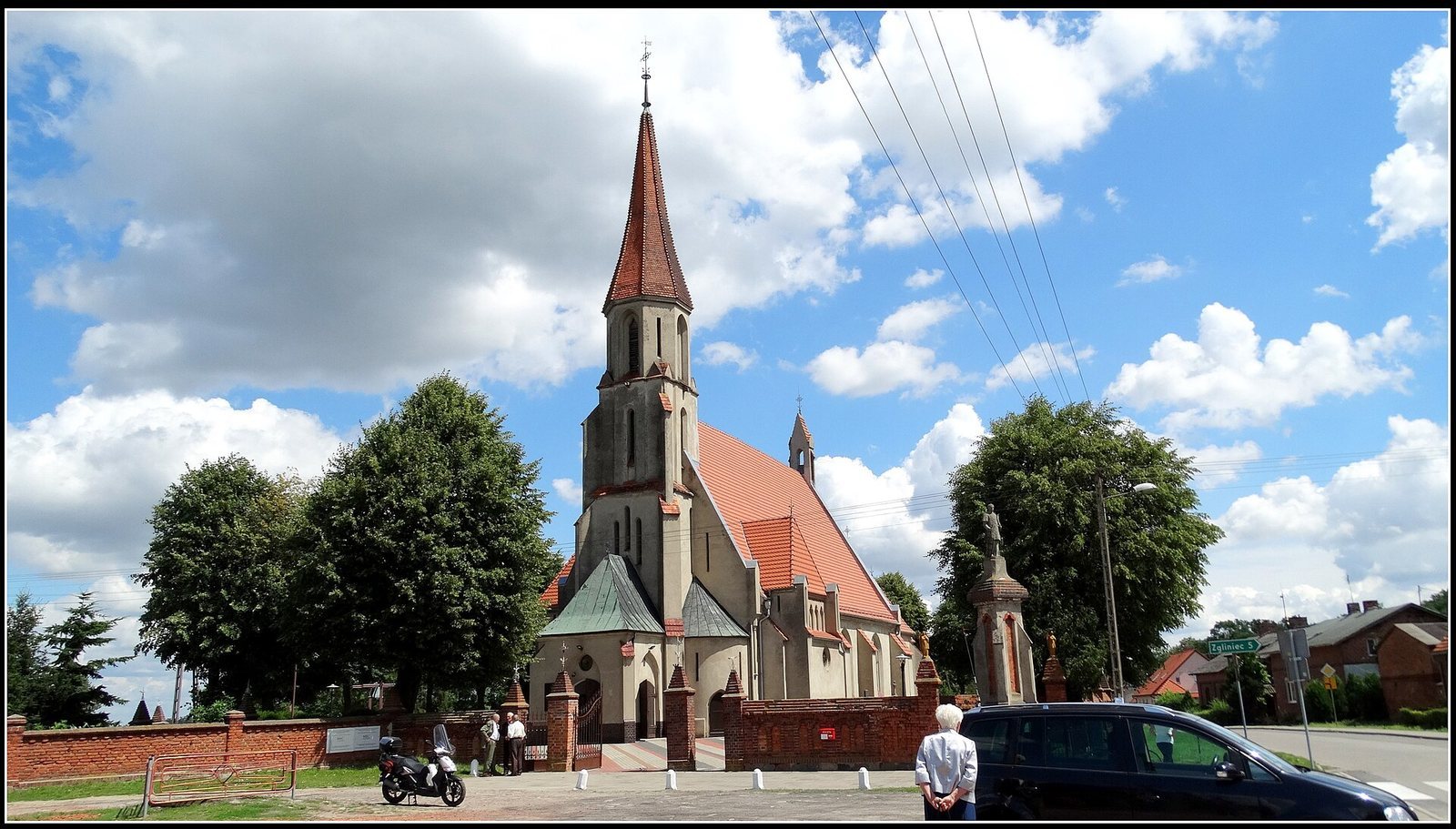
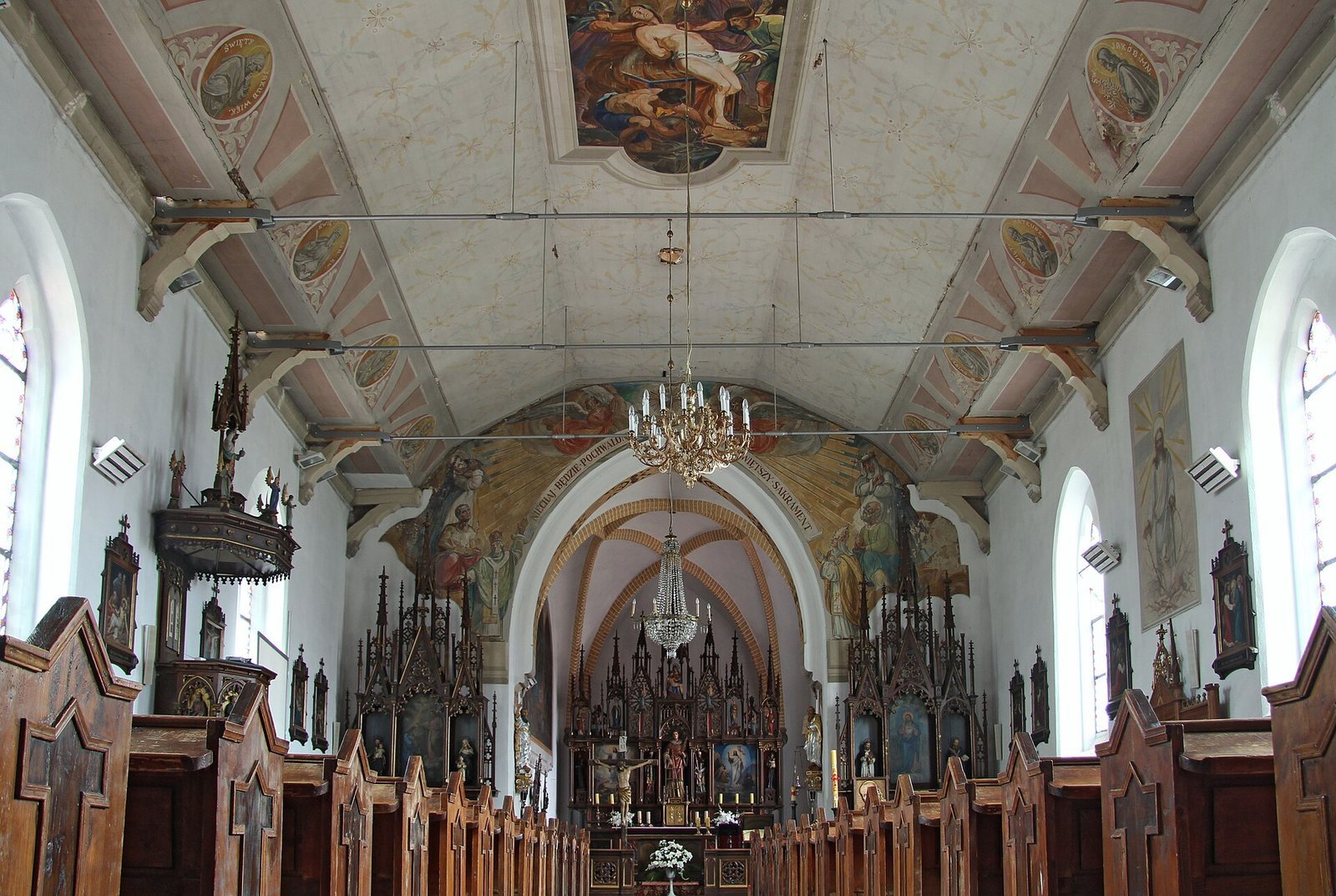
The church is an east-west-oriented, brick building finished with plaster. Its single nave, the main body of the church, has a gabled roof with a small bell turret, and the building also has a four-storey tower. The eastward end contains the chancel, the area around the altar. The former nave now serves as the chancel, while a sacristy, a room used to prepare for services and store vestments and liturgical objects, occupies the site of the former chancel. The added nave lies to the west. A cross vault, formed by intersecting vaulted sections, covers the chancel; the sacristy has a sail vault, curving upward from its supporting corners, and the nave has a barrel vault, a continuous tunnel-like ceiling.
Altars and painted decoration
Three Neo-Gothic altars furnish the church. At the center of the main altar, a statue of Saint Lawrence holds a palm and a gridiron, traditional symbols of his martyrdom as an early Christian deacon. Paintings of Christ’s Ascension and the Resurrected Christ flank the statue. Sculptures of saints occupy the upper section, with a Pietà, showing Mary mourning the dead Christ, between them. A relief of the Last Supper appears on the altar’s antependium, its decorated front. The left altar is dedicated to the Annunciation, Gabriel’s message to Mary that she would bear Jesus; the right is dedicated to the Sacred Heart, a Catholic devotion to Jesus’ love symbolized by his heart. Chancel-arch polychromy, or painted multicoloured decoration, made in 1950 by Polish painter Wiktor Gosieniecki depicts angels adoring the Blessed Sacrament, the consecrated Eucharist in Catholic belief. Other painted decoration dates partly to 1887–1890. Nativity scenes appear on the wall left of the altar, and the patron’s pews on either side display noble family coats of arms, including those of Łodzia and Bończa.
Furnishings and windows
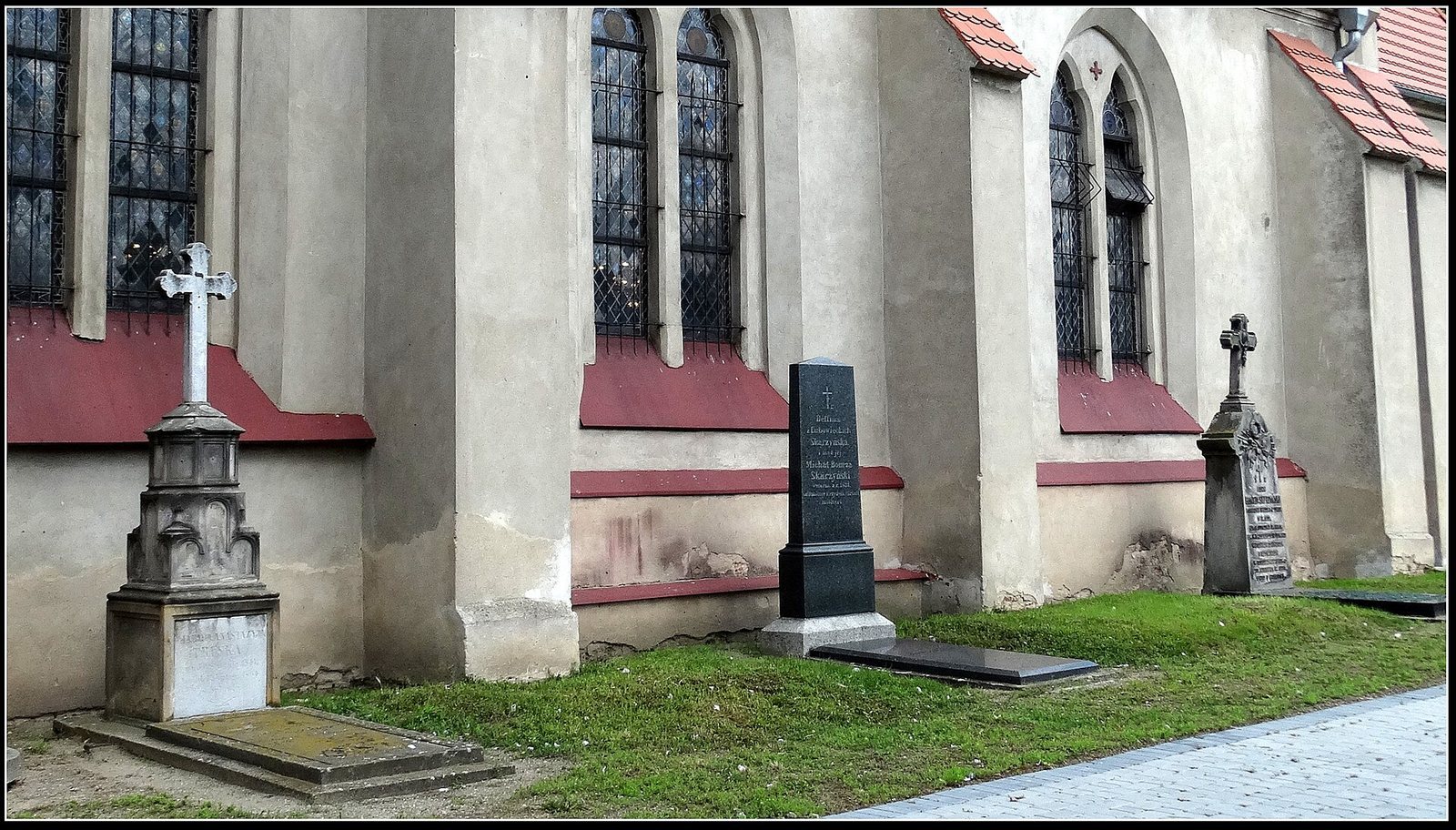
A Baroque baptismal font from the mid-eighteenth century has painted decoration and takes the form of a kneeling angel holding the basin. The pulpit is surrounded by figures of the Evangelists, traditionally identified as the authors of the four Gospels, and has a wooden canopy depicting Christ with angels. The stained-glass windows were made in Wrocław in the late nineteenth century. The organ was built in 1916 by Józef Stanisławski, an organ builder from Poznań.