Madonna dei Rimedi: A Baroque Marian Sanctuary in Palermo
Site at a Glance
- Popularity
- Medium
- Country
- Italy
- Primary era
- Early Modern
- Eras represented
- Medieval, Early Modern
- Civilizations
- Kingdom of Sicily, Norman, Spanish
- Site type
- Religious
- Remains
- Church
On this page11 sections
History
Norman foundation tradition
Madonna dei Rimedi is a Roman Catholic sanctuary in Palermo, Italy. Its present church and convent were begun in 1609 in the Baroque style, an ornate European architectural tradition. The convent became one of the earliest Carmelite institutions in the Palermo area, and the church remains affiliated with the Discalced Carmelites, a reformed branch of the Carmelite order.
A foundation tradition connects an earlier church at the site with the Norman conquest of Palermo, which took place during a campaign from 1064 to 1072. According to the story, the Virgin Mary appeared in a dream and told the Normans to light fires to drive away insects troubling their troops. After Palermo fell in 1072, the Norman ruler Roger I was said to have founded a small church where the fires had burned, dedicating it to Santa Maria dei Rimedi.
Seventeenth-century Carmelite complex
The present complex took shape after the Carmelite Domenico di Gesù e Maria was summoned from Rome to Palermo in 1609 by the viceroy Juan Manuel Fernández Pacheco y Zúñiga. Cardinal Giannettino Doria consecrated the church on 25 April 1610. Construction continued with support from the Palermo Senate, the city’s civic governing body, and was completed in 1625.
In 1611, Fernández Pacheco ordered worship at the site to stop because its proximity to the Royal Palace raised logistical and military concerns. Viceroy Pedro Téllez Girón, Duke of Osuna, reportedly dreamt that the Virgin opposed the plan. He prevented the Carmelites from being transferred and the buildings from being redirected to other uses.
Suppression and return
The church was restored in 1844. The convent was taken over for use as a barracks in 1860. Laws suppressing religious orders led to the closure of both church and convent in 1866 and their conversion to secular use. Altars and furnishings were removed, and marble decoration was stripped from the complex.
From 1947, Cardinal Ernesto Ruffini promoted repairs and the Carmelites’ return. The church and convent were recovered from the Ministry of Defense, and the church was consecrated again on 15 October 1949. On 16 May 1953, it was designated a diocesan shrine dedicated to the Virgin Mary. Ruffini ordained Blessed Francesco Spoto there in 1951 and Blessed Pino Puglisi in 1960; the theologian Antonio Sicari was ordained at the church in 1967.
The church remains a sanctuary of the Archdiocese of Palermo and is affiliated with the Discalced Carmelites. Its convent oratory, a chapel set aside for prayer, is used by soldiers of Palermo’s military district. An earthquake in 2002 exposed structural weaknesses and prompted repair work.
Remains
Exterior and setting
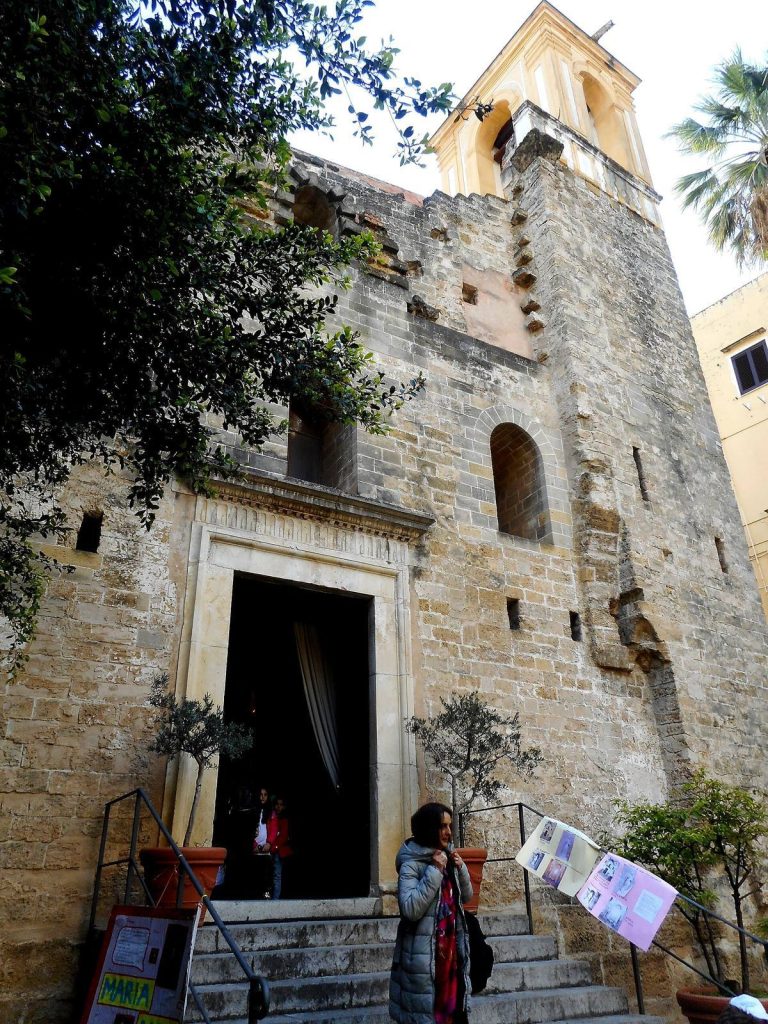
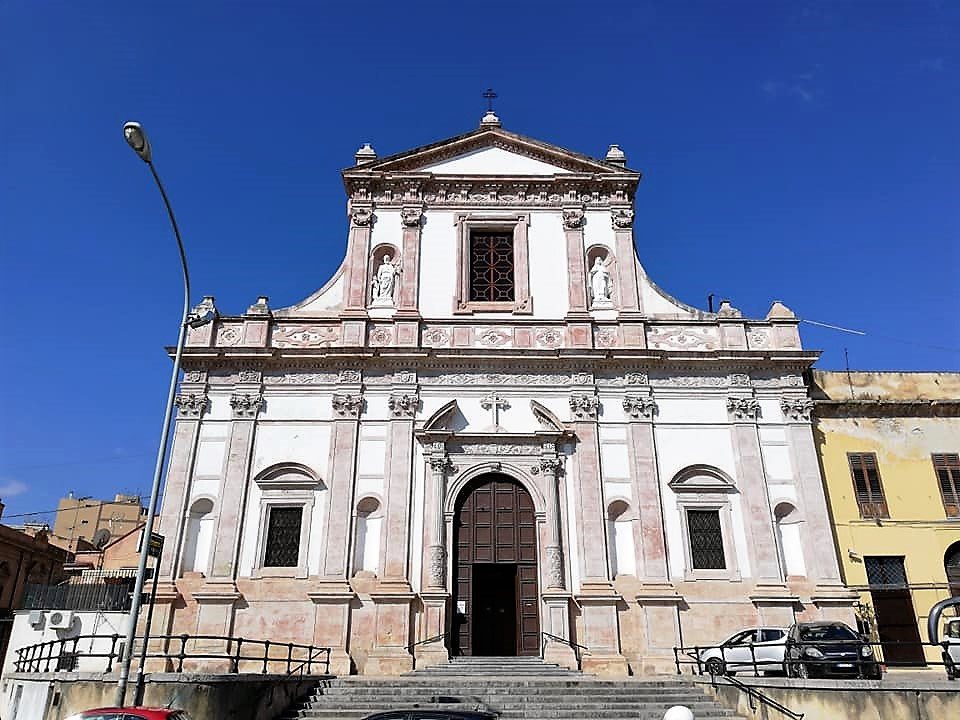
The Baroque church stands on Piazza Indipendenza, with the former monastery immediately to its right. The complex occupies the foundations of a ruined Norman church. Its two-storey façade is arranged with pilasters, shallow vertical strips resembling columns, topped by elaborately decorated capitals. A split, curved ornament above the doorway frames a three-lobed cross. An ornamental band and a triangular pediment complete the upper façade. Figures of Joseph with the child Jesus and Teresa of Avila appear on the front; the Joseph sculpture is in the style of Fazio Gaggini.
Interior and artworks
Plan and high altar
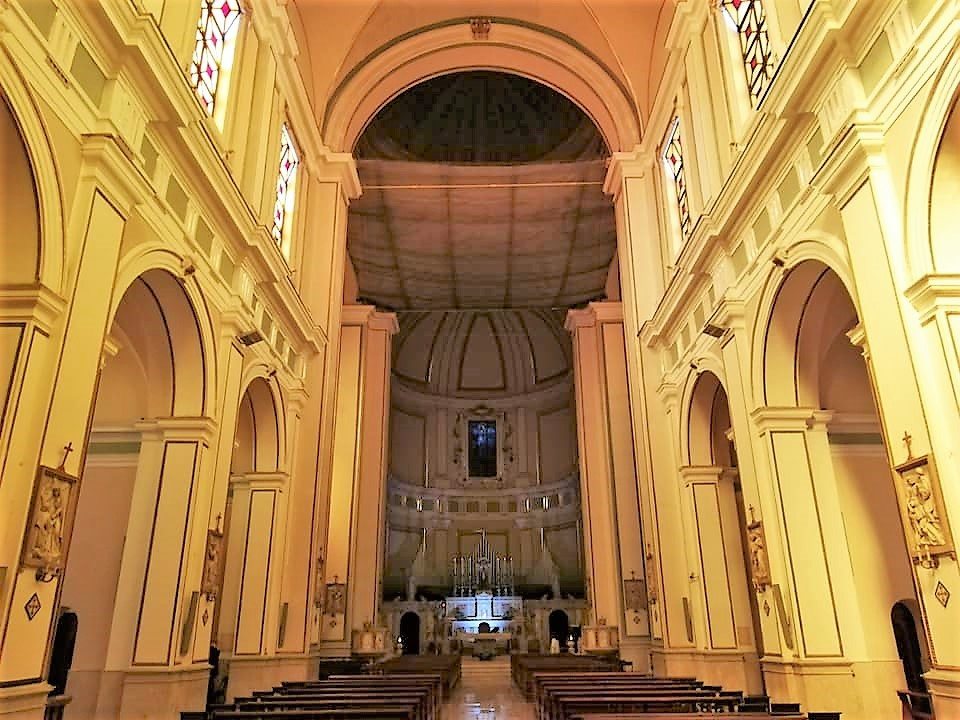
The church has a cross-shaped plan, with a long central space crossed by a transverse arm. Its interior contains paintings from the seventeenth and eighteenth centuries. A marble Madonna associated with the Gagini school, a Sicilian sculptural tradition, was given by Ruffini for the high altar. Ruffini is buried in the church.
Church paintings
A seventeenth-century Holy Family altarpiece by Pietro Novelli is in the third chapel on the right. It depicts Mary, the child Jesus, Saint Anne, and the young John the Baptist. Another Holy Family painting by Novelli is also in the church. Rosalia Novelli painted a work showing Teresa of Avila’s transverberation, a mystical experience of being pierced by divine love.
Sacristy
The sacristy contains a painting of Saint Joseph by Matthias Stomer and a Saint Bartholomew by Spagnoletto.
Former convent
The convent, founded alongside the church, includes dormitories and an oratory used by soldiers of the city’s military district.