Santa Maria Maddalena: A Norman Royal Church in Palermo
Site at a Glance
- Rating
- 4.4
- Popularity
- Very Low
- Country
- Italy
- Primary era
- Medieval
- Eras represented
- Medieval
- Civilizations
- Kingdom of Sicily, Norman
- Site type
- Religious
- Remains
- Church
On this page8 sections
History
Santa Maria Maddalena is a Roman Catholic church in Palermo, Italy, built during the Norman period in the late twelfth century in the Sicilian Romanesque tradition. From its foundation, it enjoyed royal patronage from Roger II of Sicily and held an institutional connection with the Cappella Palatina, the royal chapel in Palermo’s Norman Palace.
The royal chapel and Norman burials
An earlier chapel dedicated to Mary Magdalene existed by 1130. Roger II’s first wife, Elvira of Castile, had it built to receive her own remains and those of Norman counts, dukes, princes, kings, and queens. Elvira was buried there in 1135, and Roger III of Apulia followed in 1161. Other members of the Norman ruling family were also placed in the chapel.
The original building stood beside the south side of Palermo’s primitive cathedral, which Bishop Victor had built in 592, approximately opposite the Chapel of the Coronation. Its exact position remains uncertain, although a recent hypothesis places it in the area now occupied by the canons’ sacristy. By 1140, the chapel possessed ecclesiastical privileges and concessions.
In 1187, Archbishop Gualtiero Offamilio demolished the chapel with the authorization of William II of Sicily. The action accompanied the rebuilding and enlargement of Palermo Cathedral. A replacement church was erected slightly farther away in the late twelfth century, probably following the earlier chapel’s form and incorporating much of its building material.
While the new cathedral was being completed, the tombs of the Norman princes were temporarily moved to the replacement church. They were later transferred or reburied in the contemporary Cathedral of Monreale. These burials included William I of Sicily, his wife Margaret of Navarre, their sons Roger IV of Apulia, Robert of Capua, and Henry of Capua, as well as William II. William I had previously been buried in the crypt of the Palatine Chapel.
Religious and military transformations
The Congregation of Santa Maria Maddalena was established at the church in 1382. On 5 July 1608, the church passed to the Order of Friars Minor, the Franciscan religious order founded by Francis of Assisi, following a petition to the Sicilian viceroy Juan Manuel Fernández Pacheco, Marquis of Vigliena and Duke of Escalona.
In 1622, Viceroy Emanuele Filiberto of Savoy created the San Giacomo military quarter and hospital. The complex incorporated Santa Maria Maddalena, the 1482 church of San Giacomo dei Militari, and the 1312 church of San Paolo d’Alga at the Piano di San Paolo. Spanish troops stationed in Palermo used the area, which consequently became known as the Spanish quarter. In 1648, Viceroy Cardinal Teodoro Trivulzio required the Franciscans to leave Santa Maria Maddalena and assigned them the church of Saints Cosmas and Damian instead.
The military complex protecting the Norman Palace and other buildings in the ancient city was enclosed more extensively in 1650 by Viceroy Juan of Austria. Its parade ground had two entrances, one opening onto the Cassaro opposite the palace bastions and the other facing east. Santa Maria Maddalena was declared a national monument in 1891. It remains part of the San Giacomo military complex, now described as a Carabinieri barracks, and is concealed within the former quarter.
Remains
Fortified setting
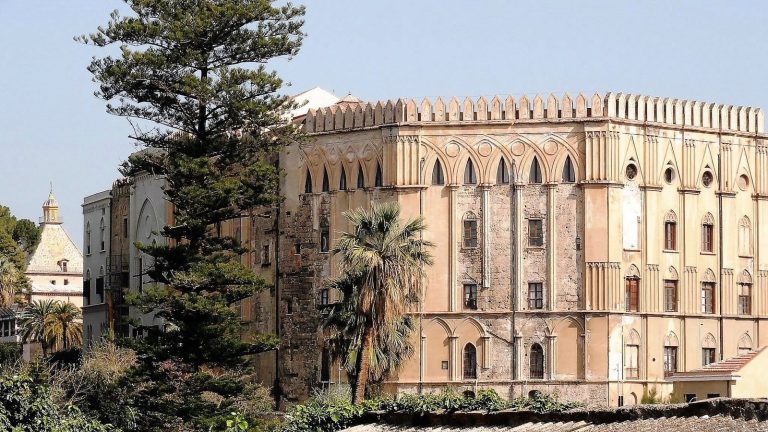
Santa Maria Maddalena stands in the fortified area west of Palermo historically known as the Galka, a name derived from al-Halqah, meaning “enclosure.” The ancient citadel had walls of Punic-period origin and was dominated by the Kasr, the castle of the Arab emirs that later became the Norman royal palace.
The church and its seventeenth-century Franciscan convent occupy ground bounded to the south by the Cassaro, now Corso Vittorio Emanuele, near Porta Nuova. Their position within the former San Giacomo military quarter places the church inside a larger fortified and military enclosure.
Church fabric and furnishings
Norman Romanesque structure
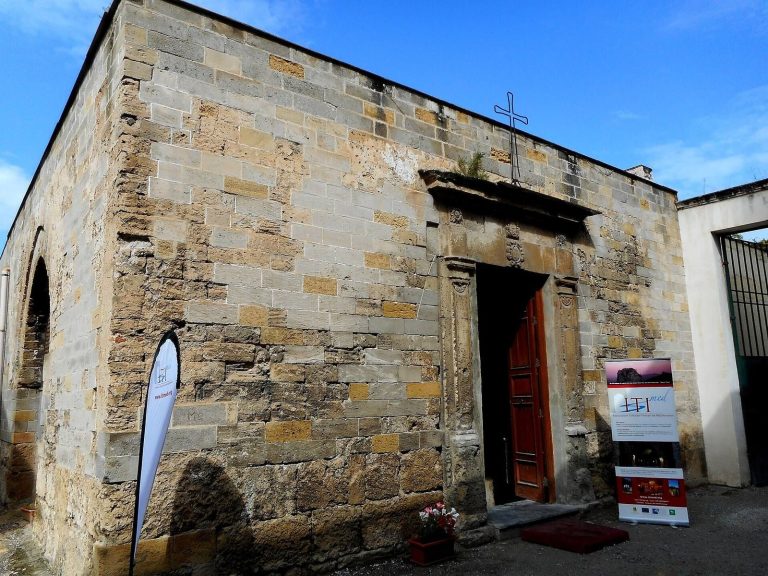
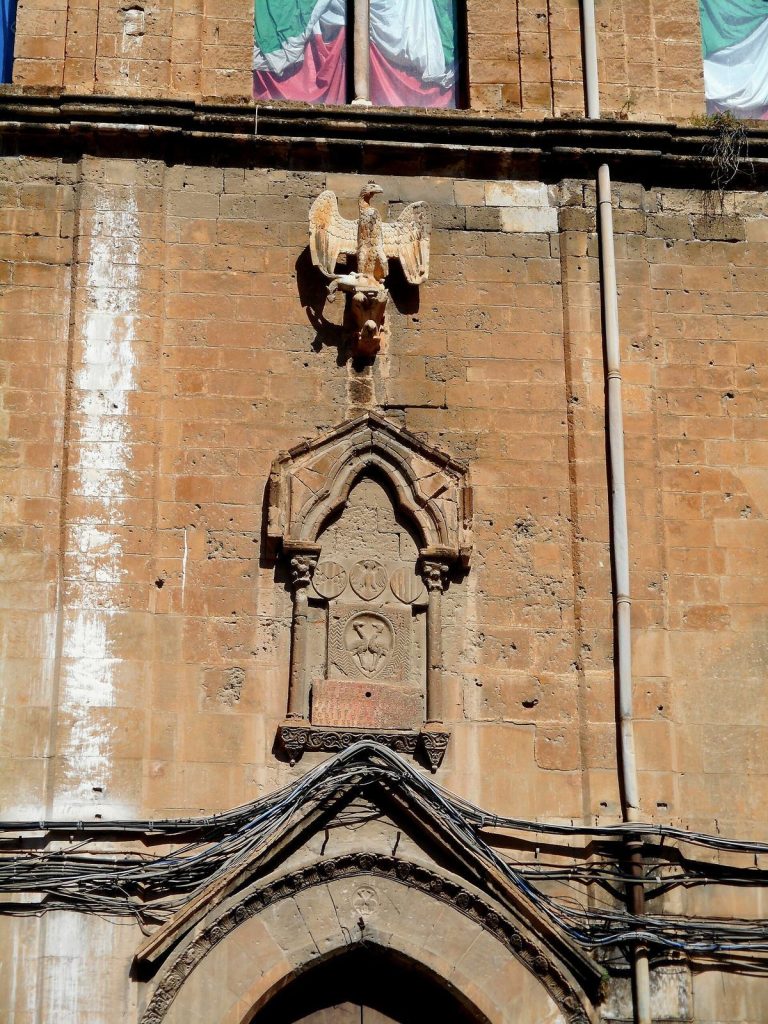
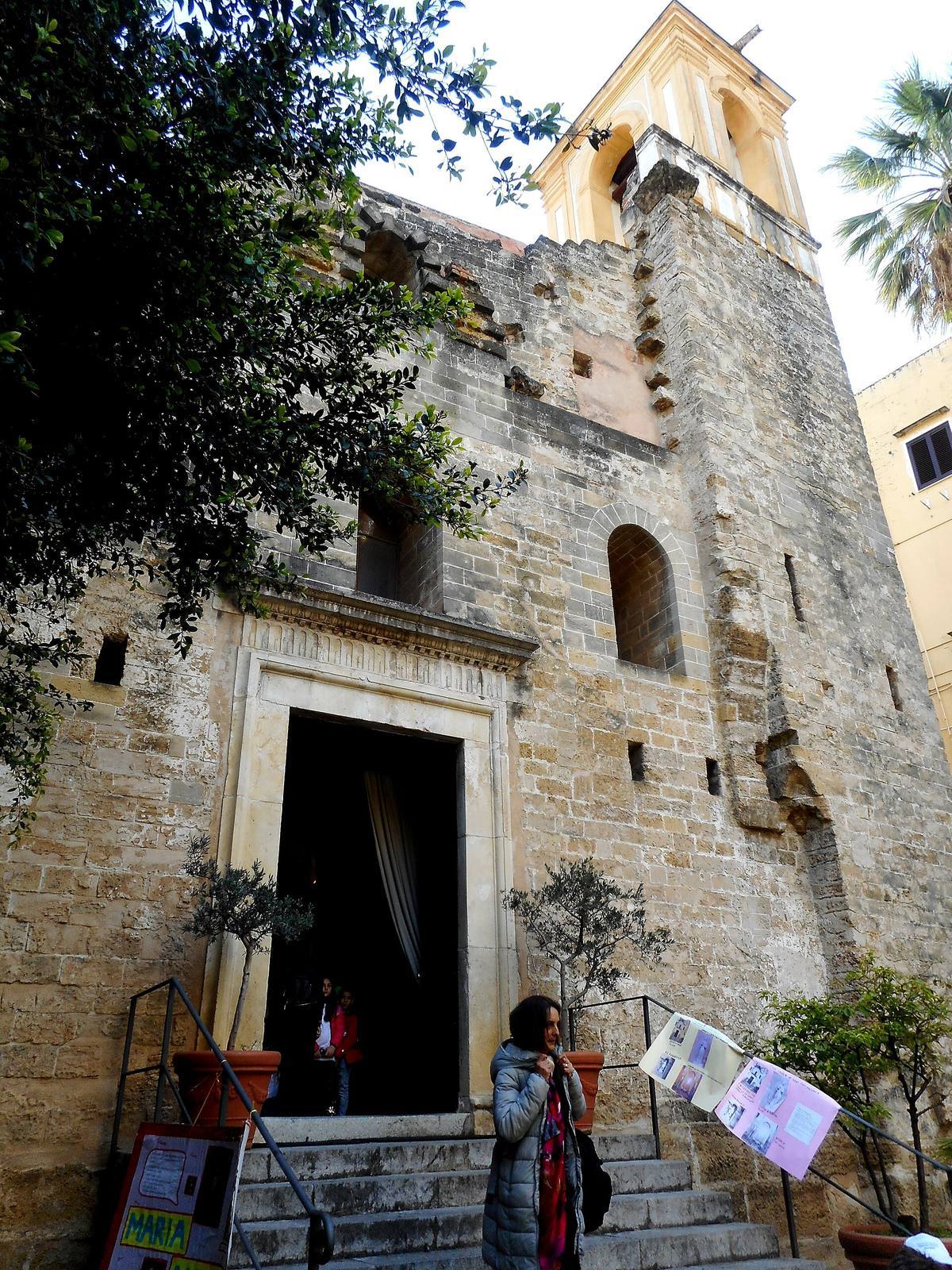
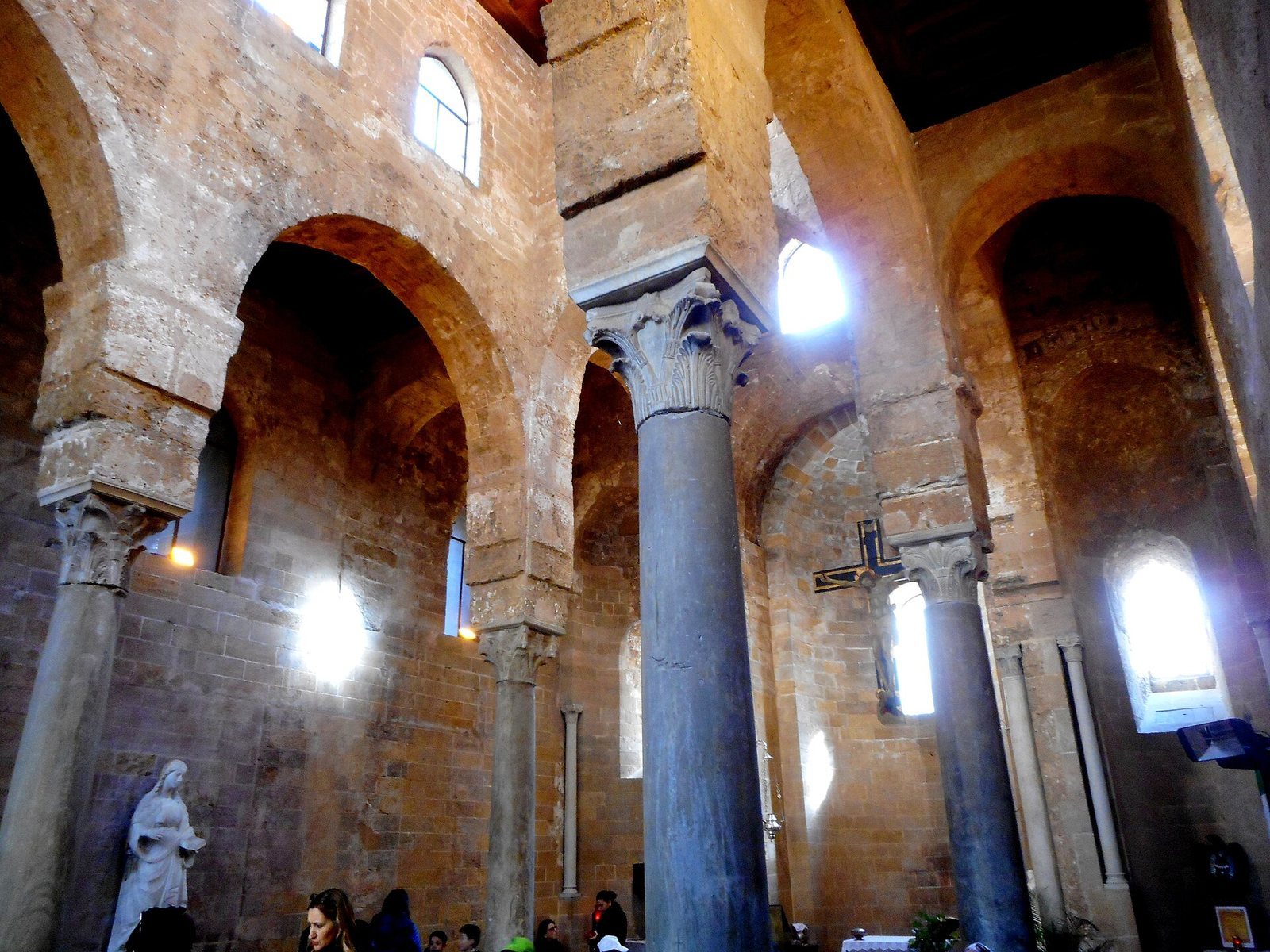
The replacement church is characterized as Norman or Sicilian Romanesque. Its plan probably duplicated the form of the earlier chapel, while a substantial amount of reused building material was incorporated into the later structure. The entrance is marked by a Renaissance-style portal.
Marble sculpture and plaques
A marble statue of Mary Magdalene from the Gagini workshop, a prominent Sicilian family workshop associated with Renaissance marble sculpture, was originally placed on the exterior and is now inside the church. The interior also preserves a plaque depicting the Resurrection of Lazarus and another showing the Virgin Mary flanked by two angels.