Church of the Nativity of the Blessed Virgin Mary in Krzywcza: A 17th-Century Parish Church
Site at a Glance
- Popularity
- Very Low
- Country
- Poland
- Primary era
- Early Modern
- Eras represented
- Early Modern, Modern
- Civilizations
- Polish–Lithuanian Commonwealth
- Site type
- Religious
- Remains
- Church
On this page7 sections
History
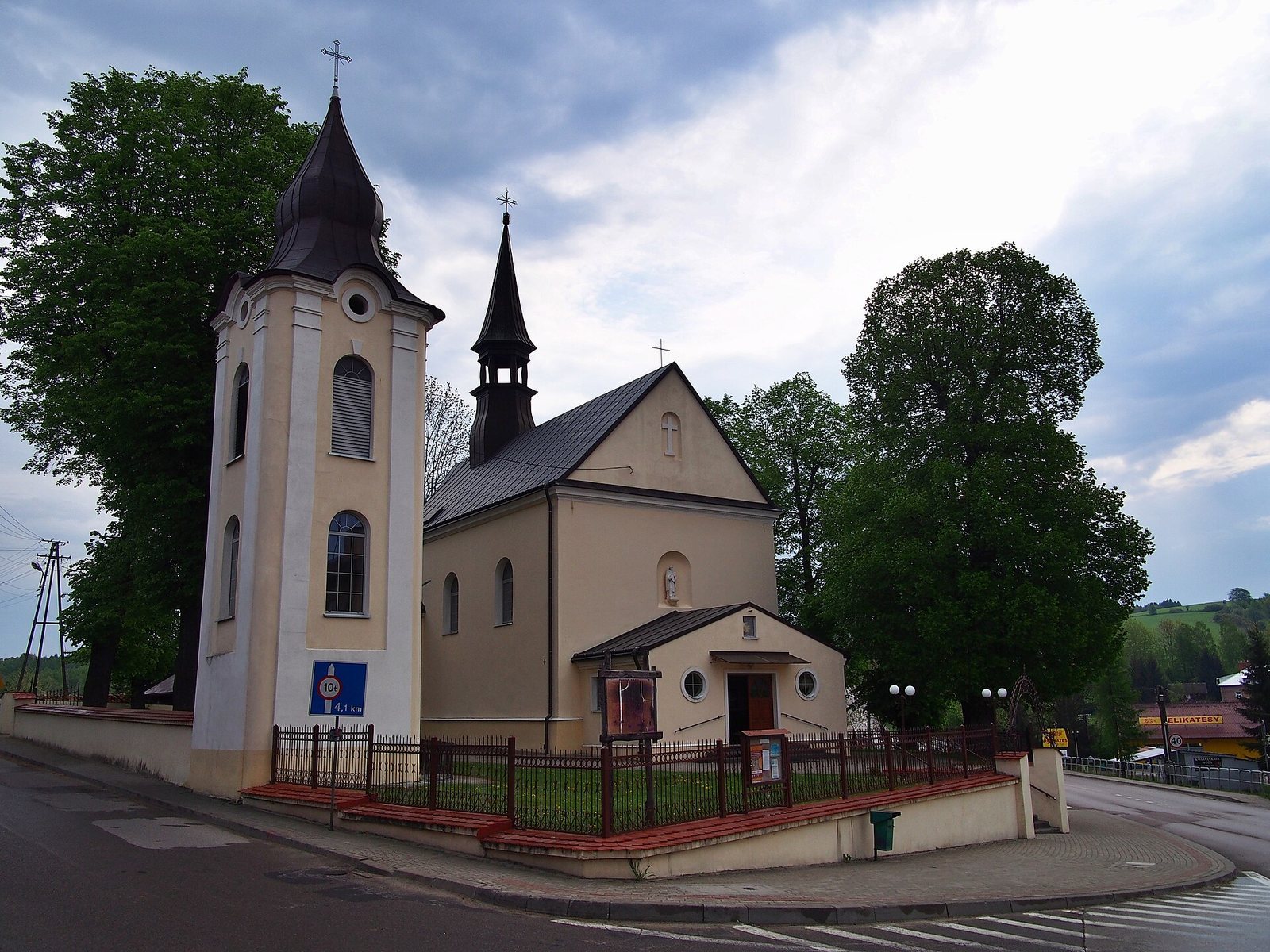
The Church of the Nativity of the Blessed Virgin Mary is a Roman Catholic parish church in Krzywcza, Poland. Marcin Krasicki, a senior provincial governor in the Polish-Lithuanian Commonwealth, had it built between 1625 and 1630.
Consecration and parish life
The church was consecrated in 1760 and later underwent substantial remodeling. Its parish belongs to the Dubiecko deanery, a district grouping parishes, within the Archdiocese of Przemyśl, a church district headed by an archbishop. The annual feast of the Nativity of the Blessed Virgin Mary, celebrating Mary’s birth, falls on September 8.
Twentieth-century changes
In 1925, parishioners who had emigrated to the United States raised $89 toward covering the church with sheet metal. During the interwar years, priest W. Solecki also gathered funds for a new church. The fund included an Austrian war-loan bond, a government debt certificate issued to raise money for wartime purposes, worth 10,275 crowns and entered on April 26, 1916. The bond was exchanged for a long-term savings account, and the sum was probably lost during World War II.
Marian Stroński, a painter from Przemyśl, directed the church’s interior painting in 1927. Parishioner Katarzyna Beniacka, then living in the United States, donated a 400-square-fathom plot of land for the work; a square fathom is a traditional measure of area. In 1946, Kajetan Amirowicz, the last parish priest of Śniatyn, brought a painting of the Virgin Mary and its devotional offerings from an Armenian church there. Armenian Christianity is a distinct historic Christian tradition. The painting was placed in the Krzywcza church in 1968.
Remains
Plan and construction
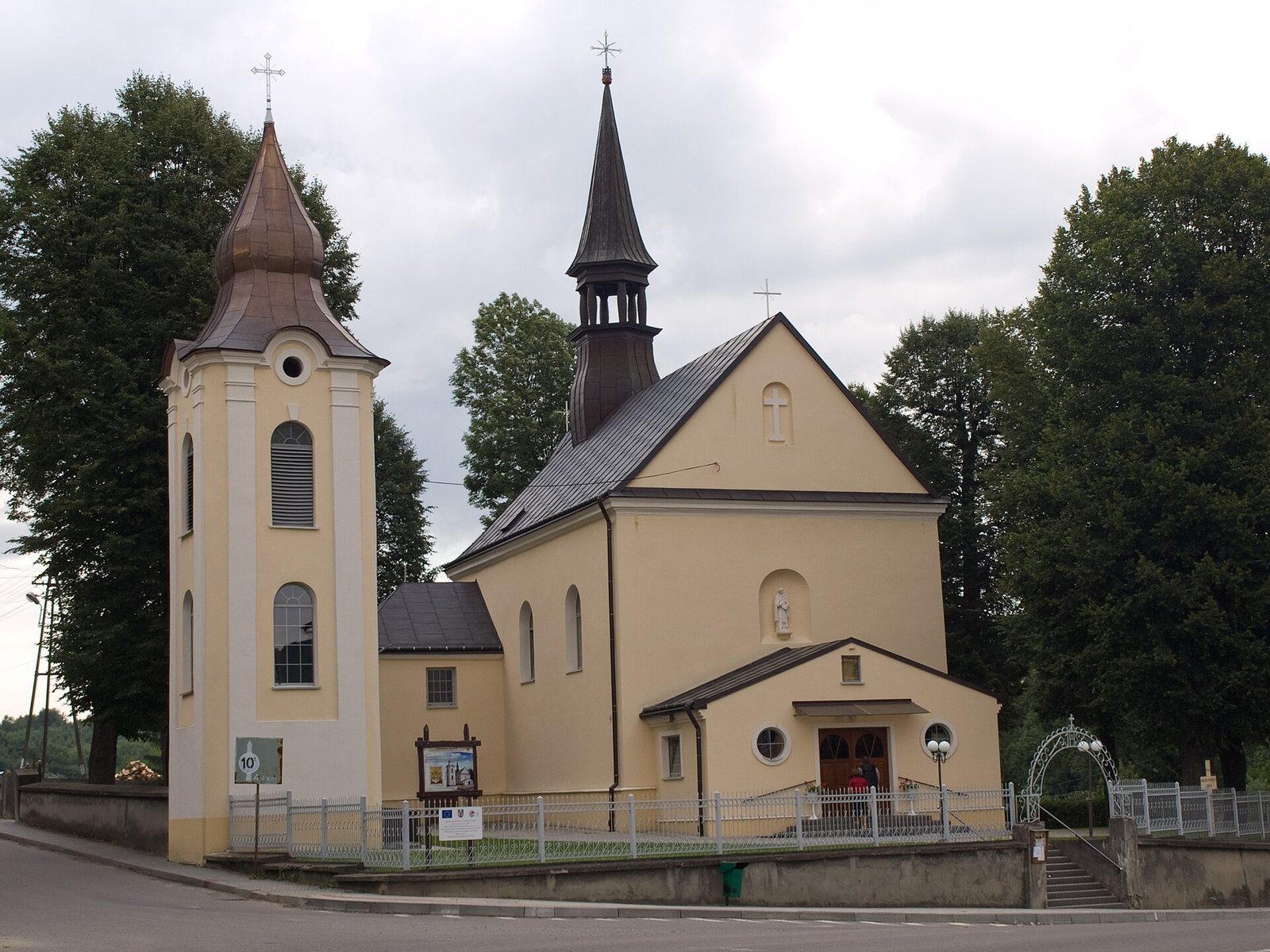
The church has a cross-shaped plan with a single nave, while its exterior presents a plain rectangular form. The nave ends in an apse. The stated measurements are 8.30 metres across the nave, 5.20 metres for the apse, and 20.5 metres in total length, including the apse. Builders used roughly worked stone laid in clay, with some brick. The smooth exterior walls have a simple finish.
Interior and furnishings
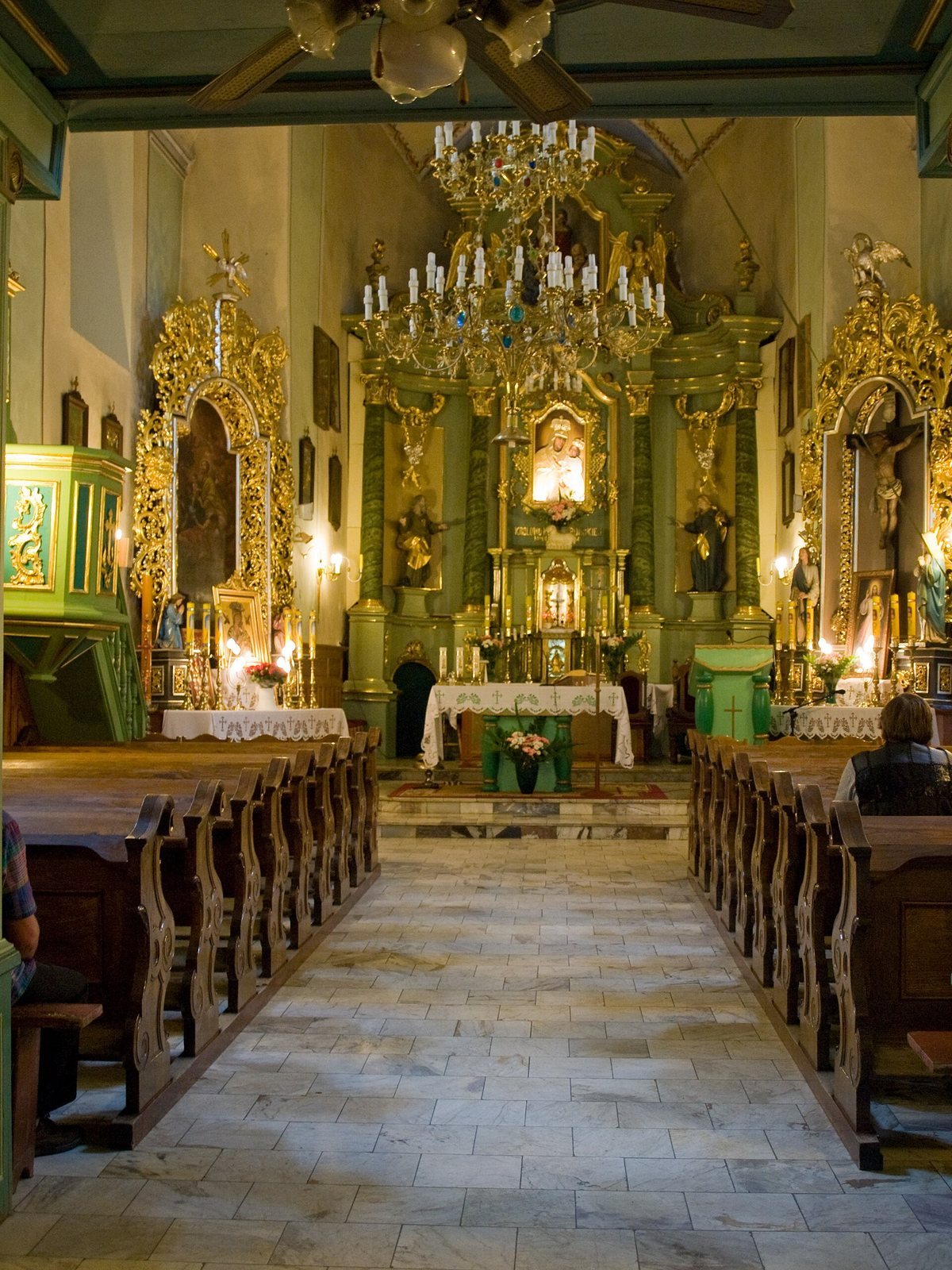
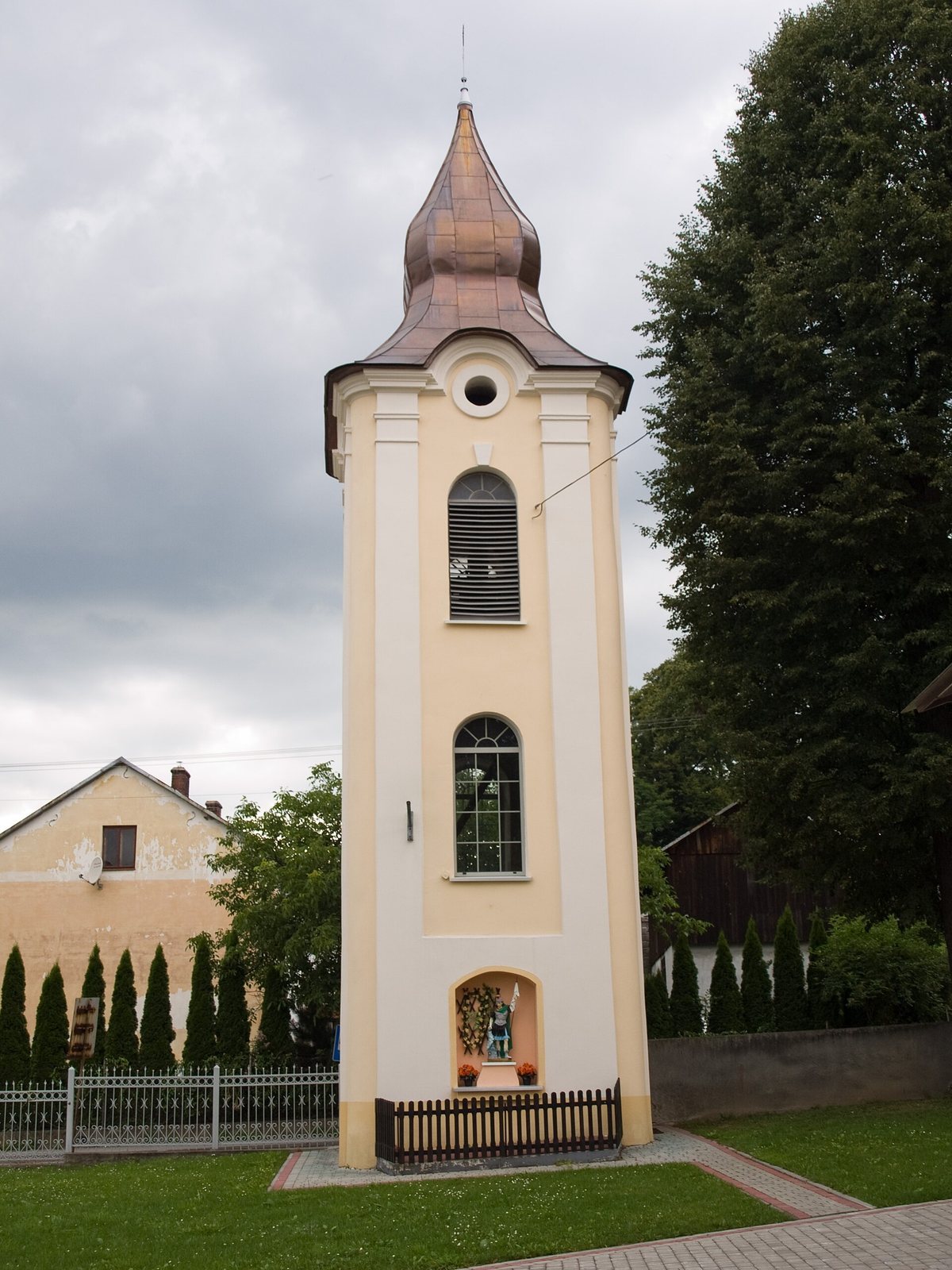
A barrel vault, a continuous arched ceiling, covers the interior and is made of boards. It carries painted decoration in multiple colours. The church contains three altars and a bell turret. A larger bell turret was erected in 1925, when sheet metal was used to cover the church. The Virgin Mary painting brought from Śniatyn, along with its devotional offerings, is also associated with the church.
Sacristy and façade
A sacristy is attached to the southeast side of the nave, and its original wooden doors are now clad in sheet metal. Before it was rebuilt, the sacristy had rough stone walls and a masonry vault, and measured 3.60 metres by 3.70 metres. On the front façade, a statue of St John of God occupies a niche made by bricking up a window. Jan Jocz, the owner of Krzywcza, funded the statue. St John of God was a Portuguese Catholic saint associated with care for the sick.