San Martino: Este’s Oldest Church
Site at a Glance
- Popularity
- Low
- Country
- Italy
- Primary era
- Medieval
- Eras represented
- Medieval, Early Modern
- Civilizations
- Venetian
- Site type
- Religious
- Remains
- Church
On this page10 sections
History
Early history and medieval rebuilding
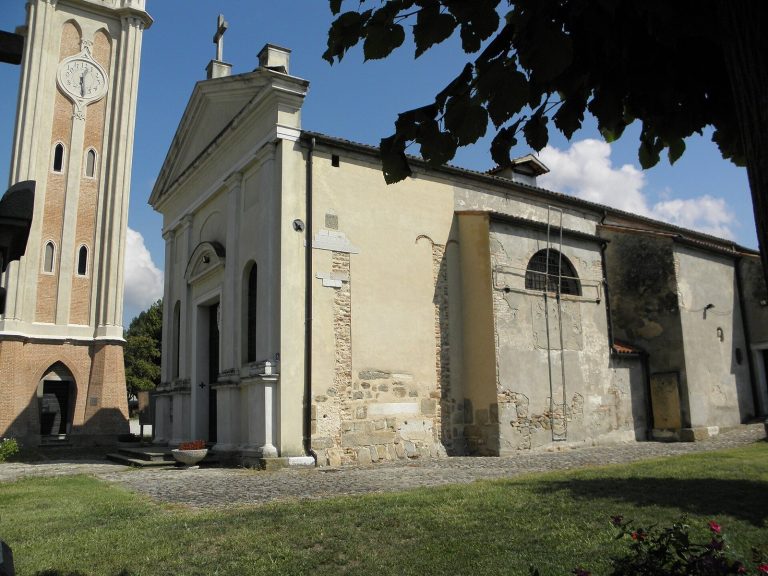
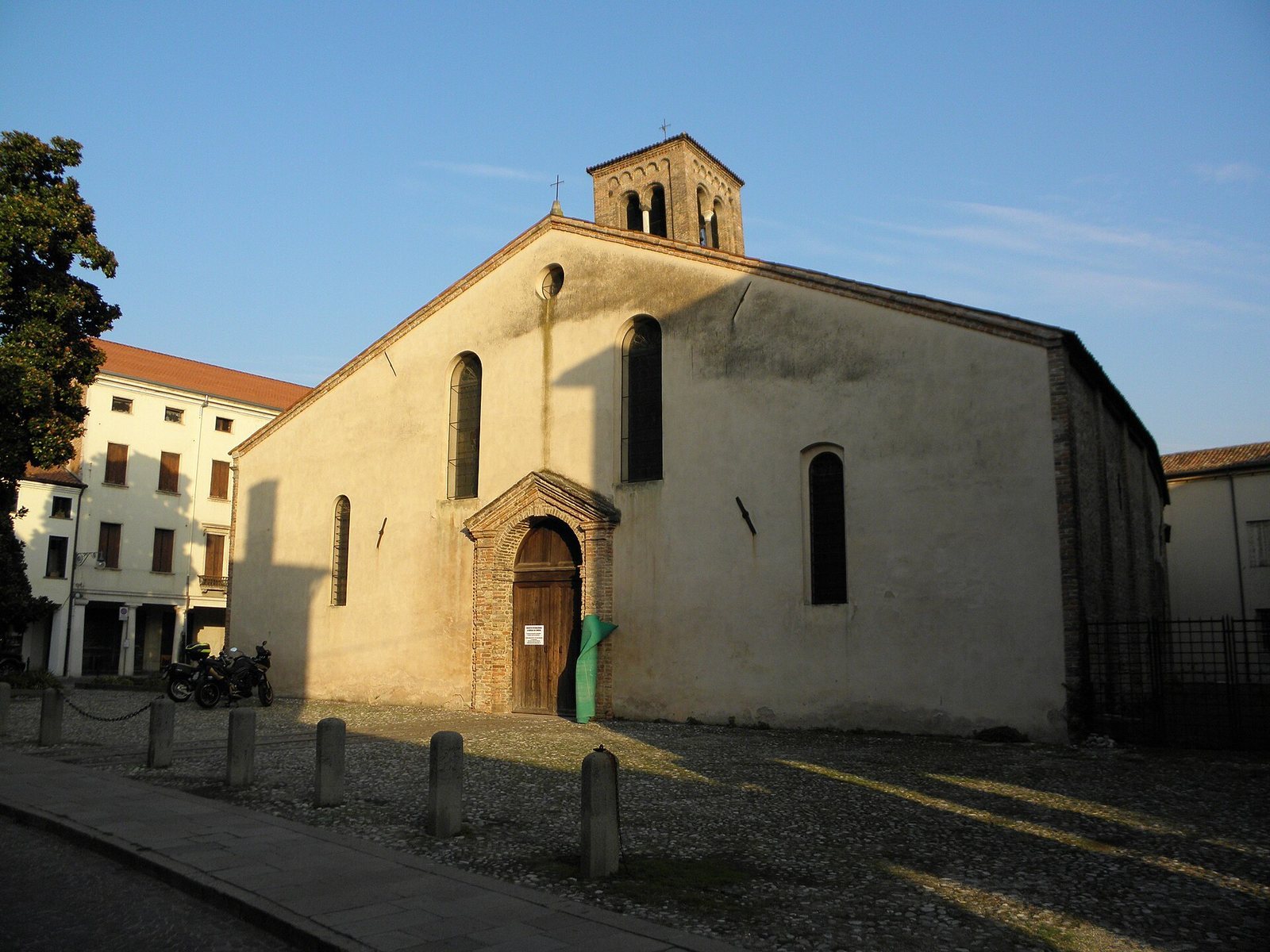
San Martino, Este’s oldest church, stands in the town’s historic centre in Italy. Its construction is broadly dated to the 13th and 14th centuries, and its façade and bell tower have Romanesque features. Records show that a church existed here by the early 11th century, and an earlier structure may have preceded it.
The church is dedicated to Saint Martin of Tours, a 4th-century bishop. This dedication has led some scholars to propose a foundation in the Lombard or Carolingian period. The Lombards were a Germanic people who ruled much of Italy in the early Middle Ages; the Carolingian period takes its name from the Frankish dynasty associated with Charlemagne. A manuscript in Este’s civic community archive attributes the church’s construction to the Lombards. An inscription states that the apse and bell tower were rebuilt in 1293. In the late 13th or early 14th century, the apse was enlarged to include an adjoining chapel dedicated to Saint Lawrence.
Later changes and restoration
In the 17th century, the façade was moved west, extending the nave by about four metres. The bell tower became part of the church building, and the interior was divided into three naves, while the medieval layout was retained. San Martino served as a parish church until 1 June 1771, when the parish seat transferred to the nearby Basilica of Santa Maria delle Grazie. It now serves as a chapel of ease, a church assisting worshippers alongside a parish’s main church, and belongs to the Diocese of Padua and the Vicariate of Este, a local administrative grouping within a diocese.
Restoration work took place in the 19th and 20th centuries. An attached building and a timber store were removed in 1940–1941. Later campaigns, from 1987 to 1997, rebuilt the interior floor.
Remains
Exterior and layout
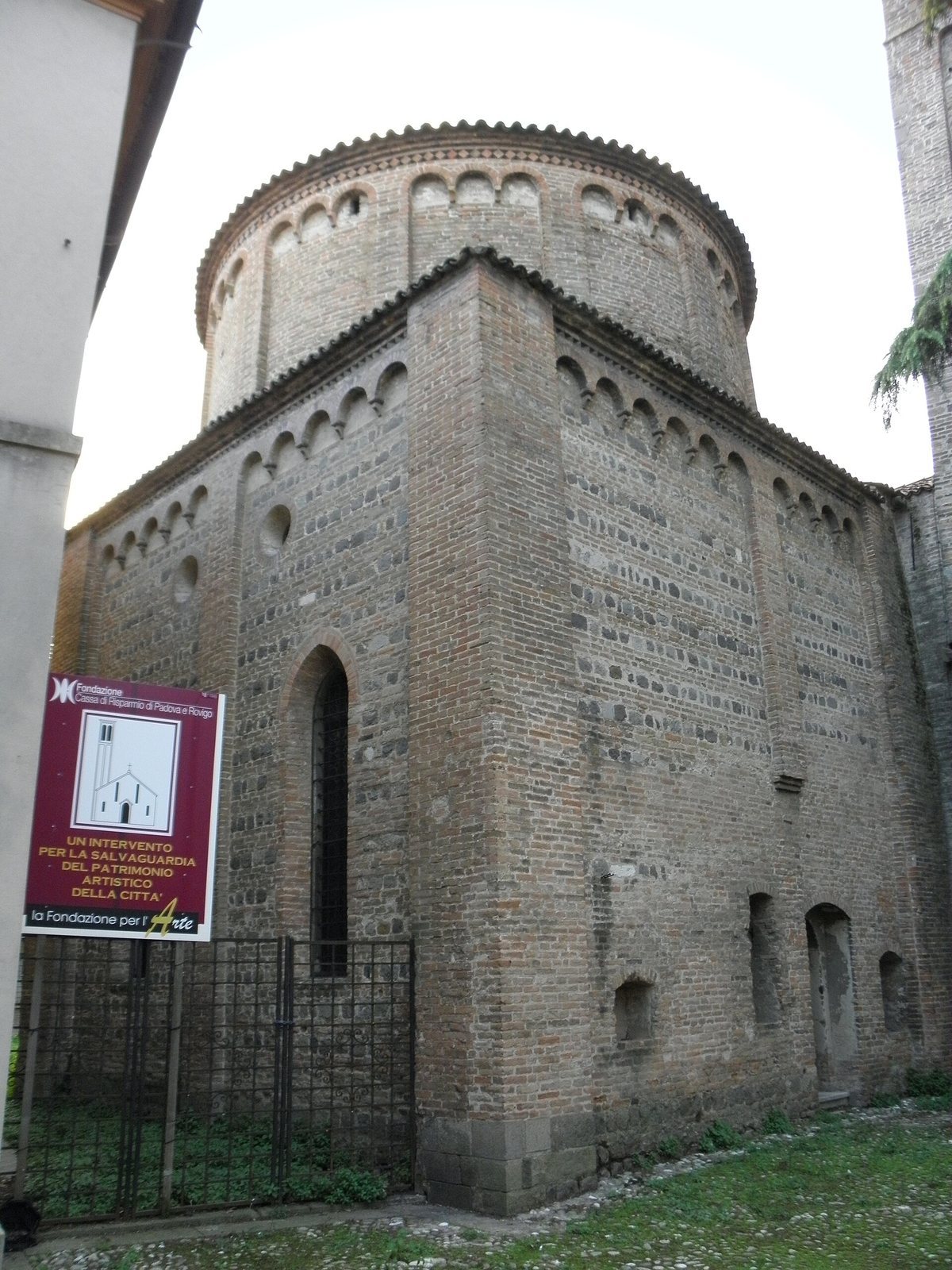
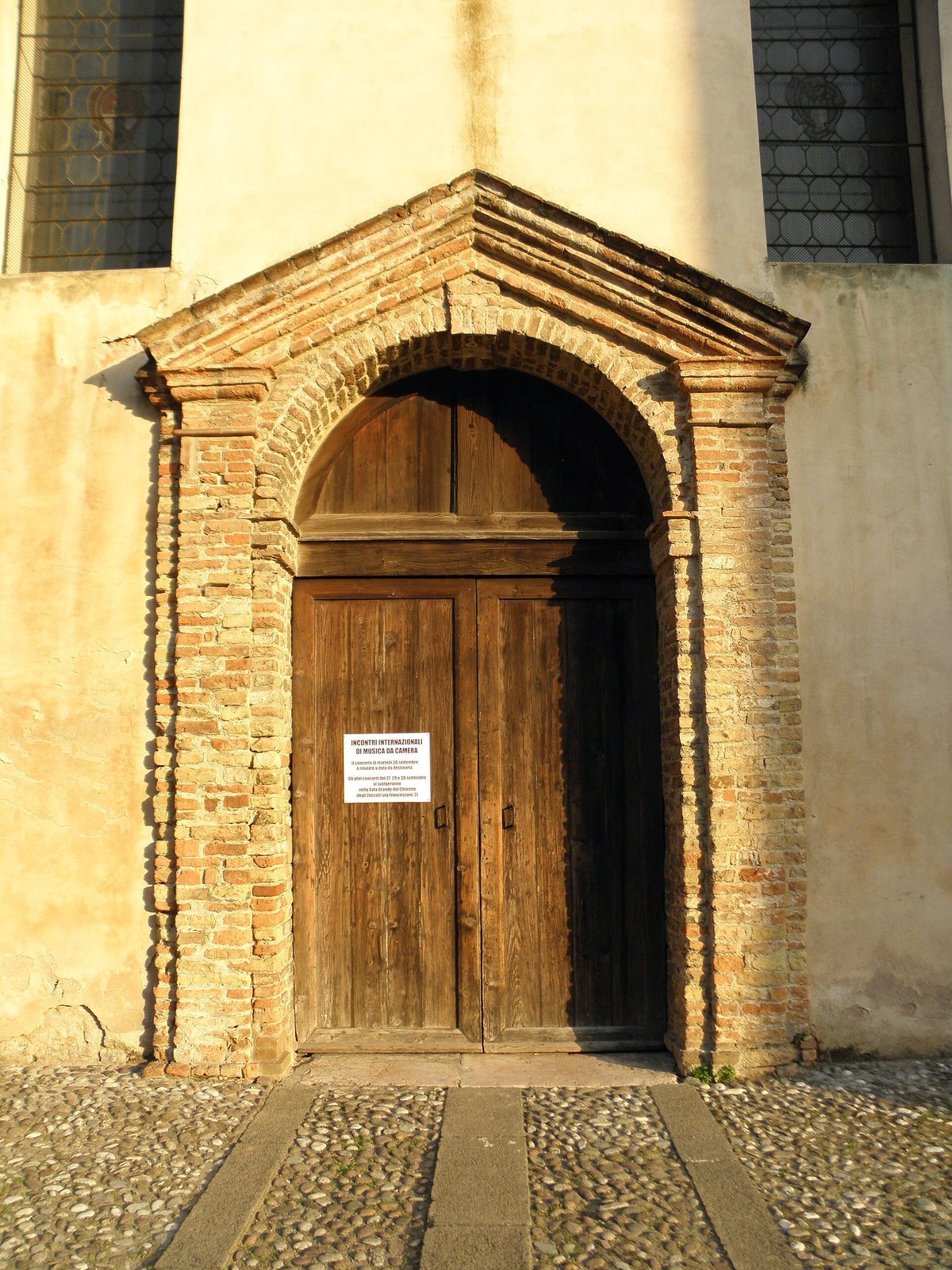
The church stands near Piazza Maggiore, alongside Via Principe Umberto. Its Romanesque gabled façade is undecorated and probably later than the apse and bell tower; its plain appearance may reflect rapid construction or limited resources. The Romanesque bell tower is integrated into the church and rises about 23 metres. It has a marked lean, noted since at least the 15th century, which does not compromise its stability. At the opposite end, the cubic apse is topped by a cylindrical outer structure that shelters a hemispherical dome. Fragments of a starry-sky decoration survive inside the dome.
Interior and furnishings
Presbytery and high altar
The interior has three naves, divided by plastered masonry columns and covered by a timber truss roof. Beneath the dome, at the end of the central nave, the presbytery contains a high altar of Carrara marble made by the Italian sculptor Antonio Bonazza between 1741 and 1743. A marble tabernacle stands between two marble angels. The altar was restored in 1998.
Chapel of Saint Lawrence and wall paintings
Along the right nave, the Chapel of Saint Lawrence contains a mid-14th-century fresco of the Crucifixion of Christ. Its style reflects the influence of the Italian painter Giotto. Other surviving wall-painting fragments show the Madonna and Child with Saint Peter and other saints, as well as the Crucifixion of Saint Margaret of Antioch. Saint Lawrence was an early Christian deacon and martyr.
Marble altar in the left nave
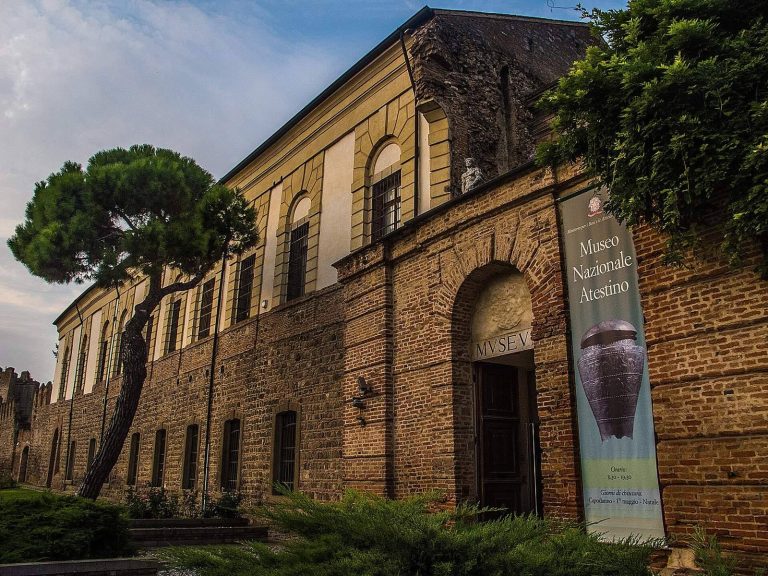
Between the bell tower and side entrance in the left nave is a polychrome marble altar commissioned by the Rota family in the 16th century. It was originally dedicated to Saint Stephen. Reliefs on its lower section portray Saint Roch being captured and taken to prison, and the martyrdoms of Saint Stephen and Saint Sebastian. Statues of those three saints once stood in niches above; they are now held at the Museo Nazionale Atestino.
Paintings removed from the church
Most of the church’s canvases were removed in the 19th century. Among them were a Martyrdom of Saint Lawrence by a painter from the circle of Tintoretto, the 16th-century Venetian artist, and other paintings by Antonio Zanchi, an Italian painter of the 17th century.