Church of the Nativity of Jesus Christ in Balakhna: A Russian Orthodox Church
Site at a Glance
- Popularity
- Low
- Country
- Russia
- Primary era
- Early Modern
- Eras represented
- Early Modern, Modern
- Civilizations
- Russian
- Site type
- Religious
- Remains
- Church
On this page8 sections
History
Convent and early churches
A convent for women occupied the site during the sixteenth and seventeenth centuries. Cossacks burned a wooden church there in 1610. In 1618, a priest named Alexei, also known as Spisok, rebuilt a wooden church with a steep, tent-like roof. A charter dated 1620 is the earliest record of this church. The convent was dissolved in 1764.
Stone church and later use
A stone monastery church was erected in 1674. Records from 1674 to 1676 describe it as not yet consecrated. Its first patron and caretaker was Kondrat Ilyin, a senior priest of Moscow’s Assumption Cathedral, a major Russian Orthodox cathedral dedicated to the Dormition of the Virgin Mary.
The church closed in 1937, and its building was used as warehouses by Balakhna’s city trade organization. The warehouses were removed in autumn 1988, when restoration began; Orthodox services resumed in 1989. The church now belongs to the Russian Orthodox Church’s Nizhny Novgorod Diocese, a regional church jurisdiction, and serves as Balakhna’s principal church. Its rector leads the Balakhna deanery, a grouping of local parishes. In Russia, the church is recognized as a federal cultural heritage monument, a designation for nationally significant heritage.
Remains
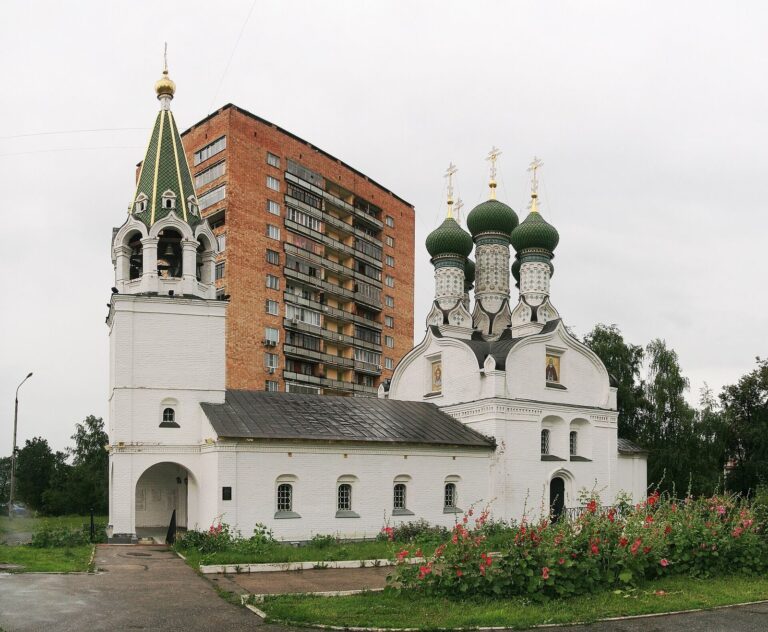
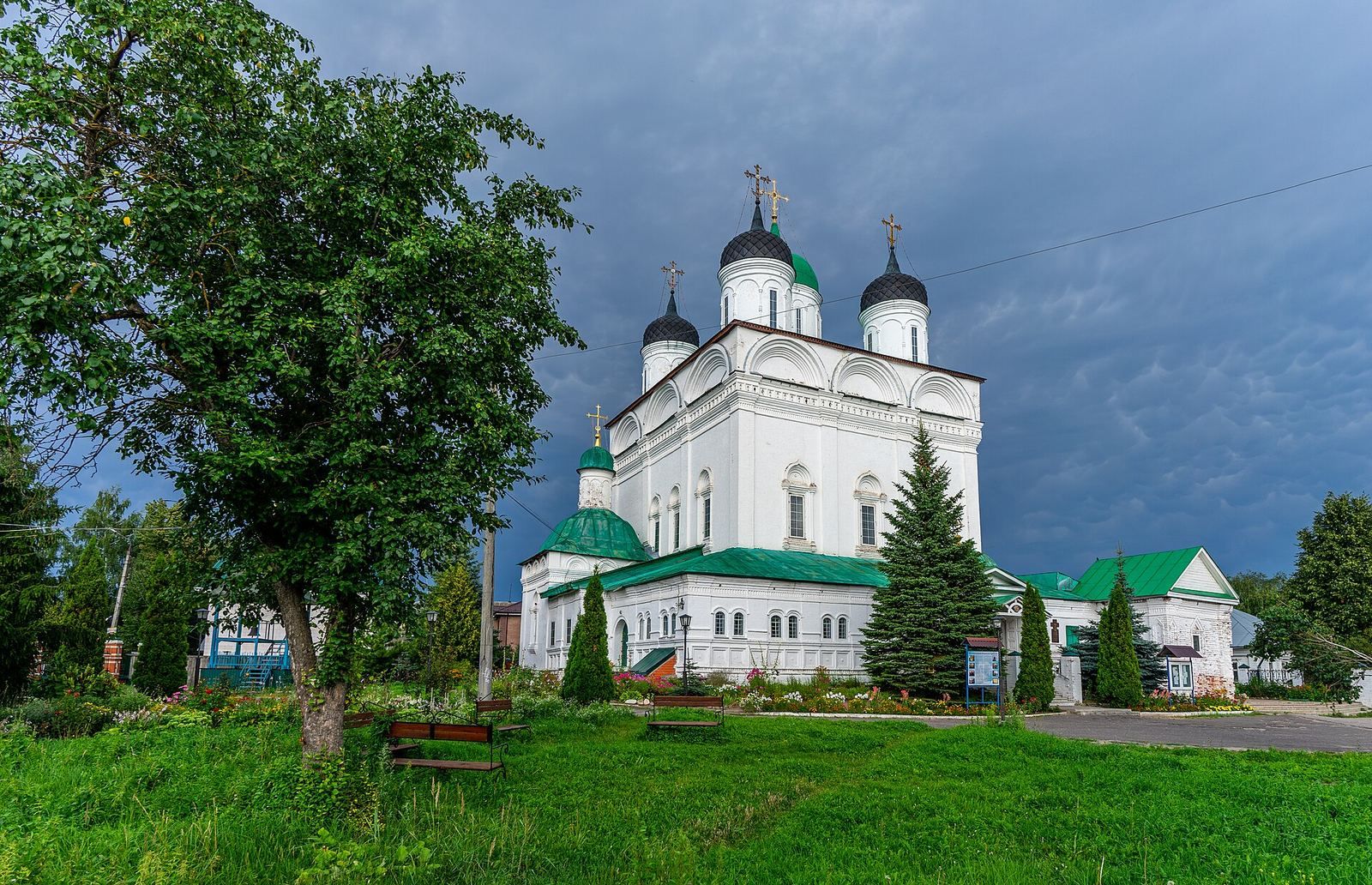
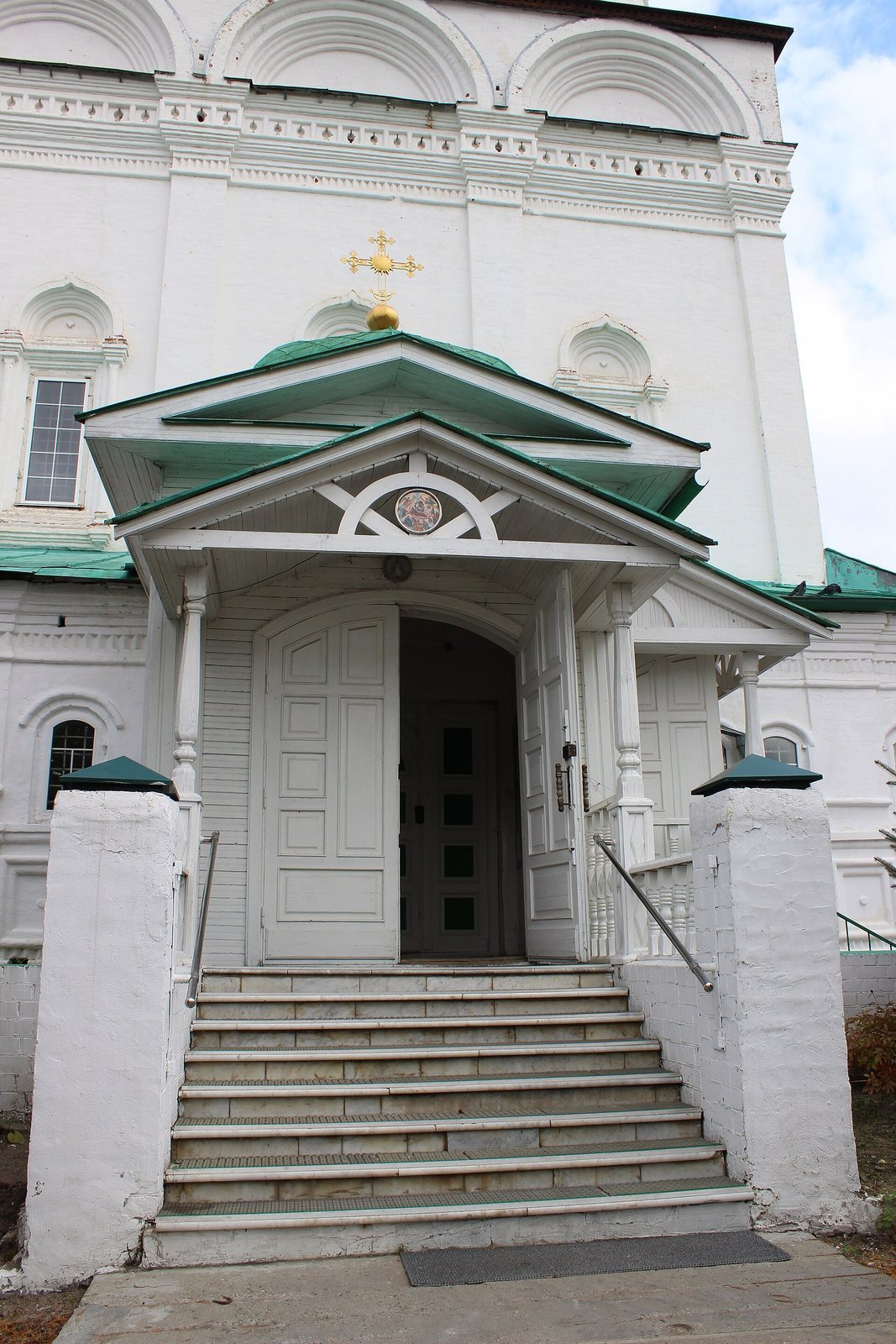
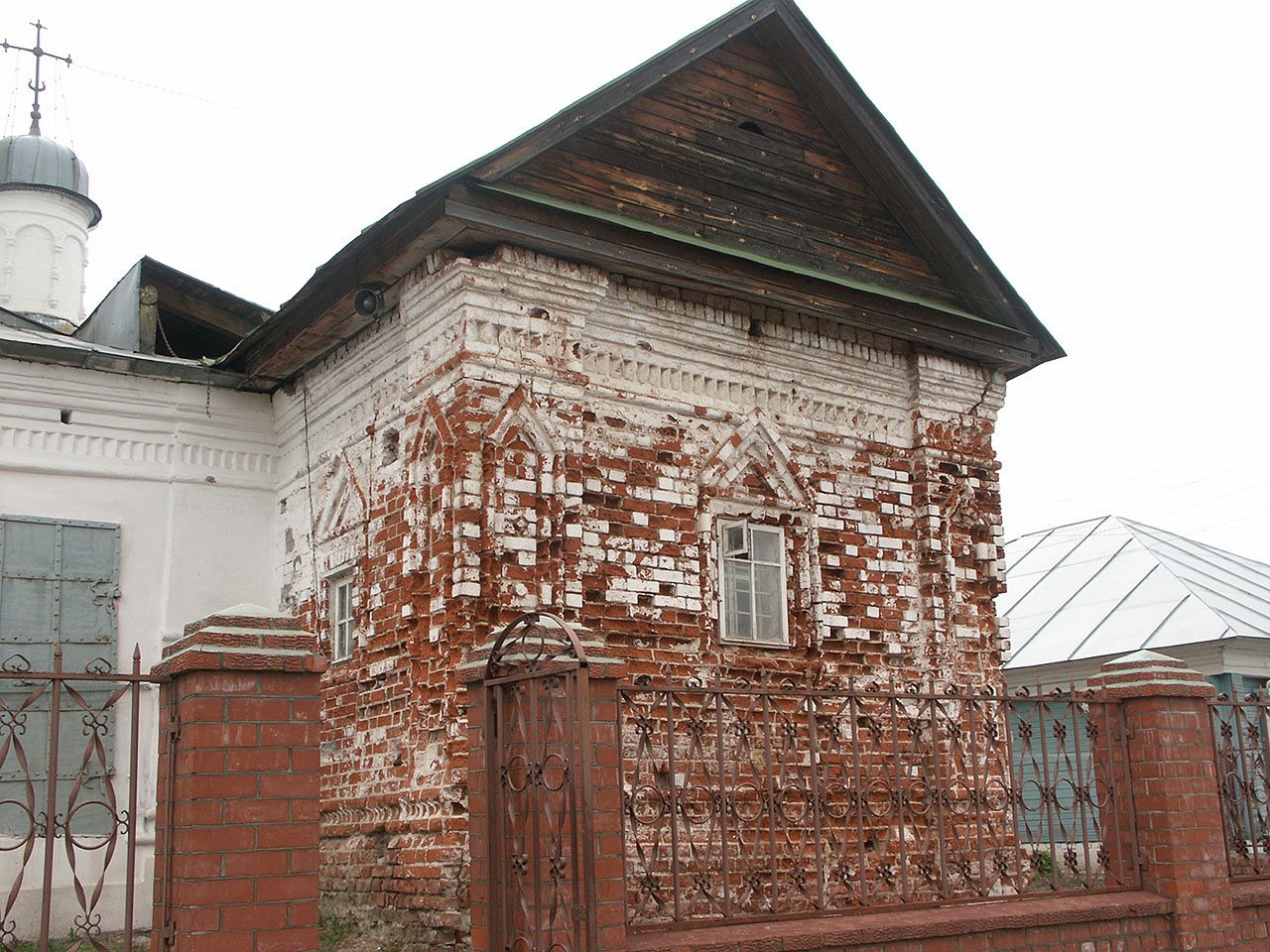
The church is a large, cube-shaped building crowned by five domes. It has two altars, and two simple, cube-shaped side chapels are attached to the main building.
Church building
Domes and roof coverings
The domes were originally clad in glossy green glazed tiles. These had deteriorated too far to retain during restoration. Four domes on the main building are now covered in copper, while the central dome and the side chapels have roofing iron.
Interior decoration and floors
Frescoes showing the Twelve Great Feasts, major festivals in the Eastern Orthodox calendar, survive in semicircular recesses above the arches. Smooth, multicolored glazed ceramic tiles cover the raised area before the sanctuary and the central altar. Eighteenth-century cast-iron floor slabs remain in the main part of the church.
Belfry
The church’s bell tower, built alongside it in the mid-seventeenth century, was dismantled in 1931. A belfry, a structure for housing bells, was built on the site in 2011.