Assumption Church on Ilynskaya Hill: A Seventeenth-Century Russian Orthodox Church
Site at a Glance
- Popularity
- Medium
- Country
- Russia
- Primary era
- Early Modern
- Eras represented
- Early Modern, Modern
- Civilizations
- Russian
- Site type
- Religious
- Remains
- Church
On this page9 sections
History
The Assumption Church on Ilynskaya Hill is a Russian Orthodox church in Russia, completed in 1672 by the merchant Athanasius Firsovich Olisov in the ornate Russian architectural style known as Uzorochye. Its dedication refers to the Christian belief that Mary was taken into heaven at the end of her earthly life.
The monastery and stone church
A monastery stood on the site before the stone church. A 1606 charter issued by Tsar Vasily IV, who ruled Russia from 1606 to 1610, mentions the monastery and its wooden church dedicated to the Assumption of the Mother of God. A charter from 1621 describes that wooden church as serving a parish.
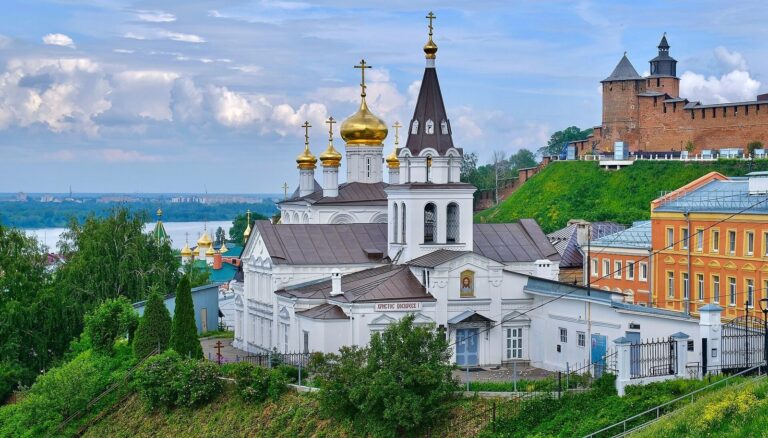
Olisov’s stone church was completed in 1672. A fire damaged it in 1715, and the building was subsequently restored. Rebuilding and alterations in the late eighteenth and early nineteenth centuries changed its original appearance.
Alterations and threatened demolition
In the 1850s, architect A. E. Turmyshev designed a new multi-tier bell tower in a pseudo-Byzantine style. The altar was rebuilt and enlarged in 1899.
In 1934, the church was desecrated, and its refectory and bell tower were demolished. Plans also called for the main church to be destroyed to clear the way for a residential quarter. Architect Svyatoslav Agafonov raised the alarm, and city chief architect Yuri Bubnov asked V. V. Voronkov to intervene. Voronkov sent an urgent telegram to Soviet Minister of Culture Ekaterina Furtseva. Demolition work was stopped on the evening before it was due to begin.
Restoration and continued use
Restoration in 1965–1967 recovered the original appearance of the church’s main body. Agafonov led the work and proposed rebuilding the refectory and bell tower.
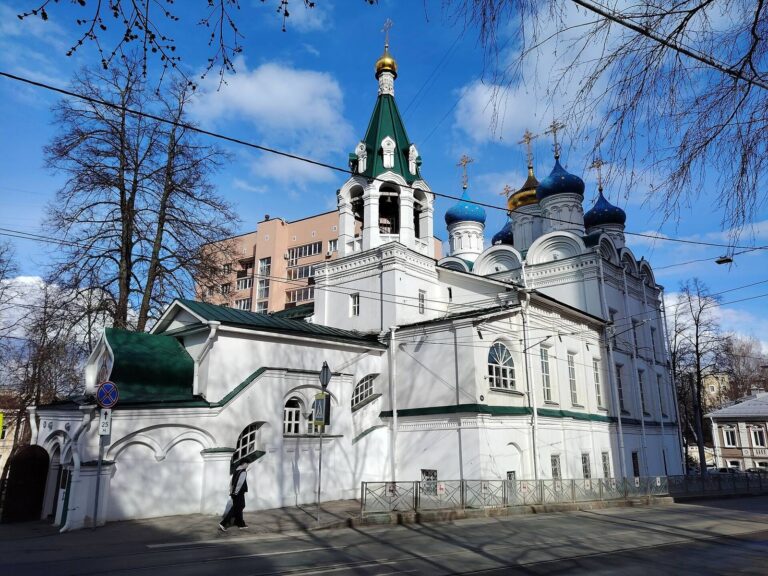
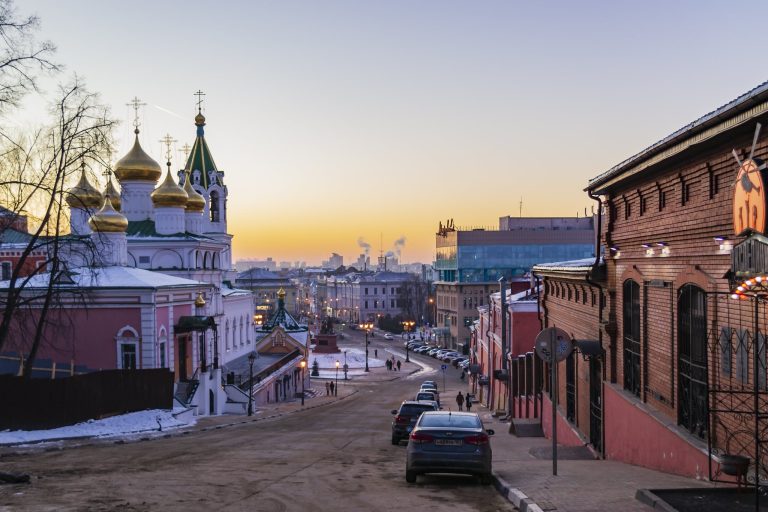
The altar table was consecrated in 2003 in the Orthodox Great Rite, a formal service dedicating it for liturgical use. In 2004, the church was restored as the first church reconstructed under the Ilyinsky Settlement project, and the refectory and bell tower were rebuilt. On March 15, icon painters led by Alexei Vladimirovich Antsiferov began work on the church paintings, altar restoration, and icon screen. The crosses and bells were consecrated on June 12. The church joined the Central Bishop’s Metochion, an ecclesiastical establishment associated with a bishop, on July 28; the following day, Bishop George of Nizhny Novgorod and Arzamas performed the Great Rite of Consecration.
The church remains an active place of Orthodox worship. It belongs to the Nizhny Novgorod Diocese and Deanery and has held federal cultural heritage monument status in Russia.
Remains
Church body and roof
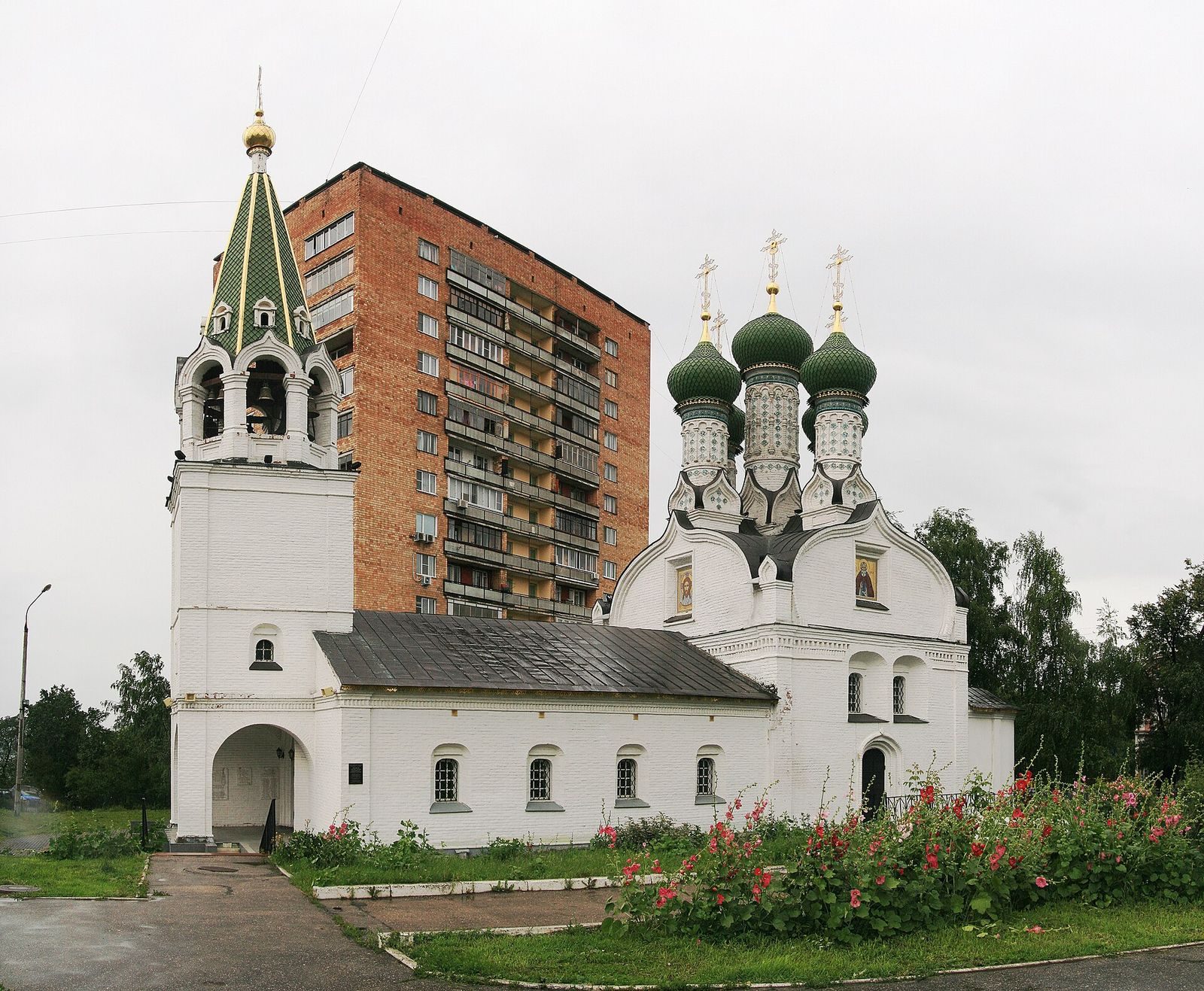
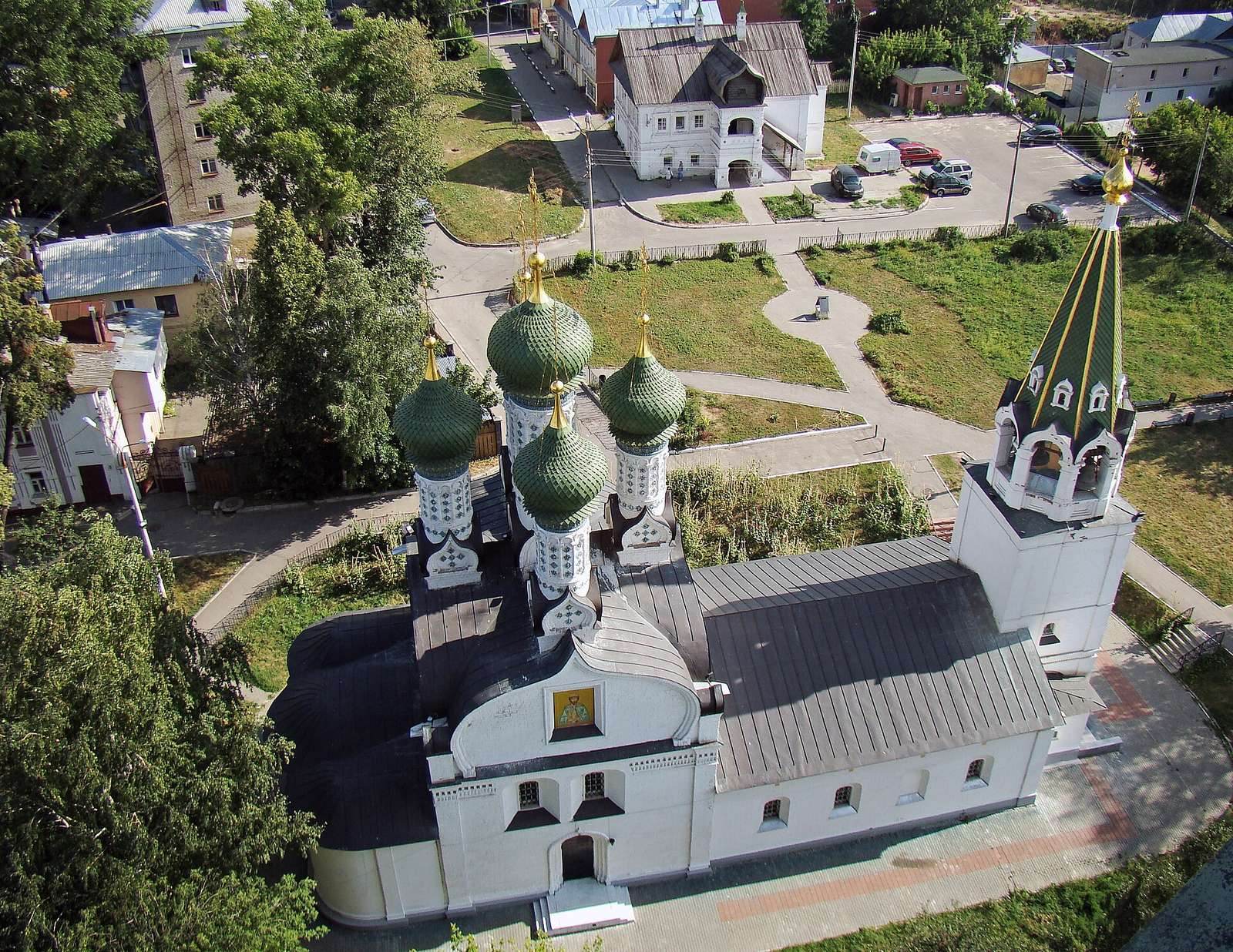
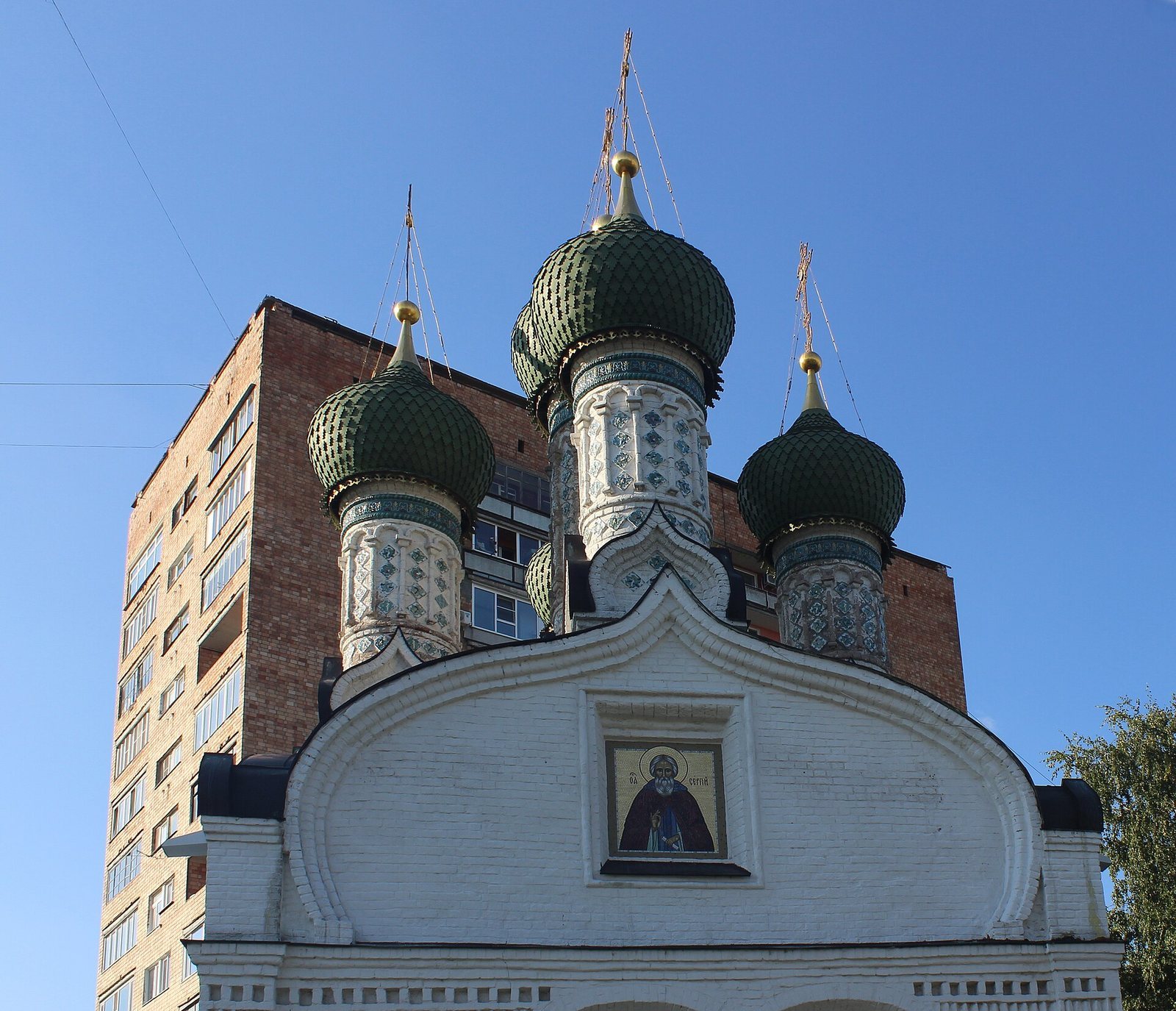
The stone church complex comprises the main church, an altar, a refectory, and a multi-tier bell tower. The main body has a four-faced, cross-shaped barrel roof, formed by intersecting curved roof sections. It is the only seventeenth-century church building in the history of stone architecture with this roofing form. In later alterations, triangular pediments covered the barrel roofs, and the corners were clad in roofing iron.
Refectory and bell tower
The refectory was enlarged, and its arched ceilings were replaced with wooden ceilings supported by column-like piers. The rebuilt complex includes the refectory and the multi-tier bell tower. The largest consecrated bell weighs 1,600 kilograms.
Exterior mosaics
Four mosaic icons consecrated on October 14, 2011, are set on an exterior wall. They depict the Image of Christ Not Made by Hands, traditionally understood as an image not made by human hands; Saint George Vsevolodovich, a medieval prince of Vladimir venerated as a saint; Sergius of Radonezh, a major Russian Orthodox monastic saint; and the Archangel Michael. The Ark icon-painting workshop made the mosaics, each of which took about two months to complete.
Relics and icons
The church holds relic fragments associated with Saint Barbara, an early Christian martyr, and with Philaret and Innocent of Moscow, Russian Orthodox metropolitans. Its icons include the Lord Almighty, Saint George the Victorious, and a copy of the wonderworking icon of the Mother of God called The Inexhaustible Chalice, given by the Serpukhov Monastery in August 2004.