Lutheran Church in Moloskovitsy: A Seventeenth-Century Parish Church
Site at a Glance
- Popularity
- Medium
- Country
- Russia
- Primary era
- Early Modern
- Eras represented
- Early Modern, Modern
- Civilizations
- Russian, Swedish
- Site type
- Religious
- Remains
- Church
On this page5 sections
History
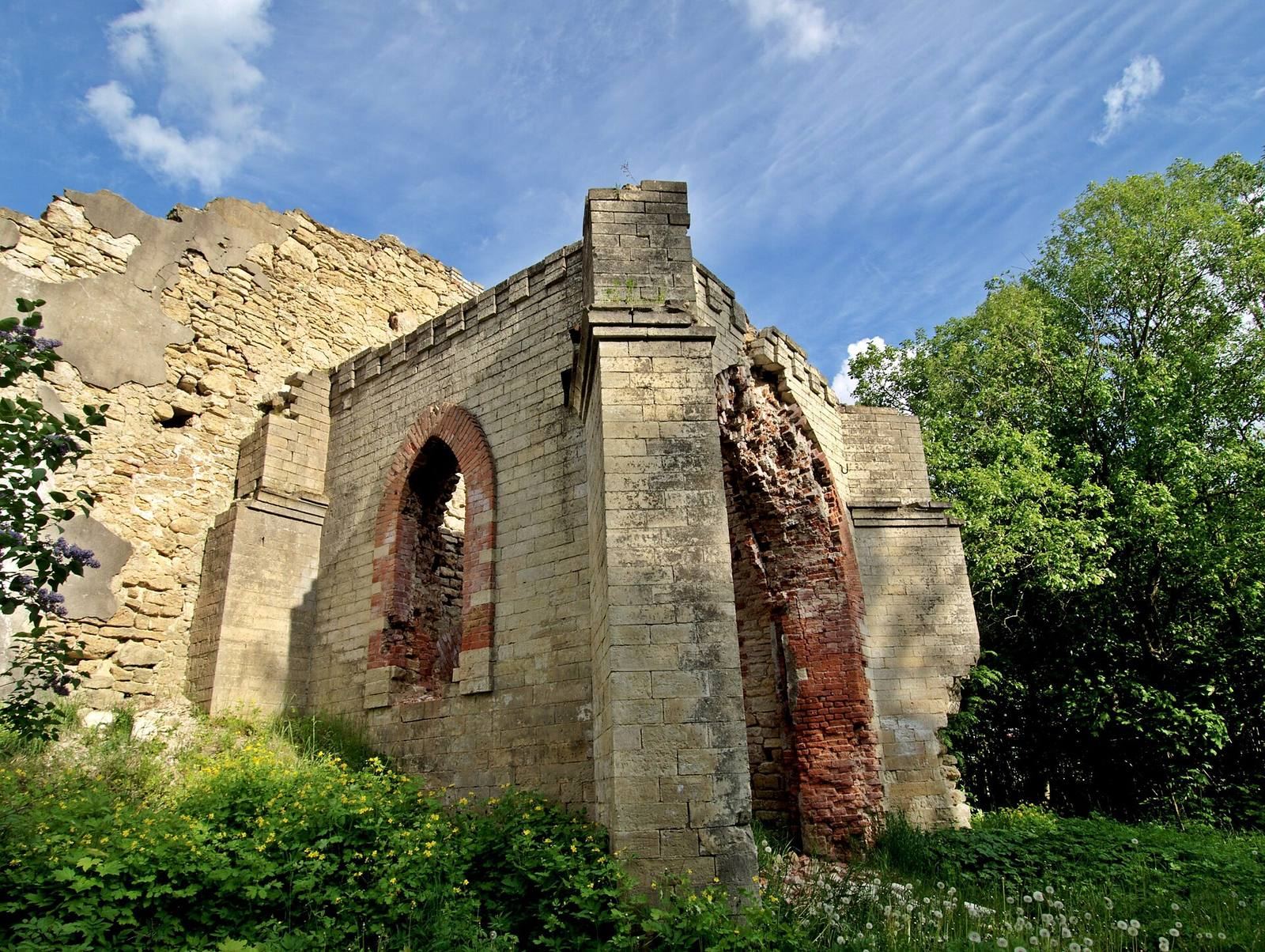
The Lutheran Church in Moloskovitsy, Russia, is a stone Lutheran building dating to 1632 and now surviving in ruins. It was the oldest Lutheran church in Leningrad Oblast and the oldest Lutheran parish church in Western Ingria.
Formation and growth of the parish
The Moloskovitsy Lutheran community took shape in the 1630s under Swedish rule, in association with settlers who had migrated from Germany. The church became the center of the Moloskovitsa parish of the Evangelical Lutheran Church of Ingria, a Lutheran church body connected with Ingria, a historic region on the eastern side of the Gulf of Finland that includes territory around present-day Saint Petersburg. Under the Russian Empire, the parish belonged to the Western Ingrian deanery, an administrative grouping of congregations, in Saint Petersburg Province. Its area extended across the Yamburg and Peterhof districts.
The parish included the Unaditsa chapel parish and, from 1759 to 1834, the Novasolkka chapel parish. Two pastorates, each comprising a pastor’s office and the congregation or area in its care, operated in the early nineteenth century. As the population changed and serfs were resettled elsewhere, Unaditsa parish was dissolved and Novasolkka became independent. A Finnish chapel church in Zimititsy was also attached to the parish during the nineteenth century; it closed in the 1930s.
By the early twentieth century, the parish encompassed 76 villages. It had 2,825 members in 1859 and 2,469 in 1865. In the 1860s, all but 71 members were Ingrian Finns of the Savakot group, Finnish-speaking settlers in Ingria historically associated with migration from Savo. Membership stood at 2,350 in 1907 and 2,537 in 1917, when about 2,500 members were Estonians.
Regular services in Estonian began in 1874, following the arrival of many Estonian tenant farmers in the parish during the second half of the nineteenth century. A Sunday school opened in 1890, and a temperance society followed in 1896. In 1877, parishioner Mikkeli T. Harju donated 7,000 rubles for church repairs. Pentti Kekki and his son Juhani gave the church 8,000 rubles in 1901. A major repair took place in 1902, funded and designed by Provost K. Palander, a senior church official responsible for oversight.
Closure, wartime use, and damage
Pastor Leo Schultz served the Estonian congregation from 1921 to 1937 and the Finnish congregation from 1925 to 1927. After a service at Moloskovitsy in 1937, he was arrested along with about 100 parishioners. Services stopped in August that year. The church closed in October 1938 and was used as a club. Services resumed during the German occupation in 1942 and 1943.
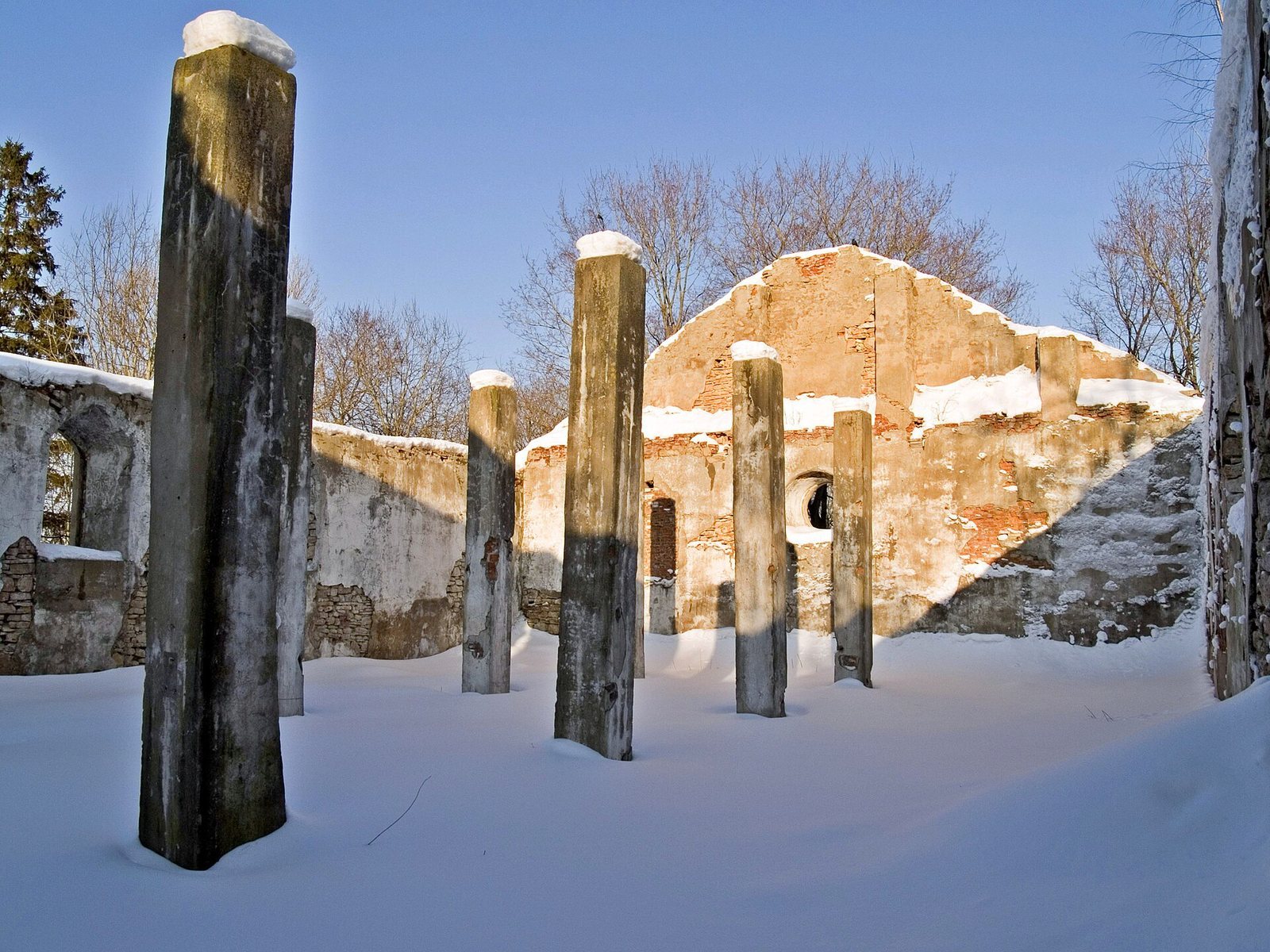
During the Second World War, shelling damaged the bell tower. After Soviet troops retook the village, soldiers and local residents lit a fire inside the church for warmth, and a fire broke out. The building deteriorated further during the 1960s through the 1980s.
Recent history
A service among the ruins in 2011 marked the 400th anniversary of the Evangelical Lutheran Church of Ingria and was the first service held at the church in its modern history. The ruins received regional cultural-heritage status in 2021. At the end of 2024, the Evangelical Lutheran Church of Ingria took ownership of the ruins and the land beneath them.
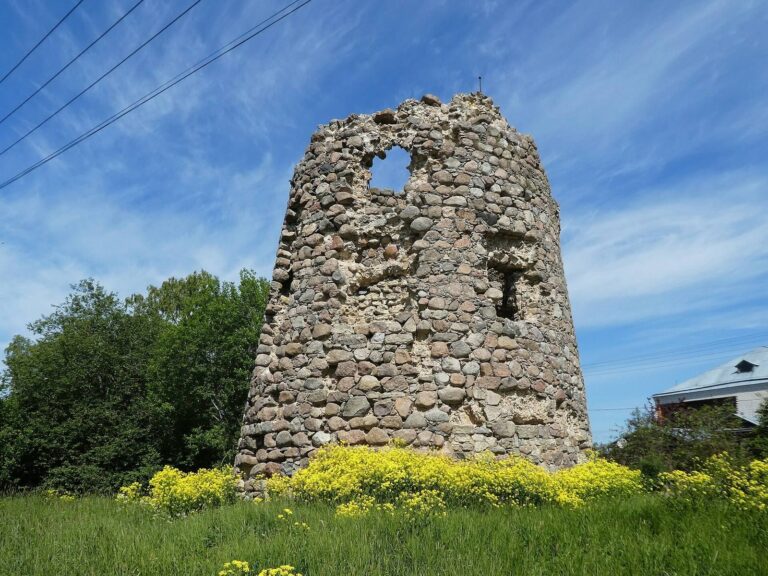
Remains
The surviving structure is the ruin of the stone church, which had capacity for 400 people. Its white limestone gave it the name “White Church,” or Valkeakirkko in Finnish. A brick bell tower was built in 1877. During the major repairs of 1902, the roof was lowered, including its Gothic crowning feature, and stoves were installed. The roof has since collapsed, and the bell tower was lost entirely during the church’s deterioration in the 1960s through the 1980s.