Church of the Assumption of the Blessed Virgin Mary: An Orthodox Church within Ivangorod Fortress
Site at a Glance
- Popularity
- Low
- Country
- Russia
- Primary era
- Early Modern
- Eras represented
- Early Modern
- Civilizations
- Russian
- Site type
- Religious
- Remains
- Church
On this page7 sections
History
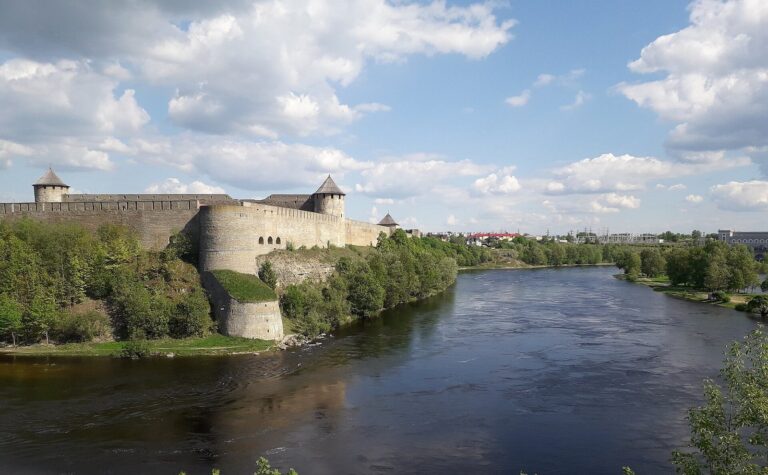
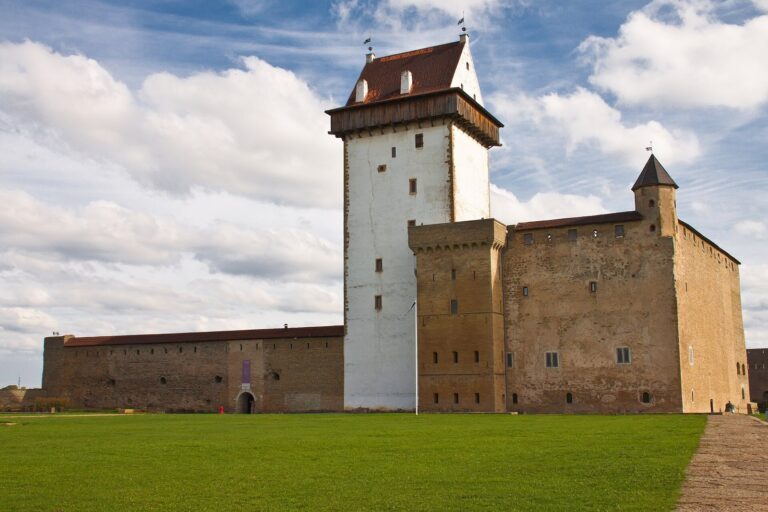
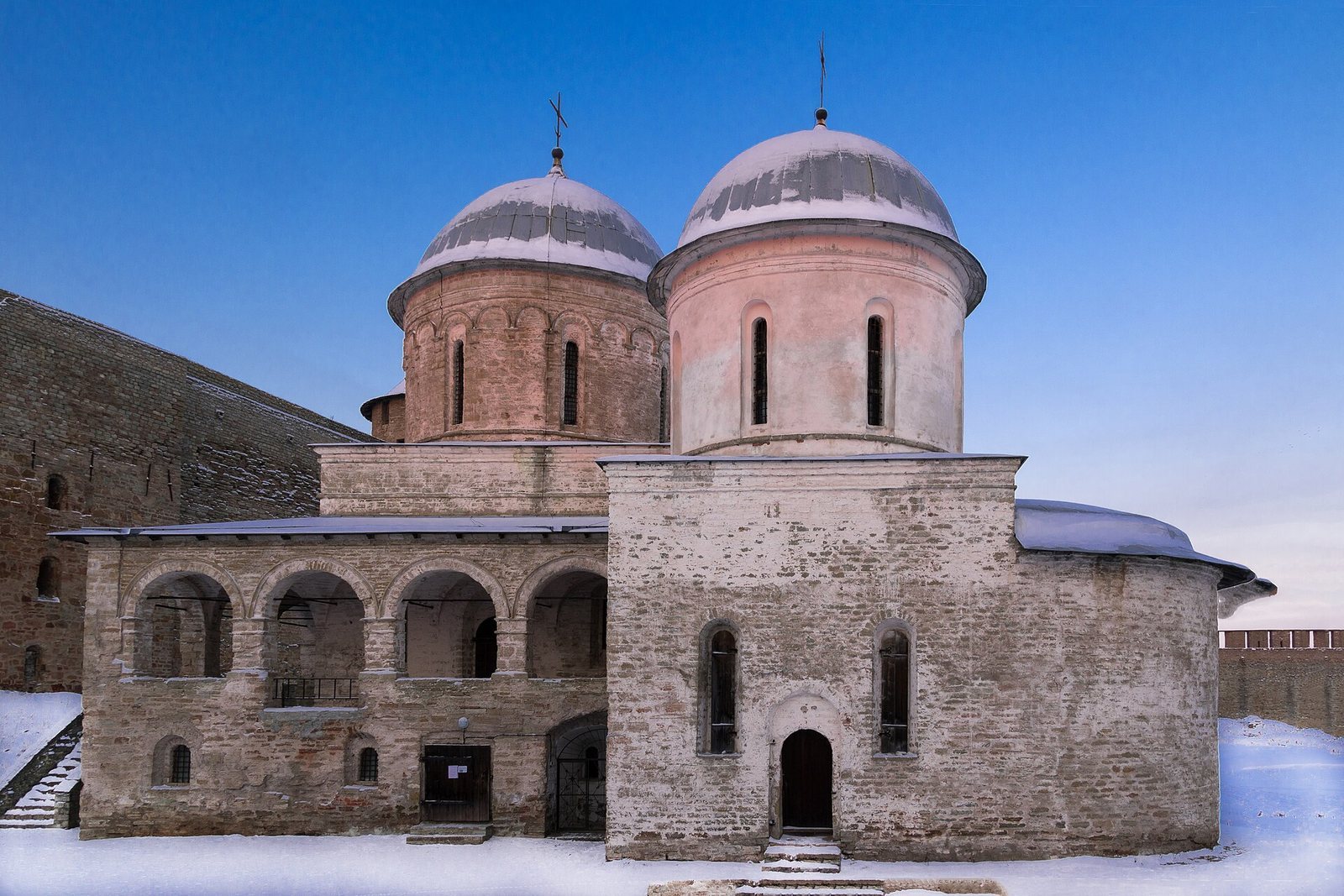
The Church of the Assumption of the Blessed Virgin Mary is an Orthodox parish church within Ivangorod Fortress in Russia, in the area known in Estonian as Jaanilinn and now on the Russian side of the control line. Its stone building was erected in 1507–1509 during the fortress’s construction. The church belongs to the Gatchina Diocese, a territorial jurisdiction of the Russian Orthodox Church.
Foundation and early dedication
An early church is associated with 1492, but its precise foundation date is uncertain, with estimates ranging from the late 15th to the mid-16th century. The design or construction of the stone church is tentatively linked to Mark the Greek, a Greek architect active in Russia in the 16th century. Its first dedication was to an icon of St Nicholas the Wonderworker, a Christian saint especially venerated in Orthodox tradition. After the fortress was completed, the church was rededicated to an icon of the Dormition of the Virgin, the Orthodox feast commemorating Mary’s death and reception into heaven. The fortress itself was consecrated on that feast.
Swedish and Russian rule
During Swedish rule, the church became a place of worship for the garrison in the Lutheran tradition, a Protestant movement that developed during the Reformation. Russian forces captured Narva and Ivangorod in 1704, after which the church closed. In 1744, Empress Elizabeth Petrovna ordered its restoration for Orthodox worship.
The church belonged to the Diocese of St Petersburg until 1827, when it was transferred to the Russian military. It returned to the diocese in 1865. Renovations took place in 1838–1846 and 1896–1901.
Parish and modern history
The parish served Jaanilinn and nearby settlements including Popovka, Dolgaja Niva, Komarovka, Zahonje, and Kobõljaki. Its congregation used the church until the parish closed in 1940. Fighting near Narva in 1944 severely damaged the building, which then closed; church valuables and bells were lost.
Restoration began in 1976 and was completed during the 1980s. The church served as a concert hall until 1988. It was returned to the Russian Orthodox Church in 1991, and services resumed. A chapel dedicated to New Martyr Alexander Volkov, a title for Christians venerated as having died for their faith in more recent periods, was established in 2010. The church is designated a cultural heritage site of federal significance in Russia.
Remains
Stone church and southern wing
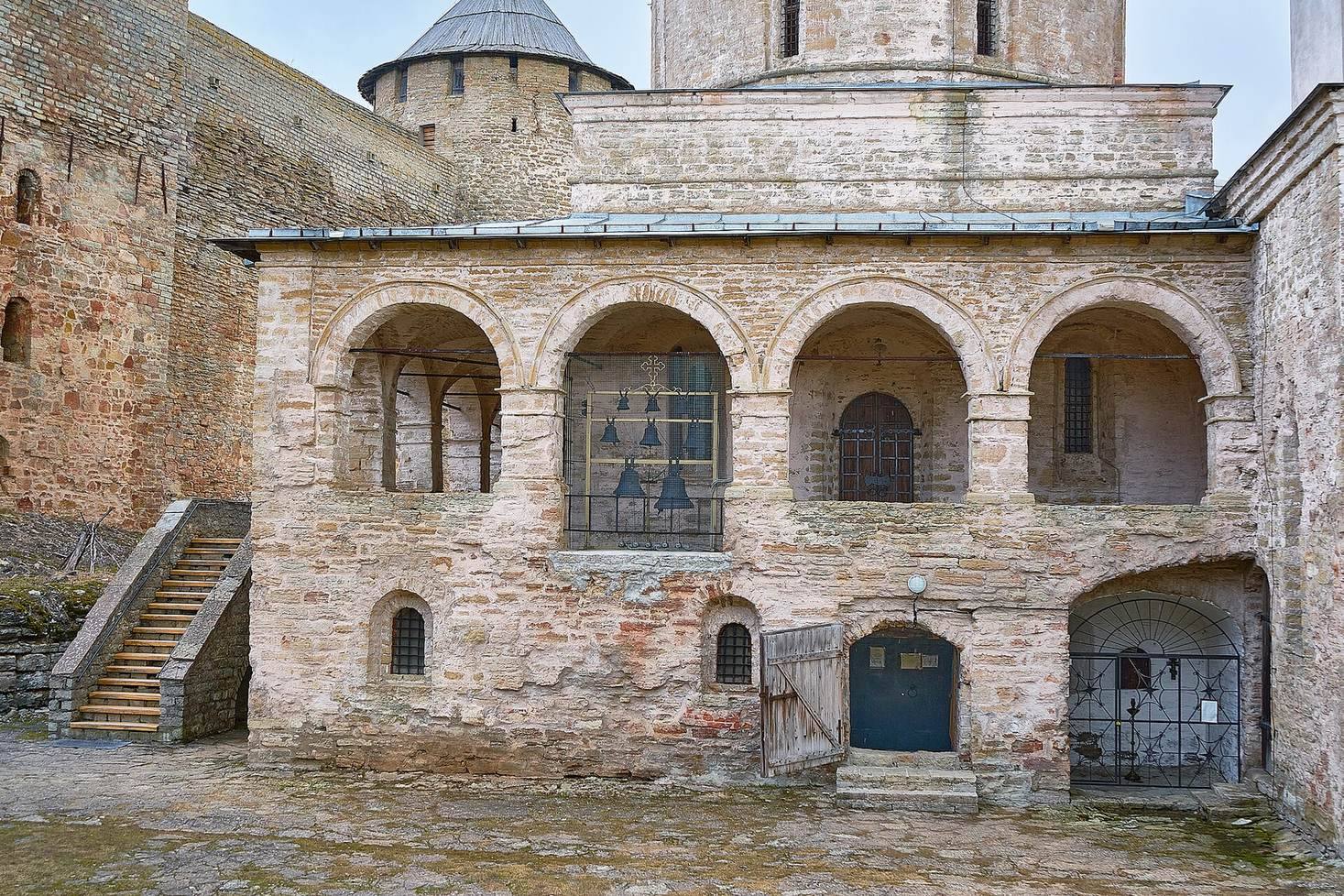
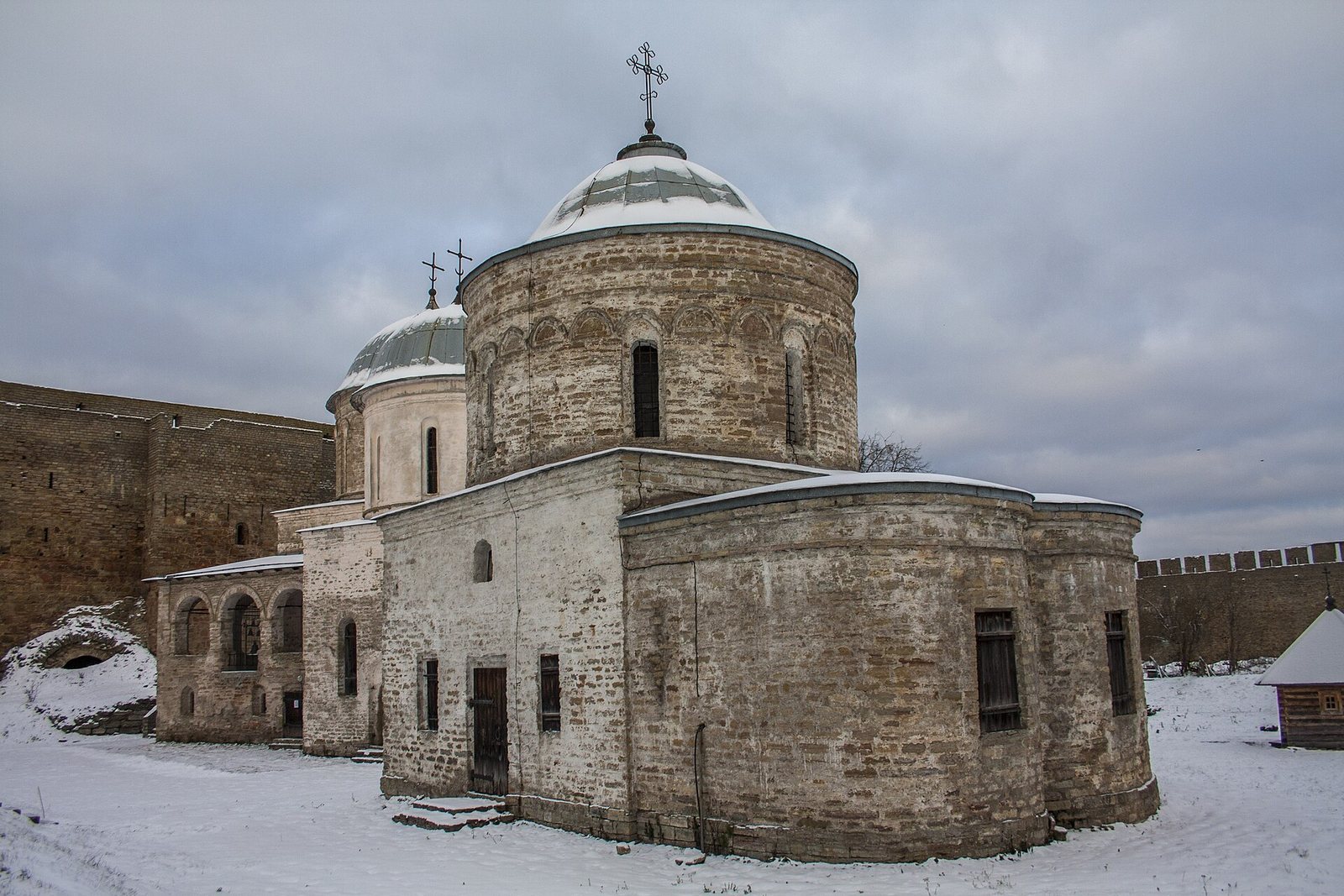
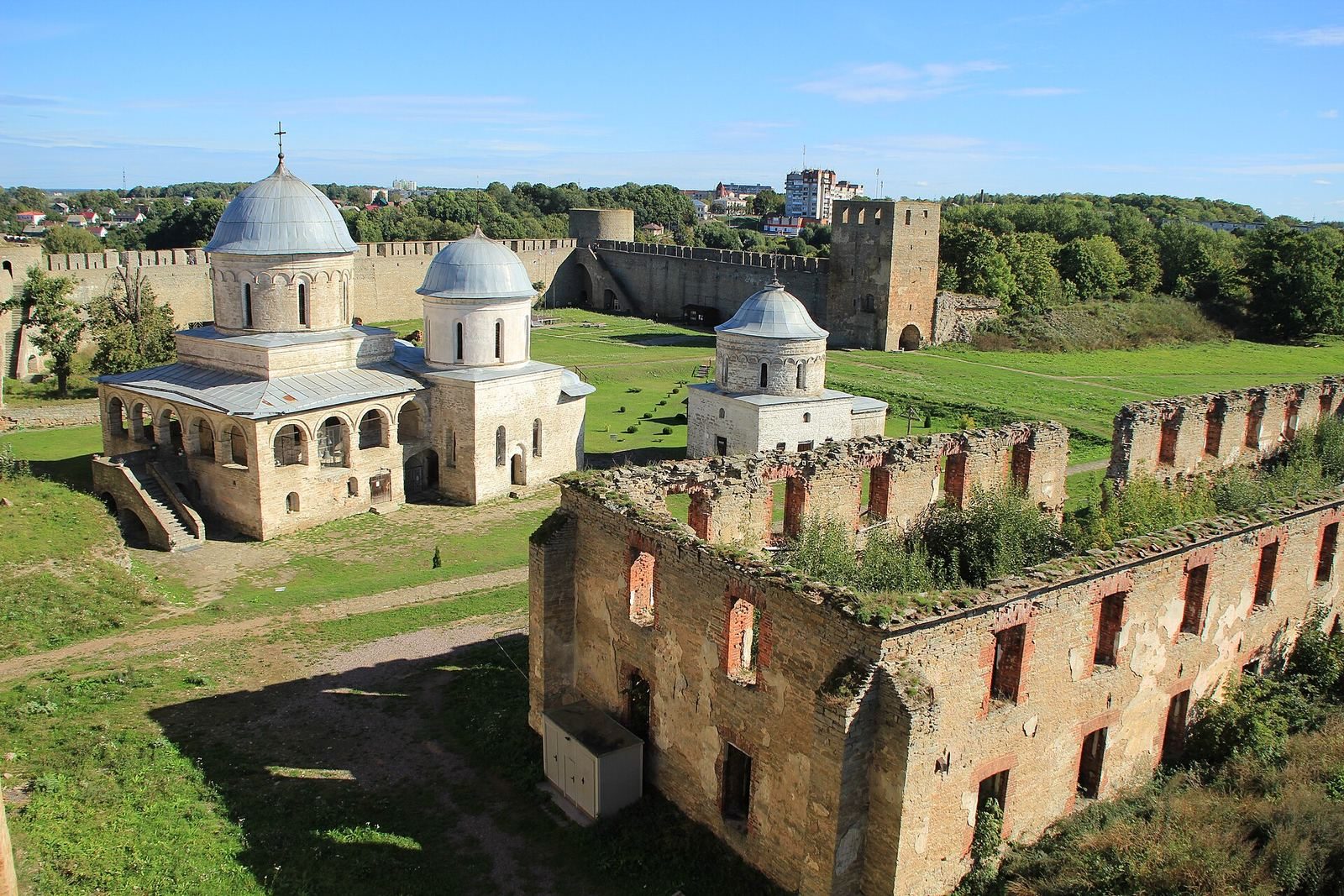
The stone complex consists of a northern church building and a southern wing, which together form a distinctive ensemble. The southern wing became an independent church in 1757, dedicated to the Intercession of the Virgin, a feast recalling her protection and prayers for believers. Work during the 1750s probably added a bell tower to the wing. The church towers formerly had tent-shaped roofs. Restoration followed the original design while revising the earlier roof and tower arrangement.
Icon and chapel
The church kept a Hodegetria icon, a type of image of Mary and the Christ Child in which Mary points toward Christ. Tradition holds that the icon escaped damage in the 1558 fire at Narva.