Koporye Fortress: A Medieval Stronghold in Russia
Site at a Glance
- Popularity
- Very High
- Country
- Russia
- Primary era
- Early Modern
- Eras represented
- Medieval, Early Modern, Modern
- Civilizations
- Novgorod Republic, Russian
- Site type
- Military
- Remains
- Castle
On this page9 sections
History
Koporye Fortress is a medieval stronghold in Russia, founded in 1237 and repeatedly rebuilt, with many surviving structures dating to late fifteenth- and early sixteenth-century reconstruction. It helped defend Novgorod’s northern lands and stood in an important iron-producing region.
Early fortress and Novgorod
The first recorded fortress at Koporye was a wooden structure built in winter 1240 by knights of the Livonian Order, a Catholic military order active in the eastern Baltic. Alexander Nevsky, a medieval prince of Novgorod, captured and destroyed it the following year. The celebrated warrior Gavrila Alexich died during the assault.
In 1280, Grand Prince Dmitry Alexandrovich, Alexander Nevsky’s son, built a stone fortress at Koporye. Novgorodians destroyed it two years later during a conflict with the prince, then rebuilt it in 1297. In the fourteenth and fifteenth centuries, Novgorod repeatedly granted the town to princes hired to defend the republic’s northern territories. Although the town remained small, by the end of the fifteenth century it had 18 houses, residences for a prince and several landowners, and a major fortress.
Muscovite and Swedish control
After Novgorod became part of the Muscovite state, the fortress was rebuilt and strengthened to withstand cannon fire. Most of the structures that remain date from this late fifteenth- and early sixteenth-century work. In 1565, Ivan IV divided the state between the oprichnina, a territory and system of rule set apart by the tsar, and the zemshchina, the remainder of the state administered separately. Koporye was assigned to the latter.
Swedish forces captured the fortress in 1581. It returned to Russia in 1590 under an agreement, but the 1617 Treaty of Stolbovo, a settlement between Sweden and Russia, transferred it to Sweden again. During the Time of Troubles, a period of political crisis and competing claims to rule in Russia, a Swedish force of about 2,000 attacked Koporye and the Russian garrison surrendered. Russia’s effort to retake the fortress in 1656–1657 failed.
Anticipating further Russian attacks, Swedish governor S. Kelmfelt reinforced the garrison and repaired the deteriorating defenses. After inspecting the fortress in 1681, military engineer Erik Dahlberg considered its condition poor and proposed dismantling it. Otto Fersen, governor of Ingria, instead urged the Swedish king to keep it, arguing that troops might need a secure refuge there.
Russian recapture and later use
In 1703, during the Great Northern War, a conflict between Sweden and a coalition led by Russia and its allies, Russian forces under Field Marshal Boris Sheremetev besieged the fortress. Captain Wasili Apolloff commanded its 80 Swedish defenders. Sheremetev’s force included noble cavalry, five infantry regiments, and five guns. Peter I later sent three more regiments from near Yamburg, together with three mortars and two howitzers. Bombardment began on 27 May and forced the Swedish garrison to surrender.
On 1 June, Peter I and Alexander Menshikov inspected the fortress and ordered a plan of the complex. Peter returned on later occasions, and Russian soldiers repaired the defenses from 1704. He gave the fortress to Menshikov in 1708; after Menshikov fell from favor, it passed to the state treasury in 1727. The fortress came under the St. Petersburg provincial administration in 1748–1750 and ceased to be listed as a defensive work in 1763. When a member of the Zinoviev family proposed selling dressed stone from the site, Interior Ministry official F. Engel rejected the plan, citing the protection of ancient buildings.
Conflict, preservation, and study
On 23 October 1919, troops of the Northwestern Army’s 6th Talab Infantry Regiment counterattacked the village and fortress, which were held by the 6th Division of the 7th Red Army. The Northwestern Army was an anti-Bolshevik force in the Russian Civil War, fought between Bolshevik and anti-Bolshevik forces after the 1917 revolutions. German and Soviet forces fought at Koporye in August 1941; Soviet troops withdrew on 1 September. Red Army units halted the German advance at the Voronka River, about 12 kilometres away, and Koporye was liberated in January 1944.
The fortress received federal-level cultural heritage status in 1960 and became a museum in 2001. Systematic study and restoration began in 1970. Conservation work from 1979 to 1983 treated a tower in the gate complex and part of a defensive wall with a tower. Preliminary scientific investigations and archaeological excavations followed in 2018–2019, and emergency work on the fortress towers was completed in 2021.
Remains
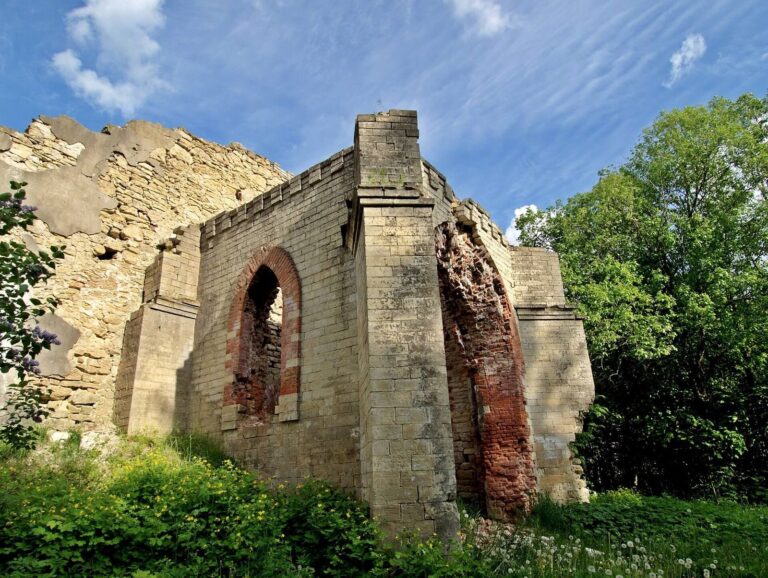
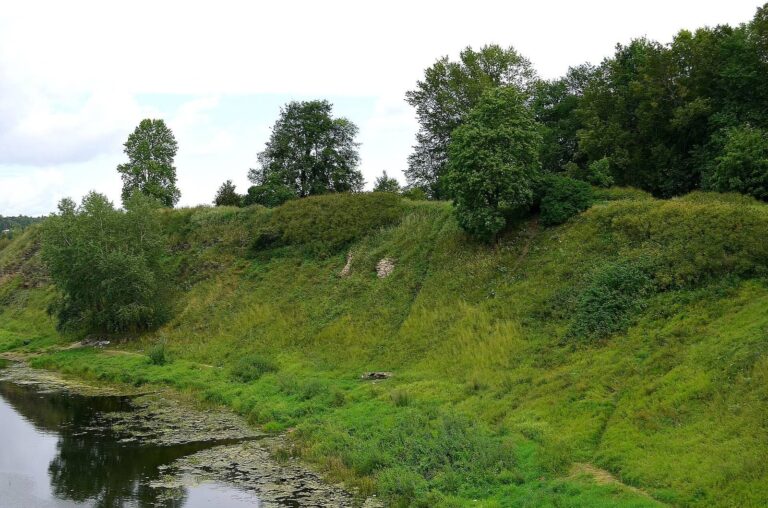
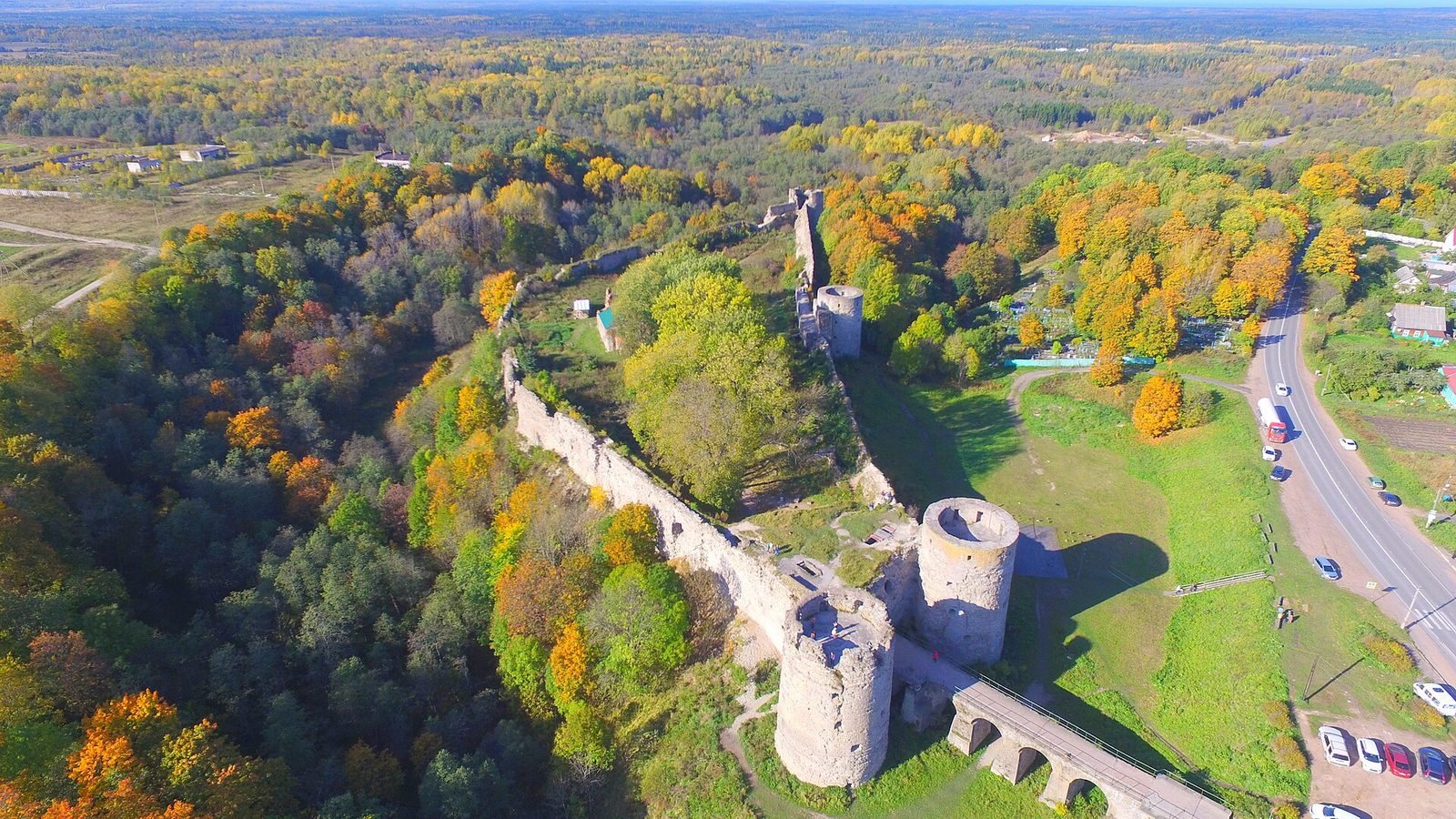
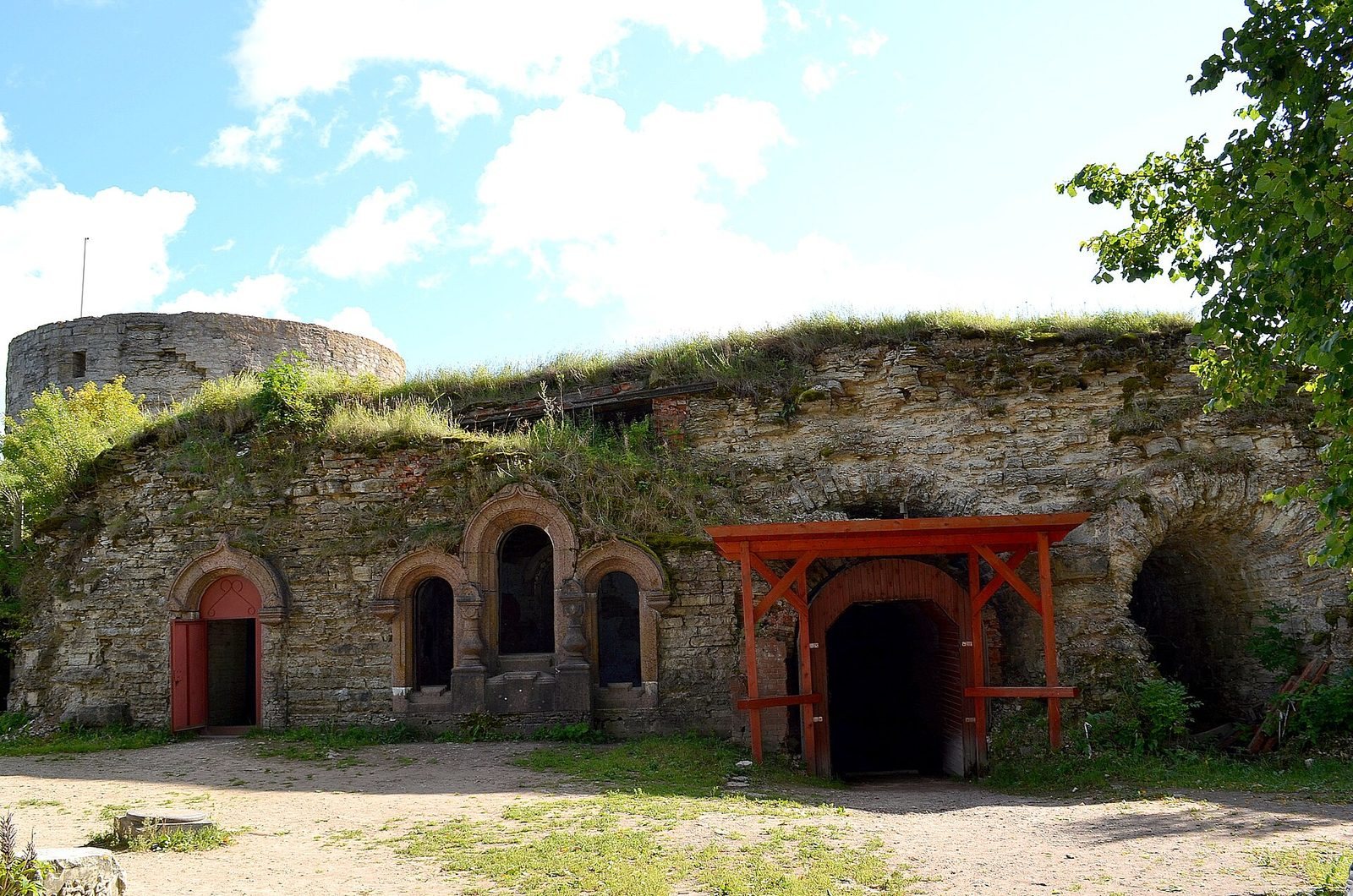
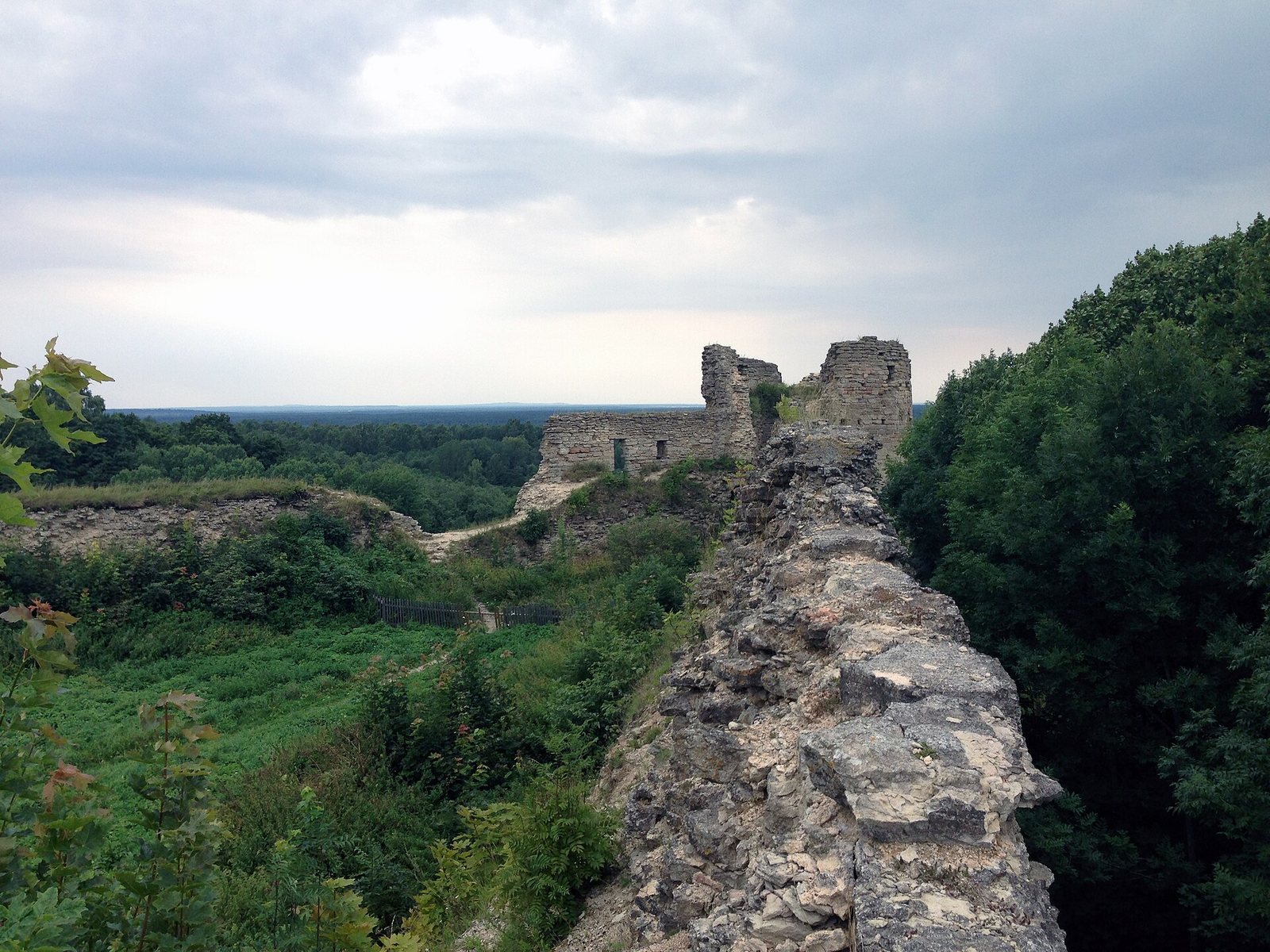
The partly ruined stone fortress stands on a small, high rocky promontory at the edge of the Izhora Upland, beside the Koporka River and about 12 kilometres south of the Gulf of Finland. Its surviving complex includes defensive walls, a gate complex, a bridge, the ruined Transfiguration Church, and a chapel that served as the Zinoviev family burial vault.
Walls and towers
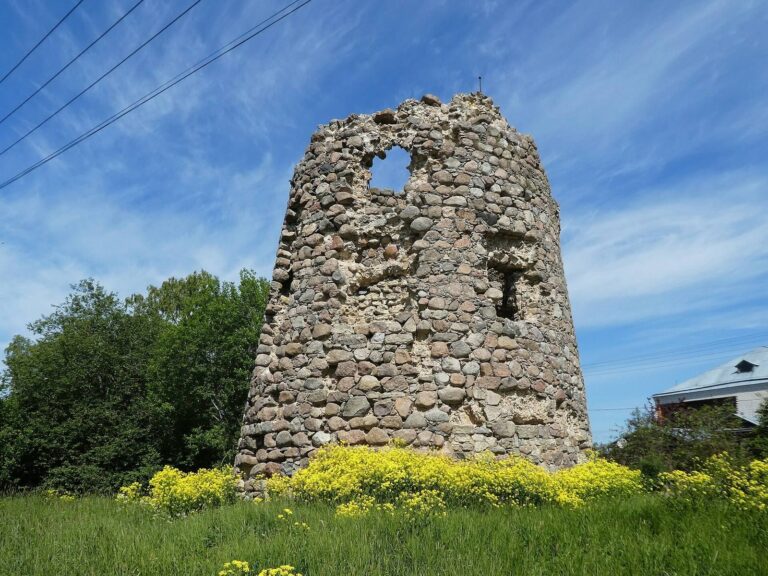
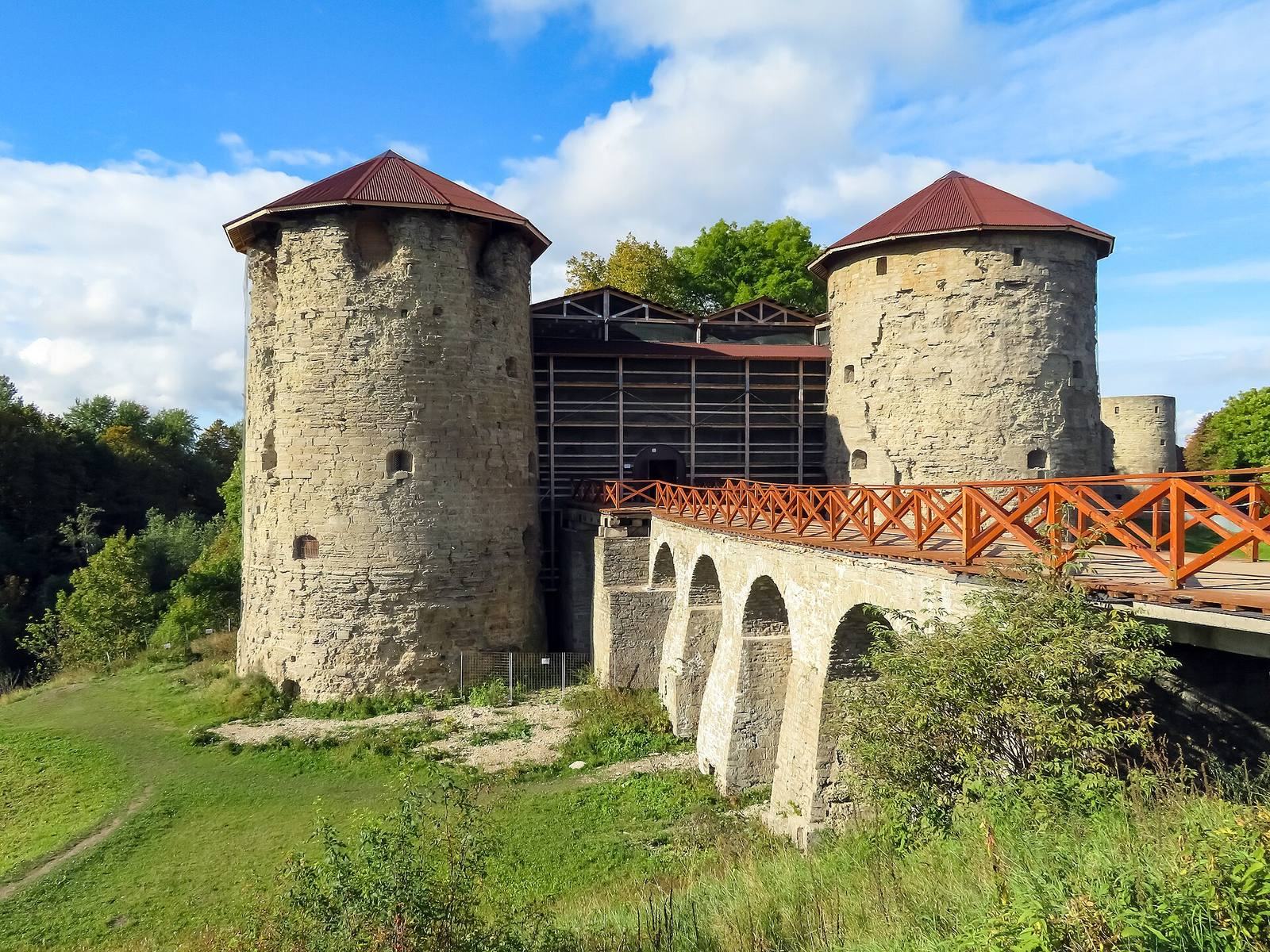
The defensive walls enclose the fortress’s surviving structures. A large breach in the southwest wall is thought to have resulted from Russian artillery during the 1703 siege. The gate complex has north and south towers, while the Corner Tower and Middle Tower form part of the surviving tower group.
Gate complex and bridge
The bridge connects with the gate complex, and its final section formerly operated as a drawbridge. Repairs during the nineteenth century, undertaken after a fire in the church, substantially altered the bridge, church, and gate complex.
Church and burial chapel
The Transfiguration Church is now in ruins. The nearby chapel served as the Zinoviev family’s burial vault.