Volkovitsy Manor: A Historic Estate in Leningrad Oblast, Russia
Site at a Glance
- Popularity
- Low
- Country
- Russia
- Primary era
- Modern
- Eras represented
- Modern
- Civilizations
- Russian
- Site type
- Domestic
- Remains
- Manor House
On this page7 sections
History
Volkovitsy Manor was an estate in Leningrad Oblast, Russia, whose development began in the 1770s. In the eighteenth century, the Land Gentry Cadet Corps, an imperial military school for noblemen, administered the village as a source of revenue. In 1770, Catherine II, known as Catherine the Great and empress from 1762 to 1796, granted the property to military engineer Fyodor Villimovich Bour, who had come to Russia for construction work. Bour established a manor near the village and sold the estate in 1778.
Nineteenth-century owners
Valeryan and Mikhail Andreevich Polovtsov acquired the estate in 1836 and developed it. The principal manor took the name Nadezhdino after Mikhail’s wife, while nearby villages, Valeryanovka and Andreevka, were named for family members. In 1843, Mikhail sold the property to Darya Mikhailovna Briskorn. Her family held it for nearly two decades and gave the estate a substantially renewed appearance.
In 1860, ownership passed to Major General Pavel Ivanovich Palibin and his wife, Darya Petrovna. Darya’s brother, Mikhail Petrovich Kozlyaninov, and Actual State Councillor Ivan Dmitrievich Akhsharumov, a senior rank in the imperial civil service, also became co-owners. An 1887 record describes the estate as covering 706 desyatinas, a traditional Russian land-area measure. It belonged to the widow of State Councillor A. I. Kozlyaninova, who had bought it in 1879 for 12,500 rubles; the manor house, windmill, and estate were leased. By 1905, the property covered 599 desyatinas and belonged to Baron and Lieutenant General Alexander Nikolaevich Korf. During his ownership, the grounds were put in order and a water supply was installed.
Revolution, war, and later use
After the 1917 Revolution, the estate was nationalized and later became the Volkovitsy rest home. During the Second World War, German occupation lasted several years, and a military hospital operated in the former manor. The estate suffered partial destruction, and many trees in the park were felled. Buildings were restored after the war, and the rest home reopened. In the 1980s, a dormitory for workers at a poultry farm in a neighboring settlement opened in the former estate; the building later burned.
Remains
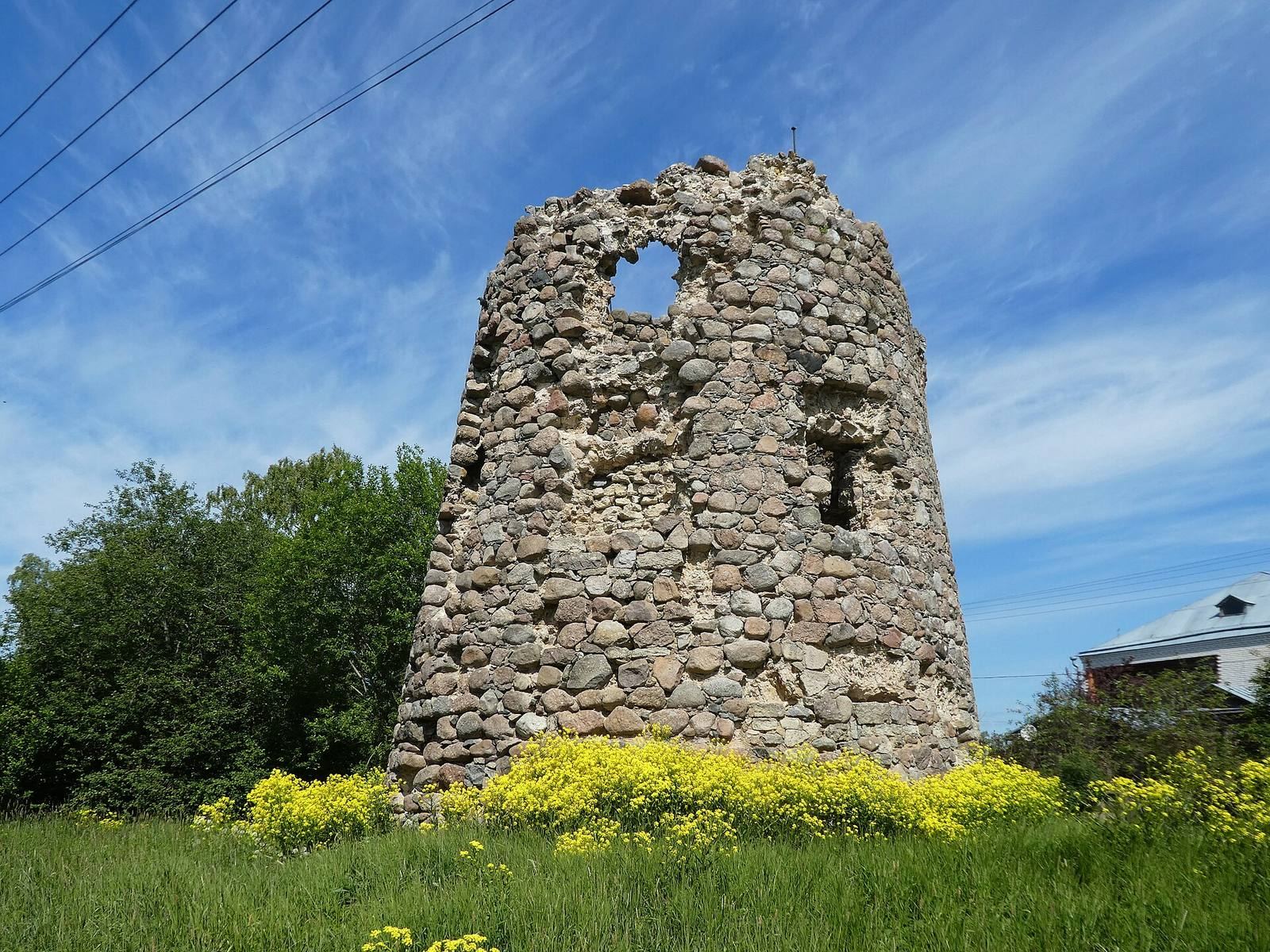
The estate’s surviving features include remnants of its landscaped park, the ruined tower of a boulder-built windmill, and foundations from the manor house and service wings. Its grounds once combined an enclosed manor plot with a designed park and a group of domestic and agricultural buildings.
Park and grounds
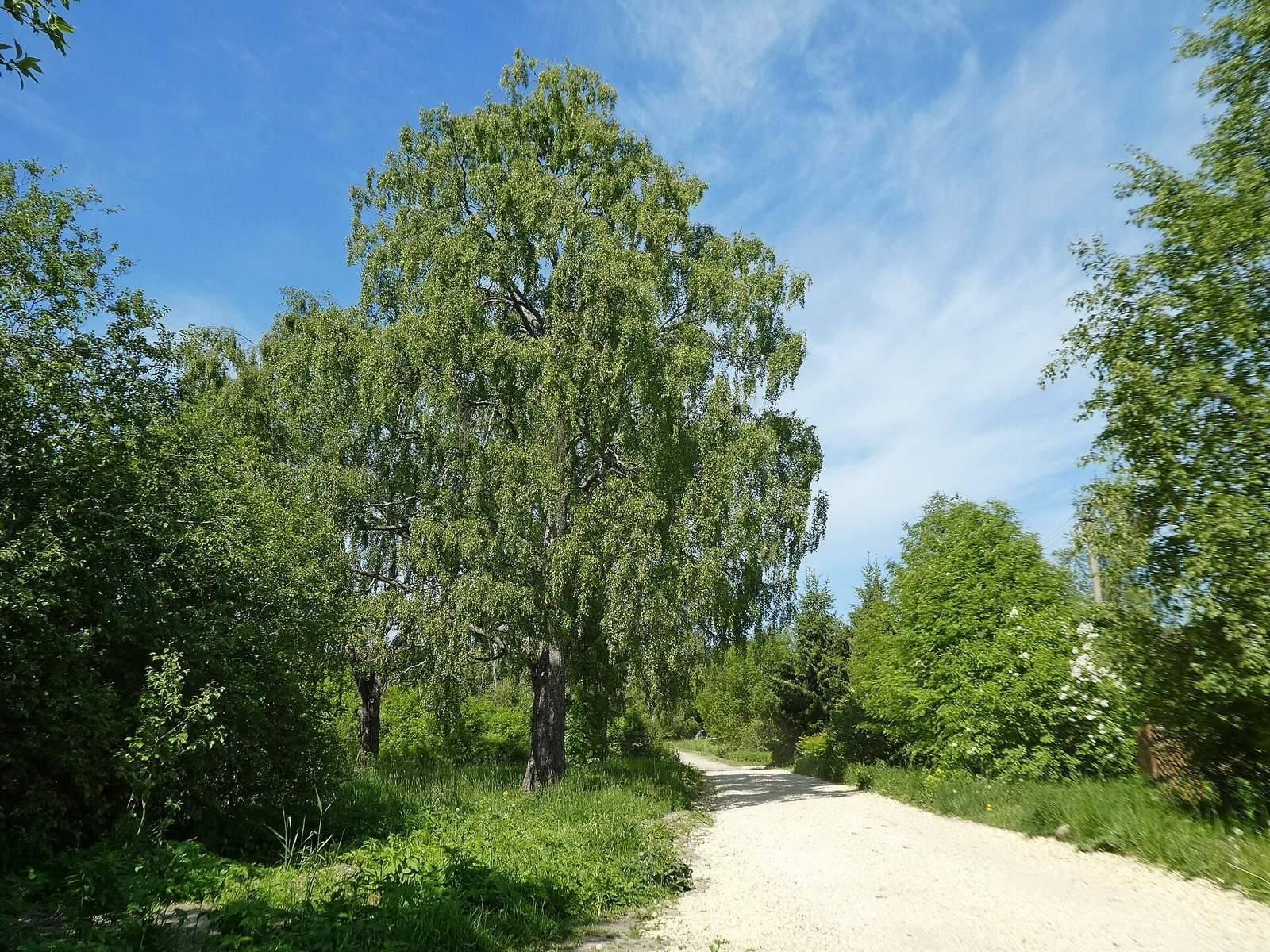
Bour’s original manor occupied 11 desyatinas enclosed by ramparts. The Polovtsovs planted an oak grove, and the Briskorns laid out a park of about 15 hectares. Its formal plan began with two intersecting alleys. A teardrop-shaped pond crossed the central alley; nearby, a viewing mound had firs at its top and birches around it. The main avenue continued beyond the boundary rampart. Under the Palibins and their co-owners, a utility pond was dug in the orchard, with hops planted along its banks. The central pond and nearby hill were named for the Briskorns, and a diagonal linden avenue was known as the Alley of Philosophers. Remnants of the park remained by the beginning of the twenty-first century.
Manor and service buildings
The Polovtsovs’ building work included a two-storey wooden manor house and a dairy building. The Palibins and their co-owners added single-storey extensions, terraces, and galleries to the existing two-storey house. Under Korf, a new wooden manor house with galleries and a tower was built, along with kitchens, a manager’s house, outbuildings, stables, a cattle yard, workshops, and greenhouses. By the beginning of the twenty-first century, only foundations of the manor house and service wings survived. They were built from red, grey, and pink granite boulders.
Windmill
A windmill built of boulders stood near Valeryanovka. Its tower survives as a ruin, also constructed from local boulders.