Quinta das Lágrimas: A Historic Estate in Coimbra, Portugal
Site at a Glance
- Popularity
- High
- Country
- Portugal
- Primary era
- Early Modern
- Eras represented
- Medieval, Early Modern, Modern
- Civilizations
- Portuguese
- Site type
- Domestic
- Remains
- Park
On this page19 sections
History
Quinta das Lágrimas is a historic Portuguese country estate in Santa Clara, Coimbra, Portugal, whose known history reaches back to at least the fourteenth century. Formerly called Quinta do Pombal, it served as a hunting ground for Portugal’s royal family. Its springs also supplied water to the nearby convent of Santa Clara-a-Velha.
Royal origins and the story of Pedro and Inês
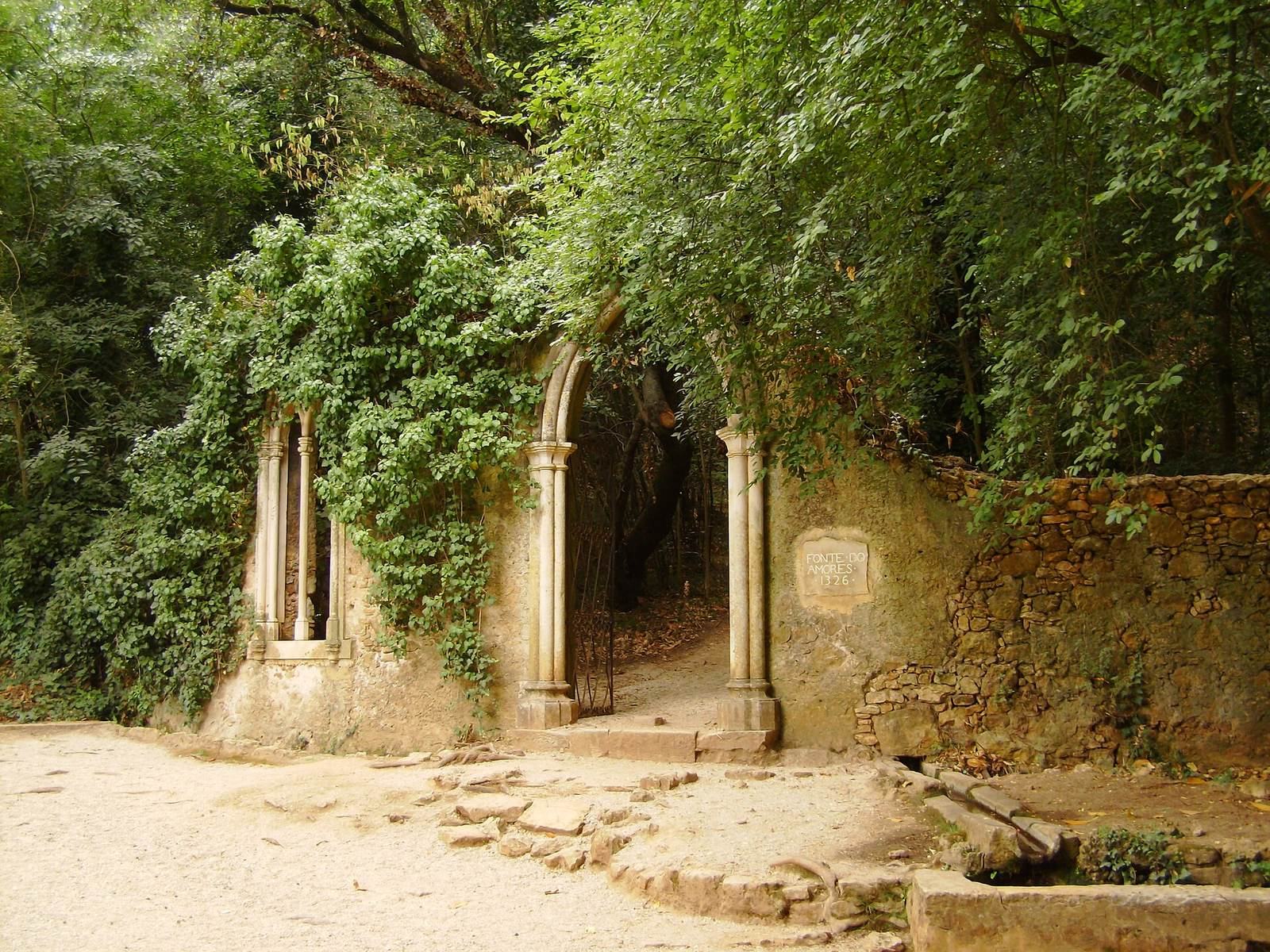
Isabella of Aragon, queen consort of Portugal and grandmother of Pedro, acquired the land in 1326. She had received papal permission in 1314 to re-establish the convent, and arranged for water from the estate’s springs to be carried there.
The name Quinta das Lágrimas, or Estate of Tears, is associated with the story of Pedro and Inês de Castro. Tradition places their relationship at the estate around 1339–40. Inês, a Galician court attendant, had come to Coimbra with Constança Manuel, the woman promised in marriage to Pedro. King Afonso IV, Pedro’s father, banished Inês in 1344. On 7 January 1355, three courtiers killed her. The story links her death to the Fonte das Lágrimas, or Fountain of Tears, and says Afonso feared that Inês and her family threatened Pedro’s claim to the throne.
Another tradition says Pedro secretly married Inês after Constança’s death. Once king in 1357, he supposedly had her killers put to death and required the court to recognize Inês as queen. A further tale claims that he had her body exhumed, placed on the throne, and treated as queen by courtiers. Luís de Camões’s 1572 epic poem Os Lusíadas gives a different account of the spring’s name: nymphs of the Mondego wept for Inês, and their tears became a spring in her memory. The estate is also associated with a tale that Inês’s spirit searches for Pedro.
Ownership, landscape works, and palace
The estate later passed to the University of Coimbra and then to a religious order. Major works in 1650 reshaped the grounds, and water from the Fonte das Lágrimas was directed to an olive-oil mill. In 1730, the Osório Cabral de Castro family acquired the estate and commissioned a palace.
Visitors and nineteenth-century transformation
Arthur Wellesley, later Duke of Wellington, visited in 1808 and 1813 while commanding Anglo-Portuguese forces fighting Napoleon’s troops. He stayed as a guest of his aide-de-camp and the estate’s host, Antonio Maria Osório Cabral e Castro. Miguel I, king of Portugal from 1828 to 1834, visited during his reign, and Pedro II, emperor of Brazil, came in 1872.
During the nineteenth century, Miguel Osório Cabral de Castro shaped the grounds into a garden influenced by Romanticism, an artistic movement that emphasized emotion and nature, and added a lake. A fire destroyed much of the palace in 1879. Miguel rebuilt it in a different style. A later member of the family added features at the estate entrance.
Restoration and present status
Portugal designated the estate a Property of Public Interest, a heritage-protection category, in 1977. Renovations in the 1980s and 1990s, overseen by landscape architect José Maria Caldeira Cabral, restored the estate and palace. The former palace became the Hotel Quinta das Lágrimas in 1995. A further garden-restoration phase began in 2006 under landscape architect Cristina Castel-Branco. The Colina Camões amphitheatre received Portugal’s national landscape-architecture prize in 2008. The Inês de Castro Foundation maintains the gardens.
Remains
The estate occupies about 18 hectares on the left bank of the Mondego, including 12 hectares of gardens. Its surviving features include the palace and older service buildings, two springs, historic waterworks, and gardens containing both established and later plantings.
Palace and estate buildings
Palace
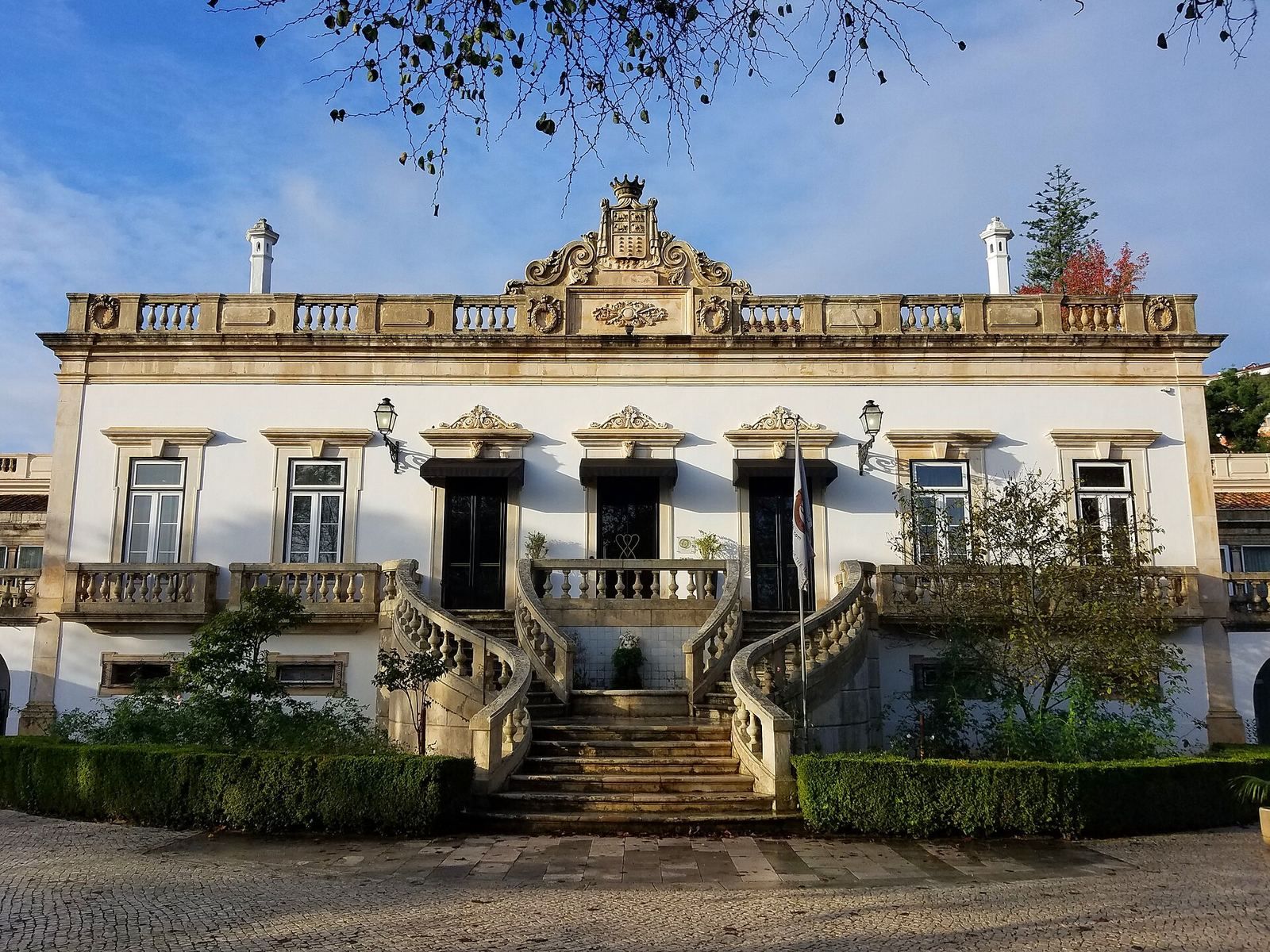
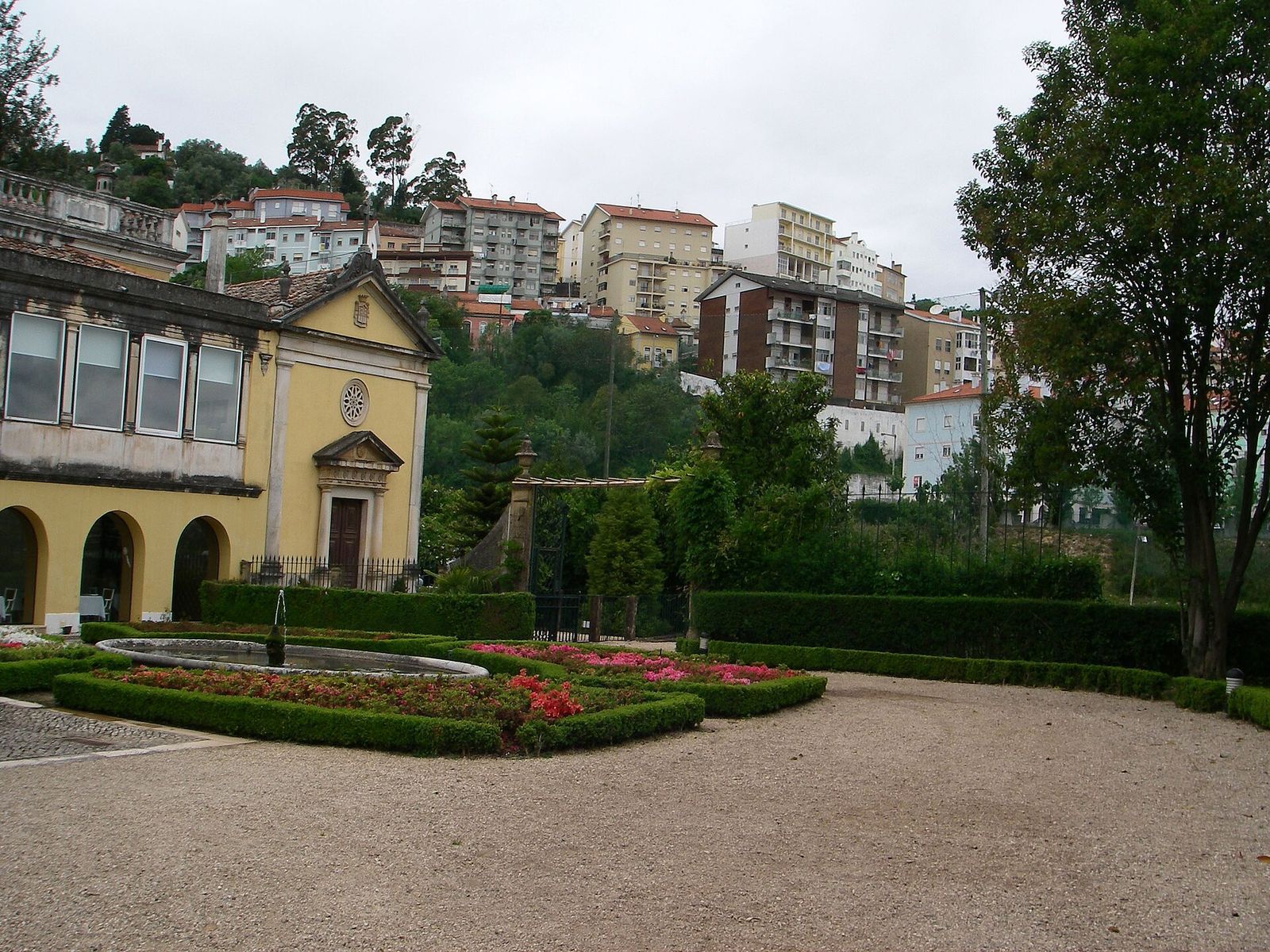
The palace has a central block flanked by two wings. Balconies on the wings’ facades have railings formed from square columns, and a chapel stands on the right. The rebuilt house follows a traditional Portuguese manor-house style and includes a library.
Older service buildings
Near the palace are remains of earlier estate buildings, including a barn, a storehouse, and an olive-oil mill.
Springs and waterworks
The two springs
The estate’s springs are the Fonte dos Amores, or Fountain of Love, and the Fonte das Lágrimas. The latter is close to a spring identified by António de Vasconcelos. Its entrance has a broken arch thought to date to the fourteenth century. Red marks on the rocks or at the spring’s bottom are traditionally said to be Inês’s blood.
Walls, reservoir, and channels
The 1650 landscape works included an enclosing wall, paths, embankments supporting the ground and trees, and a large reservoir that collected water from the Fonte das Lágrimas. Channels carried water from the springs toward the nearby convent. Later garden restoration included repairs to the fountain channels and woodland walls.
Gardens and plantings
Historic garden
The nineteenth-century garden includes a lake and a range of exotic trees and shrubs. Its historic section contains prickly yew-pine (Podocarpus spinulosus) and wavy-leaved pittosporum (Pittosporum undulatum). A large Australian banyan (Ficus macrophylla) shades the Fonte dos Amores.
Trees and later plantings
The path to the Fonte das Lágrimas crosses the roots of two coast redwoods (Sequoia sempervirens) planted by Wellington. Other recorded plantings include Chinese fan palms (Livistona chinensis), arjuna trees (Terminalia arjuna), and araucarias such as bunya pine (Araucaria bidwillii). Camphor trees (Cinnamomum camphora), Himalayan cedar (Cedrus deodara), and Atlas cedar (Cedrus atlantica) also grow on the estate.
Modern garden
The restored grounds include a redwood grove, a Japanese garden within the hotel grounds, and the Colina Camões, or Camões Hill, amphitheatre.
Entrance and memorial features
Gate and window
An arched entrance gate and a Neo-Gothic window, a revival of medieval Gothic forms, provide access to the estate.
Camões monument
Near the Fonte dos Amores stands a stone monument bearing a verse from Os Lusíadas about Pedro and Inês.