Kardaki Temple: An Archaic Doric Temple on Corfu
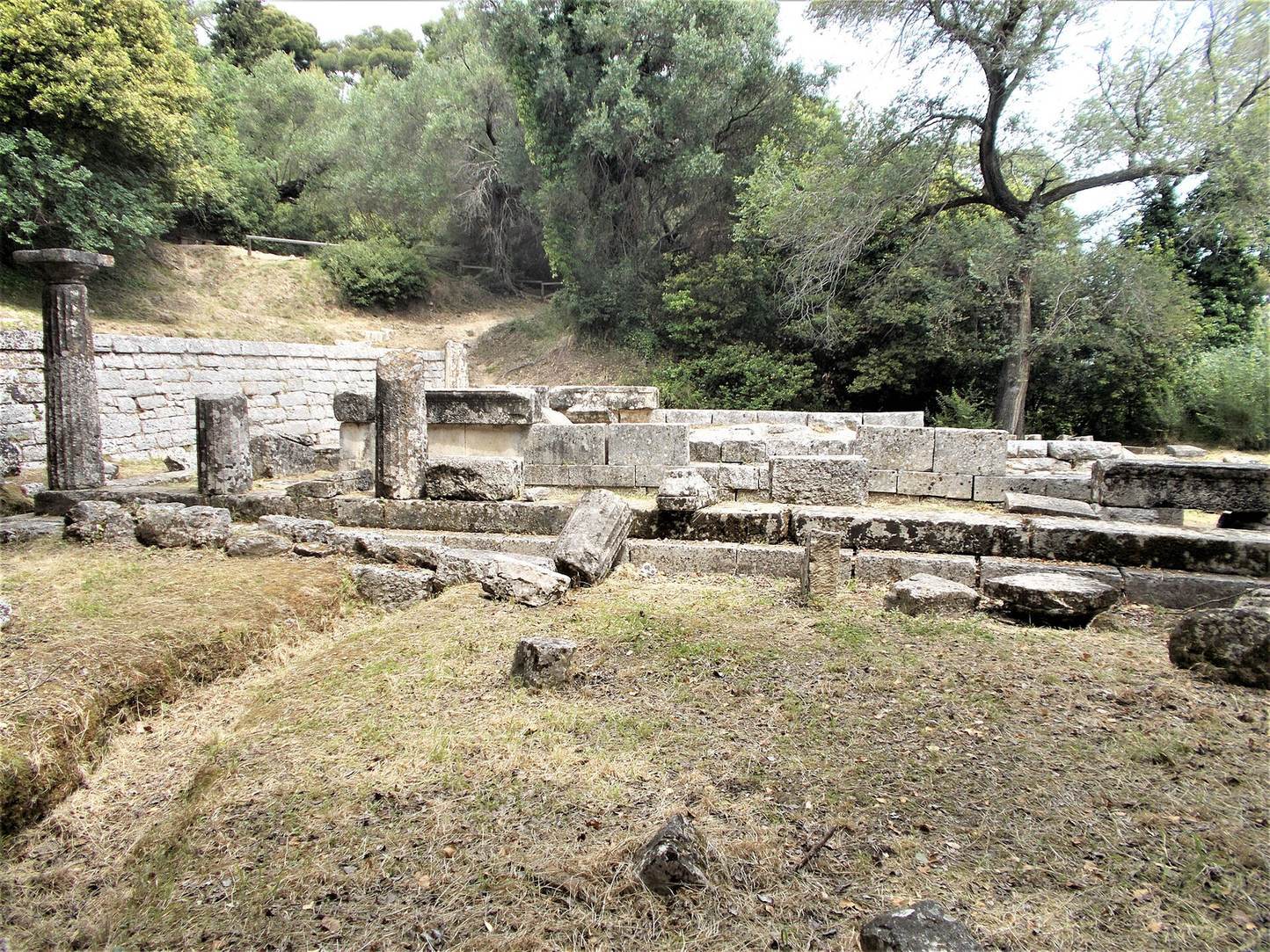
Site at a Glance
- Popularity
- Medium
- Country
- Greece
- Primary era
- Classical
- Eras represented
- Classical
- Civilizations
- Ancient Greek
- Site type
- Religious
- Remains
- Temple
On this page5 sections
History
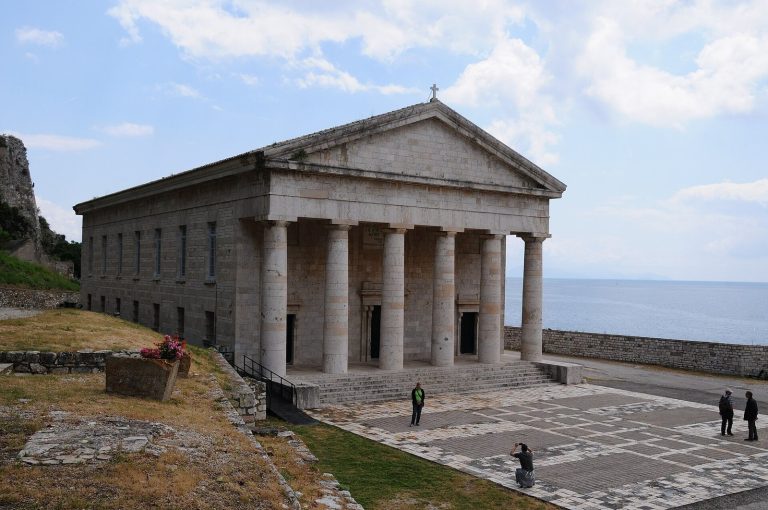
Kardaki Temple is an ancient Greek temple in the Doric order on the grounds of Mon Repos in Corfu, Greece, at Palaiopolis, where ancient Korkyra stood. Built around 500 BC in the Archaic period, an early phase of Greek history conventionally dated to about 700–480 BC, its broader architectural dating extends to the middle of the fifth century BC. Its dedication has not been established: proposed links to Apollo, a god associated with prophecy, music and healing, or Poseidon, god of the sea and earthquakes, remain uncertain.
A Greek inscription now held in Verona appears to concern the temple. It describes maintenance and repairs authorized by magistrates, civic officials of the Corcyrean republic, the ancient civic government of Korkyra. The text lists costs for tin, lead, brass, transport, labor and excavation. It says the roof was removed during the work, and records the purchase of a bronze serpent and the erection of an obelisk. Located near a sacred spring, the temple faced recurring water damage and repair.
Rediscovery and archaeological study
In 1822, while Corfu was under the British protectorate, British engineers cleared soil that was blocking water from the Kardaki spring, a supply used by the British navy. They uncovered a Doric column and then excavated the temple. Colonel Whitmore is also associated with its discovery. A landslide from Analipsi Hill later covered the temple.
The site was excavated again in 1825. British architect William Railton recorded the remains and published his findings, then illustrated a book about the newly uncovered temple in 1830. After more than 80 years without further archaeological examination, archaeologist William Bell Dinsmoor visited in 1909 and published a short account. German archaeologist Wilhelm Dörpfeld excavated the area from 1912 to 1914 with the Greek king’s permission. In 1936, classical archaeologist Franklin P. Johnson published a fuller study, adding photographs and detail to Dörpfeld’s findings to clarify the temple’s place in Greek architectural history.
Remains
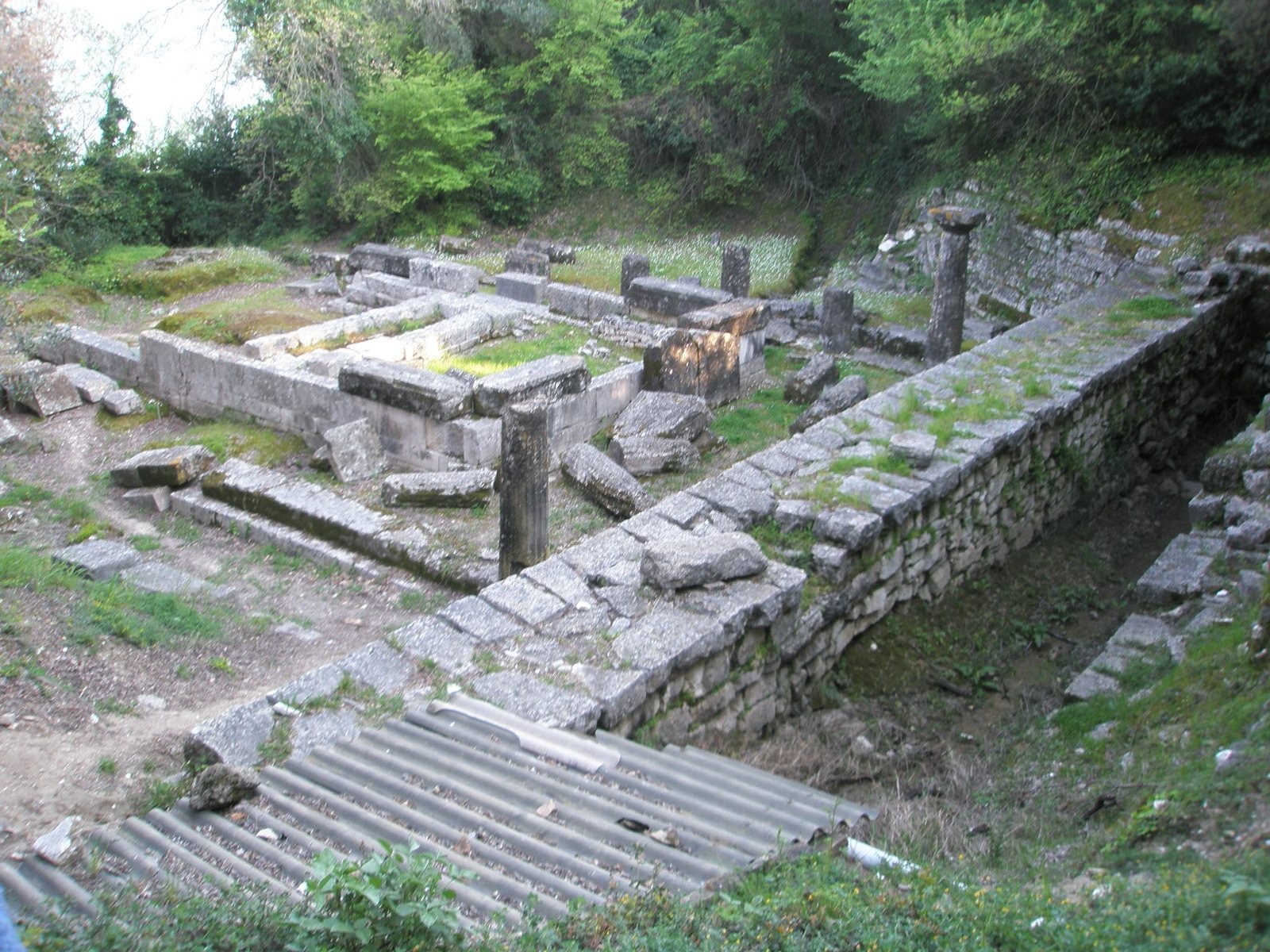
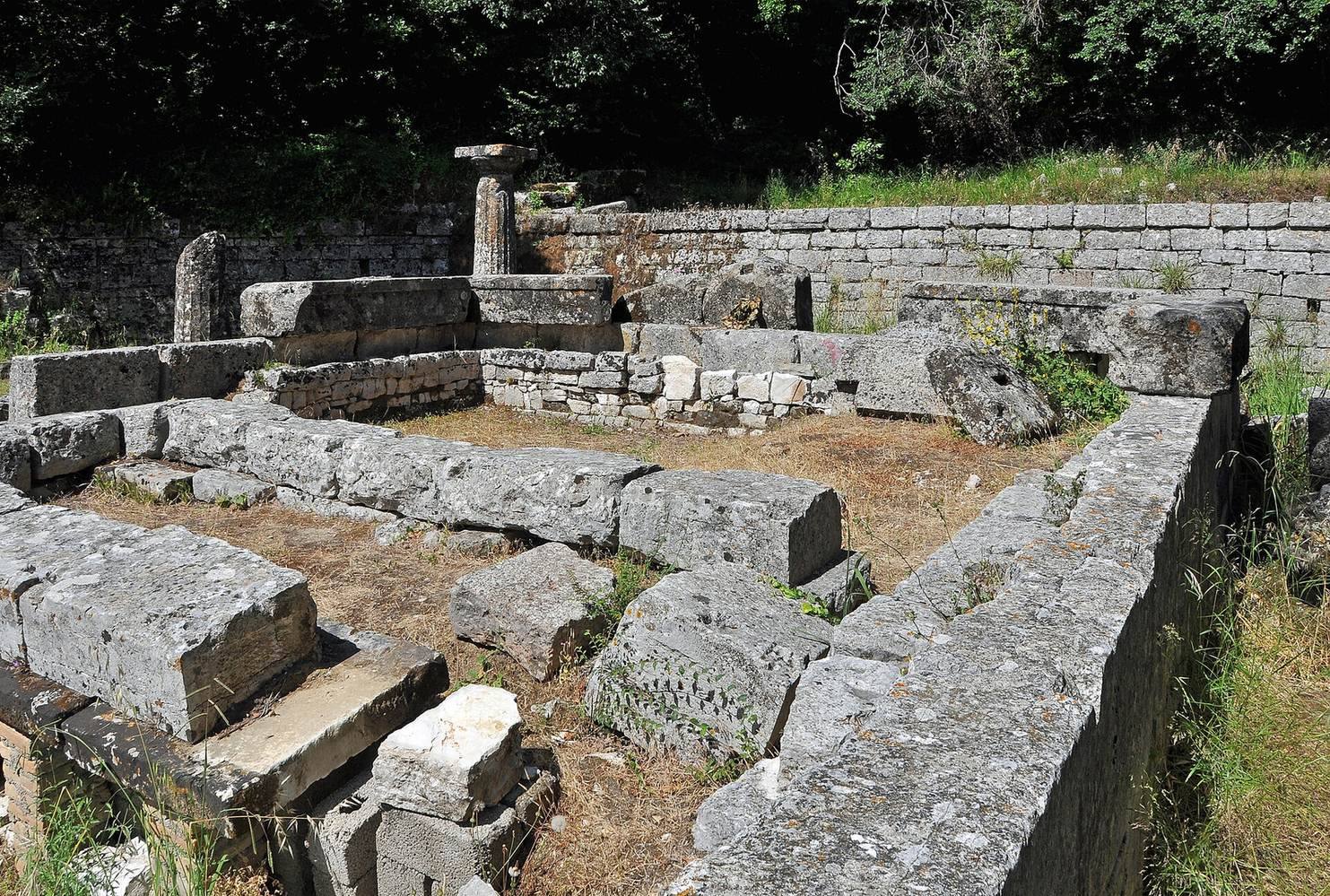
The temple stands in the Kardaki area on Analipsi Hill, within Mon Repos at Palaiopolis, the original location of ancient Korkyra. It lies close southeast of the Temple of Hera, named for the goddess associated with marriage and family. The temple measures 11.91 by 25.5 metres. Its plan had six columns across the front and twelve along each side, with a single colonnade around the building. The columns are spaced unusually far apart.
Doric design
The temple was designed without a frieze, the horizontal band above the columns that commonly forms part of a Doric building. It is regarded as the only known Greek Doric temple whose design omits this feature. The main enclosed room, or cella, had no restricted inner space, known as an adyton. A porch may have been lost in a landslide, while no rear porch is known; among Archaic temples in Greece, no other identified example is known to share that feature. Johnson connected the design with architectural traditions in Corfu and ancient Corinth. He argued that the lighter structure above the columns allowed wider spacing and fewer supports. He also considered whether the missing Doric band reflected Ionic influence, while the decision to omit a frieze altogether may relate to practices in Sicilian temples.
Eastern boundary and archaeological finds
The temple’s eastern boundary collapsed and slid into the sea, where it remained underwater for a long period. An inscription associates a retaining wall there with the craftsman Metrodorus and refers to diverting water channels to protect the wall. Many roof tiles bear the names Aristomenes, Thersia and Damon, probably chief magistrates contemporary with the building’s construction or renovation. Excavation also recovered terracotta objects shaped as female heads and legs. They have been interpreted either as objects dedicated to a deity or as toys placed at a child’s grave.