Church of Saint Boris and Gleb in Degunino: A Russian Orthodox Church
Site at a Glance
- Popularity
- Medium
- Country
- Russia
- Primary era
- Modern
- Eras represented
- Modern
- Civilizations
- Russian
- Site type
- Religious
- Remains
- Church
On this page7 sections
History
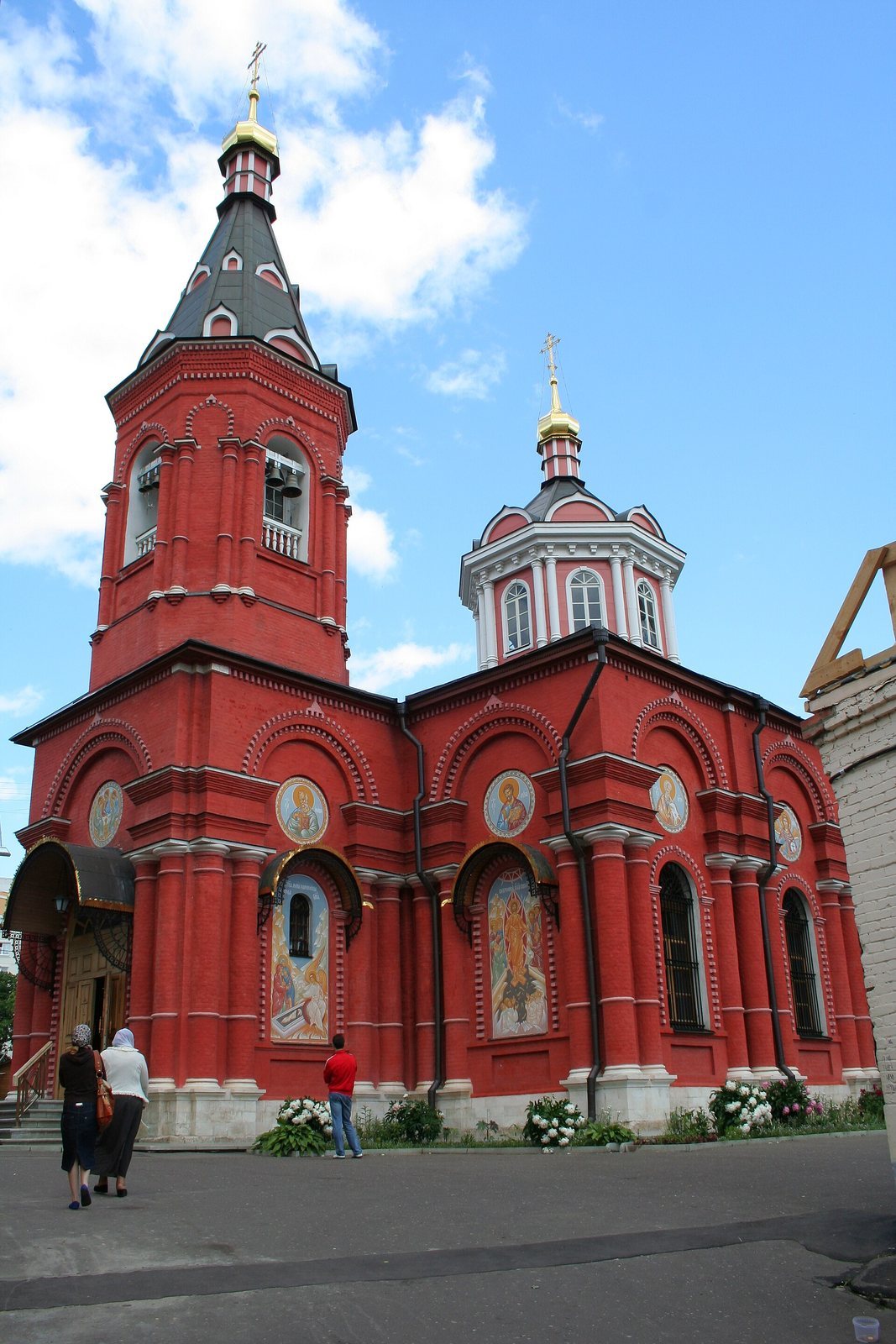
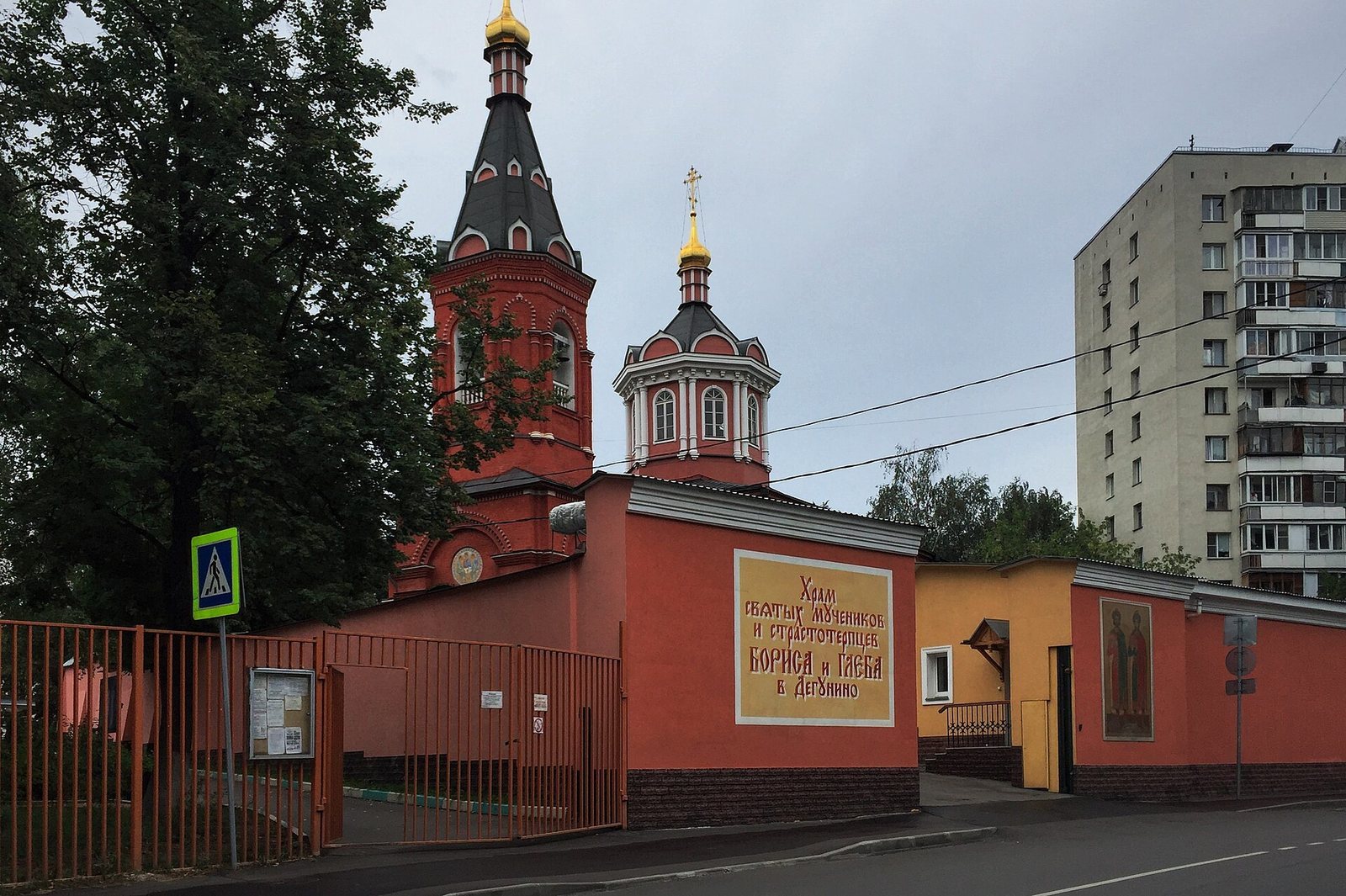
The Church of Saint Boris and Gleb in Degunino, Russia, is a Russian Orthodox church whose present brick building was constructed between 1863 and 1866. Its style is described as Russian or Russo-Byzantine and is also classified as eclectic.
Village and wooden churches
Degunino was a village by 1339, but the church’s foundation date is uncertain. Its earliest known mention dates to 1585, when Polish-Livonian forces destroyed it.
A wooden church was built on the site in 1633, with a side chapel dedicated to the Apostle John the Theologian. By 1676, the church was associated with John, while a chapel honored Saints Boris and Gleb. Another wooden church followed in 1761–1762 after the previous building had deteriorated.
At the start of Peter the Great’s reign, a decree by Patriarch Adrian placed Degunino and its church under the Alekseevsky Convent, an Orthodox women’s monastery. The church survived the War of 1812 without damage. It had one altar by 1820, and records from 1847 to 1850 describe a sound, single-altar wooden church with a bell tower in the Pavshino deanery, a local district within a diocese.
Construction of the brick church
Part of the church’s land was taken by the state during construction of the Nicholas Railway, and the church received compensation. In April 1863, the parish priest and churchwarden Ivan Gerasimov petitioned to replace the old wooden building, which was dilapidated and too small. Metropolitan Philaret, a senior Orthodox bishop, approved the project on 12 November that year.
Construction took place from 1863 to 1866, supported by the land compensation and private donations. Merchant Vasily Akimovich Prorekhov, who owned a brickworks in Upper Likhobory, supplied 360,000 bricks. The church was completed and consecrated in 1866.
Closure and return to worship
Services continued after the Russian Revolution until 1930, when a lack of clergy brought them to a halt. The church was officially closed in 1941 and converted into an outpatient clinic. Secular institutions later occupied the building, including the Rodina cooperative for disabled workers from the 1960s. The factory left in 1985, and after a period of abandonment, a garage for the Eye Microsurgery Intersectoral Scientific and Technical Complex was installed there in 1987.
The church entered the register of monuments in 1961 and is now a federal-level cultural heritage monument. Despite this status, the building deteriorated before restoration began. An Orthodox parish was established in Degunino in 1990, and the building was transferred to the Orthodox community the following year. Adrian (Ulyanov) directed restoration work from 1990 to 1993. Worship resumed in 1991, with the first service held on 8 October. The church is part of the Russian Orthodox Church’s Moscow City Diocese and Znamensky deanery.
Remains
Brick church and altars
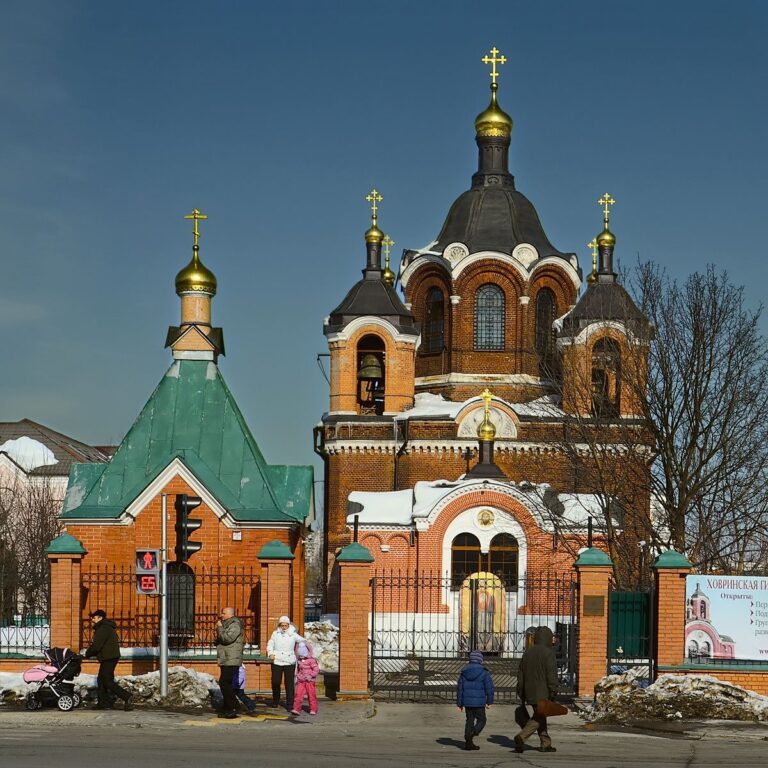
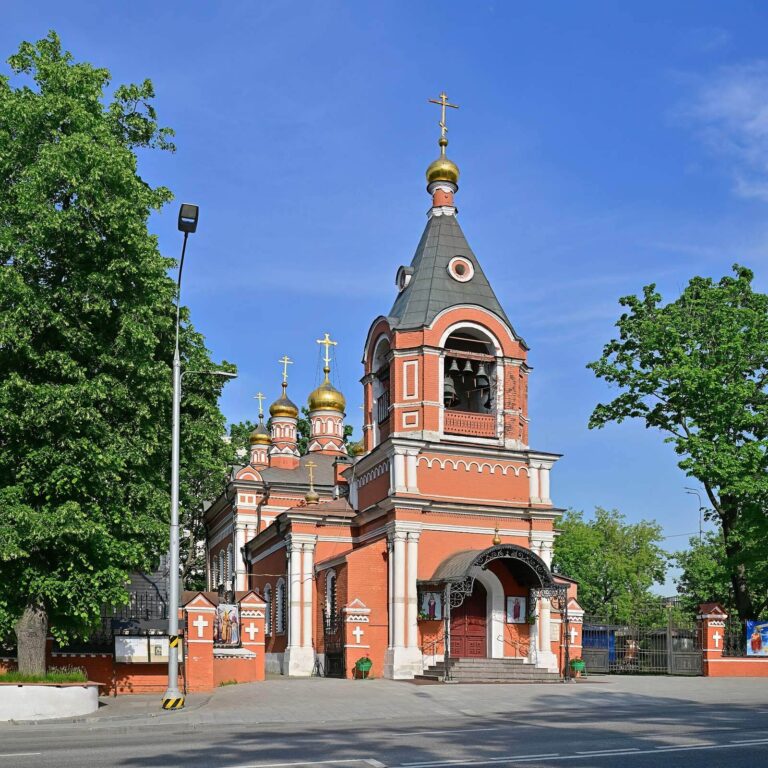
The surviving church is a brick building in a style described as Russian or Russo-Byzantine and also classified as eclectic. It has three altars: the main altar is dedicated to Saints Boris and Gleb, while the side altars honor Saint Nicholas the Wonderworker and the icon of the Mother of God, Joy of All Who Sorrow.
Alterations to the building
During the conversion to industrial use in the 1960s, the upper tiers of the bell tower were demolished, the cupolas were removed, and additions were made to the building.