Preußisch Eylau Castle: Teutonic Order Fortress in Russia
Site at a Glance
- Rating
- 4.1
- Popularity
- Low
- Country
- Russia
- Primary era
- Medieval
- External website
- Open
- Eras represented
- Medieval
- Civilizations
- Teutonic Order
- Site type
- Military
- Remains
- Castle
On this page9 sections
History
Preußisch Eylau Castle is a former Teutonic Order fortress in Bagrationovsk, Russia, built by the medieval Catholic military-religious order that administered territories in the eastern Baltic. Construction began in 1325 on the site of the earlier Prussian fortress of Sutwrit, when Arnold von Eilenstein began building the castle of Ile by order of Grand Master Werner von Orseln, the order’s highest authority. Dietrich von Altenburg, the komtur, or governor, of Balga, supervised the work.
Foundation and Teutonic administration
The builders created a defensible island by constructing a dam and mill and raising the river’s water level. The castle was completed by 1330. It was first called Ile and later Iladia, while the name Preußisch Eylau eventually became established. Until 1347, the complex served as the residence of a pfleger, an official who administered a smaller local district or estate. After that date, it became the seat of the chamber office connected with the Balga komturship.
Twentieth-century decline
The castle suffered no major damage during the Second World War, and its residential rooms remained in use until the beginning of the 1960s. From 1961, the castle and its forburg, an outer fortified enclosure associated with a castle, were transferred to the district consumer association and used as warehouses. A survey by scientific-restoration workshops in 1964 found the entire complex in very poor condition, since it had not been repaired after the war.
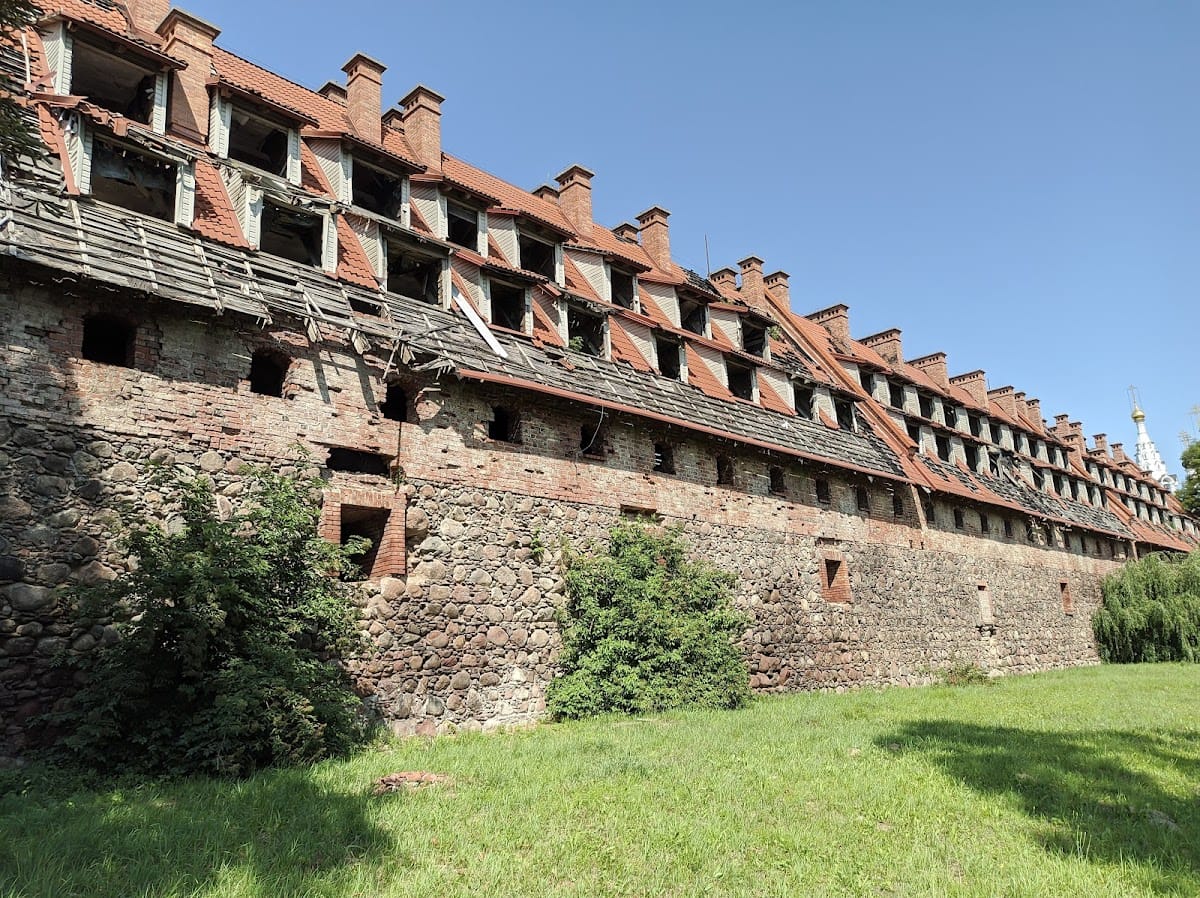
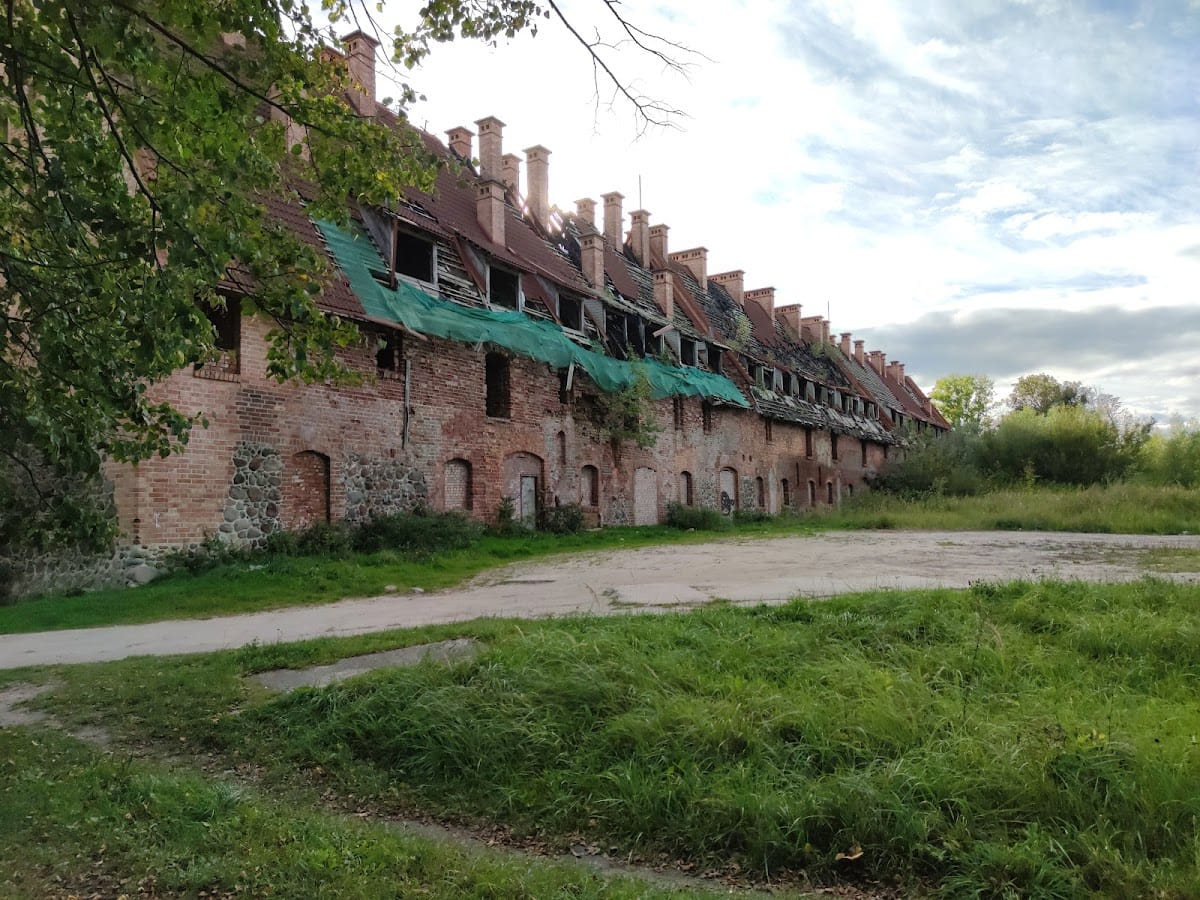
A shooting range was built over the site of the western wing and was demolished in the 1990s. The roof of the surviving forburg continued to deteriorate, with holes appearing in 1989, and its middle section burned in August 1990. Plans made in the early 1990s for minor excavations and the conversion of the forburg into a hotel with a bar were abandoned during the final stages, leaving the building unused.
Recent fires, protection, and restoration
On 5 June 2016, a fire destroyed 80 square metres of the castle roof. Auction attempts in 2018 and 2020 attracted no bids, but the castle was sold to a company in 2022 for 7.6 million rubles, four years after it was first offered at auction. In December 2023, a wooden canopy was erected over the citadel ruins, and the citadel’s basements were intended for conversion into a museum space. Restoration of the forburg roof was nearing completion in February 2024, while emergency stabilization of the citadel ruins began in 2025.
By a decision of the Government of Kaliningrad Oblast dated 23 March 2007, Preußisch Eylau Castle was designated a regional cultural-heritage site of Russia.
Remains
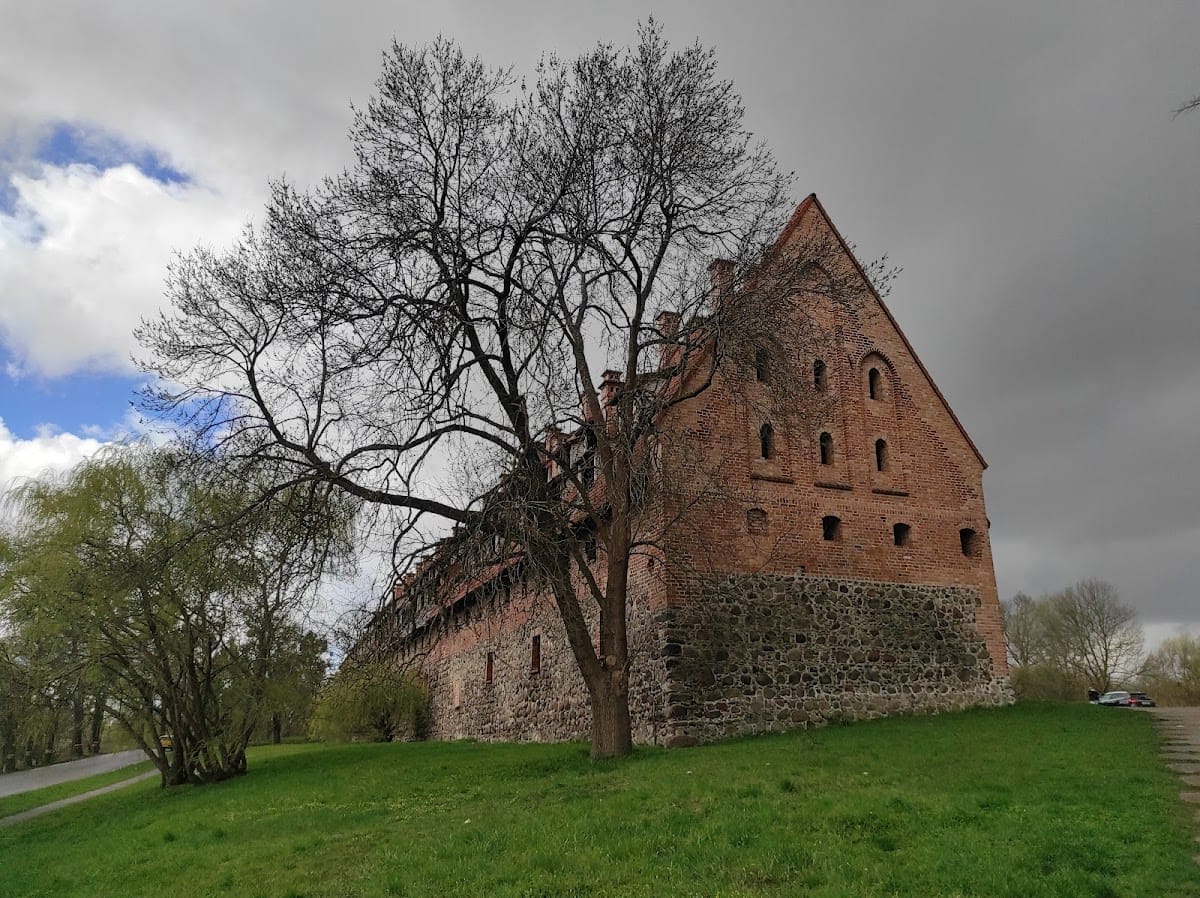
The castle was laid out as a quadrilateral measuring 41 by 43 metres. A water-filled moat surrounded the main enclosure, which was reached across a drawbridge through gates fitted with grilles. The complex stood on an artificially created island formed by the dam that raised the river’s water level. A large forburg extended the castle on its eastern side.
Main castle and citadel
Citadel ruins
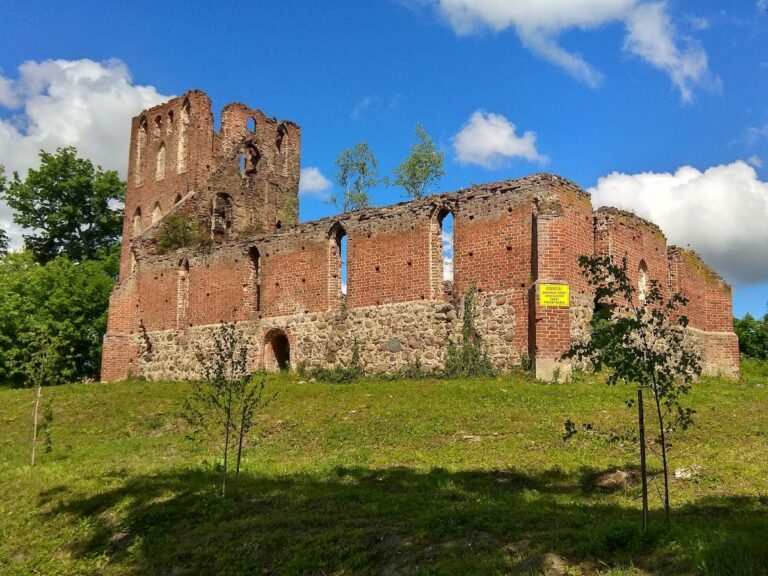
The citadel, the principal fortified stronghold within the larger complex, survives in ruinous form. Sections of its walls reach up to 5 metres in height, and some basement rooms remain partially preserved. A wooden canopy erected in December 2023 now covers the citadel ruins, while the basement areas were intended to become museum space. Emergency stabilization work began in 2025.
Defensive enclosure
Fragments of the defensive wall survive alongside the citadel remains. The original quadrilateral was protected by the moat, drawbridge, and gated entrances, while the western wing was later occupied by a shooting range before that structure was demolished in the 1990s.
Forburg
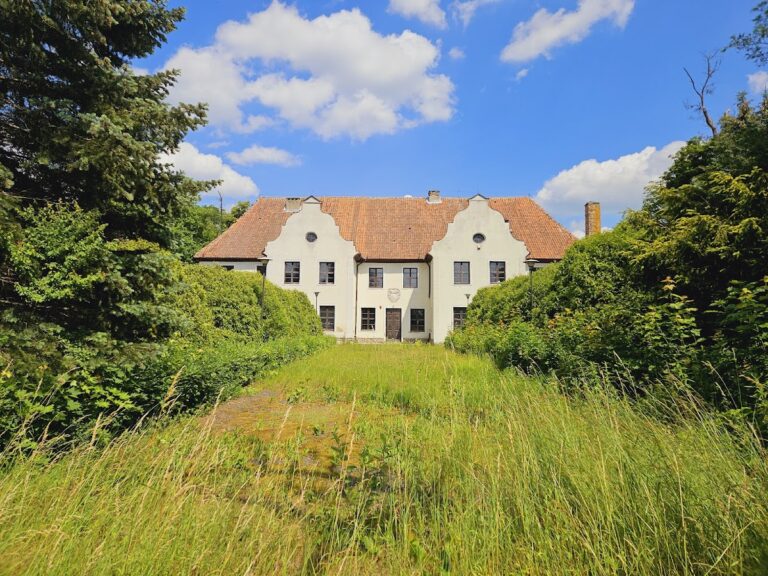
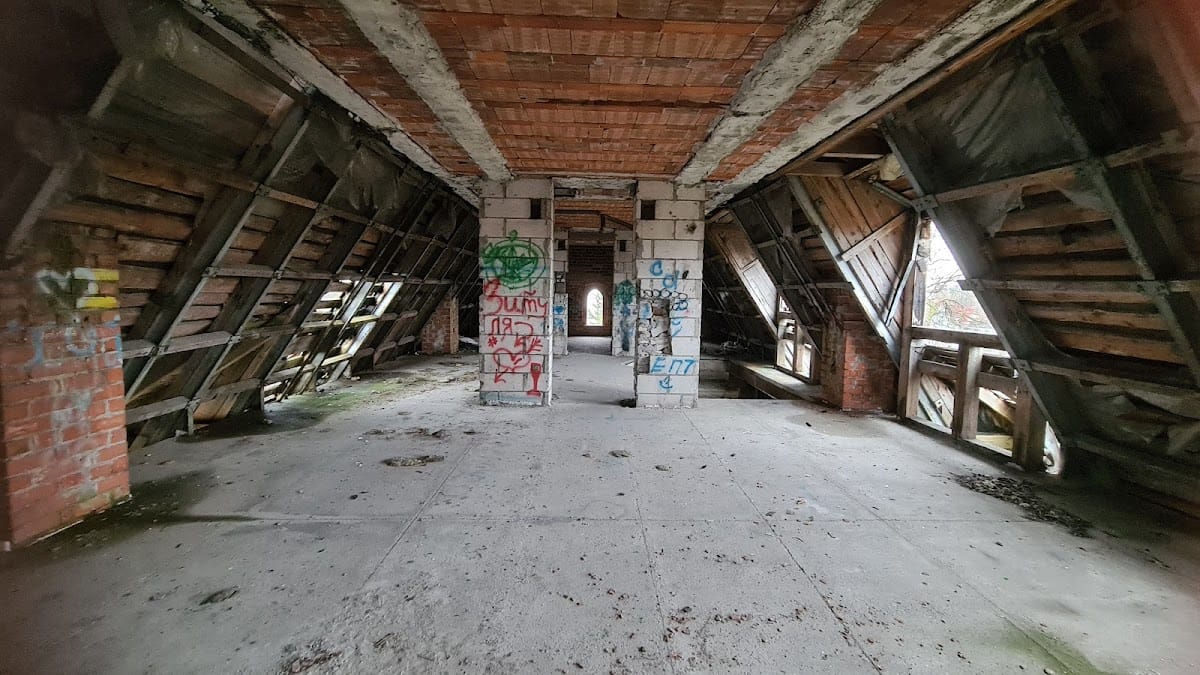
The surviving forburg forms the principal standing part of the outer complex. Its roof deteriorated after the late twentieth-century abandonment, and the middle section was damaged by fire in August 1990. The 2016 fire affected 80 square metres of roofing. During restoration in 2023 and 2024, the roof truss system was reconstructed, roof tiling was being completed, and window openings were being installed.
Nearby sites