Burg Schwarzenfels: A Hilltop Castle and Administrative Residence in Germany
Site at a Glance
- Rating
- 4.7
- Popularity
- Low
- Country
- Germany
- Primary era
- Early Modern
- External website
- Open
- Eras represented
- Medieval, Early Modern
- Civilizations
- Holy Roman Empire
- Site type
- Military
- Remains
- Castle
On this page9 sections
History
Burg Schwarzenfels is a hilltop castle in Germany, located in the village district of Schwarzenfels within Sinntal. Built and first documented in 1280, it served as a fief of the Holy Roman Empire, the medieval and early-modern political framework in which territories and castles could be granted under imperial authority. The castle also became the administrative center of the Schwarzenfels district, a role that helped lead to its expansion as a residential palace.
From Rieneck to Hanau
In 1333, Schwarzenfels passed by inheritance from the House of Rieneck to the County of Hanau. The counts and lords of Hanau repeatedly used the castle, as they also used their residences at Steinau and Windecken, for widows of the Hanau family.
A succession dispute between Count Philipp Ludwig II and his brother Count Albrecht brought another change. Albrecht received the districts of Schwarzenfels and Ortenberg, the Naumburg administrative estate, and Hanau’s share of Assenheim. He settled at Schwarzenfels, and his family line became known as Hanau-Münzenberg-Schwarzenfels. The branch ended in the next generation with Johann Ernst of Hanau-Münzenberg-Schwarzenfels, who briefly inherited the entire County of Hanau-Münzenberg in 1641 and 1642.
Pledge, war, and territorial administration
In 1643, the Schwarzenfels district and castle were pledged, along with other securities, to Hesse-Kassel. The pledge guaranteed costs incurred by the landgraviate when Hanau was liberated from an Imperial siege in 1636. The Counts of Hanau never redeemed the pledge, so Schwarzenfels was administered as landgravial property.
The Thirty Years’ War, a European conflict from 1618 to 1648 involving religious, dynastic, and territorial struggles, brought damage to the castle. In 1648, it became a ruin, and the inner castle was abandoned. Hesse-Kassel later inherited the County of Hanau-Münzenberg, including Schwarzenfels, in 1736 after the death of the last Hanau count, Johann Reinhard III. In 1786, under Landgrave Wilhelm IX, the castle was again placed under the administration of the County of Hanau.
State ownership and conservation
After Prussia annexed the Electorate of Hesse following the German War of 1866, the Prussian state treasury took over the complex. With no use for some parts of the castle, the authorities allowed unused sections to decay or sold them. The castle inn was sold around 1877.
Deterioration was checked from the end of the nineteenth century. Hesse, as Prussia’s legal successor, became the owner, and a forestry administration was housed at the castle for a period. The listed complex now belongs to the administration of the State Palaces and Gardens of Hesse. Since 2007, it has been leased to an association initiated by the citizens of Schwarzenfels, which works to maintain and sustainably revitalize the site. A youth hostel has occupied the first floor of the Marstall since 1979.
Remains
Layout and surviving structures
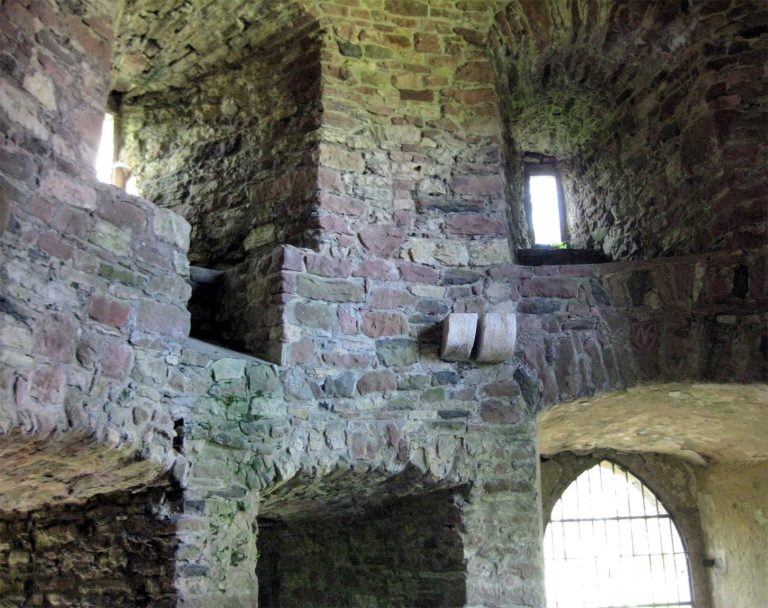
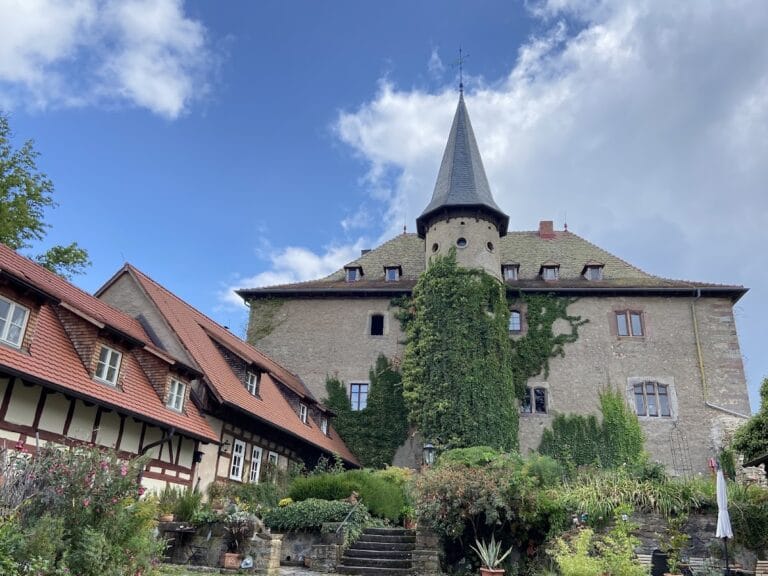
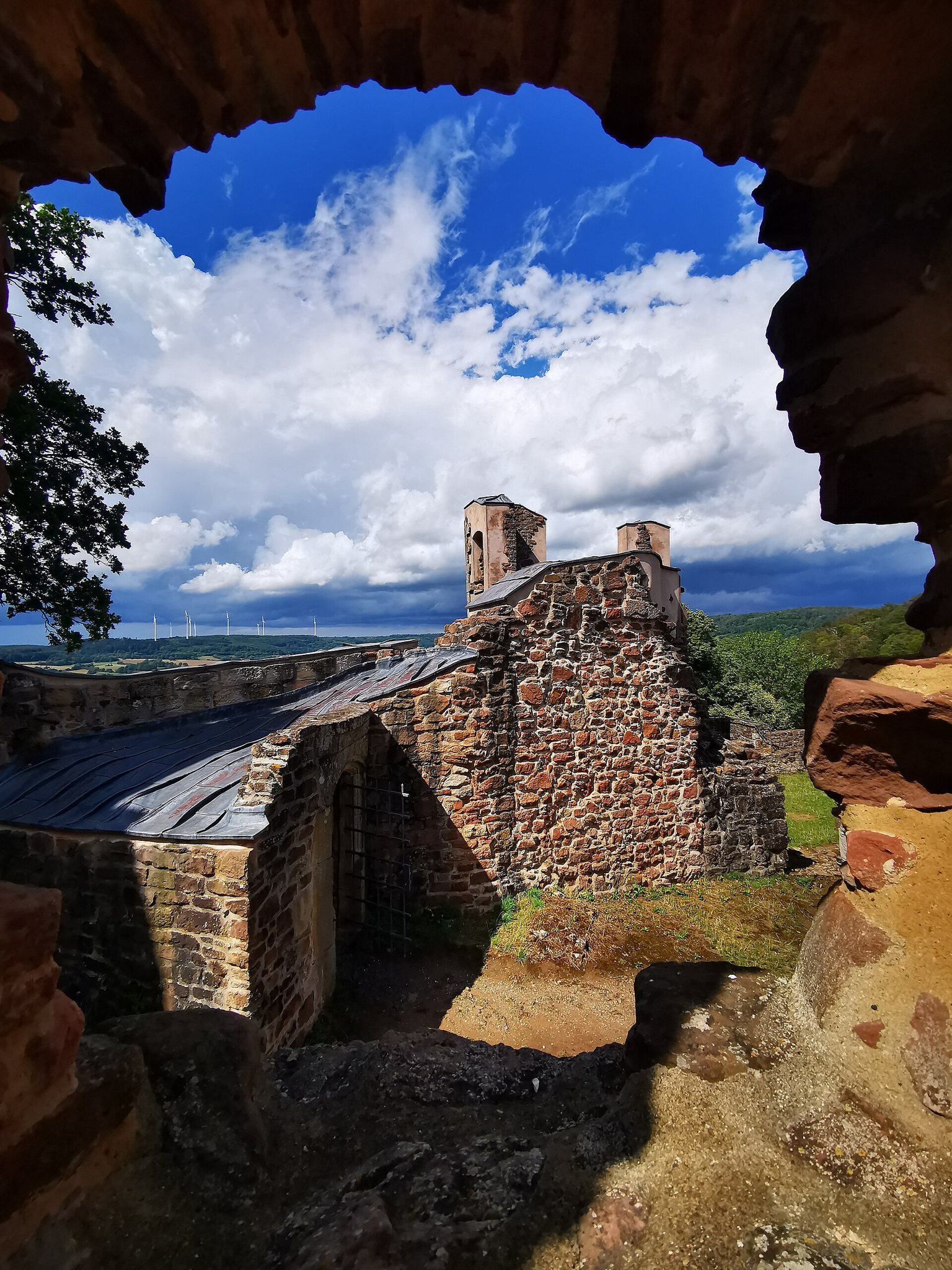
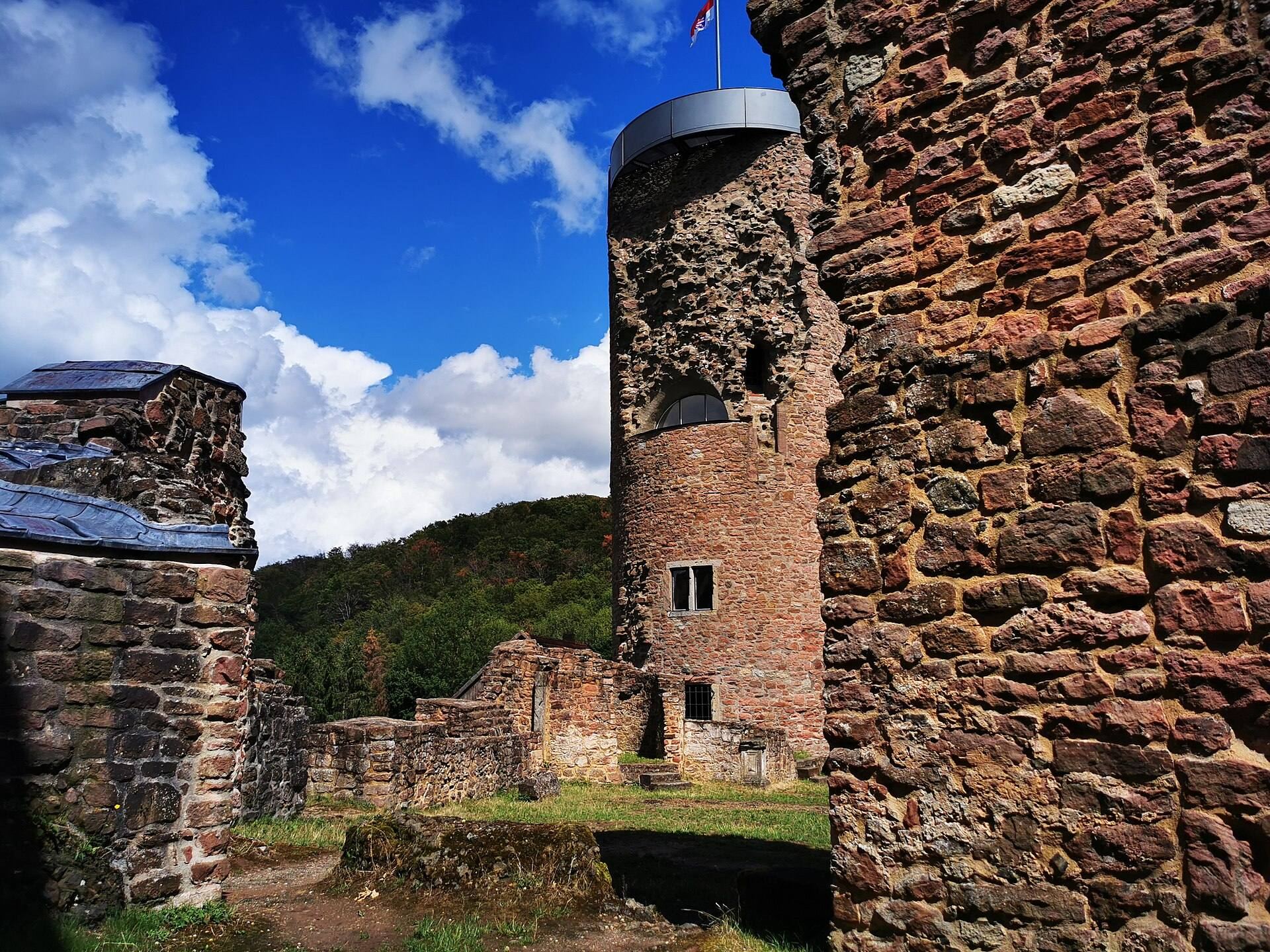
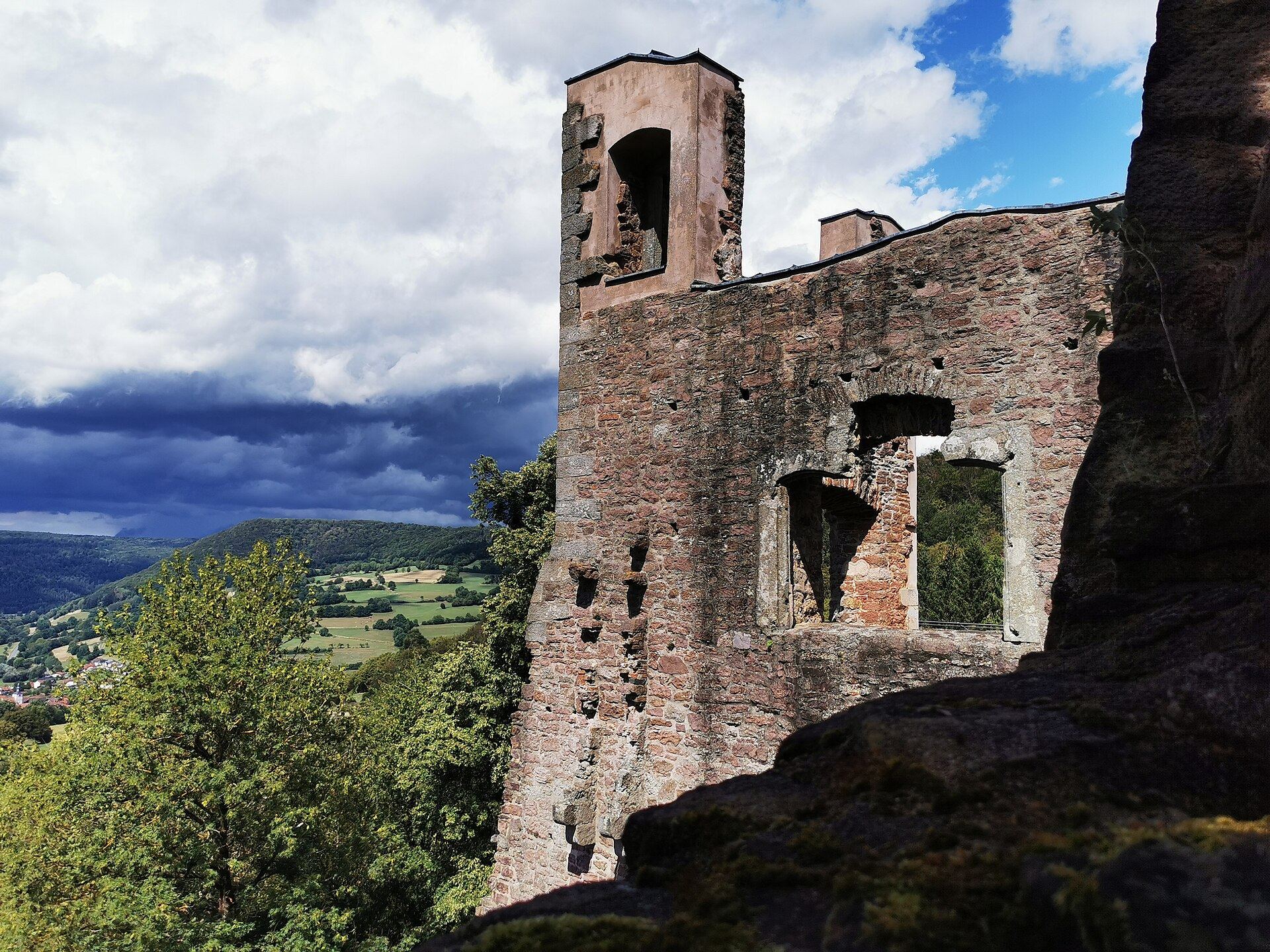
Burg Schwarzenfels stands on a rise about 427 metres above sea level within the village. The hilltop complex survives chiefly through substantial wall remains and the ruin of the inner castle. Its position is especially commanding from the Bergfried, the principal tower of a medieval German castle, which could have defensive and representative purposes. The name Schwarzenfels is traditionally linked to the black dolerite used in the construction.
Marstall
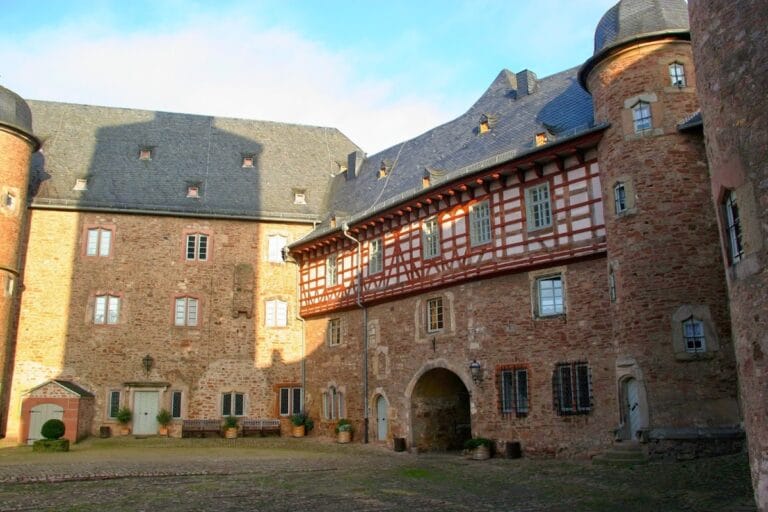
The renovated complex is centered on the large Marstall, a stable or carriage building associated with a noble residence. Constructed in 1557, it is one of the substantial surviving structures and remains preserved or substantially intact, unlike the ruinous inner castle. Its first floor has housed a youth hostel since 1979.
Residential palace entrance
The former residential-palace phase is represented by a richly decorated portal dated 1621. A well stands directly in front of it, preserving part of the arrangement associated with the palace phase.
Bergfried
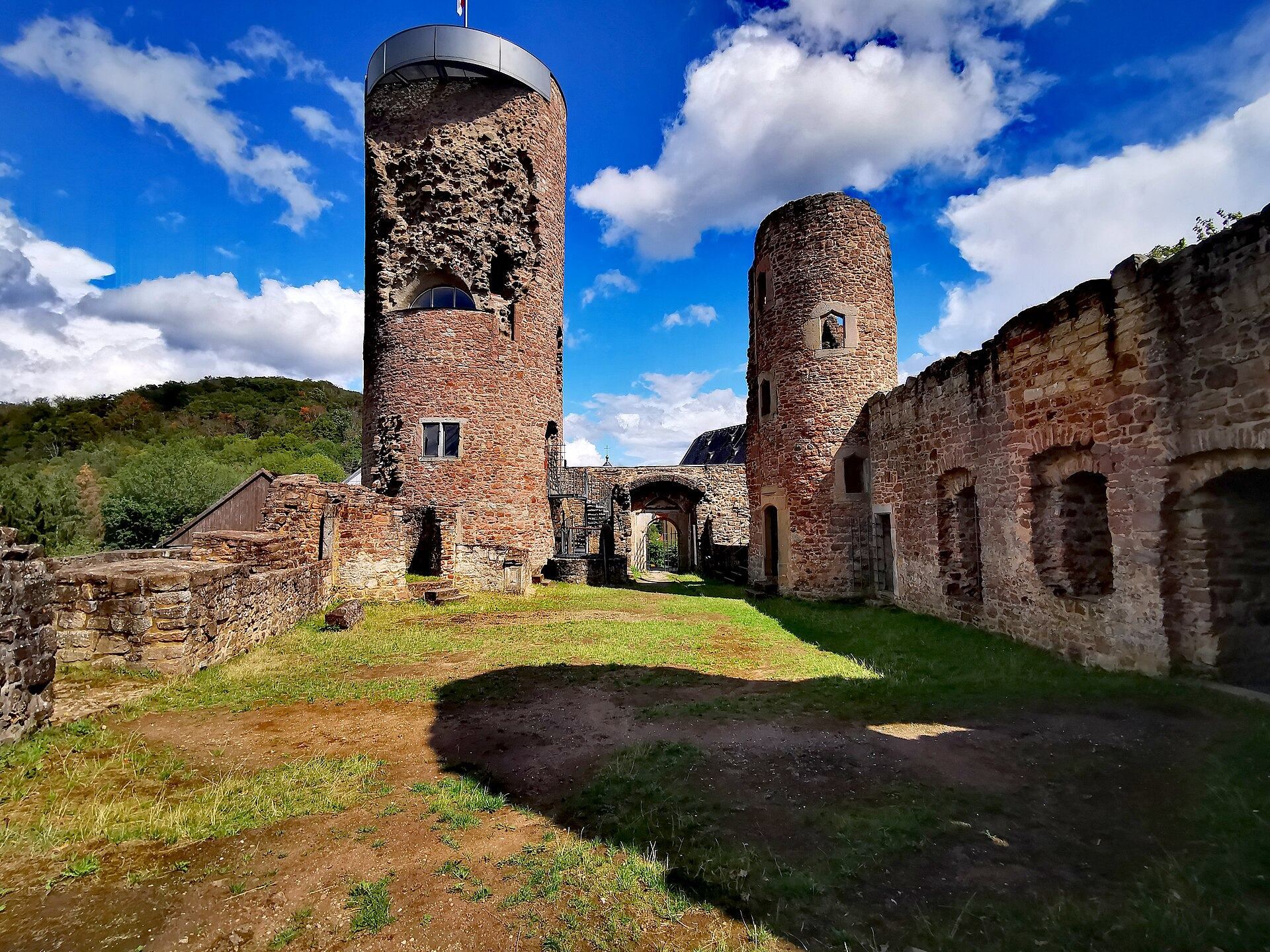
The Bergfried rises about 25 metres. Conservation in 2015 and 2016 included steel stairways on the exterior and interior, a modern spiral staircase, a metal-grid and glass observation platform, and a flagpole. The upper part of the tower is completely restored.