Sierakowski Palace: A Warsaw Residence Converted into Barracks
Site at a Glance
- Rating
- 5
- Popularity
- Very Low
- Country
- Poland
- Primary era
- Modern
- Eras represented
- Early Modern, Modern
- Civilizations
- Kingdom of Poland, Polish–Lithuanian Commonwealth
- Site type
- Domestic
- Remains
- Elite Residence
On this page8 sections
History
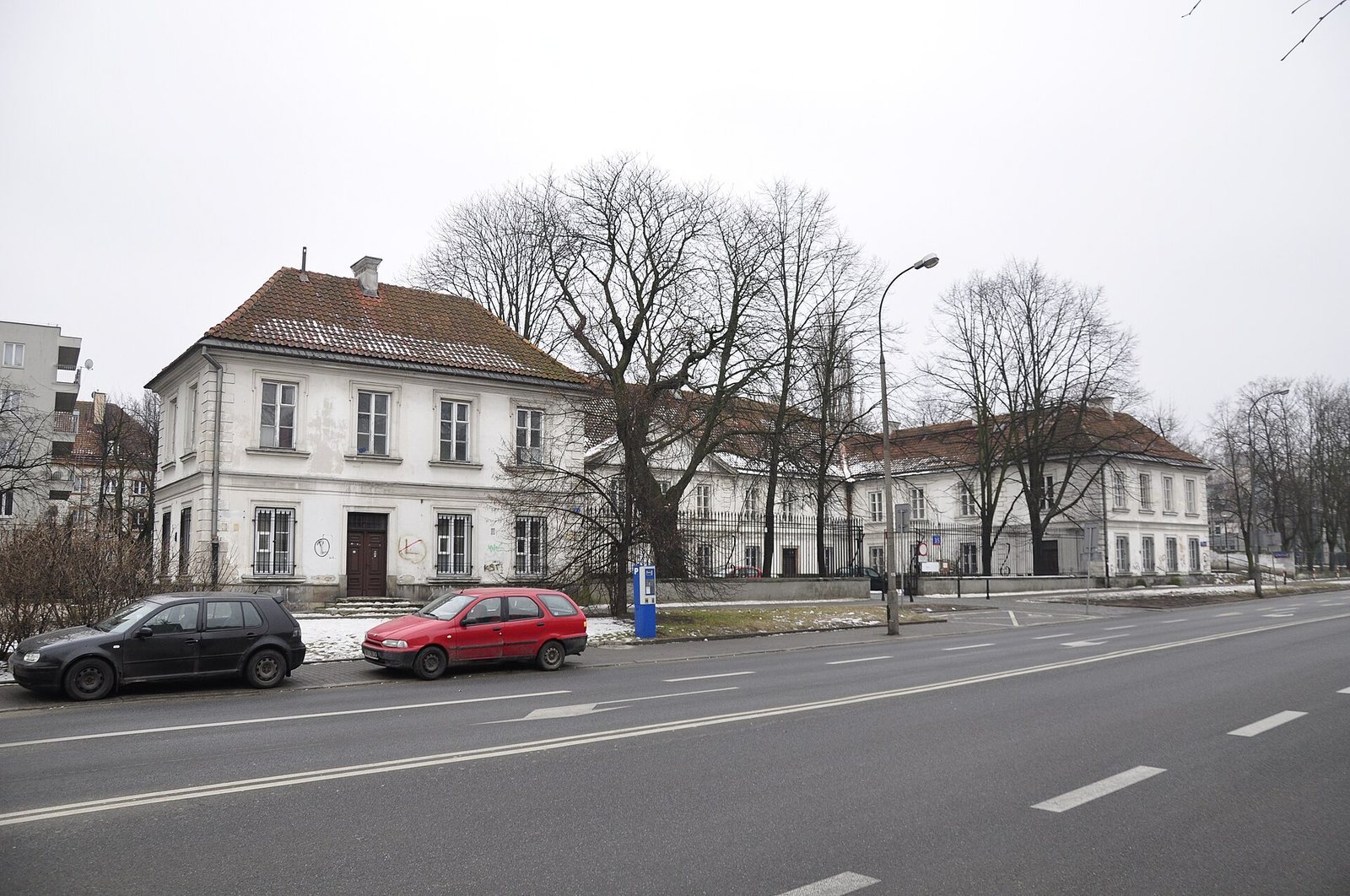
Sierakowski Palace is an eighteenth-century palace on Konwiktorska Street in Warsaw, Poland. Maksymilian Bruno Sierakowski had it built around 1780, probably incorporating an earlier structure, and the property later became a military barracks.
Jesuit school and palace
A building for a Jesuit boarding school was erected on the site between 1754 and 1757. The Jesuits are a Catholic religious order with a long tradition of education. After the property passed to Sierakowski, a castellan of Płock, he commissioned a palace there. A castellan was a senior official in the Polish-Lithuanian administration, an office with historical roots in the governance of a castle and its district. The palace plot had been formed by dividing the grounds of the suppressed Jesuit school.
Military barracks and hospital
In 1818, the Government Commission of War acquired the property for military accommodation and administrative and service functions. These supported the 4th Line Infantry Regiment, nicknamed the Children of Warsaw, which was stationed at nearby Sapieha Barracks. The complex became known as Sierakowski Barracks and Konwiktorska Barracks. The buildings were adapted for barracks use in 1819–1820 to a design attributed to Jakub Kubicki, possibly with Wilhelm Heinrich Minter also involved. By about 1830, the entire second battalion of the regiment was probably based there.
After the November Uprising, the Polish revolt against Russian rule in 1830–1831, Russian troops used the complex as barracks until 1915. From 1852 to 1861, the Holy Spirit Hospital occupied it after moving from Dorota Miączyńska’s palace. In 1861, the Russian Guards St. Petersburg Regiment, named for King Frederick William III, was stationed there.
Polish military use
After Poland regained independence, the 1st Automobile Squadron was based at the barracks from 1919. An Experimental Armored and Motorized Group was organized there in 1931. In 1933, the squadron merged with the 1st Battalion of the 3rd Armored Regiment to form the 3rd Battalion of Tanks and Armored Cars; in 1935, that unit became the 3rd Armored Battalion.
The barracks could not accommodate the armored unit’s full needs. Its command, garages, and workshops were based at Fort Wola, and the command moved to Marymont in 1938. Some units also occupied Fort Traugutta. That year, the command of the 1st Warsaw National Defense Battalion was based at Sierakowski Barracks.
Destruction and reconstruction
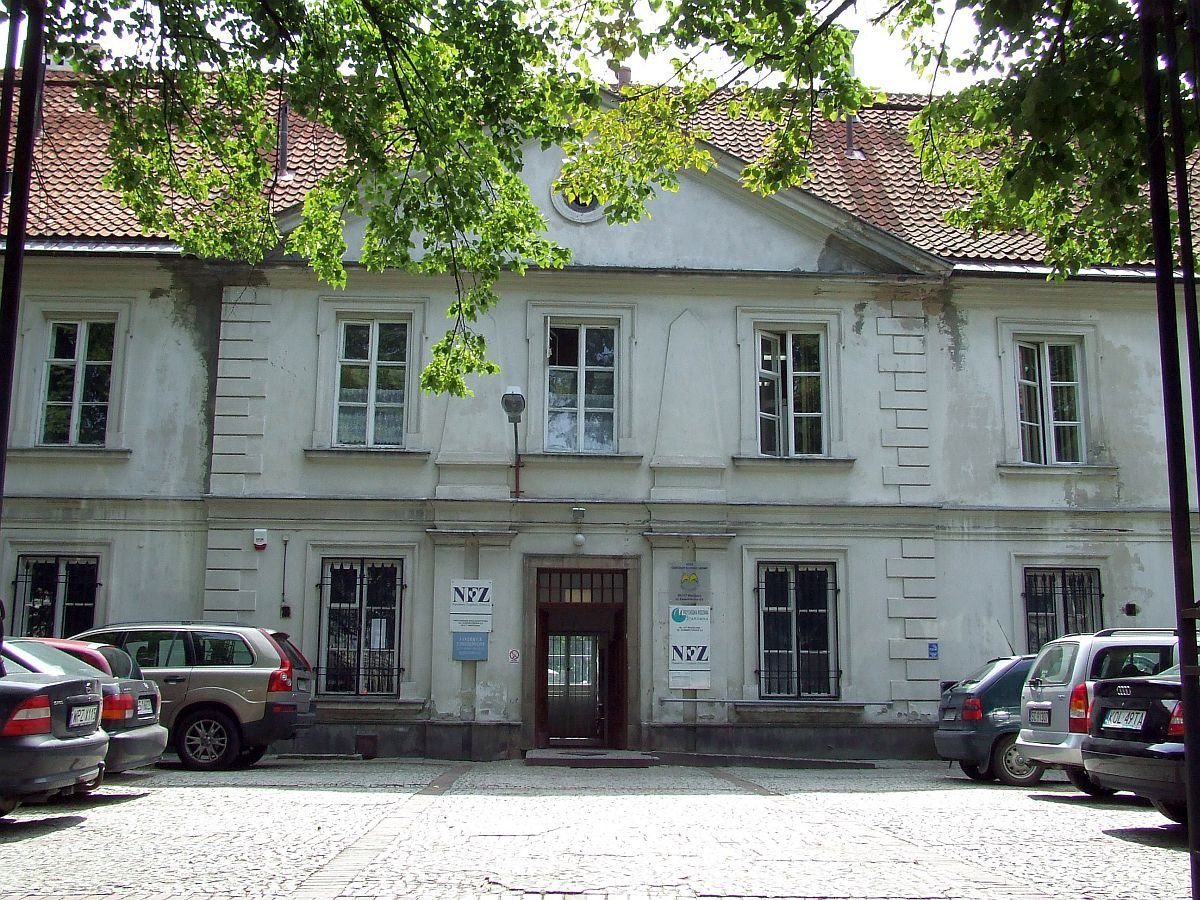
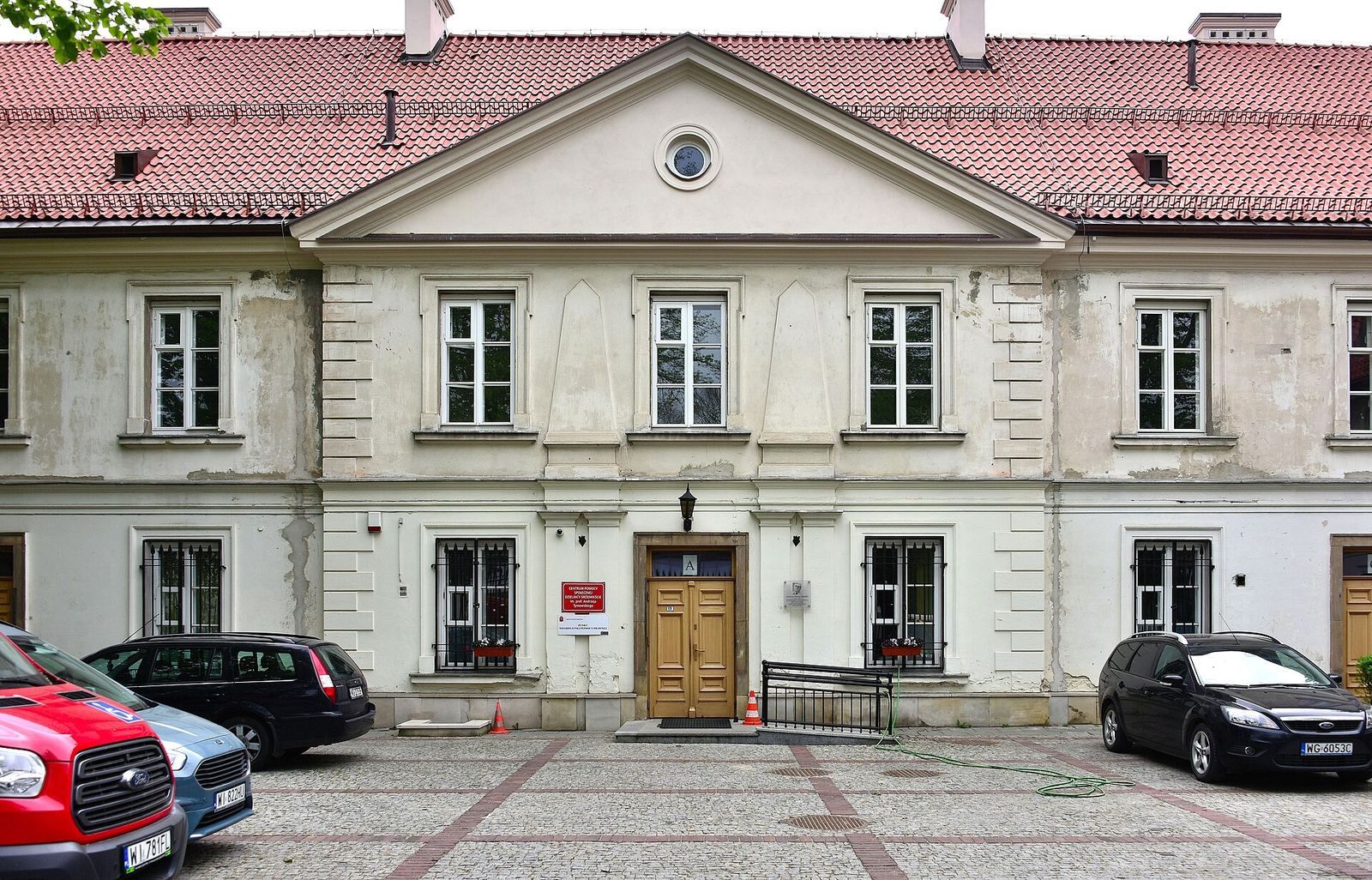
During the German attack on Warsaw in 1939, the palace and half of its front annex were destroyed. The remaining buildings were destroyed during the Warsaw Uprising of 1944, an armed revolt against German occupation in the city. The palace was rebuilt in 1951–1954 under architect Barbara Andrzejewska, using a surviving design by Kubicki. It entered Poland’s register of historic monuments in 1965. Later public-service occupants included the Śródmieście District Social Assistance Center named for Professor Andrzej Tymowski and a National Health Fund outpatient clinic.
Remains
The site occupies a long, narrow plot. The palace stands at its eastern end, toward the Vistula, while service buildings were added progressively to the west. This arrangement reflects the development of the former barracks complex.
The palace
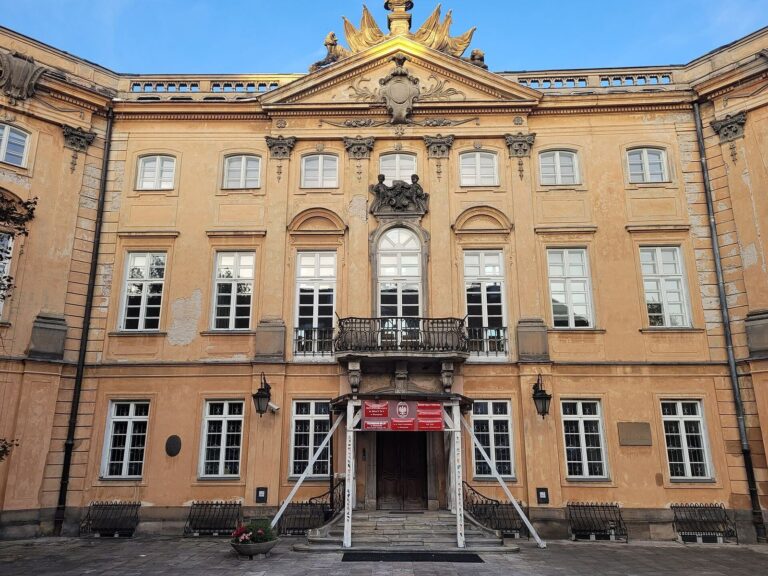
The palace’s main entrance faces Konwiktorska Street. Its earlier exterior was late Baroque; conversion to barracks brought a late-Classical treatment, based on classical forms and proportions. The rebuilt palace follows Kubicki’s surviving design. The building is poorly maintained.
Western plot and commemorative features
School Complex No. 12 occupies the former site of the western service buildings. A plaque commemorating the Warsaw Uprising is mounted on the palace’s west side. Behind the palace, a public fountain carries a sculpture of a dancing bear.