Hiratsuka Kawazoe Site: A Moated Yayoi Settlement in Japan
Site at a Glance
- Rating
- 4.1
- Popularity
- Medium
- Country
- Japan
- Primary era
- Classical
- External website
- Open
- Eras represented
- Classical
- Civilizations
- Yayoi
- Site type
- City
On this page14 sections
History
Yayoi and Early Kofun Periods
The Hiratsuka Kawazoe Site is an archaeological settlement in Asakura, Fukuoka Prefecture, Japan, occupied from the middle Yayoi period into the beginning of the Kofun period, roughly from the first century BCE to the fourth century CE. These are successive periods in Japanese history; the Kofun period takes its name from the large burial mounds built during that era. By the late Yayoi period, around the second or third century CE, Hiratsuka Kawazoe had grown into a large settlement enclosed by moats.
This late Yayoi phase coincided with conflict in Wa described in the third-century Chinese historical text Wei Zhi, dated around 297. Wa was the name used in early Chinese writing for people and polities of the Japanese archipelago, while Yamatai was a polity described in those records. The site’s wider period of occupation overlaps the era associated with Yamatai in Chinese historical writing. Hiratsuka Kawazoe’s organized settlement pattern helps explain the local polities of the time.
Discovery and Preservation
The site came to light in 1990 during construction of the Hiratsuka Industrial Park. The Amagi City and Fukuoka Prefecture boards of education excavated it from August 1991 to May 1993. Japan designated Hiratsuka Kawazoe a National Historic Site on May 19, 1994; the protected area covers about 11 hectares. Development of the Hiratsuka Kawazoe Archaeological Park began in 1996.
Remains
The remains extend across about 17 hectares on slightly raised ground, approximately 20 metres above sea level, in a river-formed plain. The site lies in the Koishihara River basin, near the western edge of the Fukuda Plateau. The Koishihara River runs to its west and the Sada River to its east. The settlement’s layout combines moats, pit dwellings (houses built partly below ground) and buildings supported by upright posts set into the ground. Excavations uncovered traces of about 300 pit dwellings and around 100 post-supported buildings.
Moats and Settlement Plan
Central Settlement
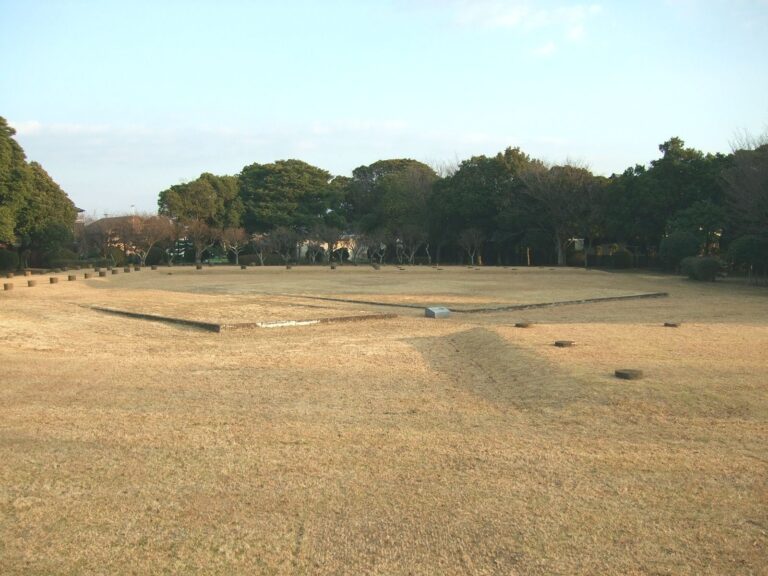
An oval central settlement, about 220 metres from north to south and 120 metres from east to west, covers roughly two hectares and is enclosed by an inner moat. Its remains include a large post-supported building, with another large building of this type in the settlement’s northeastern corner.
Outer Moat System
Beyond the central enclosure, small settlement groups appear to have been surrounded by a double ring of moats. Pronounced outward bends in sections of the moats form more than six areas between the rings. Three or four additional moats were identified in low ground west of the plateau. The settlement as a whole is estimated to have extended more than 400 metres north to south and 250 metres east to west.
Residential and Working Areas
Southwestern Warehouse Area
Outside the inner moat, southwest of the central settlement, a warehouse area consists of post-supported structures. On its northern side, paired postholes on both slopes of the inner moat are thought to have held supports for bridges leading toward the settlement’s centre.
Northeastern Settlement
Beyond the third moat northeast of the central settlement, pit dwellings occupy the middle of an area with groups of post-supported buildings to the east and west. In the western part, one such building stands within an oval moat. Its form resembles remains at Suku Okamoto and Suku Nagata, where similar structures have been interpreted as possible bronze-casting workshops. Concentrations of wooden artifacts and beads away from dwelling areas suggest that some workshops were separate from residential zones. Large quantities of unfinished wooden implements and planks in the northeast indicate an area where craftspeople both lived and worked.
Finds and Reconstructed Features
Objects and Craft Evidence
Finds include everyday pottery, bronze spears and arrowheads, mirror fragments, Chinese coins, wooden agricultural tools, building materials and fishing gear. A fragment of a bronze spear mould, reused as an anchor stone, came from a pit dwelling north of the central settlement, near the oval-moated building.
Plant Remains
Plant remains include reeds, grapes, alder, Japanese evergreen oak, Japanese chinquapin, konara oak and bayberry.
Archaeological Park Reconstructions
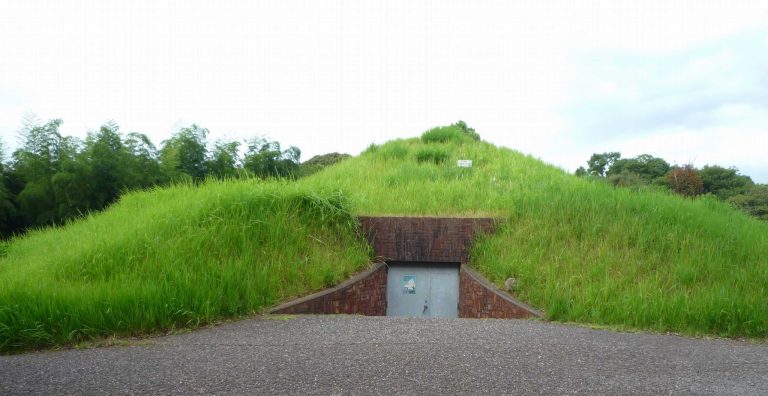
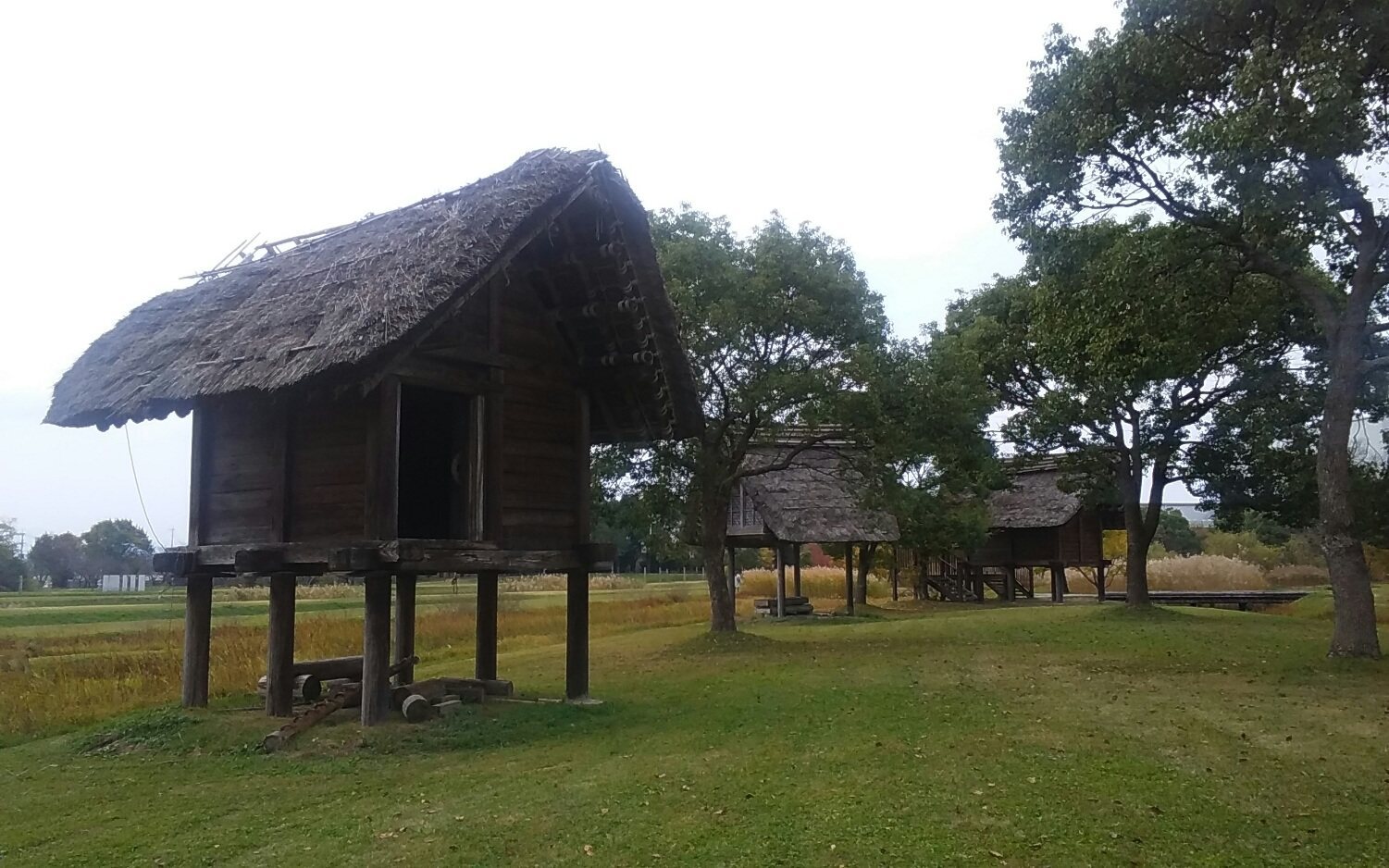
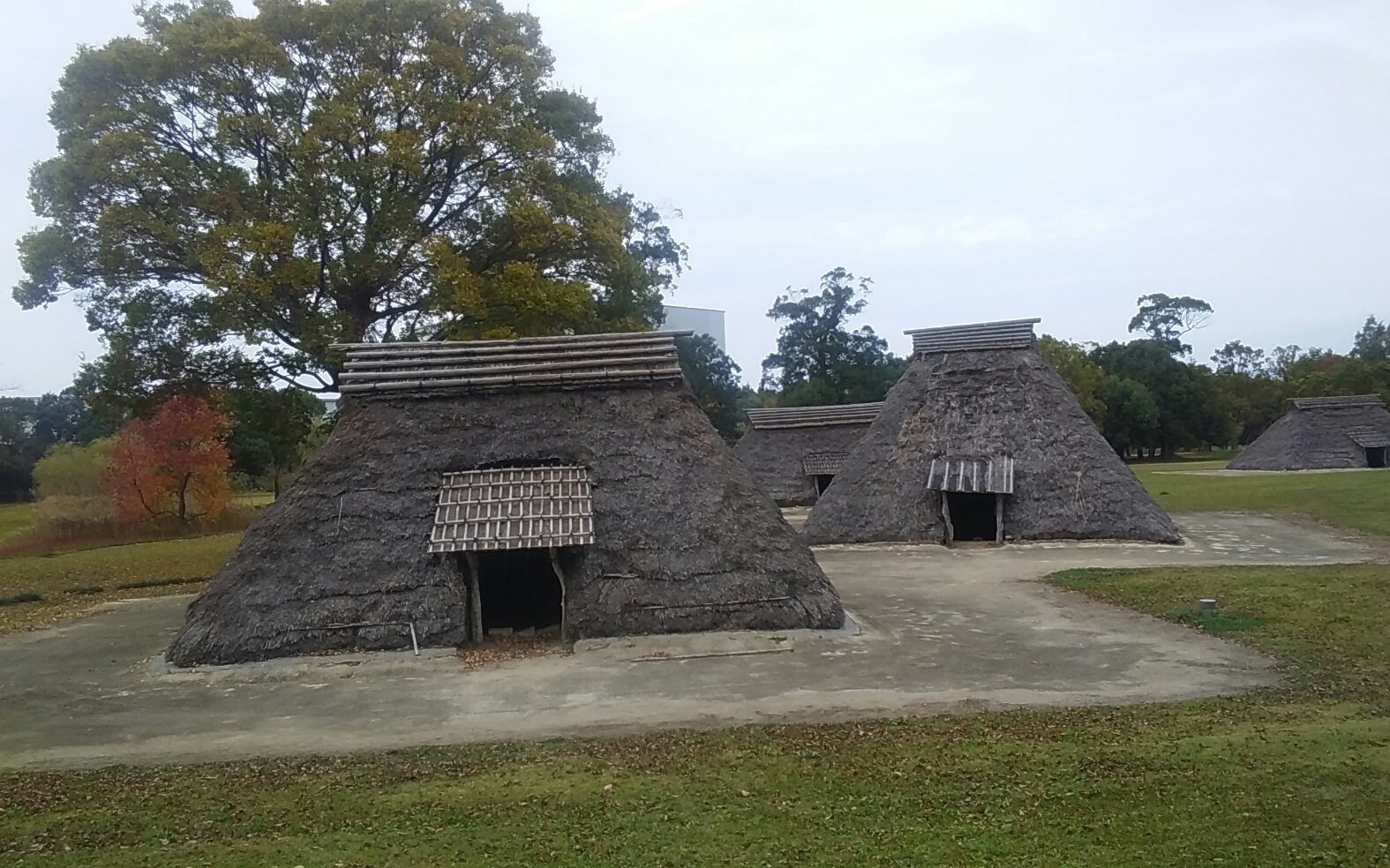
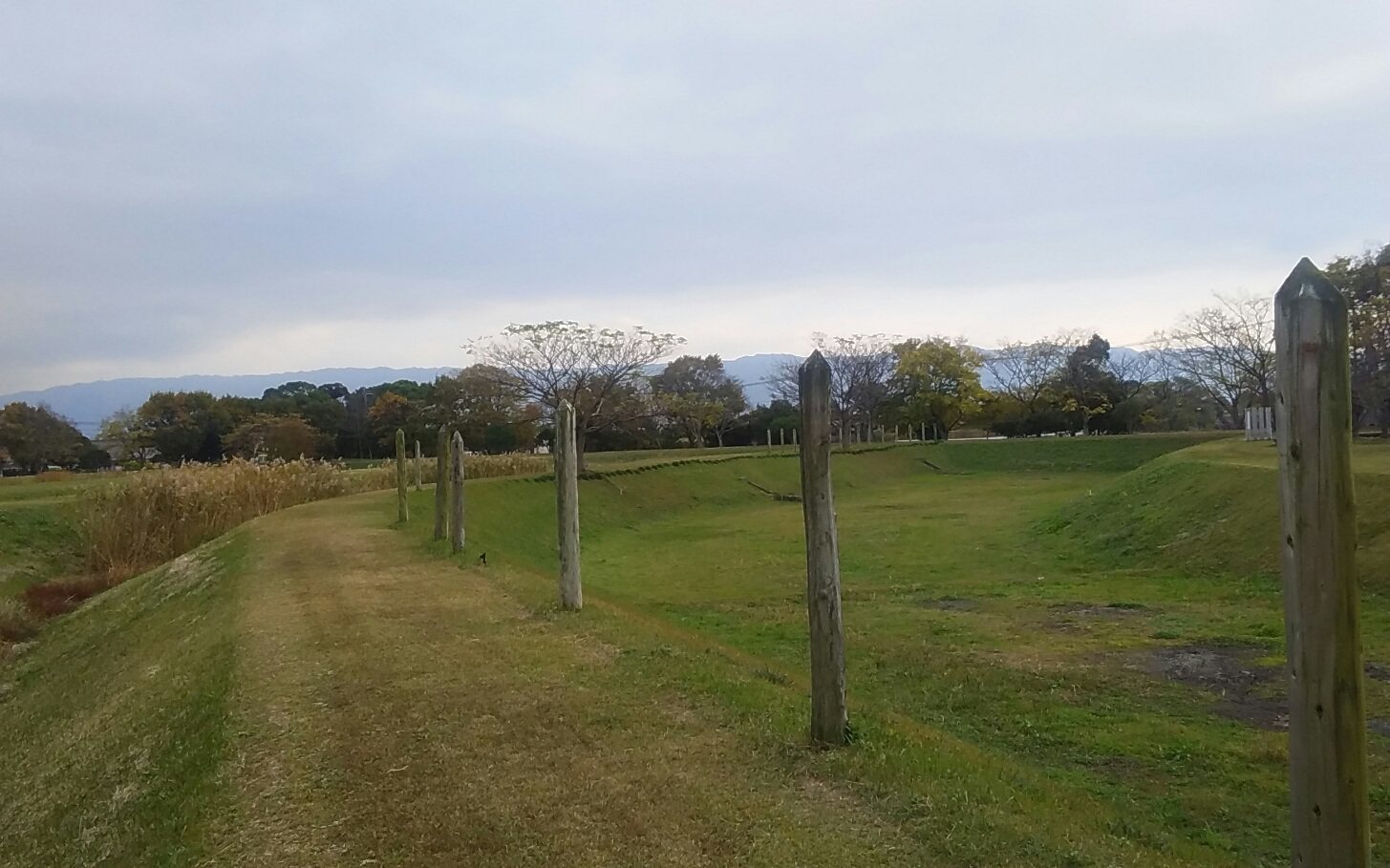
The archaeological park includes reconstructions of moats, pit dwellings, raised-floor storehouses and other buildings, as well as plantings representing ancient vegetation.