Bornburg: A Medieval Fortified Manor in Frankfurt am Main
Site at a Glance
- Rating
- 4.6
- Popularity
- Very High
- Country
- Germany
- Primary era
- Modern
- External website
- Open
- Eras represented
- Medieval, Modern
- Civilizations
- Holy Roman Empire
- Site type
- Civic
- Remains
- Park
On this page11 sections
History
Bornburg was a fortified manor in what is now Frankfurt am Main, Germany; its grounds later became the site of Frankfurt’s first public park. The castle probably originated in the 10th century as a lowland water castle.
Roman and Early Medieval Context
A Roman country estate, or villa rustica, stood west of Bornburg around AD 110, when the area was under Roman control. After the Roman frontier system gave way, Alamanni and later Franks occupied the district. Bornheim reappears in the historical record around 793, when royal manors were established in the Nordend area. In the Middle Ages, estates of this kind came into the hands of Frankfurt’s patricians, the city’s politically and economically prominent families.
The Medieval Manor and Frankfurt
Documentary evidence for Bornburg dates to 1189/94. A record from 1194 names Henricus von Bornheim as a resident. The estate belonged to Rulmann Weiß von Limburg from 1306. In 1327, after becoming Frankfurt’s imperial reeve, a local official exercising imperial authority, he continued to live at Bornburg beyond the city. In 1396, Junge Wisse was recorded as its owner and as granting Frankfurt rights of entry and first refusal. These privileges gave the city access to the fortified property under agreed conditions and priority if it was sold. The record leaves unclear whether Wisse established the rights or confirmed earlier ones, but later owners were obliged to honor them.
In 1474 or 1475, the Schelme von Bergen sold their imperial fief, land held under the authority of the emperor, in Bornheim to Frankfurt, and Bornheim became a Frankfurt village. An agreement in 1481, confirmed by the emperor in 1484, settled a dispute of nearly 160 years over the imperial county of Bornheimer Berg, a territory whose count held authority directly from the emperor. Count Philipp of Hanau received 16 villages; Frankfurt retained Oberrad, Hausen, and Bornheim, the former seat of the local court. By about 1490, Bornburg was known as the Glauburger Hof, after its owner Johann von Glauburg zu Lichtenstein. He and his son, Johann von Glauburg, belonged to Frankfurt’s patriciate and Alten Limpurg, an association of patrician families.
Siege and Changing Owners
Bornburg became part of Frankfurt’s Landwehr, the defensive boundary system around the city. In 1552, during a siege by the Protestant Princes’ League, a coalition of Protestant princes led by Albrecht Alcibiades, a Hohenzollern prince and Margrave of Brandenburg-Kulmbach, the estate burned. The whole Frankfurt Nordend was devastated. Bornburg was probably rebuilt only in part during the 16th century.
After 1690, the estate took the name Günthersburg, following its purchase by Johann Jakob Günther. Once an innkeeper, Günther had become a wealthy businessman through speculation and profitable dealings with powers at war. His mostly aristocratic business partners later outmaneuvered him. He died impoverished and heavily indebted in 1722, and his creditors sold the 105-Morgen estate, measured in a traditional land unit whose size varied by region.
From Private Estate to Public Park
Konstantin von Buttlar, prince-abbot of Fulda, combining leadership of an abbey with secular princely authority, sought to acquire the estate, but Frankfurt’s council withheld approval. In 1766, it passed to building speculator Johann Georg Petsch; about a decade later, it was resold to a general’s wife. During the Wars of Liberation, the campaigns against Napoleonic French rule, especially those of 1813–15, the estate served as a hospital for wounded Prussian soldiers. In 1837, councilman Johann Adam Beil sold the property and its land to Baron Carl Mayer von Rothschild.
Bornburg was demolished during the first half of the 19th century, in 1827 or 1840. At the Rothschilds’ direction, Frankfurt city gardener Sebastian Rinz redesigned the grounds as an English landscape garden between 1837 and 1839. Carl Mayer’s son, Mayer Carl von Rothschild, inherited the estate in 1845 and had the large Günthersburg Palace built around 1855. Designed by Friedrich Rumpf, the mansion was Neoclassical, a style drawing on ancient Greek and Roman forms. A tea pavilion stood nearby. When Mayer Carl died without children in 1886, his will left the property to Frankfurt on condition that it become a public park and the palace be demolished. The city acquired the palace and 29 hectares of grounds in 1891, demolished the mansion, and had garden architect Andreas Weber redesign the park. Günthersburgpark opened in 1892 as Frankfurt’s first public park.
The Park in the Twentieth Century
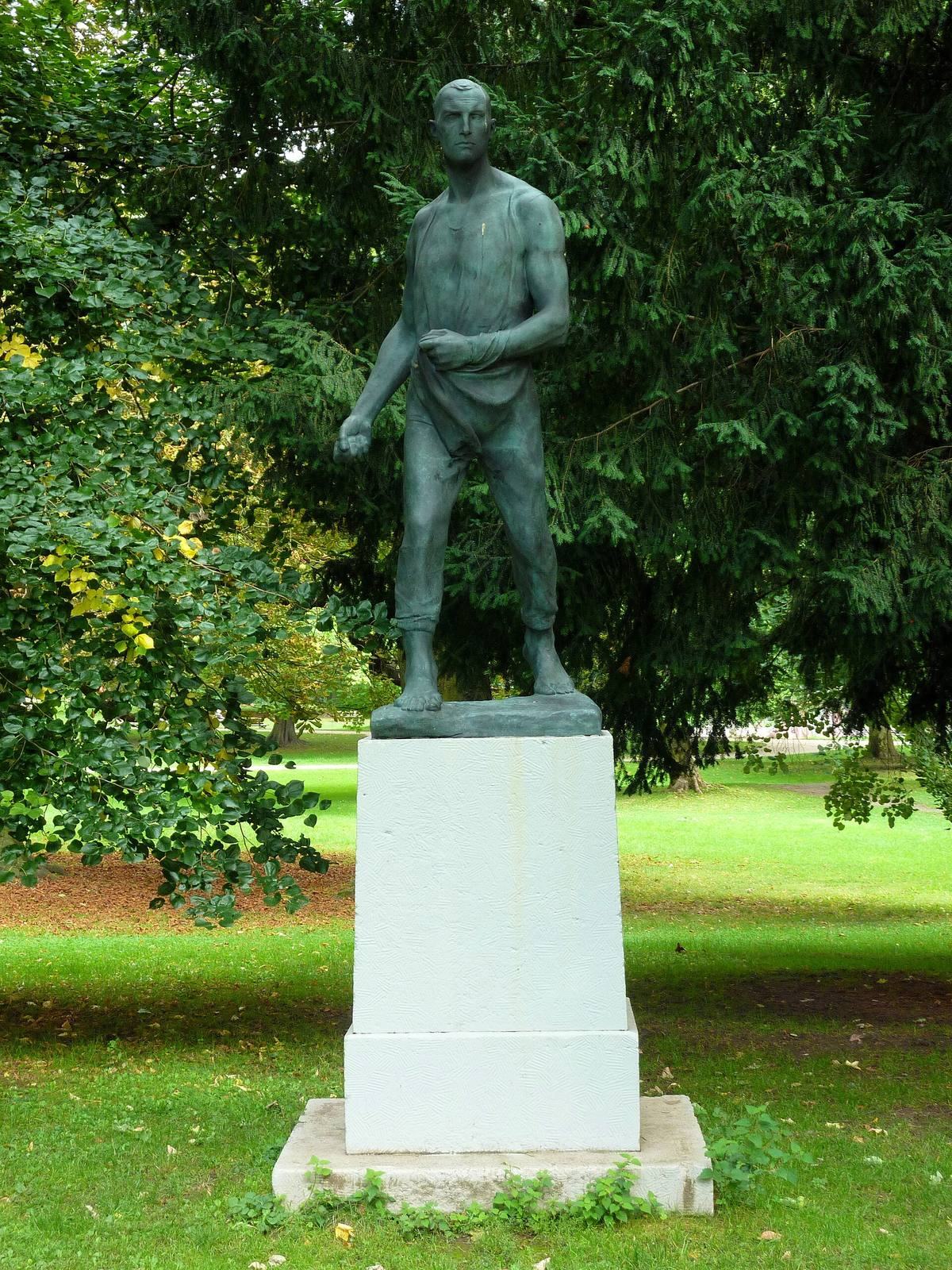
Constantin Meunier’s bronze The Sower, created in 1890, was installed at the park’s southern entrance in 1915. Frankfurt had bought the sculpture in 1906, and its installation was a gift from entrepreneur Leo Gans, then head of the Cassella works. Around the same period, Fritz Boehle’s Striding Bull was placed in the park.
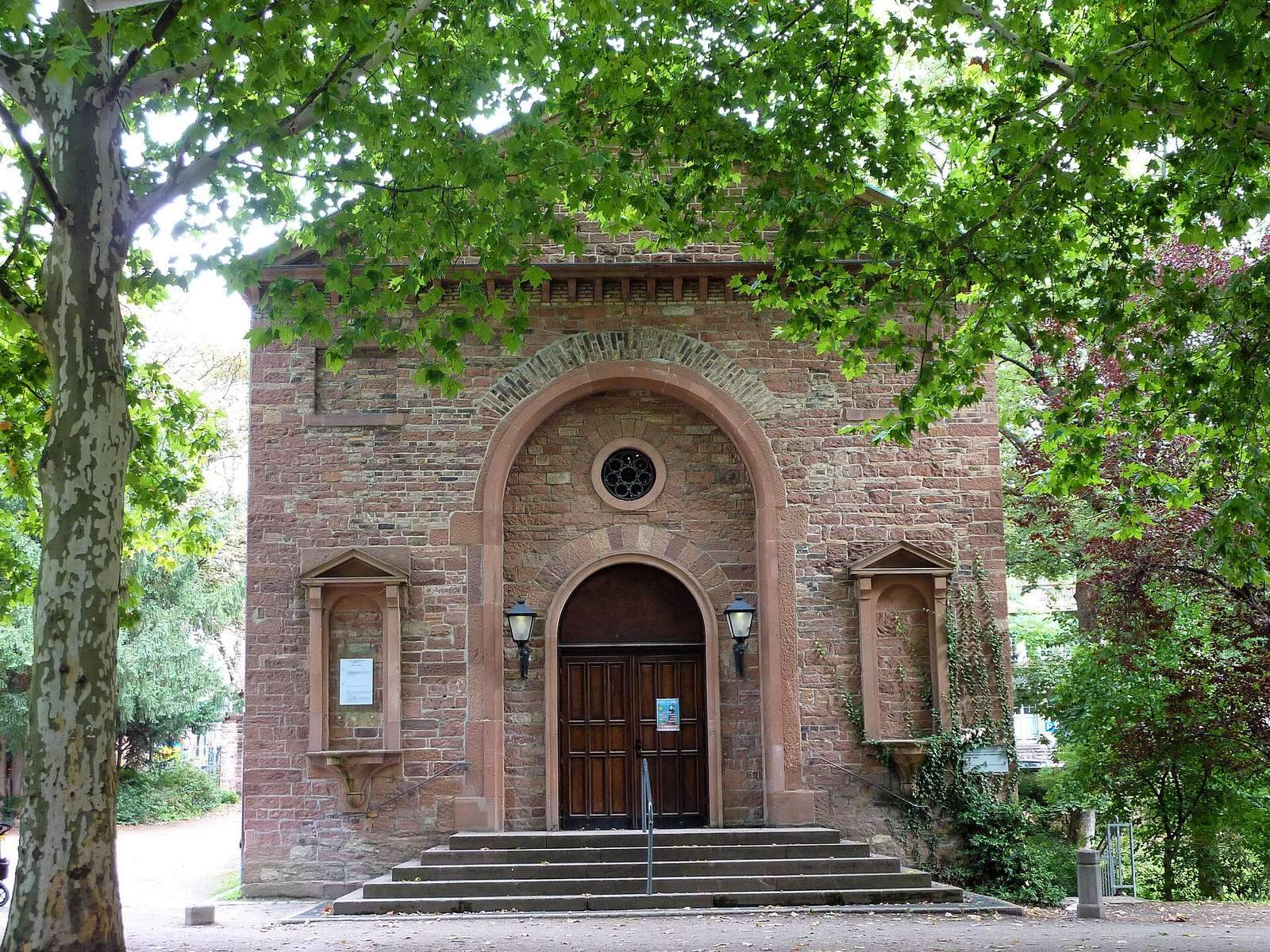
During the Second World War, bombing destroyed the tea pavilion and severely damaged the Rothschild Orangery. The Orangery was restored after the war and served as the Reformed congregation’s Church of Grace from 1950. After it was no longer needed as a church, Karl and Else Seifried gave the building to the Child Protection Association.
Remains
Günthersburgpark occupies low-lying ground once known as Ossenau or Ochsenau. Its landscaped grounds include broad lawns and groups of trees. Bornburg stood approximately where the former Rothschild Orangery is located and took the form of a fortified manor surrounded by water.
Bornburg’s Layout and Surviving Evidence
Nineteenth-century images depict Bornburg as a multistorey fortified house enclosed by a broad moat, with two entrances protected by drawbridges. The house had a roof with partly sloped ends and, along one long side, a large rectangular section projecting outward through almost the full height of the building. A separate tower, about as tall as the house, stood at a corner on that side. After the probable partial rebuilding in the 16th century, the tower later acquired a Baroque dome topped by a small bell tower. At least one approach was protected by a forward wall pierced with narrow defensive openings. Part of the entrance portal survives in the park, and early 19th-century etchings and steel engravings depict the castle.
The Orangery and Park Features
Former Orangery
The building on Bornburg’s site is dated to 1855. Originally an orangery, a structure for sheltering citrus and other tender plants, it later served as the Church of Grace. The Child Protection Association has used its rooms since 2004.
Landscape and Sculpture
The park’s broad lawns and groups of trees form the principal elements of its landscaped grounds. Meunier’s bronze The Sower stands at the southern entrance. Boehle’s Striding Bull is an oversized sculpture made from hammered copper sheet, based on a design from 1910.