Moerkerke Castle: Seat of the Lords of Moerkerke
Site at a Glance
- Popularity
- Medium
- Country
- Belgium
- Primary era
- Modern
- Eras represented
- Medieval, Early Modern, Modern
- Civilizations
- Belgian, County of Flanders
- Site type
- Domestic
- Remains
- Castle
On this page10 sections
History
Medieval castle and lordship
Moerkerke Castle, in Belgium, originated around 1100 and became the seat of the lordship of Moerkerke, a territorial estate whose lord held local rights and authority. The Van Moerkerke family first lived there, before the castle passed to the Van Praet family in the fourteenth century.
In 1302, the year of the Battle of the Golden Spurs, fought between Flemish forces and the army of the French crown, an attack on the castle was planned because its occupant supported the French. Ghent troops plundered the castle toward the end of the fourteenth century. Lodewijk van Praet, who died in 1440, may have helped bring about the 1369 marriage of Margaret of Male, Countess of Flanders, and Philip the Bold, Duke of Burgundy.
Changes of ownership and use
The castle was sold in the sixteenth century and passed through several families. Karel van Sint-Omaars (1532–1569), son of Joos van Sint-Omaars and Anna van Praet, lived there, established a botanical garden and commissioned watercolours of plants and animals. In the late sixteenth century, Clemens van Castilië acquired the property and remodelled it as a more comfortable residence, as it no longer had a military purpose.
In 1700 the castle passed to Pierre de la Villette. When he died without children in 1716, ownership went to his nephew’s son, Pierre-Louis d’Hanins, born in 1693. Pierre-Louis thereafter used the name d’Hanins de Moerkerke.
Nineteenth-century remodelling and modern use
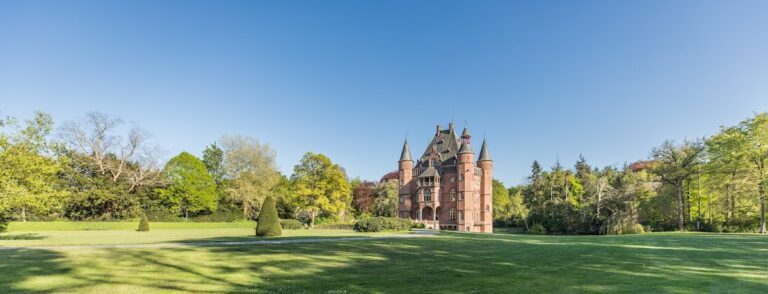
The d’Hanins family had the building remodelled in the nineteenth century. In 1842, the marriage of Pierre-Louis d’Hanins’s great-granddaughter to Baron Auguste de ’t Serclaes transferred the estate to the de ’t Serclaes de Wommersom family, which substantially remodelled the castle again.
The Xaverian Brothers, a Catholic teaching congregation, established a school in the castle in 1922. After they left, the building fell into serious disrepair. Colonel Van den Broeck bought the estate in 1964 and had the castle restored. From the 1960s, it was also used for receptions and parties.
Remains
Castle and grounds
Early fabric and access
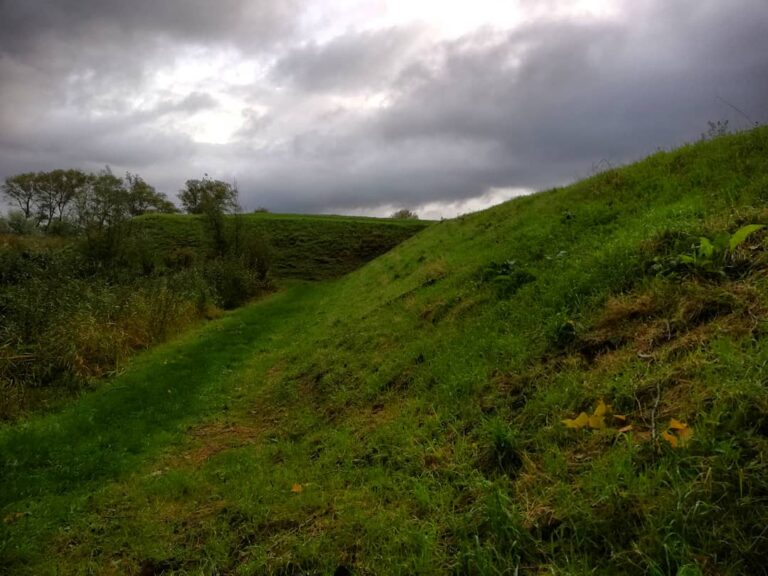
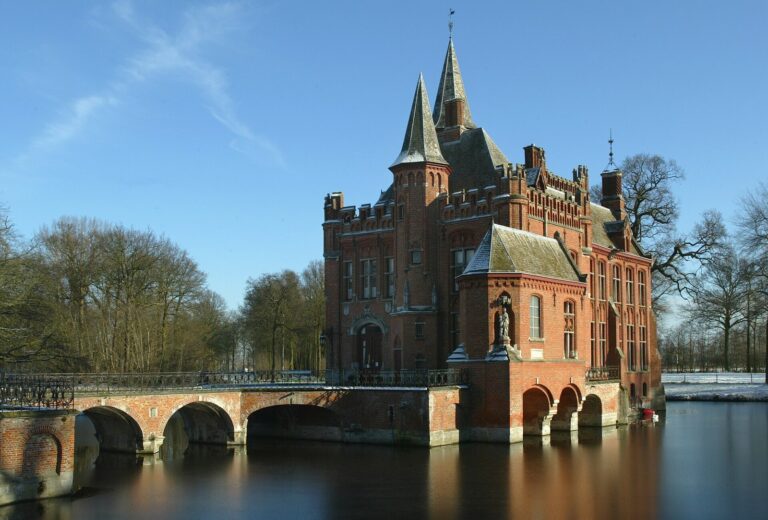
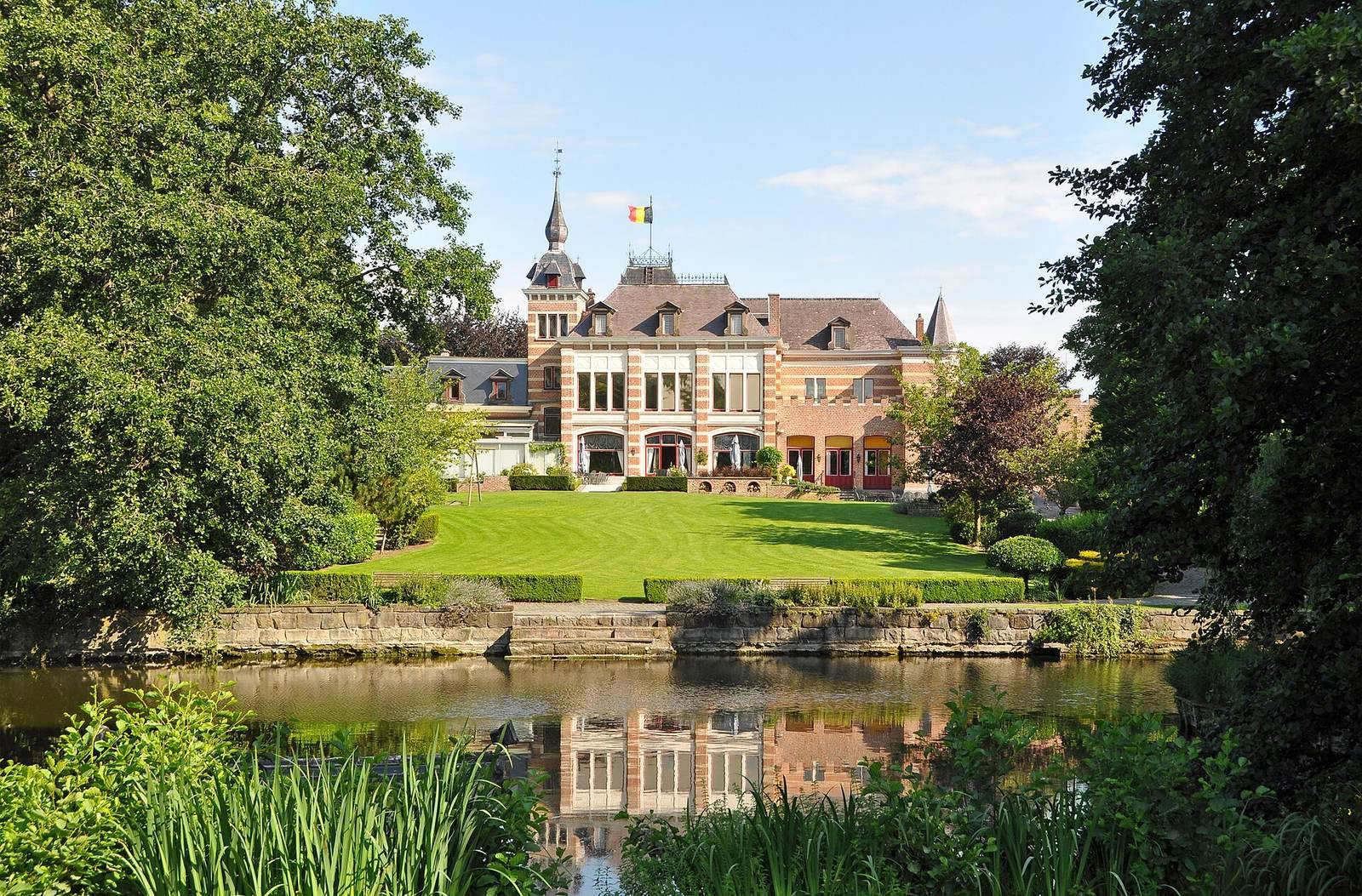
The original complex consisted of a square fortified tower on a raised earth mound and an outer court. The castle remains partly encircled by a moat. Older fabric survives especially in the basement, which includes a crypt with a continuous, tunnel-shaped vaulted ceiling.
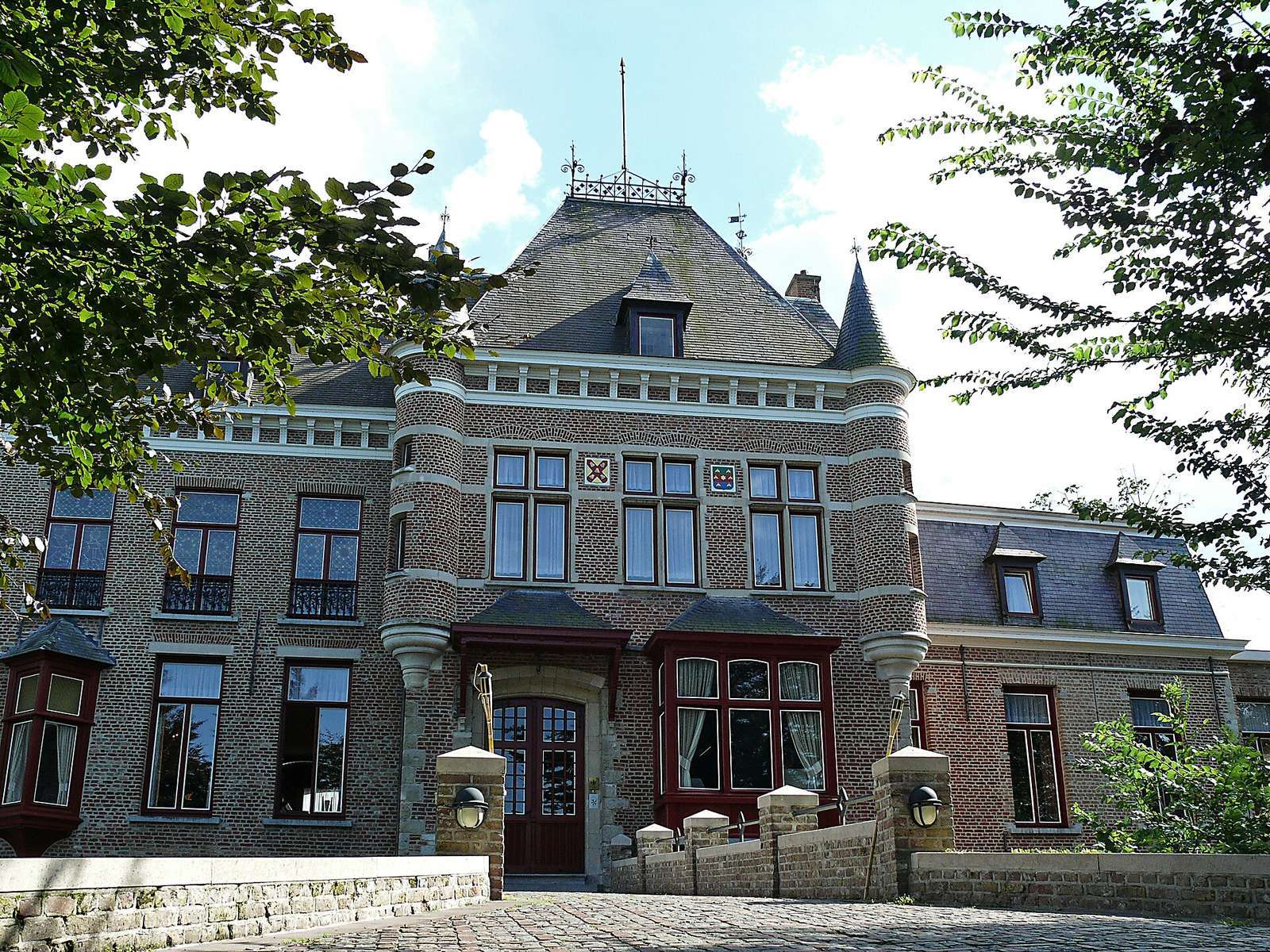
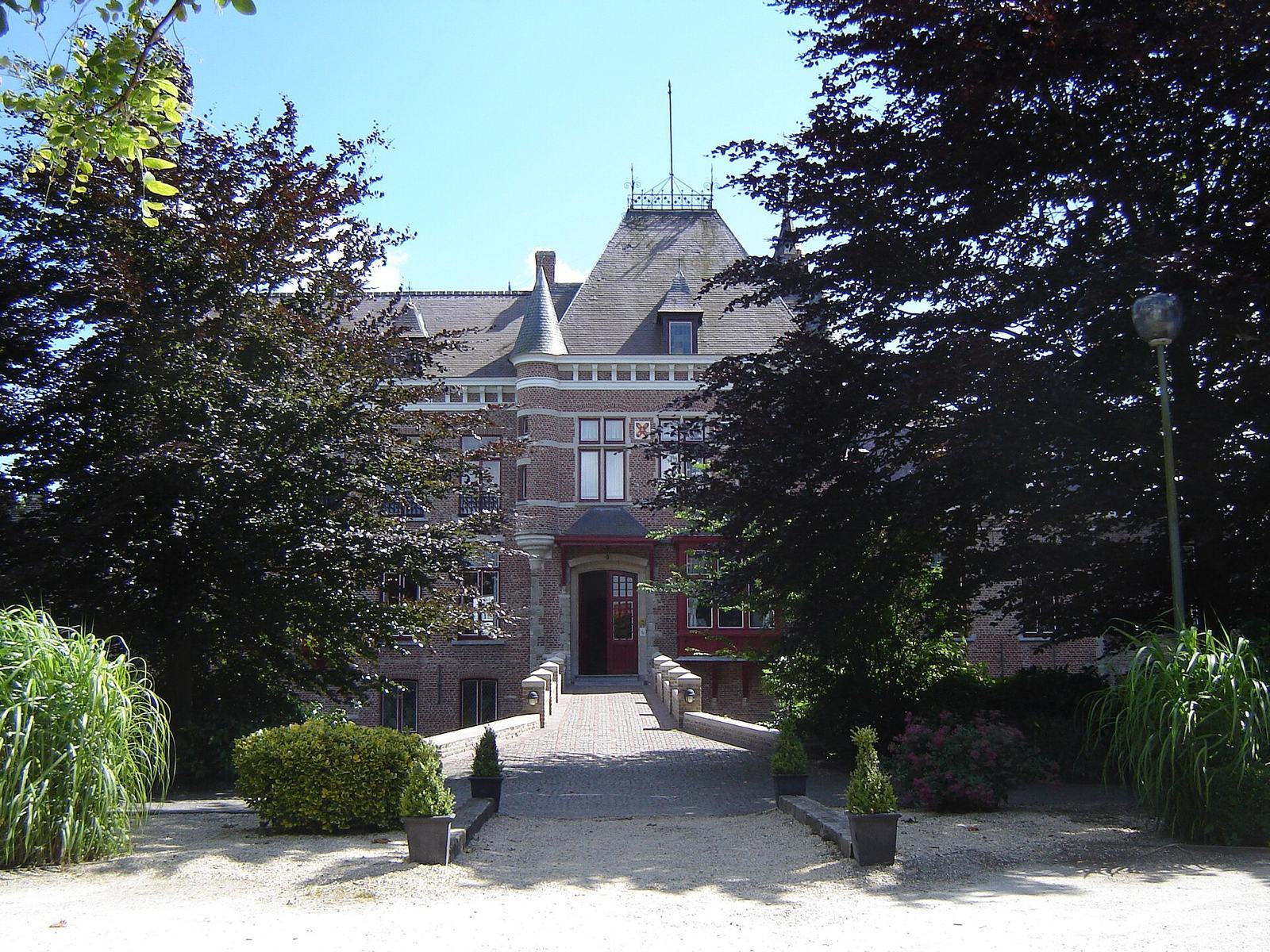
A bridge with four rounded arches gives access to the castle. It dates to the seventeenth and eighteenth centuries. The nineteenth-century remodelling used the neoclassical style, drawing on Greek and Roman architecture, while the building’s present eclectic appearance, combining elements from different styles, dates to 1912.
Wings and garden
The restoration added a wing on each side of the castle. An ice cellar lies in the left wing. The surrounding garden contains a pond, and portions of the former outer court were found within the garden.
Memorial objects
Funerary boards
Inside the castle are nineteenth-century funerary boards, heraldic displays commemorating the dead, which once hung in a church. The building also contains Pierre de la Villette’s funerary board, dated 1716.