Palace of Ongay-Vallesantoro: A Baroque Residence in Sangüesa
Site at a Glance
- Popularity
- Low
- Country
- Spain
- Primary era
- Early Modern
- Eras represented
- Early Modern
- Civilizations
- Kingdom of Navarre, Spanish
- Site type
- Domestic
- Remains
- Elite Residence
On this page7 sections
History
The Palace of Ongay-Vallesantoro is a seventeenth-century Baroque palace in Sangüesa, Navarre, Spain, built by Blas de Ongay Iriarte. It now serves as the town’s cultural center. Spain’s UNESCO retrospective inventory of associated components identifies the palace as connected with the Camino de Santiago, a network of pilgrimage routes leading to Saint James’s shrine at Santiago de Compostela. This connection does not make the palace a separately designated World Heritage site.
Ongay family ownership
The palace initially belonged to the Ongay family. A daughter of Blas de Ongay Iriarte married Juan Echeverri y Echenique Lesaca Bernía, of Arnegui.
Vallesantoro ownership
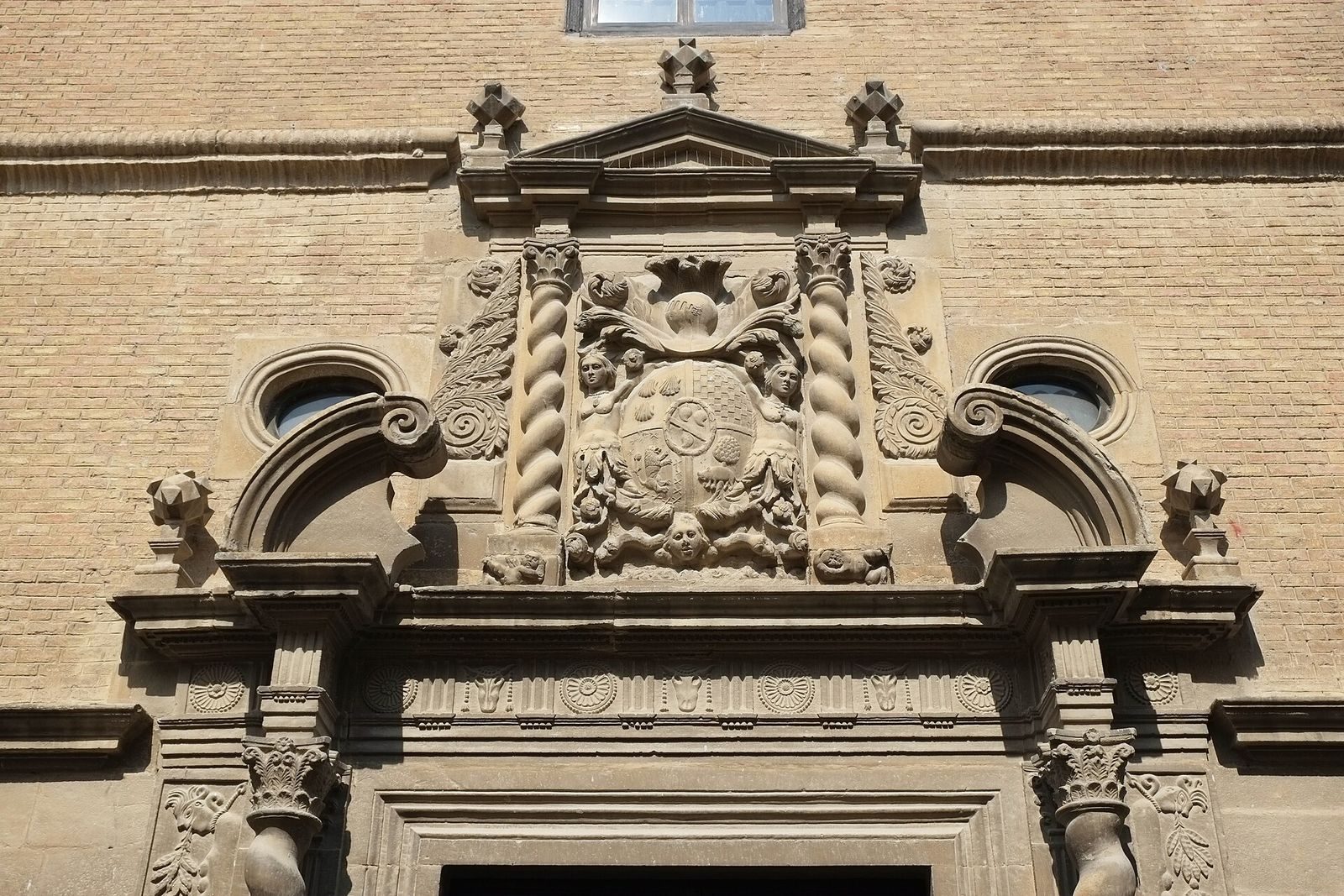
In the late eighteenth century, the property passed to Leopoldo de Gregorio y Paterna, Marquis of Vallesantoro and viceroy of Navarre. A viceroy governed on behalf of a monarch. The entrance portal was built after the transfer, while the coat of arms above it dates to the Ongay period.
Remains
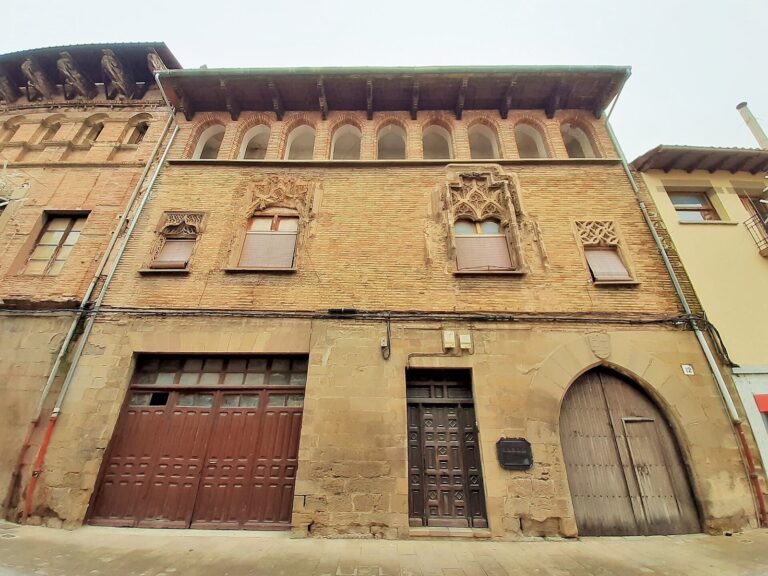
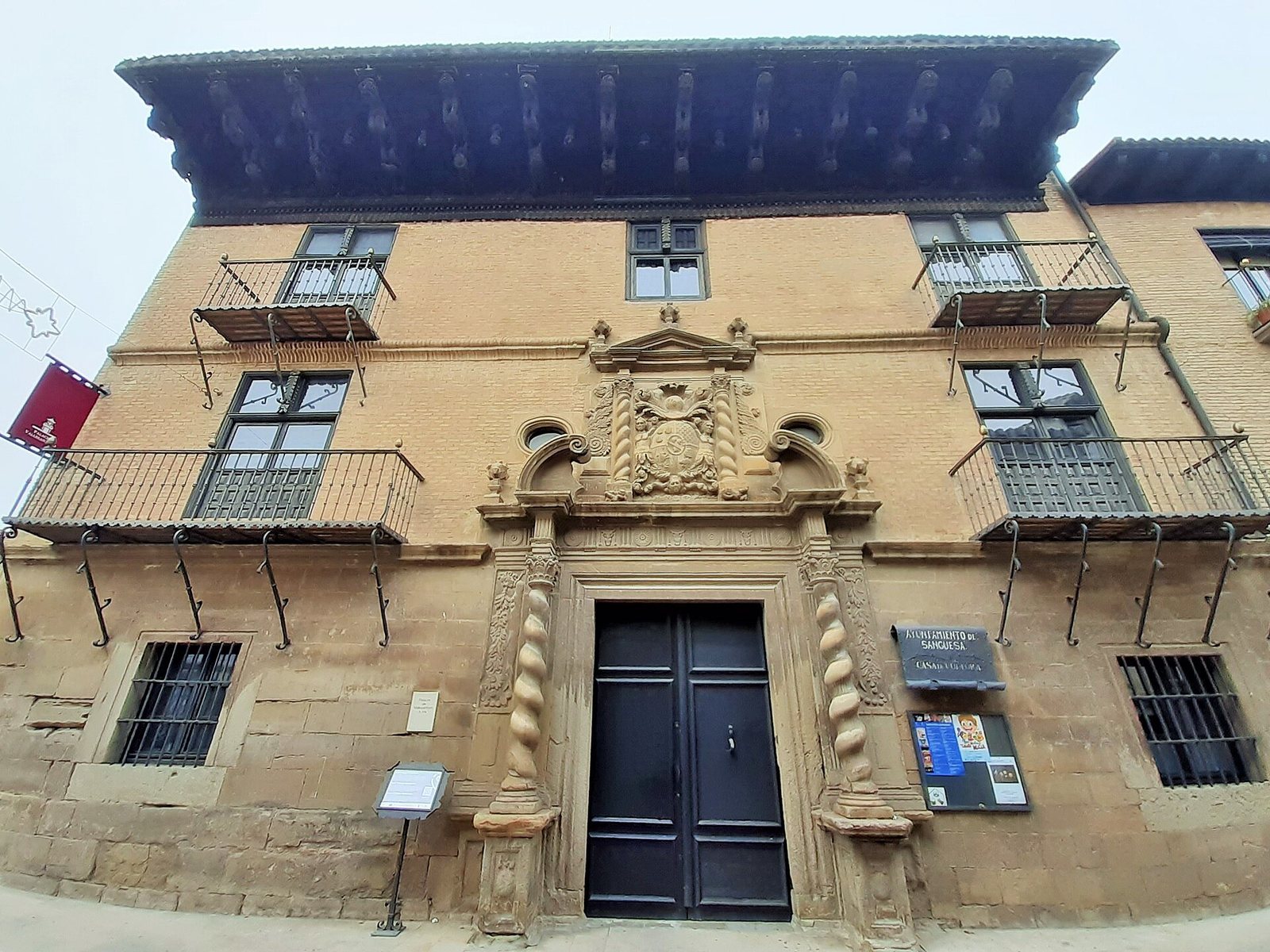
Standing on Alfonso el Batallador Street, the palace has three storeys. Its ground floor is built of ashlar, finely cut stone set in regular blocks, while the upper floors are brick. Rounded-profile stringcourses, horizontal bands marking levels, separate the storeys. Two balustraded balconies occupy the upper floors.
Façade and portal
The façade is Churrigueresque, an ornate form of Spanish Baroque architecture. The Baroque doorway has a lintel, a horizontal support spanning the opening, and a triangular pediment above it, with a design that already shows Neoclassical influence. Two smooth Solomonic columns, with spiral shafts, stand on paneled bases and have Corinthian capitals, the decorated tops of columns. The portal’s ornament draws on colonial Mexico and Peru. Siren figures on narrow vertical wall bands have clusters of fruit hanging from their mouths. The horizontal decorative frieze alternates suns and buccaneers, or pirates. Above the portal, the coat of arms combines emblems associated with Juan Echeverri y Echenique Lesaca Bernía’s four surnames: three silver scallop shells, a checkerboard, a lion, gold diagonal crosses, and a boar with a tree. Its central shield bears the Ongay family’s three hearts.
Carved wooden eaves
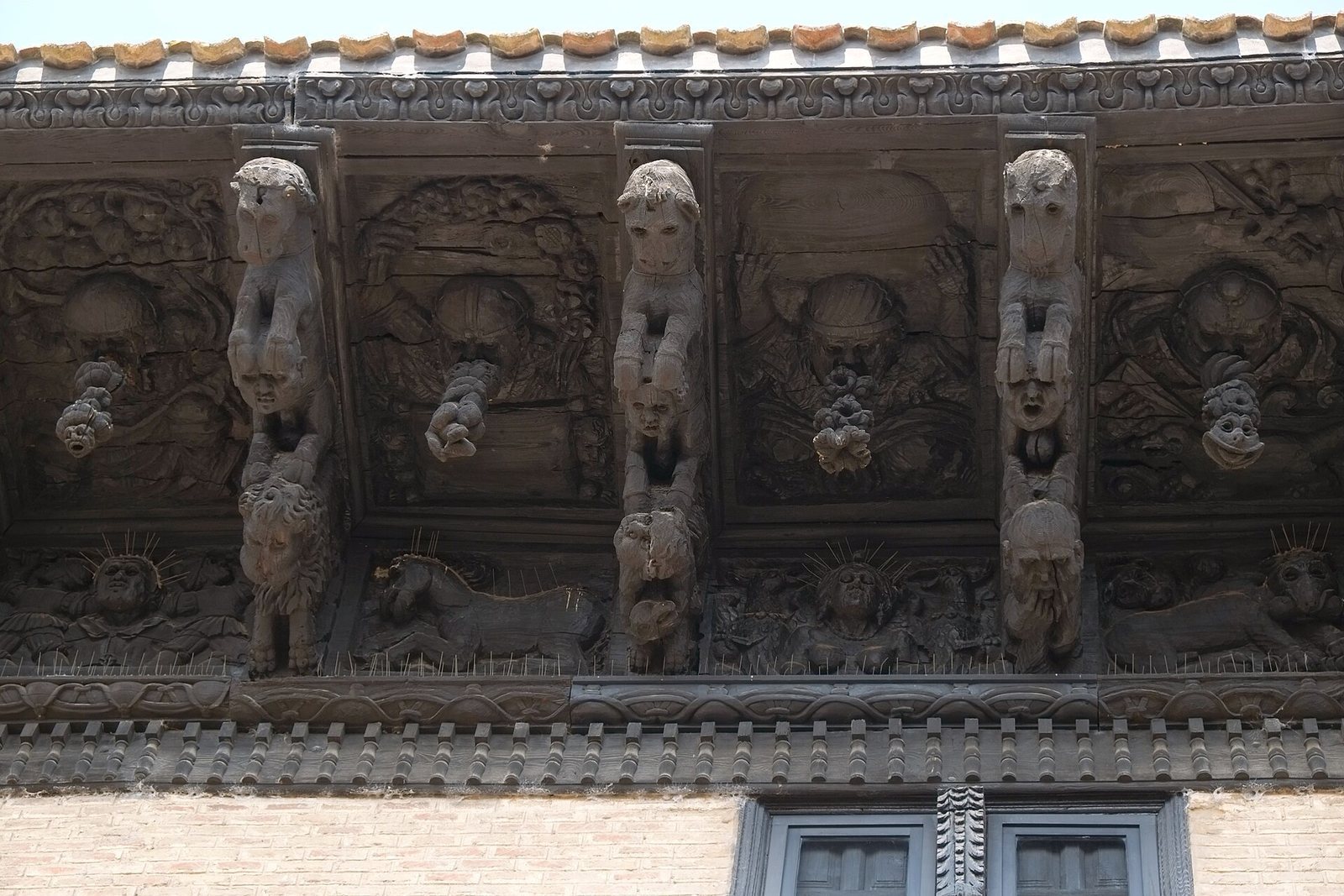
The wooden eaves carry thirteen depictions influenced by the colonial Americas. They include fantastic animals holding human heads, fruits, exotic plants, Indigenous figures in atlante form, meaning human figures used as architectural decoration or supports, and other fantastic animals.
Courtyard and staircase
Inside, a monumental staircase has a wooden balustrade and fluted, Solomonic, and twisted columns. Solomonic columns also line the courtyard’s upper floor.