Castle of Xavier: A Navarrese Fortress and Birthplace of Saint Francis Xavier


Site at a Glance
- Rating
- 4.5
- Popularity
- Medium
- Country
- Spain
- Primary era
- Medieval
- External website
- Open
- Eras represented
- Medieval, Modern
- Civilizations
- Kingdom of Navarre, Spanish
- Site type
- Military
- Remains
- Castle
On this page16 sections
History
Castle of Xavier is a medieval fortress in Spain, built in successive phases from a tenth-century watchtower on a rocky hill in the Sierra de Leyre. It overlooks the upper valley of the Aragon River and gave its name to the neighboring settlement. The castle is chiefly remembered as the birthplace and childhood home of Francisco Xavier, the sixteenth-century Jesuit missionary later canonized as Saint Francis Xavier.
From Watchtower to Castle
The earliest phase belongs to the final years of the tenth century, when the site served as a watchtower defending the upper Aragon valley and possibly resisting Muslim attacks. The foundations of the central tower date from this period. In the early eleventh century, a semicircular protective structure was built around the tower. It also provided accommodation for local lords, establishing the beginnings of a castle.
The fortress expanded substantially during the thirteenth century. Around 1223, Sancho VII of Navarre acquired the castle and the town of Xavier after an Aragonese nobleman failed to repay a loan of 9,000 sueldos secured against them. Sancho VII, a medieval king of Navarre, used similar lending and frontier policies to extend Navarrese control over fortified settlements near Aragon. After his death, the castle passed to Theobald I of Navarre, and in 1236 it was transferred to Adan de Sada. Later inheritances brought it to the Azpilcueta family.
The Jassu Family and Francisco Xavier
María de Azpilcueta brought the castle as her marriage dowry when she married Juan de Jassu, president of the Council of Navarre. Their son Francisco Xavier was born at the castle on 7 April 1506 and spent his youth there. His birth and childhood residence later gave the fortress a lasting religious importance through his connection with the Society of Jesus, the Catholic order of which he was a founding member.
When Navarre was annexed by Castile in 1512, Francisco Xavier’s elder brothers Michel and Jean de Jassu fought with Catherine of Foix and John III of Albret against Castilian forces. Juan de Jassu died in 1515. The defeat of the Navarrese cause led to the castle’s military reduction, as the family had supported Navarre’s independence.
Demilitarisation and Later Ownership
In 1516, Cardinal Cisneros, the Castilian cardinal and regent who directed the consolidation of Castilian rule in Navarre, ordered the complete demolition of the castle. The order resulted in the dismantling of its defensive elements rather than the total destruction of the residence. The surrounding walls, battlements, loopholes, moat, two large gateways, two round towers, drawbridge, inner garden, and rabbit enclosure were removed or destroyed. The San Miguel Tower was reduced by about half. Thereafter, Castle of Xavier functioned as a seigneurial residence and did not regain a military role.
Further inheritances eventually transferred ownership of the castle and town to the House of Villahermosa. By the late nineteenth century, the complex was almost ruined. María del Carmen de Aragón-Azlor, Duchess of Villahermosa, and her husband, José Manuel de Goyeneche, Count of Guaqui, began restoration works. After the count died unexpectedly without descendants in 1893, notarized agreements dated 30 April 1894 and 9 March 1895 recognized the duchess’s life usufruct of his inheritance, allowing her to finance the works already in progress. The count’s siblings also contributed to the restoration, the basilica, and associated residences.
Reconstruction as a Religious Center
The late nineteenth-century intervention reconstructed the castle in a fifteenth-century form rather than simply conserving its surviving fabric. The demolished New Palace was replaced by a basilica dedicated to Saint Francis Xavier, completed in 1901. Architect Ángel Goicoechea Lizarraga designed the work, which was carried out by Blas Morte of Tudela.
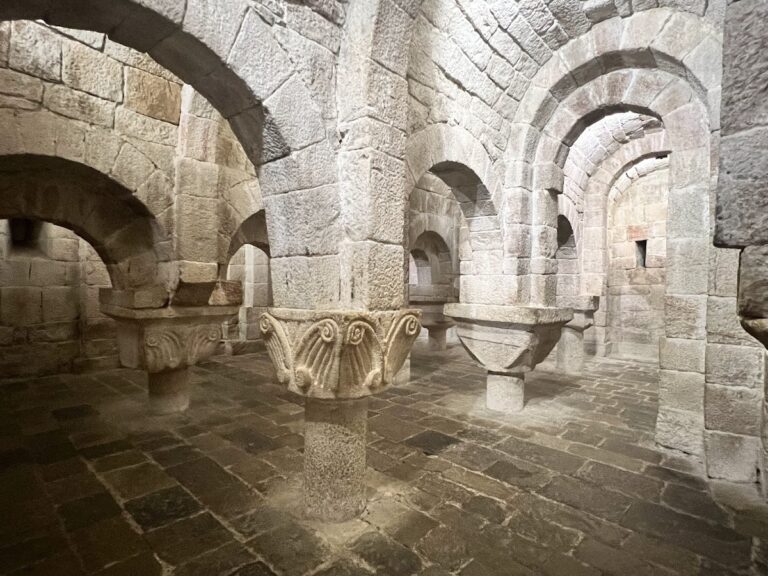
The duchess later donated the castle and basilica to the Society of Jesus on the condition that they be maintained as transferred and that pastoral services continue in the basilica. A Jesuit residence and a house for spiritual exercises were built nearby, and a small seminary opened in 1904. The basilica crypt contains the remains of contributors to the reconstruction, including the Duchess of Villahermosa, José Manuel de Goyeneche, María Josefa de Goyeneche, Carmen de Gamio, and José Sebastián de Goyeneche y Gamio, founder of the Goyeneche Foundation.
The castle and basilica became a pilgrimage center associated with Saint Francis Xavier and the Aragonese Way, a route of the Camino de Santiago network leading to Santiago de Compostela. The Javierada pilgrimage developed from a promise made in 1886 to visit Xavier in thanksgiving for the saint’s reputed intervention during a cholera epidemic. Its principal observances take place in early March and culminate on 12 March, the anniversary of Xavier’s canonization in 1622. Xavier was designated one of Navarre’s patron saints in 1623, and pilgrims walk to the site, pray in the basilica, and follow a Way of the Cross from Sangüesa to Xavier.
The Society of Jesus owns and manages the complex, whose current uses include tourism and a house for spiritual exercises. Spain’s 1949 decree on castles protected it, and it was registered as a cultural-interest monument in 1994. It is also identified as part of a World Heritage site. Between 2003 and 2005, a restoration and museum project repaired the interior and added a new cloister and associated facilities in preparation for the five-hundredth anniversary of Xavier’s birth.
Remains
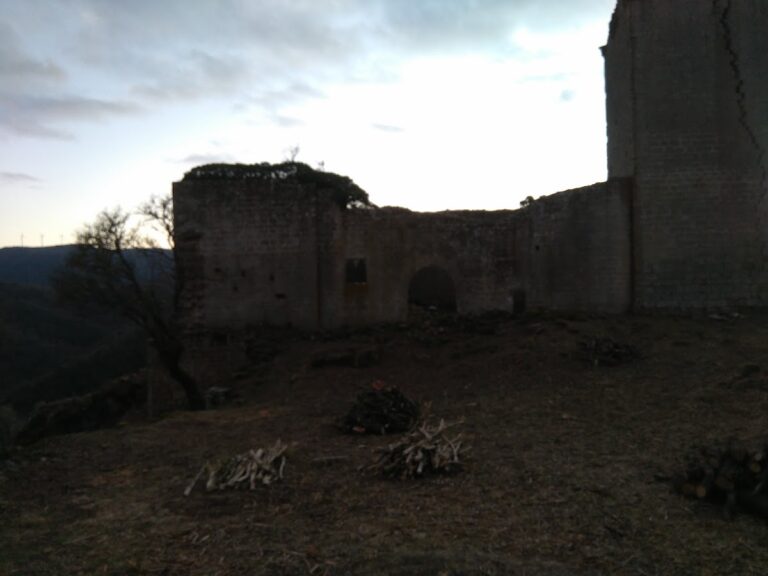
Castle of Xavier occupies a hill within the settlement of Xavier and consists of three principal bodies arranged on successive levels according to their age. The central San Miguel Tower is the oldest element, with foundations dating to the tenth century. The original watchtower was enlarged by a semicircular enclosure in the early eleventh century, creating the first enclosed residential area. Thirteenth-century expansion added towers, fortified buildings, and a larger enclosure around the southern side. The surviving complex is joined on its western side by the Basilica of Saint Francis Xavier and includes the crypt, Jesuit residence, and houses for spiritual exercises created through the later reconstruction scheme.
The Medieval Towers and Enclosures
San Miguel Tower
San Miguel Tower, also called the Homage Tower, began as the castle’s tenth-century watchtower. It contained the regular residence of the Jassu family, including the room used by Francisco Xavier during his youth. The tower was reduced to approximately half its former height during the dismantling ordered in 1516. Traces and base courses associated with Muslim construction survive in the foundations and may date to the tenth century.
Thirteenth-Century Fortress
The thirteenth-century fortress included the Saint Christ Tower on the west, the Unduès Tower on the east, and a fortified polygonal building toward the north. A larger enclosure extended around the southern side. Another account of the same expansion describes two polygonal bodies and two flanking towers added on the four sides. These elements formed the principal defensive expansion around the earlier tower and semicircular enclosure.
Chapel and Religious Art
Saint Christ Tower and Chapel
The Saint Christ Tower is a fortified bastion containing the former Jassu family chapel. The narrow chapel served family prayer, and Francisco Xavier received his first communion there. Its thirteenth-century walnut crucifix, known as the Smiling Christ, shows Christ with a smiling expression despite the Crucifixion. A local tradition holds that the crucifix sweated blood on 3 December 1552, the day Xavier died at Sancian while facing toward China.
Wall Paintings
Fifteenth-century wall paintings in the chapel depict the Dance of Death, a late-medieval theme in which people of different social ranks are confronted or led by Death. The subject emphasizes the universal nature of mortality and is described as rarely represented in Navarre and unique in Spain.
Altered Defences and Basilica
Defensive Fabric
The castle’s defensive fabric was heavily altered in 1516. The encircling wall, which carried battlements and loopholes, was demolished, while the moat was filled and leveled with the surrounding ground. Two large gateways, two round towers, and the drawbridge were removed. The garden and rabbit enclosure inside the walls were also destroyed, leaving the complex to serve as a residence rather than an active fortress.
Basilica of Saint Francis Xavier
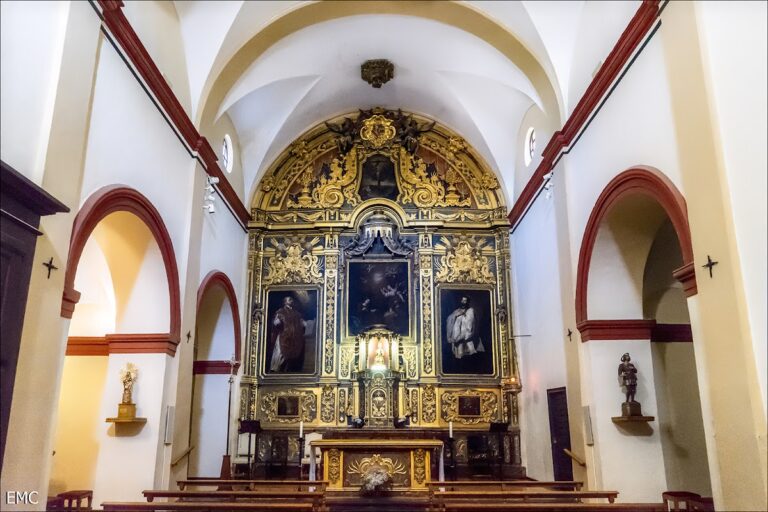
The New Palace, a less austere residence built on the western flank of the Saint Christ Tower in the fourteenth century, was later demolished. The Basilica of Saint Francis Xavier was erected in its place in 1901, adjoining the castle on the west and incorporating a bell tower. Its crypt contains the remains of people who contributed to the reconstruction, while the nearby Jesuit buildings formed part of the same late nineteenth- and early twentieth-century scheme.
Museum Collections
The museum in the San Miguel Tower presents episodes from Xavier’s life through three-dimensional reconstructions and other exhibits introduced or arranged during the 2003 to 2005 renovation. Its collections include paintings by the seventeenth-century Flemish painter Godfried Maes, nineteenth-century Japanese hanging scrolls, a diorama by Lopez Furio dated 1967, later gifts from India, and religious paintings. The Japan-related holdings include a scroll associated with the Japanese warlord Ouchi Yoshitaka.