Temple of Fortuna Augusta: A Roman Temple of Imperial Worship at Pompeii
Site at a Glance
- Popularity
- Low
- Country
- Italy
- Primary era
- Classical
- Eras represented
- Classical
- Civilizations
- Roman
- Site type
- Religious
- Remains
- Temple
On this page8 sections
History
The Temple of Fortuna Augusta was a Roman temple in Pompeii, Italy, built in the late first century BC in the Corinthian order, a classical style whose capitals feature acanthus-leaf decoration. It honored Fortuna, the Roman goddess of fortune; the title Augusta linked her cult to Augustus, Rome’s first emperor, and imperial worship.
Construction and cult
The temple’s construction is generally placed between 13 and 2 BC. These proposed limits correspond to the end of Augustus’s campaigns of conquest in 13 BC and the end of Marcus Tullius’s political career at Pompeii in 2 BC. Tullius, one of the town’s two chief magistrates, financed and commissioned the building on land he owned. He belonged to the Tullii, a family associated with Cicero, the Roman statesman and orator. An inscription stated that Tullius had the temple built. The project expressed loyalty to Augustus and supported the local elite’s promotion of the imperial family.
The temple stood beyond the Forum, Pompeii’s principal square. Its position may reflect the high cost of land there, or a reluctance at the time to place a political building on the city’s central public space. Enslaved people administered the temple in its early years, and enslaved people and freedmen maintained the cult of Fortuna Augusta.
Damage and rediscovery
An earthquake severely damaged the temple in AD 62. The eruption of AD 79 later buried the building in ash and pumice. Bourbon-sponsored excavations uncovered it in 1823; the Bourbons were a ruling dynasty that governed southern Italy. Further investigations followed in 1826 and 1859, and the ruins were restored in 1908. The temple forms part of the UNESCO World Heritage property that includes the Archaeological Areas of Pompeii, Herculaneum and Torre Annunziata.
Remains
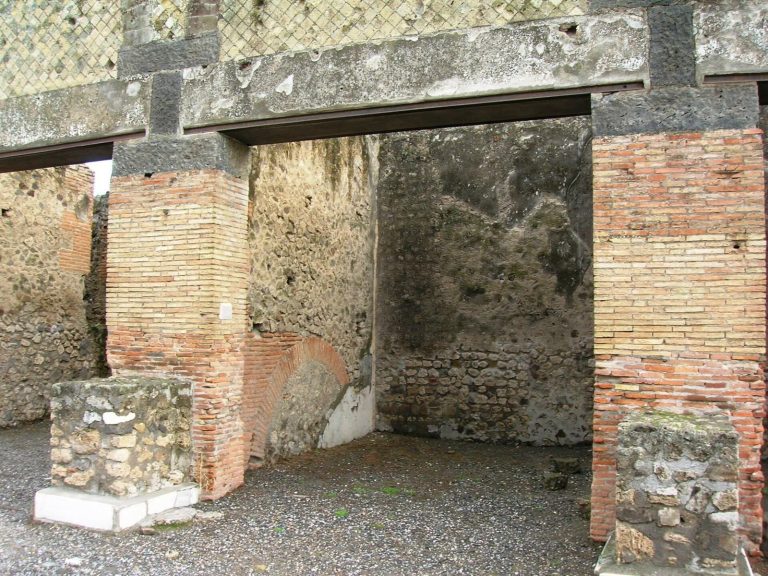
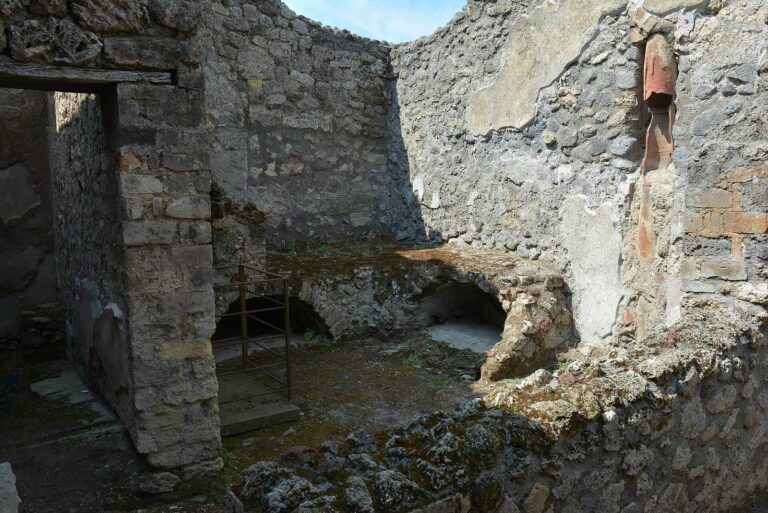
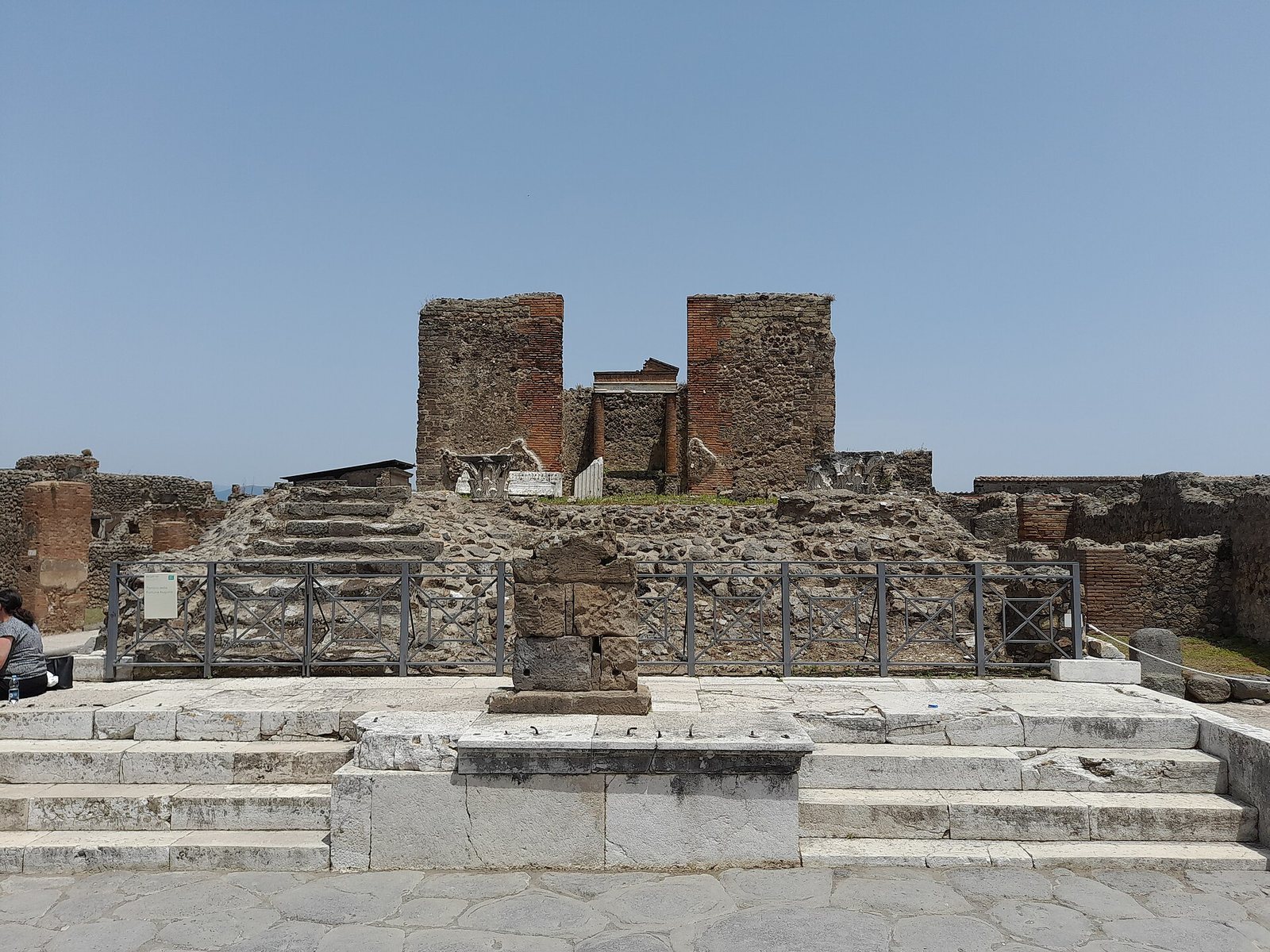
The layout centered on a small temple raised above the ground, with an entrance porch leading to its inner chamber. A small residence for the temple’s custodians stood on the right side of the sacred area. Marble and limestone slabs once clad the building, and faint traces of this facing remain.
Raised base and entrance
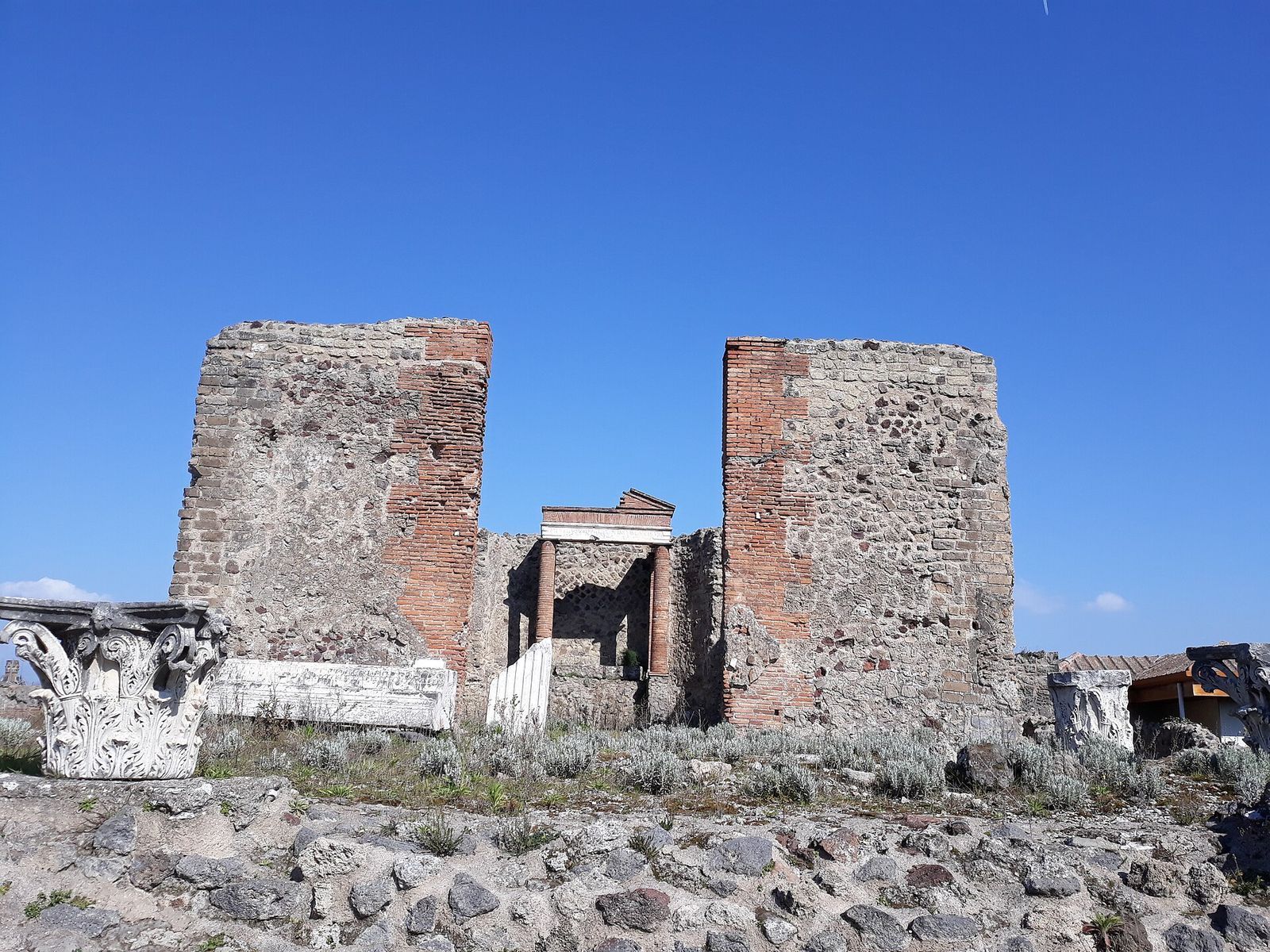
The temple followed the Corinthian order and was described as similar in design to the nearby Temple of Jupiter. Its entrance porch, or pronaos, had four columns across the front and three along each side; both the columns and their capitals were marble. Two side columns and Corinthian capitals are among the finds. Two ramps, each with four steps and originally bordered by railings, led to a landing with an altar. A further flight of nine steps continued upward. This upper flight is more worn than the lower steps, which may have been repaired shortly before the eruption.
Inner chamber and statues
The pronaos opened into the cella, the temple’s principal inner chamber, which was repaired shortly before the eruption. At the rear, a small shrine-like frame called an aedicula, flanked by two shallow attached supports called pilasters, held a statue of Fortuna. The statue is now in the National Archaeological Museum of Naples. Four other niches held statues. Fragments of two figures are thought to represent members of the imperial family and Marcus Tullius. The other figures were a woman whose face had been abraded and a man once incorrectly identified as Cicero.
Inscriptions and cult evidence
Four inscriptions from inside the temple honored the emperor in office at the time of each dedication. These dedications are associated with the five emperors of the Julio-Claudian dynasty, the imperial family that ruled from Augustus through Nero. Two additional marble bases honored Claudius; Lucius Statius Faustus, a man of enslaved origins, dedicated them. A stone plaque provides the last evidence of the temple’s activity, in AD 62. Although repairs were made shortly before the eruption, the building was never fully restored after the earthquake, and work may still have been underway when it was buried. Its marble decoration was removed soon after the eruption.
Custodians’ dwelling
The small dwelling on the right of the sacred area stood on land also owned by Marcus Tullius. It served as the residence of the temple’s custodians.