Roman Villa of Alto da Cidreira: A Rural Estate in Portugal
Site at a Glance
- Popularity
- Very Low
- Country
- Portugal
- Primary era
- Classical
- Eras represented
- Classical, Medieval
- Civilizations
- Roman
- Site type
- Domestic
- Remains
- Villa
On this page11 sections
History
Roman occupation
The Roman villa of Alto da Cidreira was a private rural estate in Alcabideche, within the municipality of Cascais, Portugal. Its main period of occupation ran from the second half of the first century AD through the first half of the second century. The villa lay near the center of Roman Olisipo, the Roman-era name for Lisbon, and had a substantial industrial base alongside its residential use.
The site may have been abandoned at the end of the second century or during the third century, before people returned in the fourth and fifth centuries. It was probably used for other purposes during its long history.
Rediscovery and protection
Agronomist Caetano da Silva Luz, Viscount of Coruche, explored the site before geologist Francisco de Paula e Oliveira identified it in the late 1890s. Oliveira encountered two or three buried houses amid extensive building material and referred to the villa in 1899. In 1915, Félix Alves Pereira of the Portuguese Association of Archaeologists surveyed the area, where agricultural work had disturbed the ground. The site was examined again in 1977, followed by systematic excavations by Guilherme Cardoso and José d’Encarnação in 1980 and 1981.
Long neglect contributed to the loss of archaeological material. The villa was classified as a Property of Public Interest in 1992, a Portuguese heritage designation.
Remains
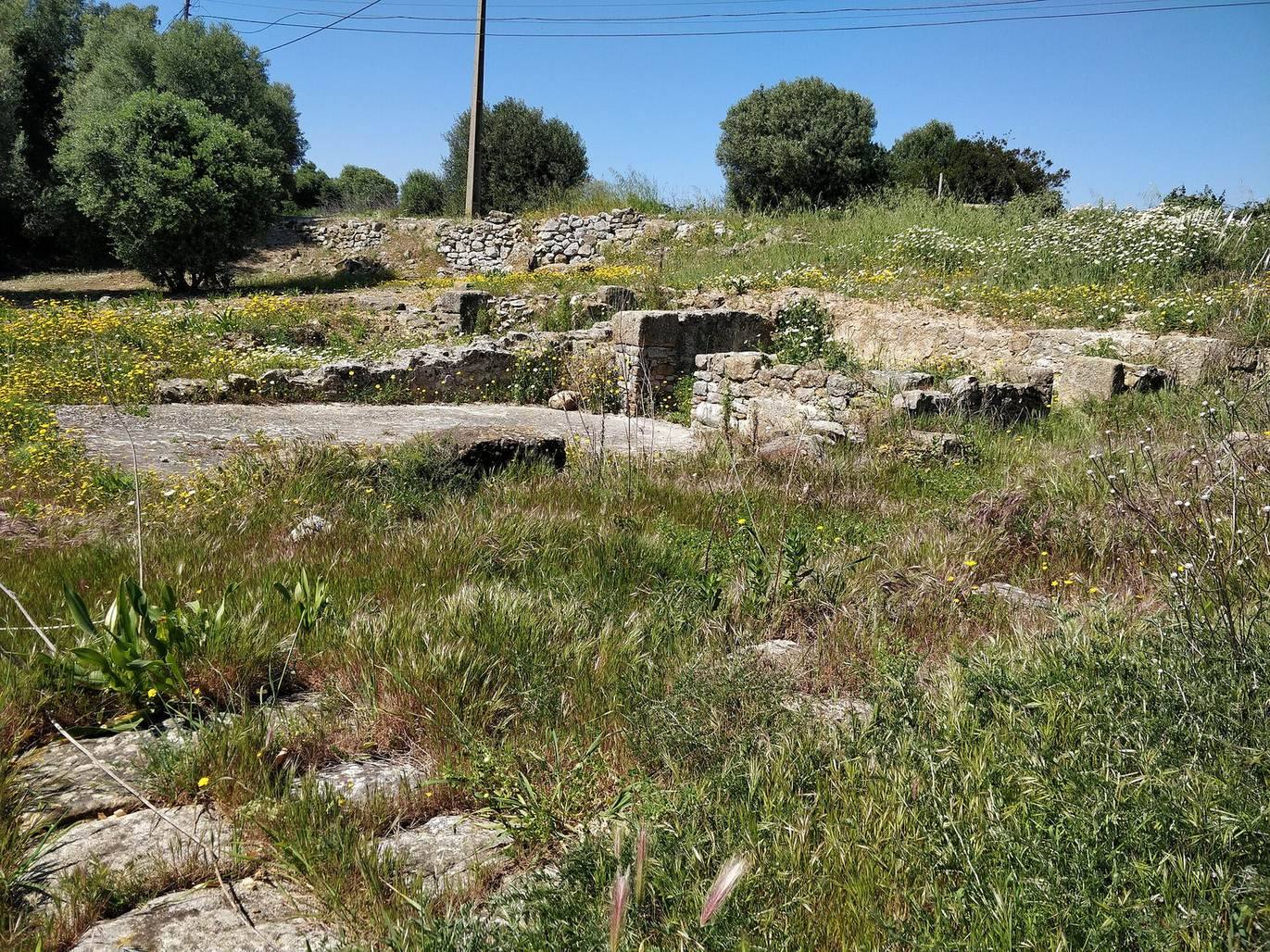
The remains occupy elevated, urbanized ground at about 100 m elevation. Their recorded dimensions are 612.62 m long and 217.63 m wide, and some houses stand over the archaeological area. The surviving features include a two-storey residential building, a bath complex, tanks, and remains from other periods.
Villa structures
Residential building
The main house, or domus, had two storeys and several rooms paved with polychrome mosaics. The mosaic pavements have been damaged or lost, and fragments of Roman mosaics were found at the site.
Tanks
Three tanks were lined with opus signinum, a Roman mix of lime and crushed ceramic. A house built nearby in the 1960s partially destroyed the tanks.
Bath complex
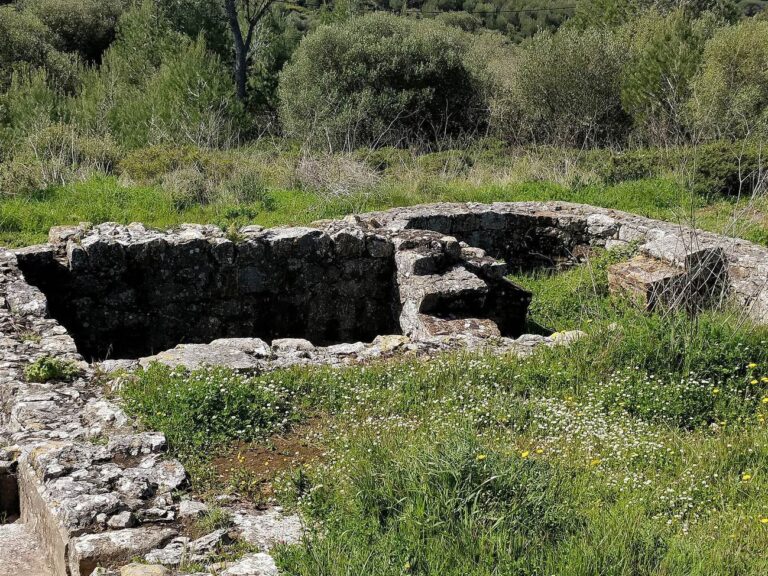
The bath complex included a semicircular tank for cold water and a furnace installation that heated air. The hot air passed through cavities beneath the baths, warming the tanks and floors. Natural and human actions destroyed water and heating conduits associated with the complex.
Other archaeological remains and finds
Aqueduct, necropolis, and remains from other periods
Other features include a Roman aqueduct and necropolis, as well as medieval silos and receptacles. Ceramic traces date to the Late Chalcolithic, or Copper Age, and the Early Bronze Age.
Objects
Finds include terra sigillata, a fine Roman tableware, other pottery fragments, flat roof tiles and curved tiles that covered their joints, bronze fragments, buttons, and an inscribed stone fragment. A small terracotta mask from the site is now displayed at the Condes de Castro Guimarães Museum in Cascais.