Roman Ruins of Casais Velhos: A Rural Villa and Settlement in Portugal
Site at a Glance
- Popularity
- Low
- Country
- Portugal
- Primary era
- Classical
- Eras represented
- Classical
- Civilizations
- Roman
- Site type
- Domestic
- Remains
- Villa
On this page9 sections
History
The Roman ruins of Casais Velhos preserve a rural villa and settlement near Areia in Cascais, Portugal. The Romans are believed to have built the site in the second century AD, initially for private use.
Later Roman occupation and production
Coins dating from AD 205 to 450 suggest that occupation grew more intensive in the later Roman period. The coins are attributed to Constantius II, Constans, Theodosius I, Constantine the Great, and Arcadius. Finds from the burial grounds also point to more permanent settlement.
Murex shells and processing installations indicate that residents produced Tyrian purple, a costly dye made from murex molluscs for use on textiles or leather. A proposed route carried the processed dye to Olisipo, the Roman name for Lisbon, and onward to Rome.
Excavation and protection
Although the remains were known earlier, the first excavations took place in 1945 under Afonso do Paço and Fausto de Figueiredo. Further investigations followed from 1968 to 1971. Cleaning and consolidation work was carried out in 1968, 1970, and 1971 at the initiative of António de Castelo Branco and Octávio da Veiga Ferreira. On 25 September 1984, Casais Velhos was designated a Property of Public Interest, a Portuguese heritage-protection status.
Remains
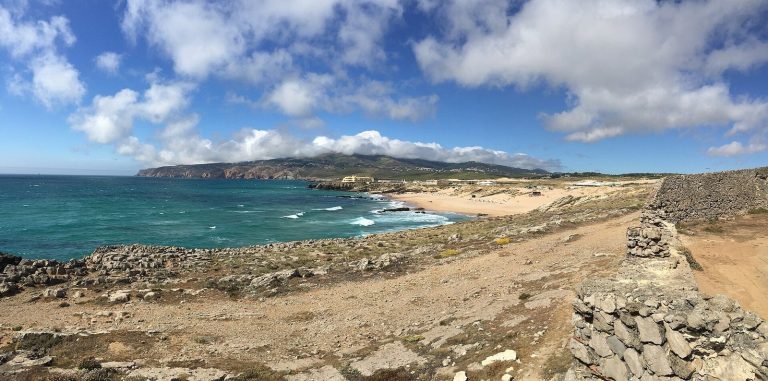
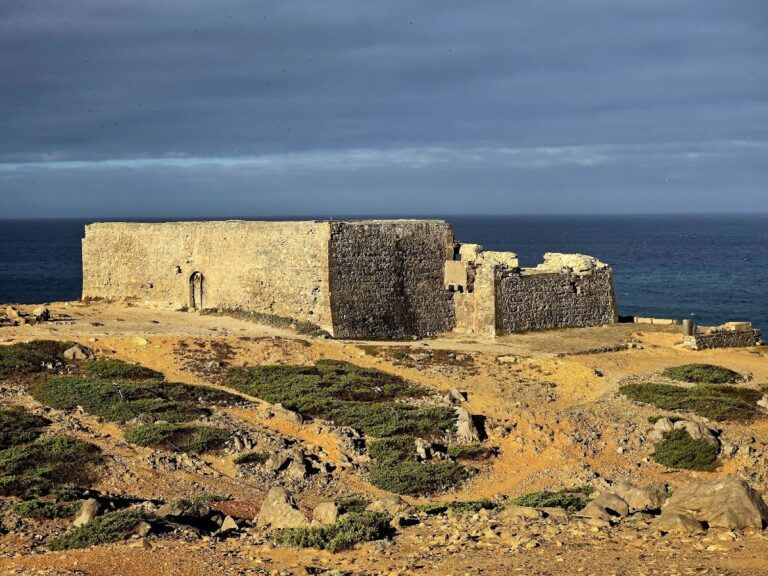
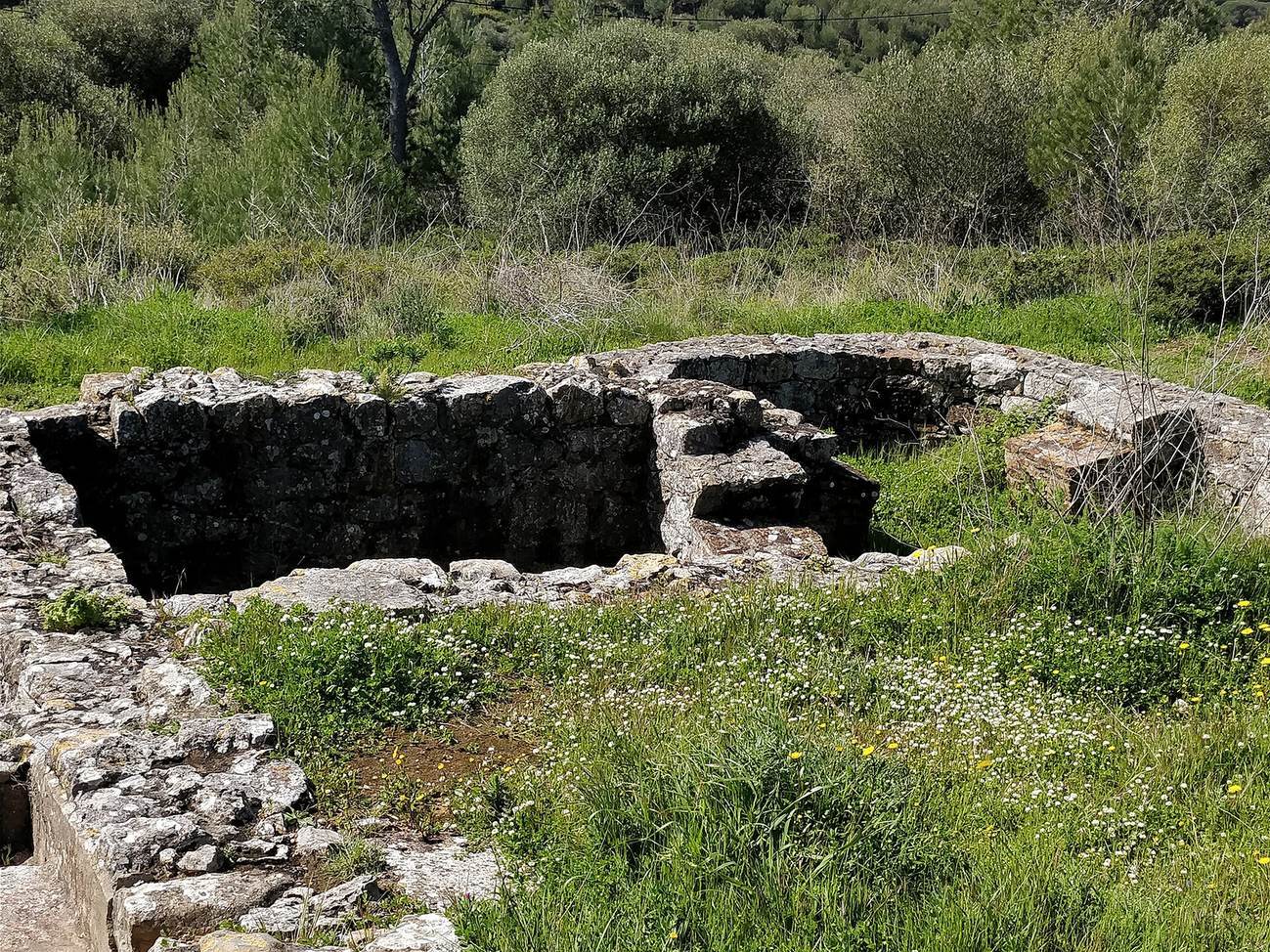
The remains occupy a hill among pine woods overlooking coastal dunes near Areia. Surviving structures include residential and productive areas dating to the third and fourth centuries AD, while burial grounds lie southeast and southwest of the villa.
Residential sector and water supply
The residential area included a Roman house with a vestibule. A surviving section of aqueduct brought water from a nearby spring to a large tank near the centre of the ruins. The tank may have served as a swimming pool and also supplied the bath complex several metres below it.
Bath complex
The baths contained a cold room, a warm room, and a furnace installation that heated air circulated beneath the floor. Three semicircular bathing basins formed part of the complex.
Service and production areas
The northern service and productive sector contained several rooms and two silos cut into the rock and covered with circular stone slabs. Two compartments had basins lined with waterproof Roman mortar and fittings for airtight covers; murex shells were found there. A separate structure was associated with a press and had a settling tank and a stone press weight.
Burial grounds and finds
The burial grounds contained box-shaped graves bordered by shaped stone markers. The dead were laid on their backs facing east. Finds from these areas included ceramic vessels, jewellery, weapons, bronze earrings, and a decorated jug. Other finds included a rare coin wrapped in linen, a bronze needle, and an oil lamp whose form dates to the third or fourth century.
Boundary wall and turret
A perimeter wall, not fully excavated, marks the site boundary. A turret may also have belonged to the boundary. The wall and possible turret have been interpreted as evidence of ancient defensive fortification.