Santa Maria Capua Vetere Mithraeum: A Roman Sanctuary of Mithras
Site at a Glance
- Popularity
- Medium
- Country
- Italy
- Primary era
- Classical
- Eras represented
- Classical
- Civilizations
- Roman
- Site type
- Religious
- Remains
- Mithraeum
History
The Santa Maria Capua Vetere Mithraeum is an underground sanctuary of Mithras in Italy. It belonged to Roman Mithraism, a mystery religion whose rites were performed by initiates. The sanctuary is thought to have been built in the second century AD, when worship of Mithras had spread to Capua under Roman rule. Eastern gladiators, who were commonly associated with the cult, may have introduced it to the city.
The sanctuary was accidentally uncovered in 1922 during excavation for a building.
Remains
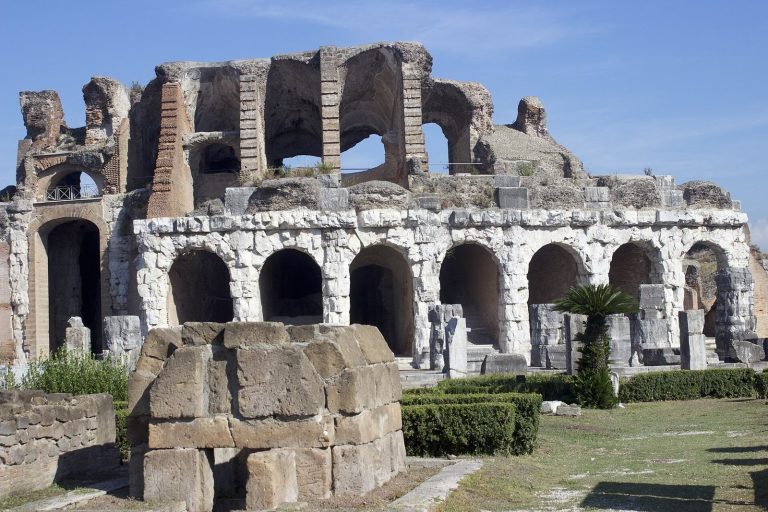
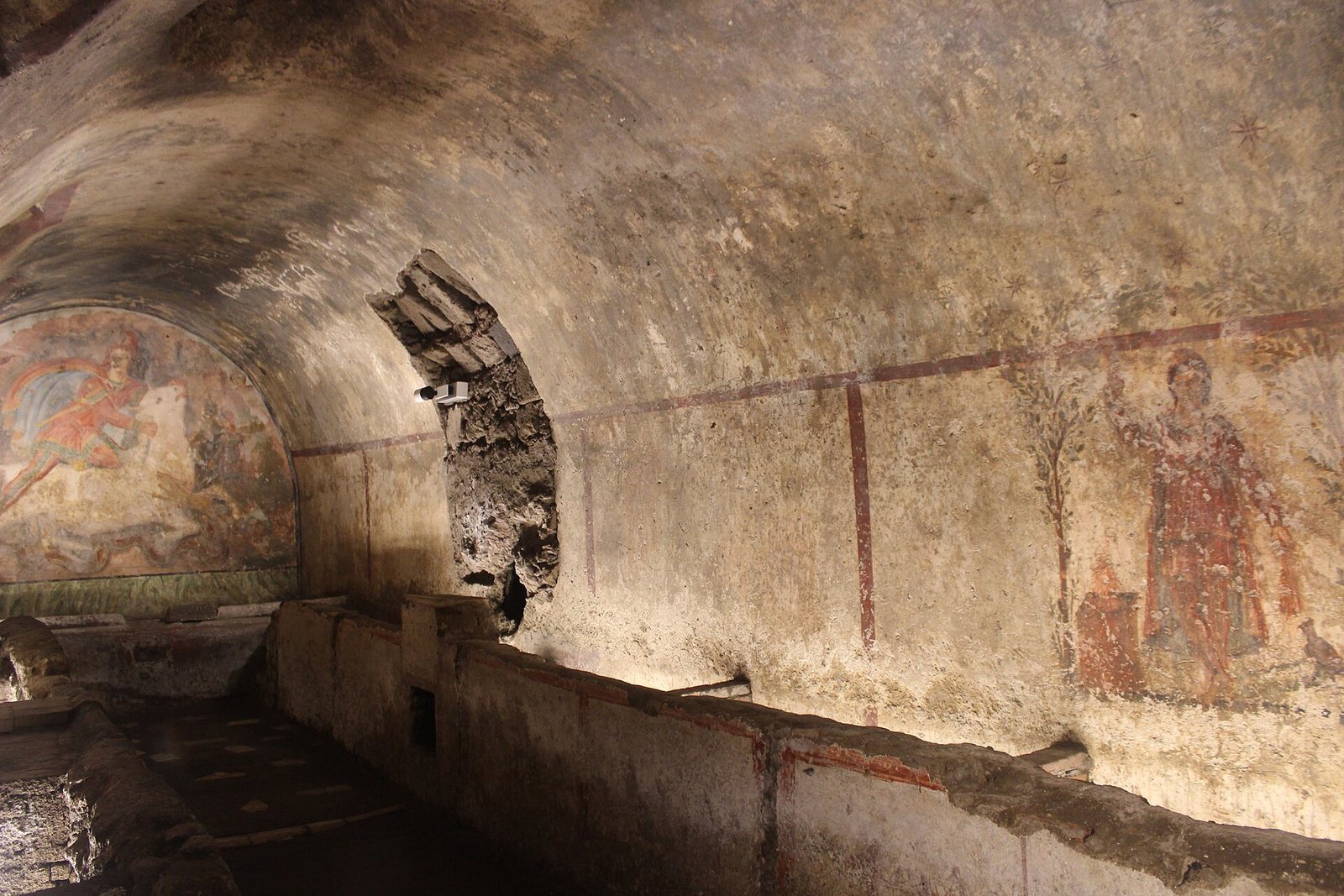
The underground sanctuary lies near the Campanian Amphitheater and the National Archaeological Museum of ancient Capua. Steps descend to a narrow passage that served as an entrance chamber. An arch on the right opens into a room used by participants to prepare for rites, while the sanctuary lies to the left. This rectangular chamber measures about 12 metres long and 3 metres wide. Seating for participants extends along it, and an altar stands at the far end.
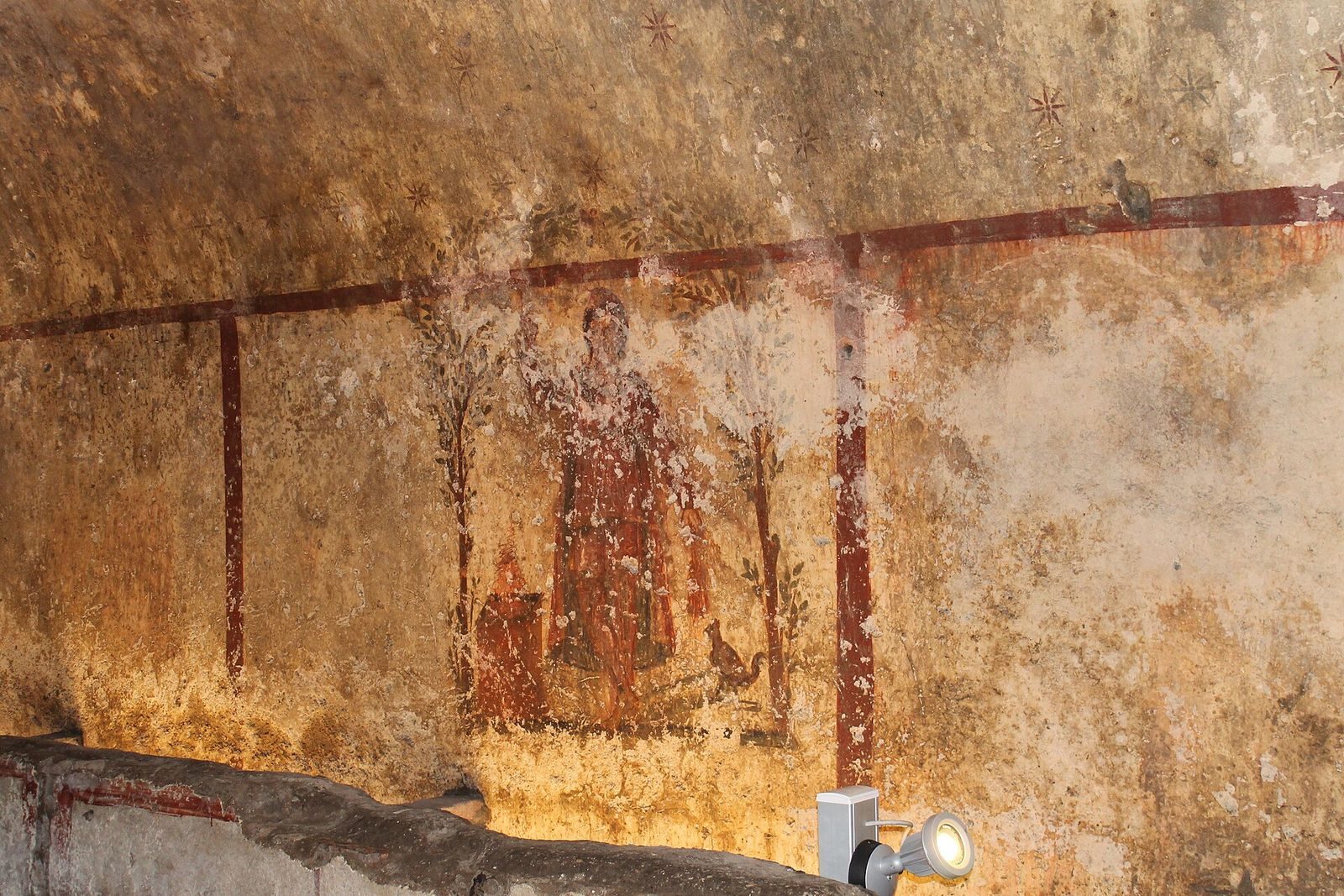
The chamber has a barrel vault, a continuous arched ceiling, and skylights. Its yellow surface bears many green and red stars. Luminous glass paste at their centres probably caught torchlight and gave the ceiling the appearance of a starry sky.
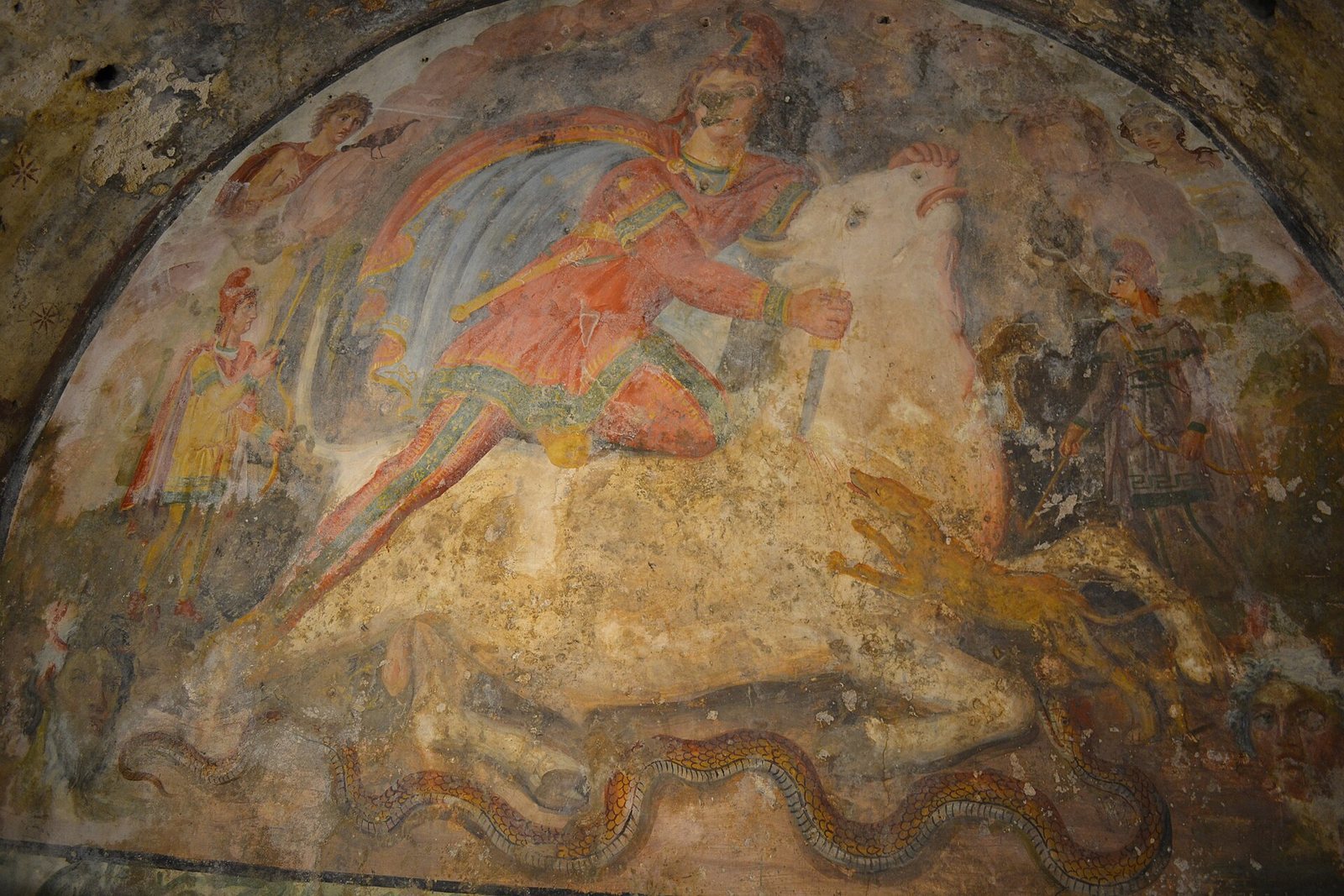
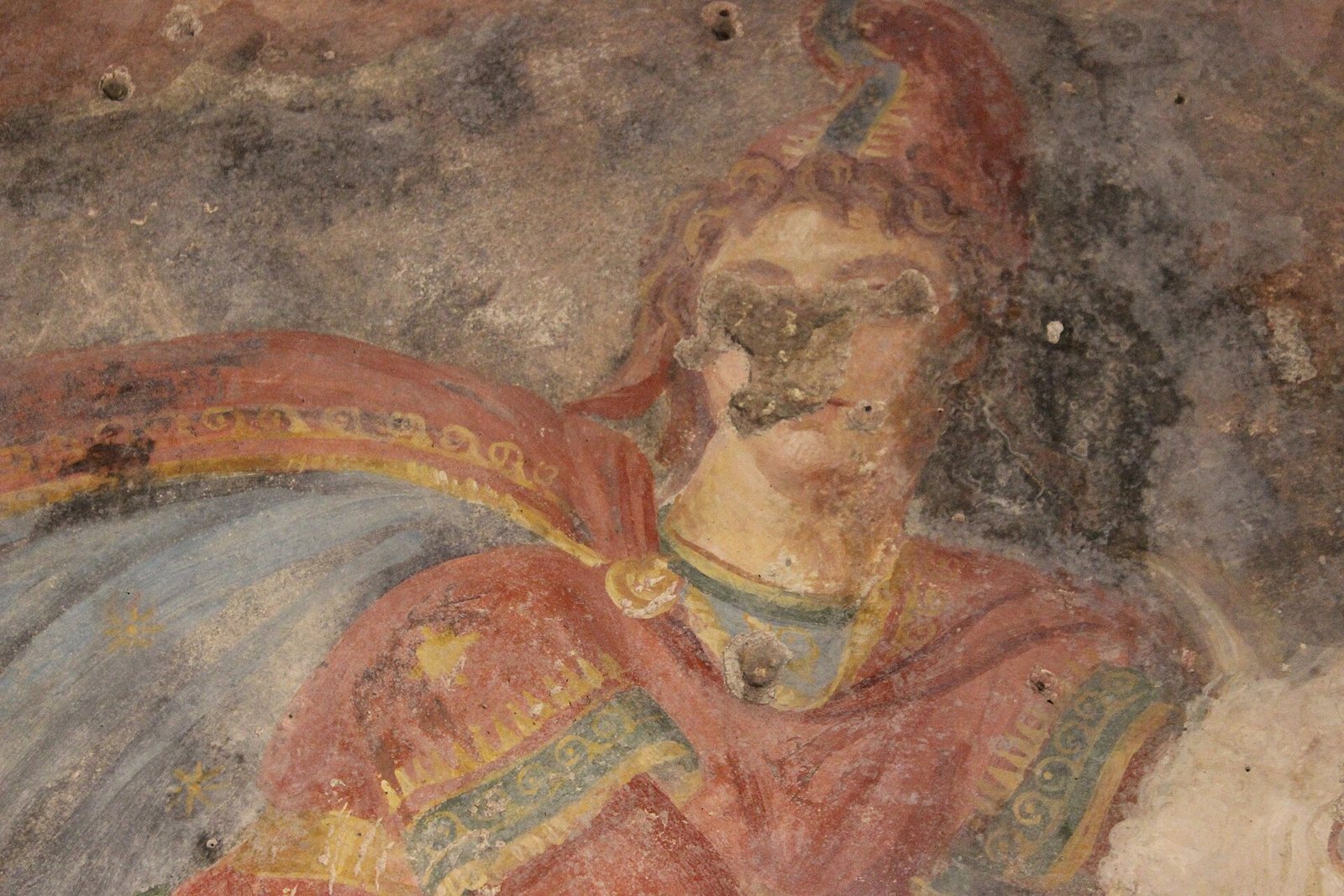
Behind the altar, a fresco shows Mithras killing a white bull against a rocky setting. He wears a red garment edged in green and a soft, tapered Phrygian cap, associated with ancient Phrygia in Anatolia. His large cloak is red on the outside and blue within. The Sun appears above to the left, with a raven in front of him that conveys his command to Mithras. The Moon goddess occupies the upper right. At the sides, Cautes raises a torch and Cautopates lowers one. These torchbearers represent, respectively, light overcoming darkness at the spring equinox and night overcoming day at the autumn equinox. A dog, scorpion, and snake appear below the bull, while two bearded faces emerging from the ground represent protective spirits of the place.
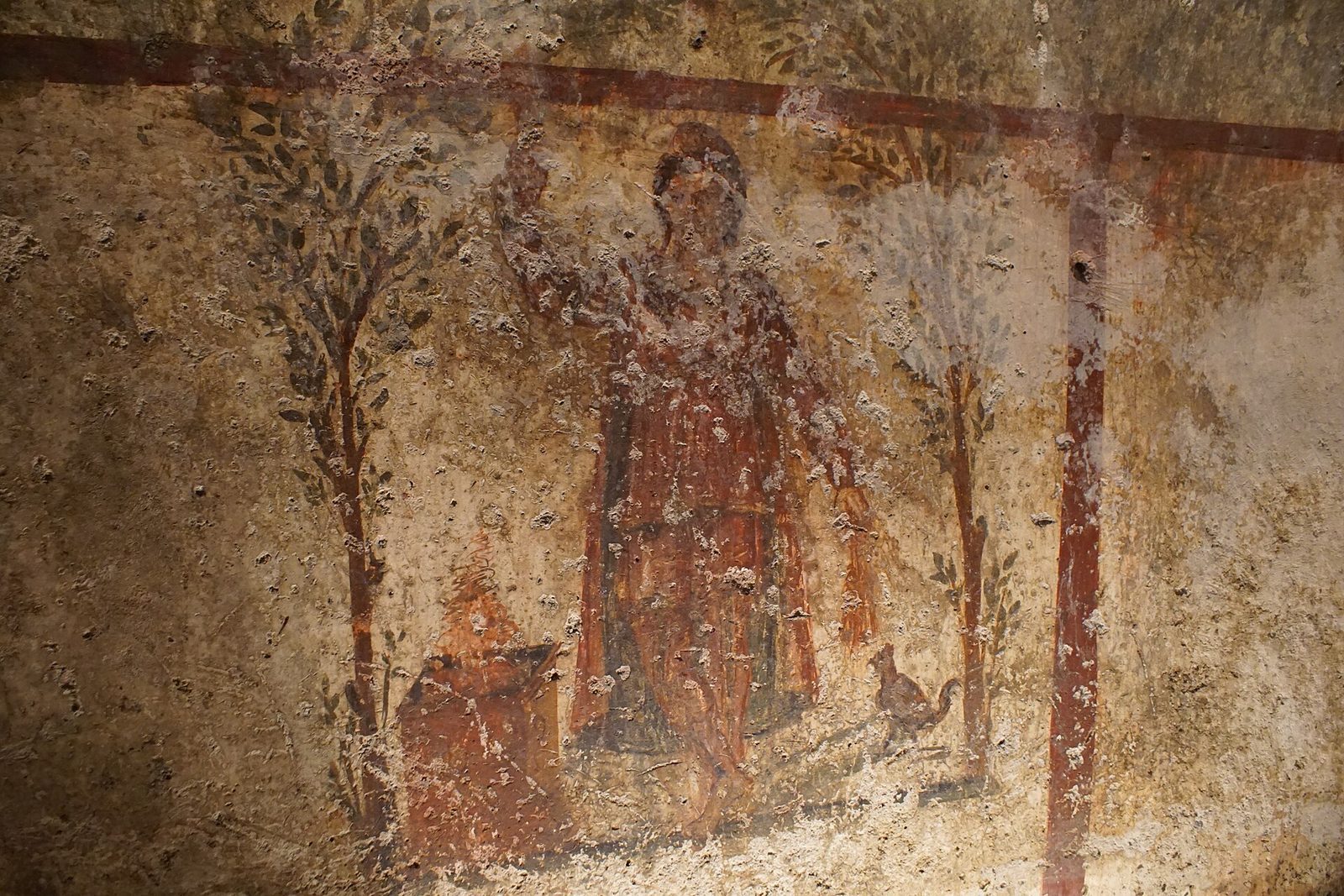
Other surviving decoration includes a semicircular panel on the eastern wall showing the Moon in a two-horse chariot, and a marble relief of Cupid and Psyche, figures from classical mythology, on the southern wall. Scant traces remain of the original wall paintings depicting initiation rites. Marks on the walls remain undeciphered.