Arch of Septimius Severus in the Forum Boarium: A Probable Gateway to Rome’s Cattle-Market District
Site at a Glance
- Popularity
- Medium
- Country
- Italy
- Primary era
- Classical
- Eras represented
- Classical, Medieval
- Civilizations
- Byzantine, Roman
- Site type
- Civic
- Remains
- Arch
On this page10 sections
History
The Arch of Septimius Severus in the Forum Boarium is a Roman monument in San Giorgio in Velabro, Rome, Italy, completed in 204 CE. Local money changers and merchants paid for it privately. It stood where the Vicus Jugarius, an ancient Roman street, entered the Forum Boarium, Rome’s cattle-market district. Often called a triumphal arch, it has a different form from conventional examples. Its precise purpose is unknown, though it probably served as a monumental gateway to the district.
The Severan dedication
The inscription honors Emperor Septimius Severus, founder of the Severan dynasty, his wife Julia Domna, their sons Caracalla and Geta, and Fulvia Plautilla, Caracalla’s wife. Plautilla’s father, Gaius Fulvius Plautianus, a senior official who commanded the Praetorian Guard, may also have been included in the original dedication.
Erasure and later use
Plautianus was killed after falling from favor in 205. Plautilla was exiled that year and died in 211. Geta was murdered in 212 after Caracalla took sole power. Their names and portraits were then erased from the monument, an act of damnatio memoriae, the deliberate removal of a person’s name and likeness from public monuments as condemnation.
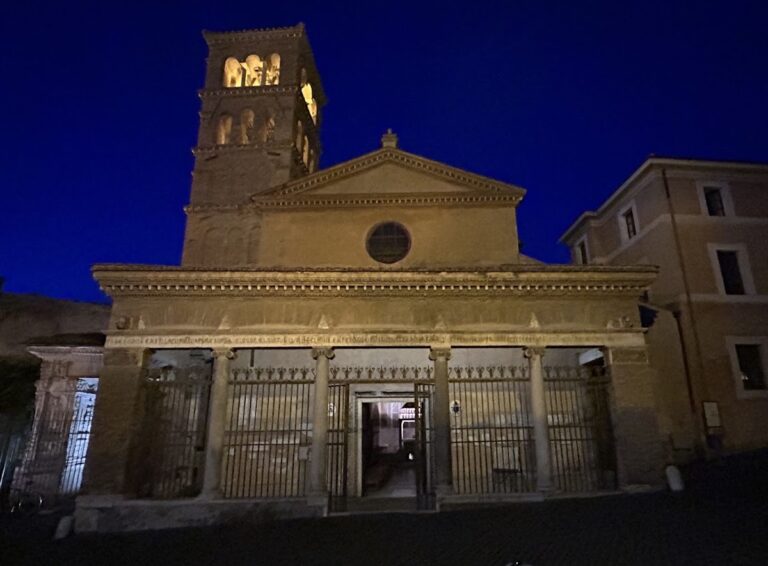
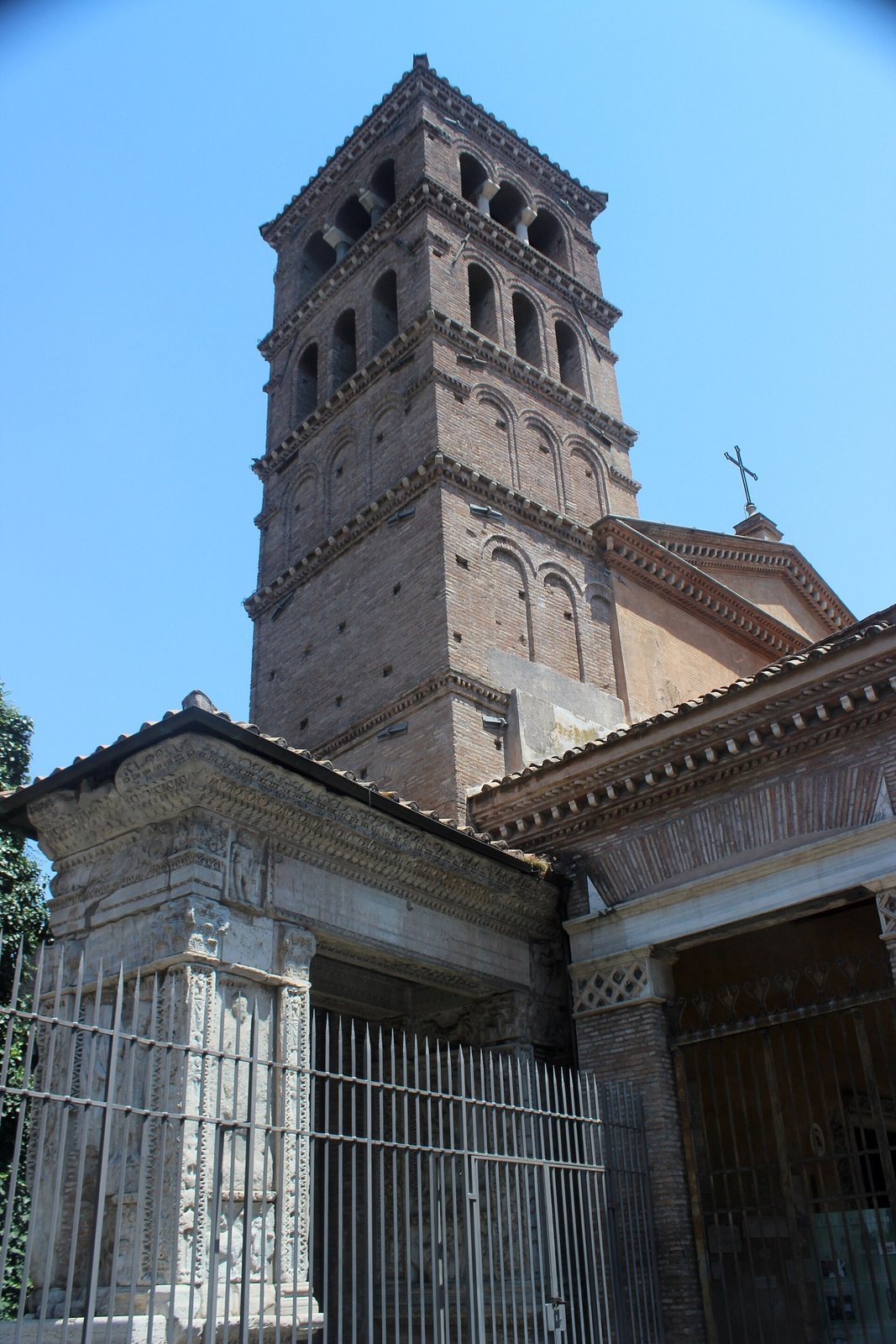
In the seventh century, part of the arch became part of the western wall of the nearby church of San Giorgio in Velabro. A popular rhyme about finding treasure “between the cow and the bull” was mistakenly understood as pointing to a hidden hoard inside the monument, prompting treasure seekers to damage it.
Remains
Structure and materials
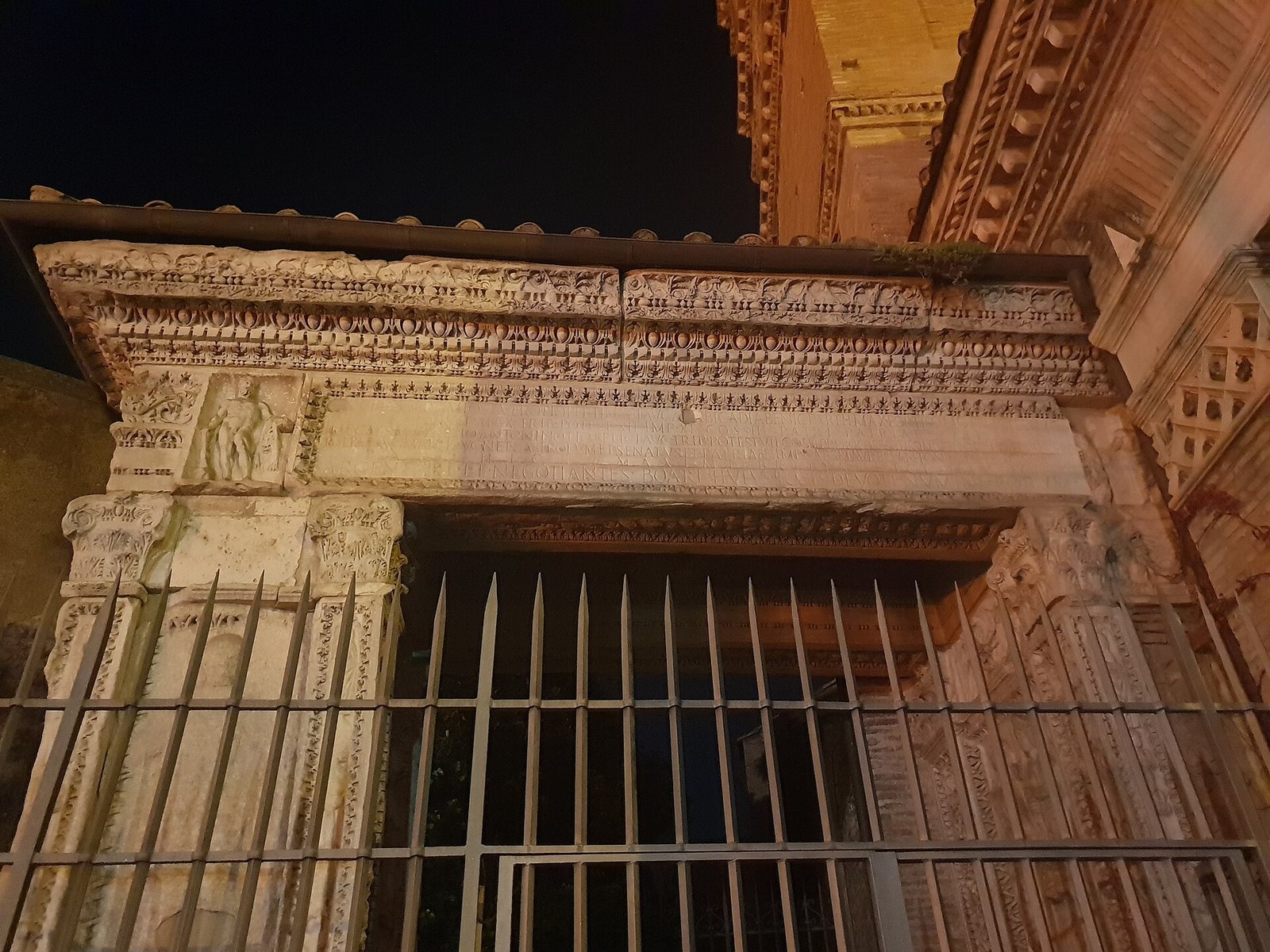
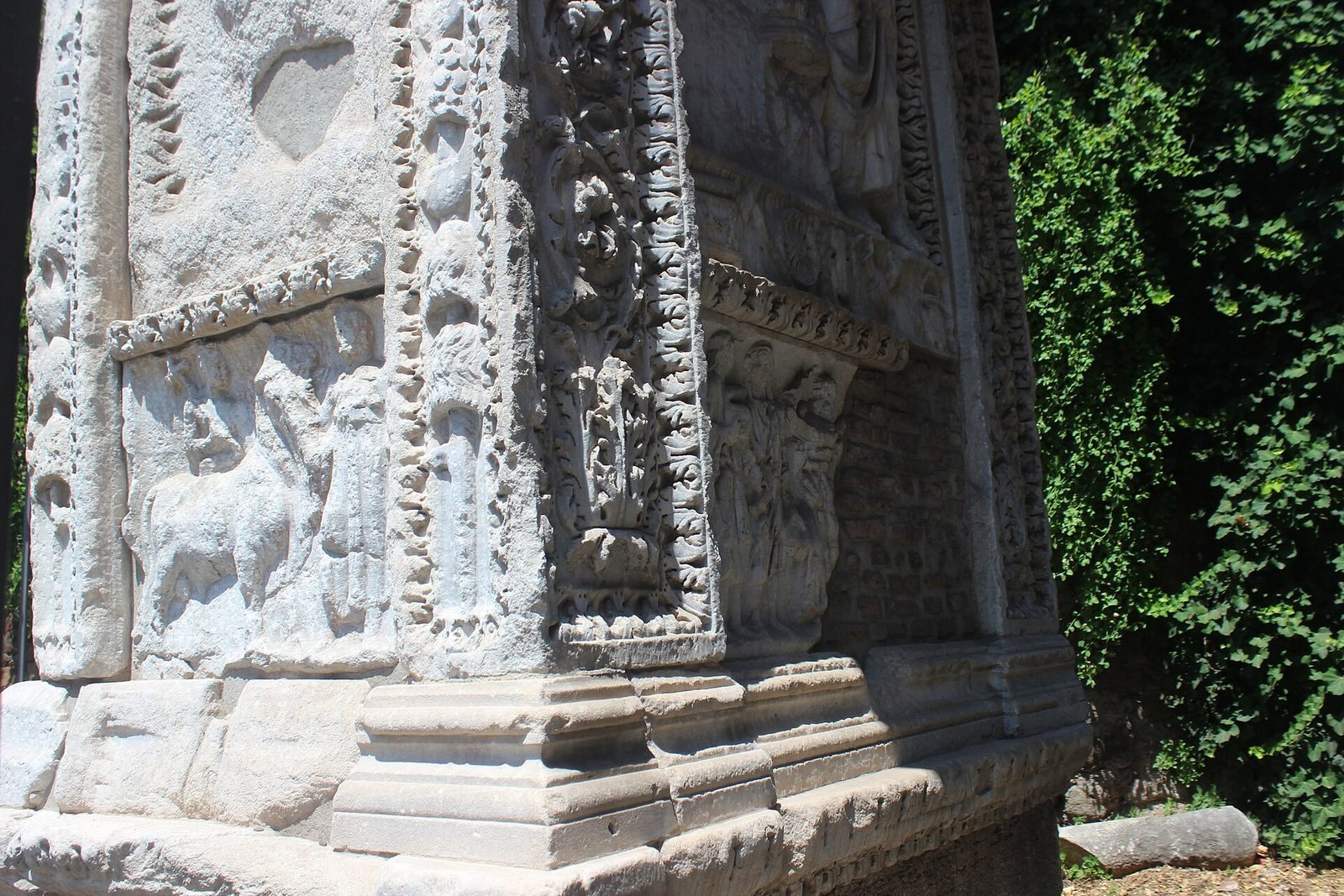
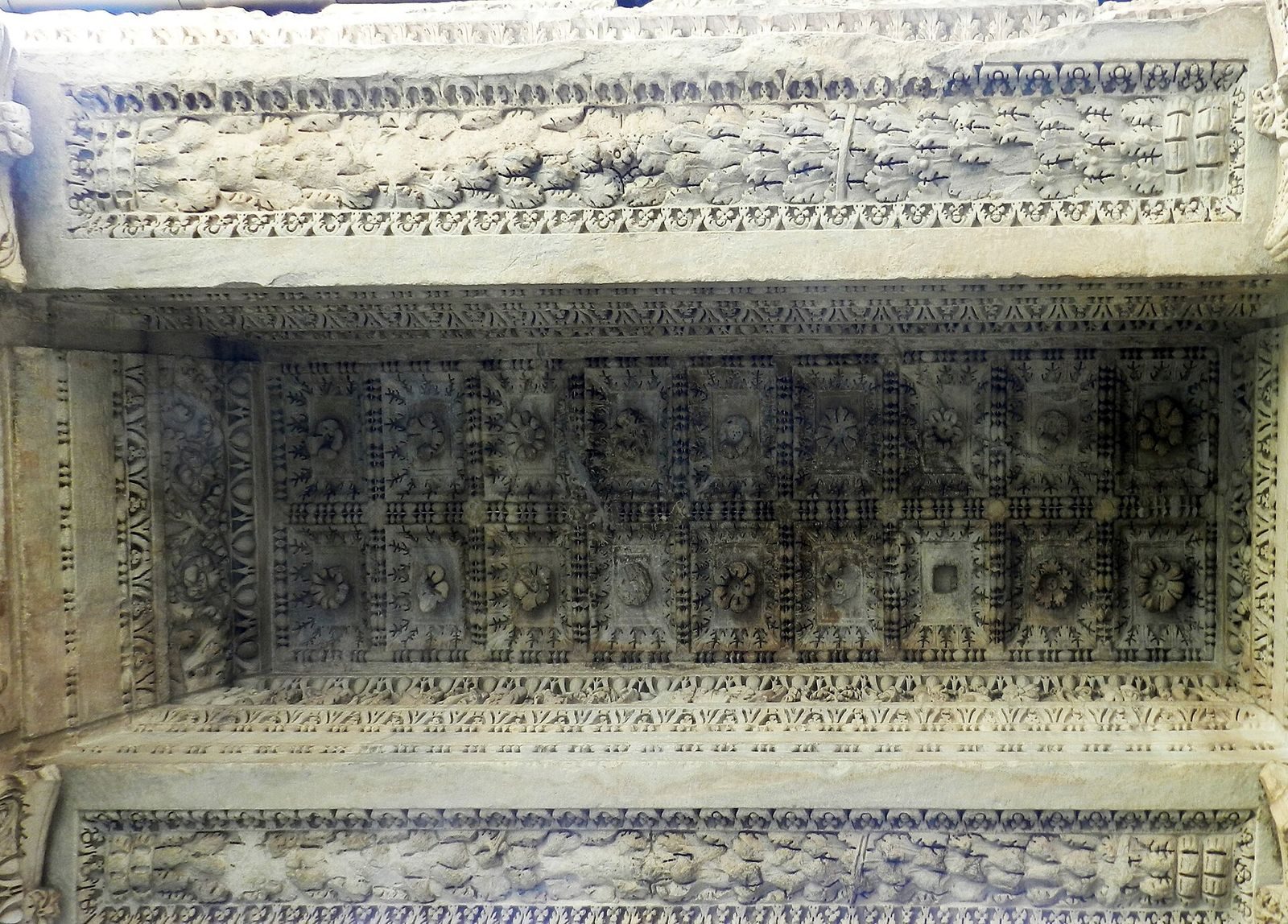
The arch is rectangular, with two substantial piers supporting a level horizontal beam rather than a curved opening. Shallow vertical strips mark its corners. It stands about 6.8 metres high and measures 5.86 metres across, with a passage 3.3 metres wide. Its concrete core is faced with Proconnesian marble. The base and plain lower band are travertine, while the upper part, inscription, and reliefs are marble. The undecorated lower surface may reflect how often cattle brushed against it. Holes made by treasure seekers remain visible.
Carved decoration
South-facing inscription
On the south-facing side, reliefs frame the dedicatory inscription. One shows Hercules carrying a club and the skin of the Nemean lion; another represents the Roman people through a personified figure.
Reliefs inside the passage
The relief on the east interior shows Septimius Severus, holding pontifex maximus, the highest priestly office in Roman state religion, making a liquid offering at an altar with Julia Domna. Geta originally appeared with them. On the west interior, Caracalla makes an offering at an altar; Plautilla and Plautianus were originally shown beside him.
Exterior reliefs
Carved soldiers and captives appear with military standards and other imperial emblems, including standards bearing busts of emperors. A damaged figure in a short tunic survives on the front. Smaller panels above the main reliefs show Victories or eagles holding wreaths, while panels below depict sacrificial scenes. Dense plant ornament covers much of the remaining carved surface.
Upper panels and statues
Statues of members of the imperial family probably once stood above the monument, but they have not survived.