Meta Sudans: A Flavian Fountain Near the Colosseum
Site at a Glance
- Popularity
- High
- Country
- Italy
- Primary era
- Classical
- Eras represented
- Classical
- Civilizations
- Roman
- Site type
- Civic
- Remains
- Fountain
On this page6 sections
History
Meta Sudans was a fountain built in Rome, Italy, under the Flavian emperors, the Roman dynasty that ruled from AD 69 to 96. At a low point where two important roads met, it marked the turn of a Roman triumph, a formal procession celebrating military victory, from the Via Triumphalis onto the Via Sacra toward the Roman Forum and Capitol.
Earlier fountain and Flavian rebuilding
An earlier fountain on the site dated to the reign of Augustus and was destroyed in the Great Fire of Rome in AD 64. The later Meta Sudans also occupied part of the ground once covered by Nero’s Golden House. After Nero’s death, the palace was cleared as part of the official repudiation of his memory, a practice intended to suppress a person’s public legacy.
The Flavian fountain was built in the late first century AD. Seneca described flute and trumpet sounds being tested near it in a letter to his correspondent Lucilius. A later legend claimed that gladiators washed at the fountain after fighting in the Colosseum.
Decline and demolition
The fountain stopped functioning during the siege of Rome in AD 537, when the Ostrogoths blocked the aqueducts to cut off the city’s water supply. It suffered damage during the Middle Ages and had become a ruin.
Benito Mussolini spoke before the monument in September 1931. Between 1933 and 1936, its surviving structure was demolished to clear space for Fascist parades and a new traffic route around the Colosseum. Investigations in 1997-98 preceded the route’s closure and the conversion of the area to a pedestrian zone.
Remains
Fountain and setting
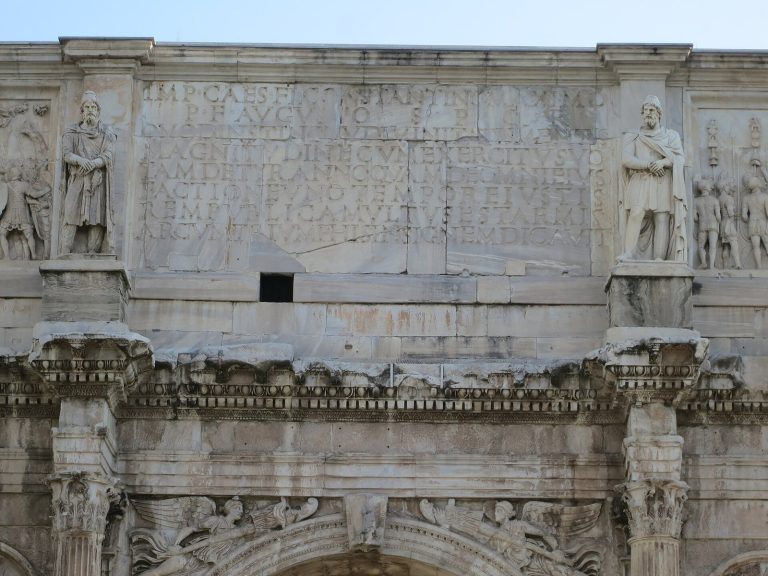
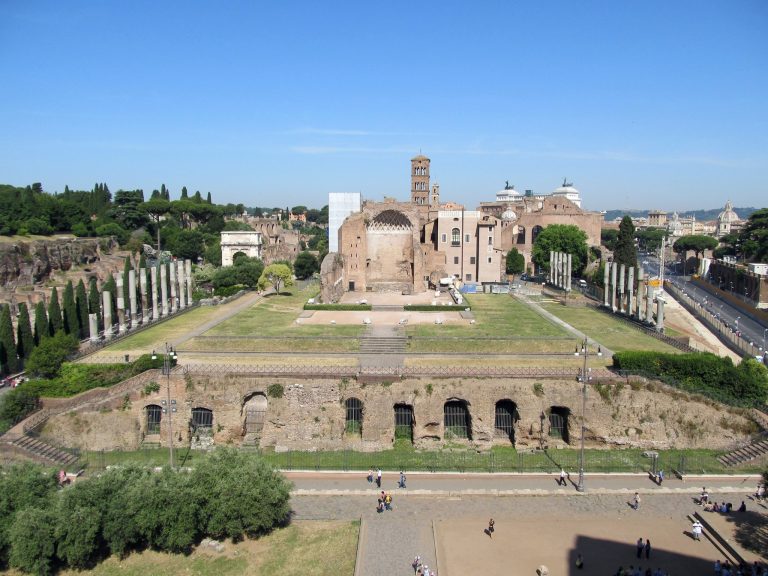
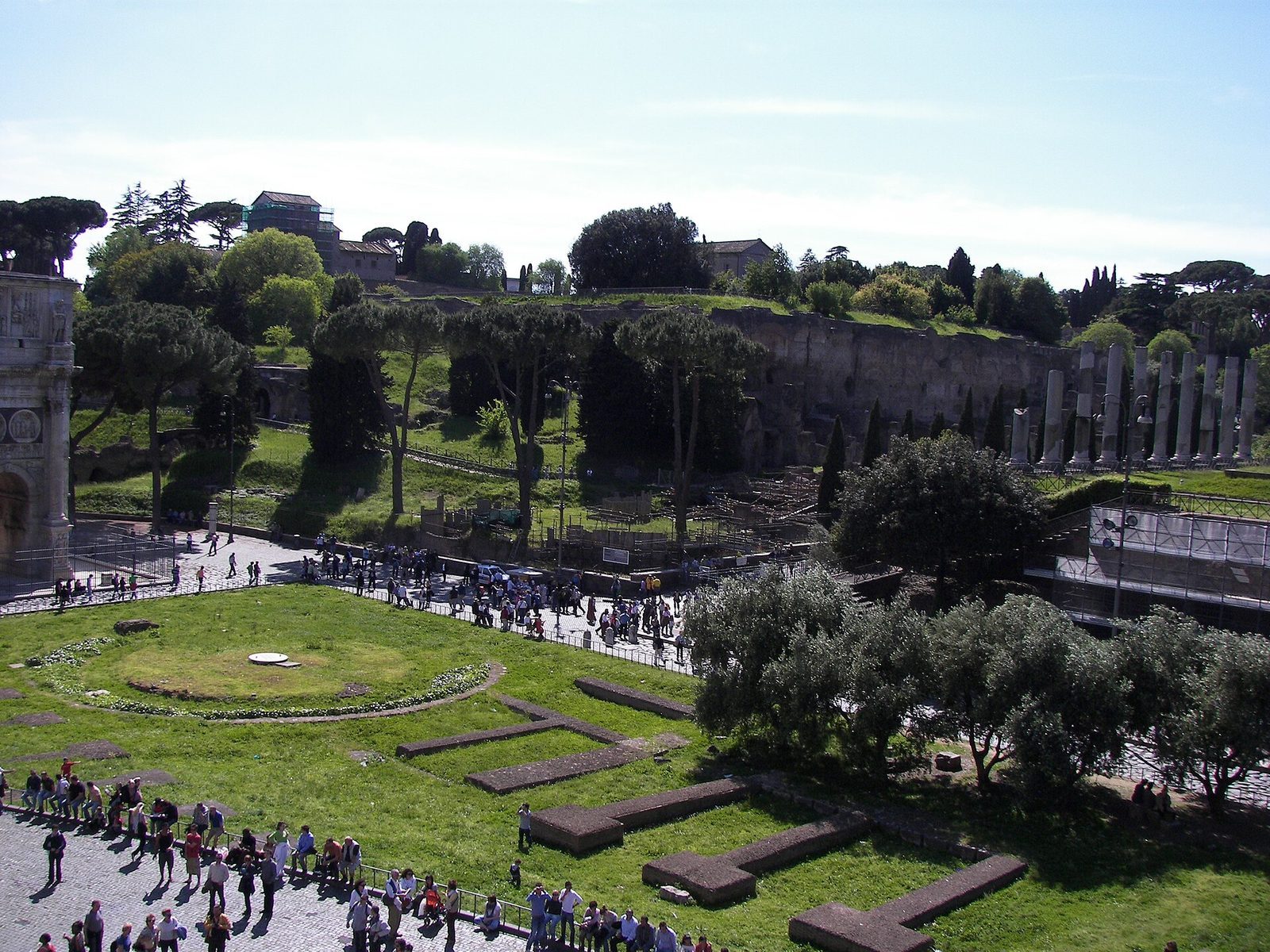
The fountain stood between the Colosseum and the Temple of Venus and Roma, near the later site of the Arch of Constantine. A tall cone rose from a circular basin. The structure was rebuilt more than once: an earlier version measured about 9 metres high and 5 metres across, while the Flavian form reached about 17 metres high and 7 metres across. Its brick-and-concrete core was faced with marble. Water seems to have flowed over or from the cone, perhaps running down from the top or emerging through openings in its sides. The basin measured about 16 metres across and 1.4 metres deep, and bronze statues adorned it. The fountain stood where the boundaries of Roman regions I, III, IV and X met, possibly also at the edge of region II. These numbered areas were administrative divisions of the city.
Images and surviving evidence
Renaissance paintings and engravings show the fountain stripped of its decoration, with its central brick core remaining. Late nineteenth-century photographs depict the conical ruin beside the Arch of Constantine, surrounded by the original stone basin.
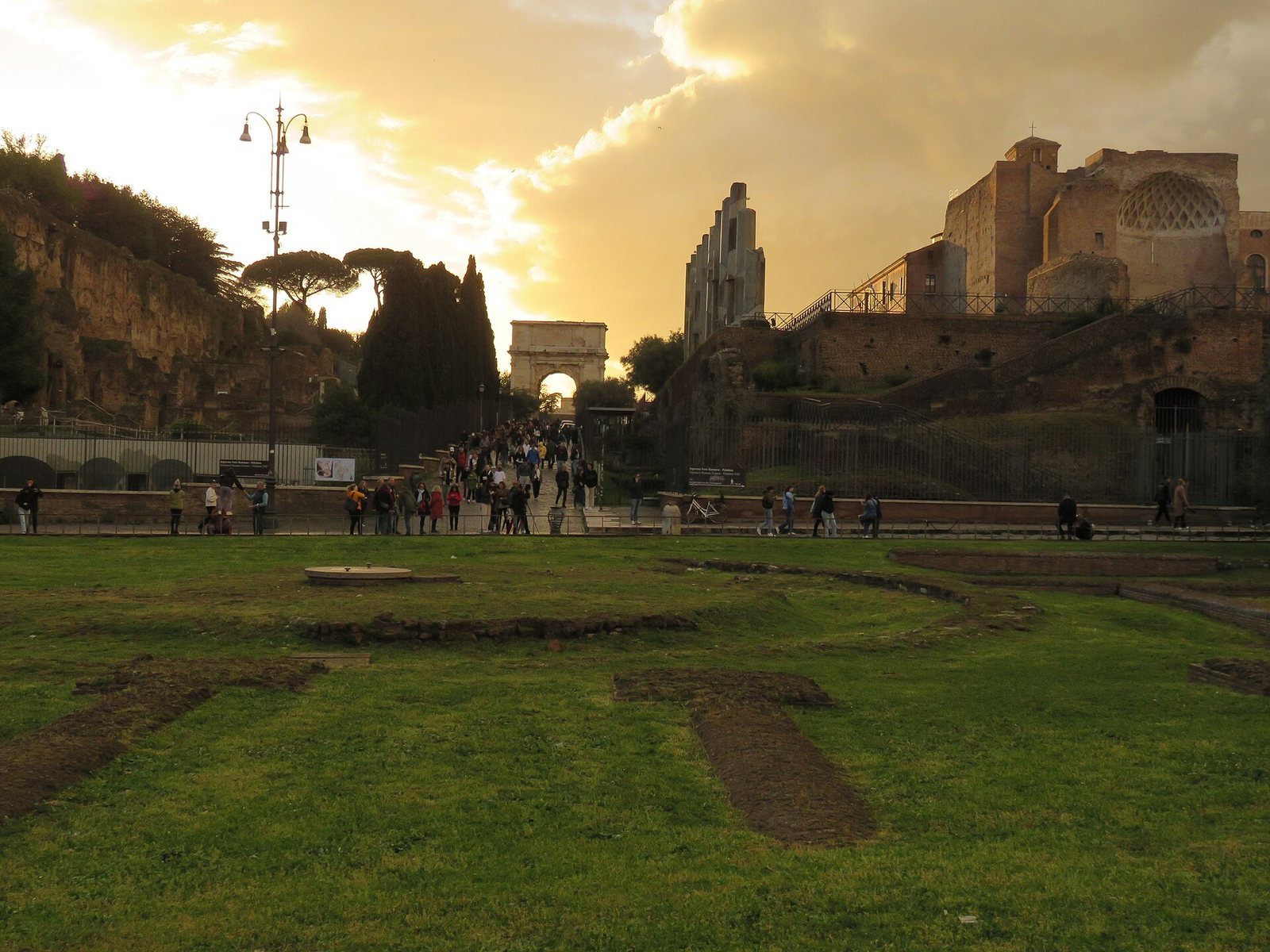
The structure above ground is gone, but excavated foundations remain visible in front of the Arch of Constantine, along with an extensive underground structure. Five stamped fragments of lead water pipes, found in 1989, formed part of a conduit directed toward the fountain. Archaeologist Clementina Panella led extensive investigations that also yielded archaeological information about the northeast slope of the Palatine Hill. After demolition, circular paving marked the fountain’s location, and a commemorative plaque was installed.