Elagabalium: A Roman Temple Dedicated to El-Gabal
Site at a Glance
- Popularity
- High
- Country
- Italy
- Primary era
- Classical
- Eras represented
- Classical
- Civilizations
- Roman
- Site type
- Religious
- Remains
- Temple
On this page6 sections
History
The Elagabalium was a colonnaded Roman temple in Rome, Italy. Its platform was built under Domitian between AD 81 and 96, and Emperor Elagabalus enlarged and rededicated it after taking power in 218. During his reign, from 218 to 222, the temple became the center of a contentious religious cult. Elagabalus served as its high priest.
Elagabalus and the Cult of El-Gabal
The earlier platform may have served as a place of worship for Jupiter, a principal Roman god. Elagabalus dedicated the enlarged temple to El-Gabal, the deity worshipped in his birthplace, Emesa in Syria. He presented the god as Deus Sol Invictus, meaning “Unconquered Sun,” and sought to raise him above Jupiter as the leading deity of the Roman pantheon. Solar worship had spread across the empire since the reign of Septimius Severus. Elagabalus associated El-Gabal with Astarte, a Near Eastern goddess, Minerva, a Roman goddess, or Urania, a Muse linked with astronomy, as a consort.
The historian Herodian describes Elagabalus making senators watch him dance around the god’s altar to drums and cymbals. A major festival took place at the summer solstice, drawing crowds in part through the free distribution of food. The deity’s black, conical stone was carried through the city on a chariot decorated with gold and jewels and drawn by six horses. Gold dust was spread along the route. The procession ended at the temple, where rites and sacrifices were performed.
Elagabalus also moved Rome’s most sacred religious objects into the temple in an effort to make El-Gabal the sole object of worship. These included the Great Mother, or Cybele, Vesta’s sacred fire, the shields carried by the Salii priests, and the Palladium, a sacred image believed to protect Rome. Allegations also claimed that children from wealthy and noble families across Italy were sacrificed in the temple.
Reversal after Elagabalus
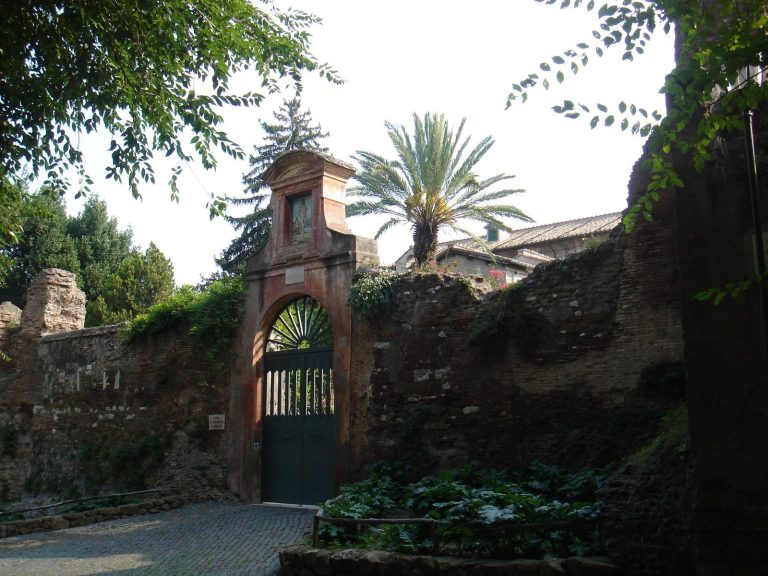
Members of the Praetorian Guard, the emperor’s bodyguard and military force in Rome, killed Elagabalus on March 11, 222. His cousin Severus Alexander succeeded him, reversed his religious edicts, and returned the statues transferred to the Elagabalium to their original shrines. Severus Alexander rededicated the temple to Jupiter. A smaller second temple to El-Gabal was built on the site now occupied by the Church of the Holy Cross in Jerusalem, also known as Santa Croce in Gerusalemme.
The later use of the Elagabalium is uncertain. If it remained in use into the fourth century, it would have been closed during the late Roman persecution of paganism. Elagabalus’s religious policies had contributed to his downfall, and the reversal of his cult followed his death.
Remains
Temple Platform and Enclosure
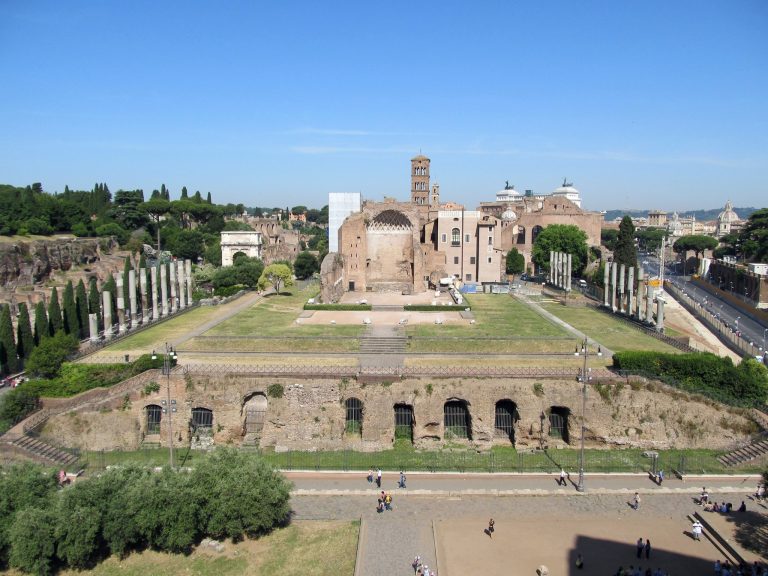
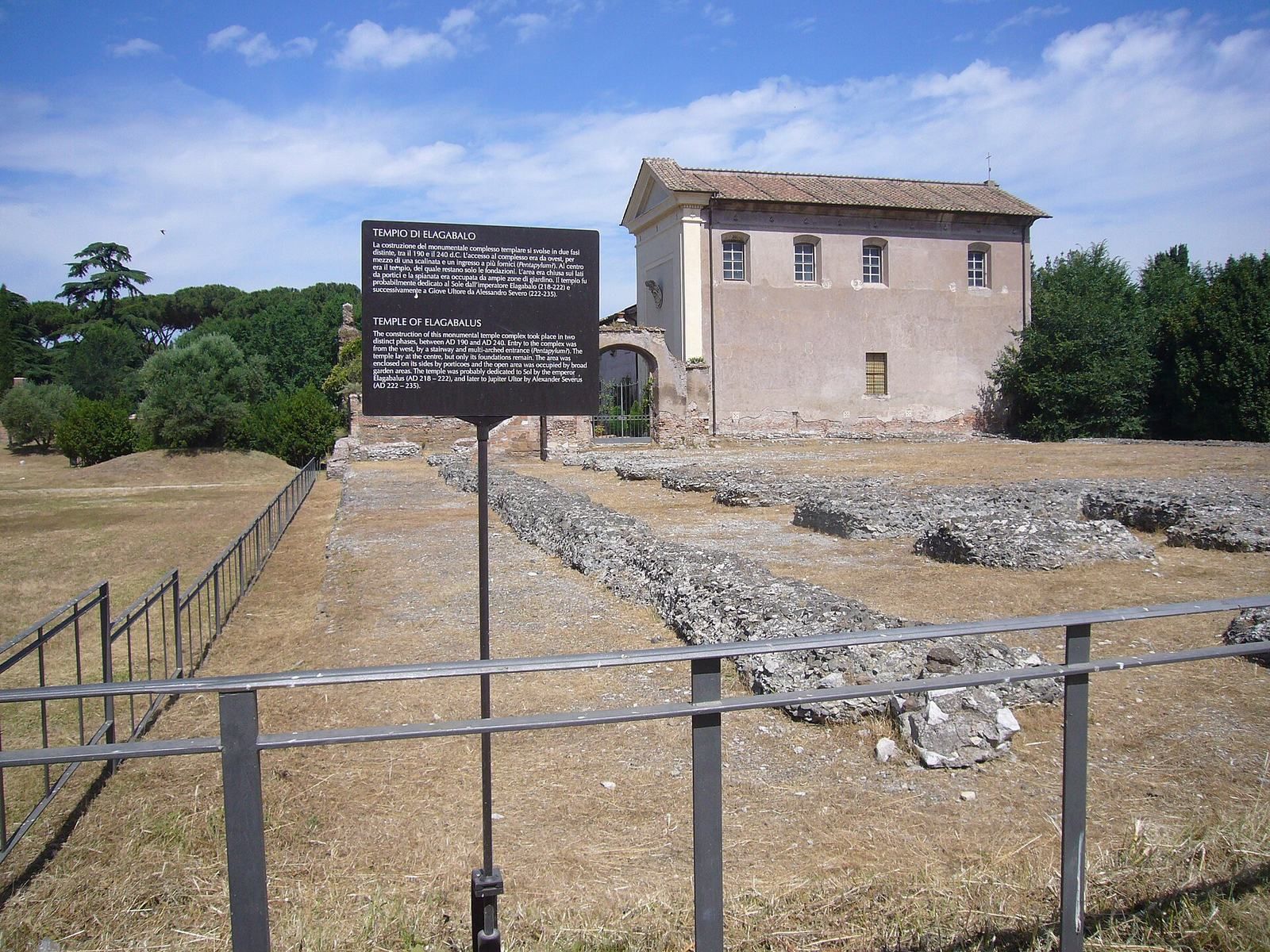
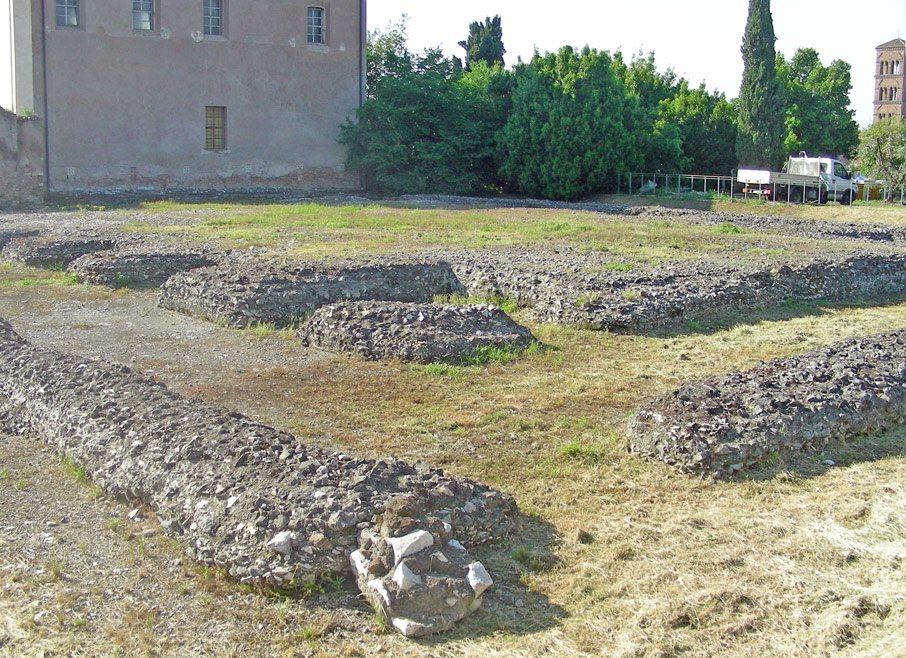
The temple was a colonnaded structure about 70 by 40 metres, enclosed within a second colonnaded space. It stood in front of the Colosseum at the northeast corner of the Palatine Hill. A terrace formed the temple platform, and remains of this platform are still visible at the Palatine’s northeast corner.
Alignment and Ritual Features
The temple’s principal axis had a bearing of about 294 degrees, measured clockwise from north, and pointed toward the sunset at the summer solstice. El-Gabal was represented by a black, conical stone, possibly a meteorite. Tall towers erected by Elagabalus were used during the temple rites; he climbed them to cast gifts to the crowd, including cups of gold and silver, clothing, and cloth.