Andriake: The Ancient Harbor of Myra
Site at a Glance
- Popularity
- Medium
- Country
- Turkey
- Primary era
- Classical
- Eras represented
- Classical, Medieval, Early Modern
- Civilizations
- Byzantine, Ottoman, Roman
- Site type
- Infrastructure
- Remains
- Harbour
On this page11 sections
History
Andriake was an ancient harbor settlement at the mouth of the Andriakos River on the Mediterranean coast of Lycia, in present-day Turkey. Founded in the early Hellenistic period, the era of Greek-ruled kingdoms that followed Alexander the Great’s conquests, it served chiefly as the port and an outlying settlement of Myra rather than as an independent city. Its position on a major maritime route made it one of Lycia’s important harbors.
Hellenistic and Republican periods
In 197 BC, the Seleucid king Antiochus III captured Andriake from the rival Ptolemaic dynasty. The geographer Ptolemy mentions the settlement, while Pliny associates it with Myra under the name Andriaca. In 43 BC, Lentulus Spinther, acting for Marcus Junius Brutus during the Roman civil wars that followed Julius Caesar’s assassination, broke the chain protecting the harbor entrance and continued upriver to Myra.
Roman imperial port
In AD 18, statues were set up at Andriake in honor of Germanicus, a Roman general and member of the imperial family, and his wife Agrippina the Elder after they visited Myra. Around AD 60, Paul the Apostle, traveling as a prisoner to Rome, probably changed ships at the harbor. He may have boarded a vessel from Alexandria bound for Italy and waited there for favorable winds.
Andriake’s harbor served grain ships from Egypt, which carried supplies to Rome and, increasingly from the fourth century AD, to Constantinople. Harbor construction expanded under Emperor Hadrian, who ruled from AD 117 to 138. Inscriptions honoring the emperors Constantine II, Julian, and Valens show that the port retained importance into the fourth century.
Byzantine activity and later settlement
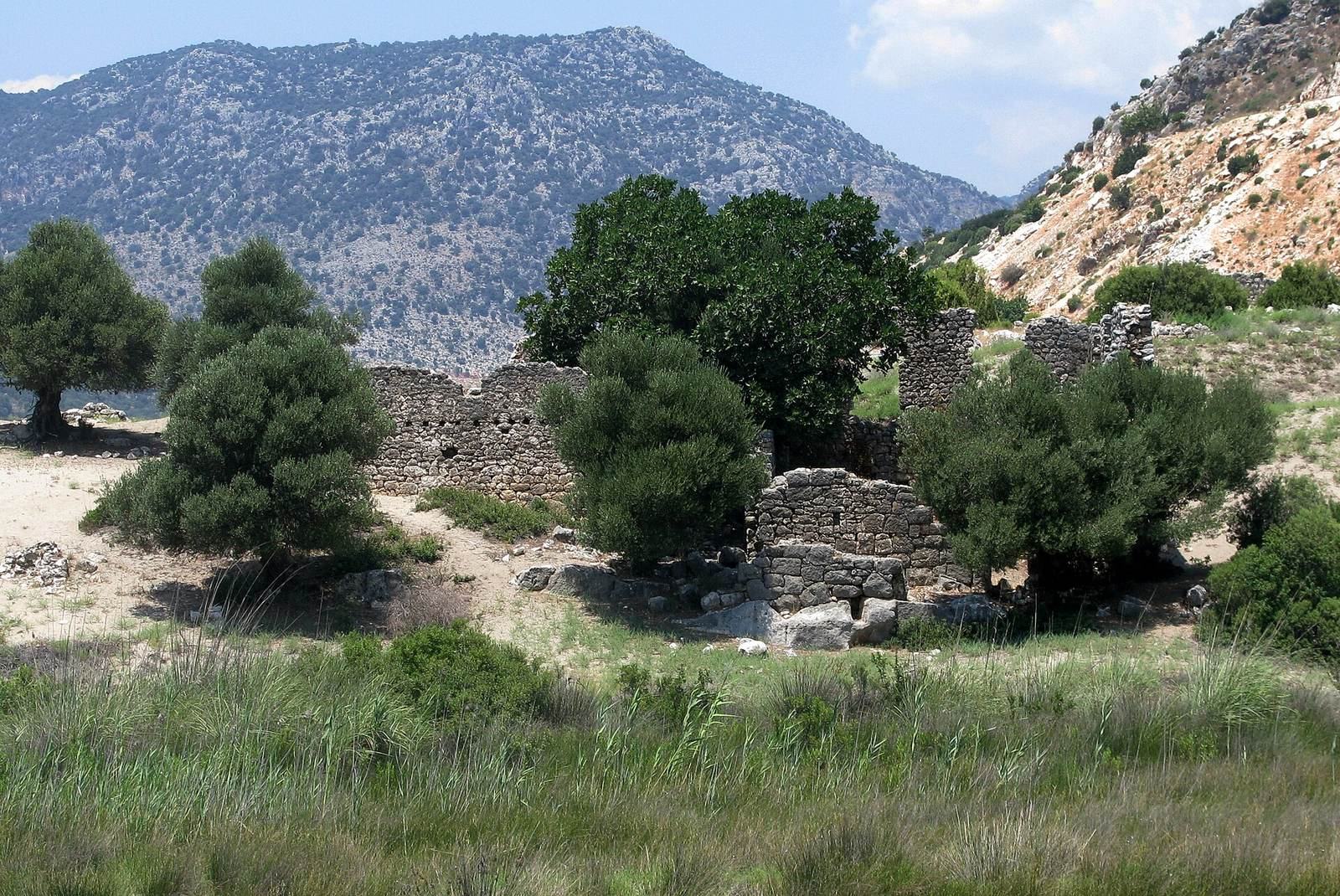
Activity revived in the sixth century, when six large churches, two bath complexes, and many other buildings were erected. Purple dye was also produced at Andriake in the early Byzantine period. The harbor gradually silted up, and the settlement was probably abandoned in the early Middle Ages. During Ottoman rule, a small fort was built at the western end of the northern settlement hill.
Archaeology
Fieldwork by the Austrian Archaeological Institute has taken place at Andriake since 2005. Excavations in 2009 uncovered a synagogue.
Remains
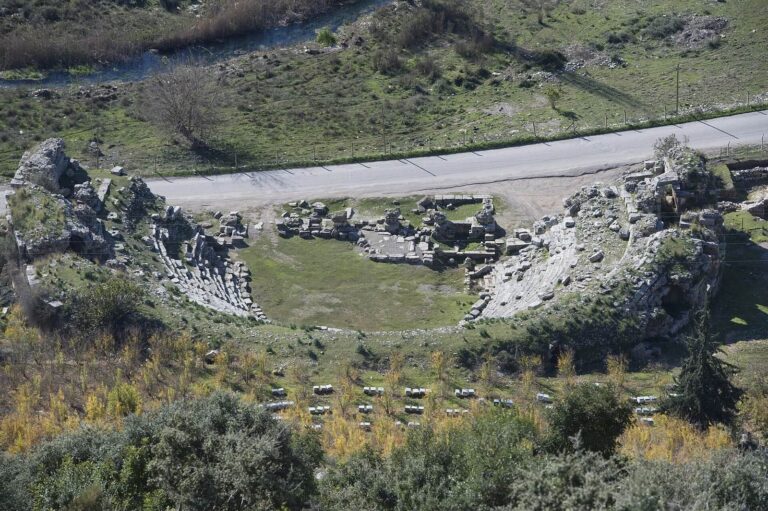
Andriake’s remains extend around the harbor and the hills beside its entrance. The earlier settlement covered hills on both sides of the harbor, while much of the surviving site lies around the foot of the hill south of it. The harbor basin has silted up and become marshy.
Granary and marketplace
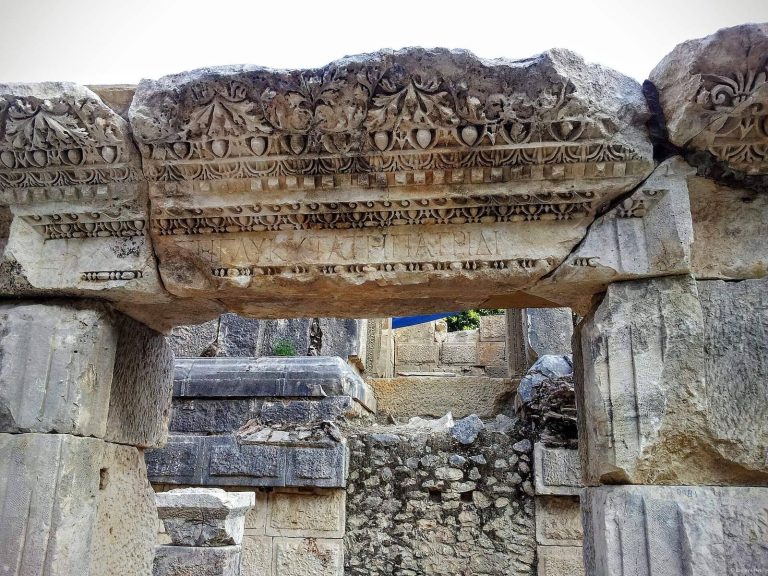
The Roman grain storehouse on the north side of the harbor entrance measures about 35 by 62 metres and covers approximately 2,307 square metres. It could hold up to 6,000 cubic metres of grain and survives to roof level; an inscription identifies it as Hadrian’s building. It now houses the Museum of Lycian Civilizations, arranged in eight sections across the building’s 2,307 square metres. Immediately east of the storehouse stood a public marketplace. A plaza and other buildings extended along the harbor’s southern shore, where many structures are now largely destroyed. A substantial deposit of purple-murex shells, marine snails used to make purple dye, lies over the plaza east of the storehouse.
Water supply and port buildings
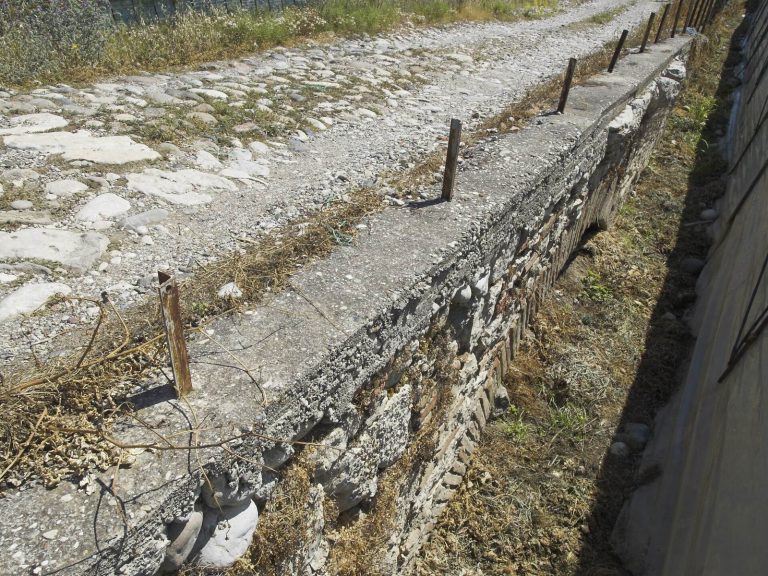
Remains in the harbor area include an aqueduct, cisterns, workshops, and other port buildings. Cisterns first supplied water to the settlement; a water conduit was built later.
Bath complexes
Two bath complexes survive in ruin. They include remains identified as Roman baths and a separate complex known as the Eastern Bath.
Churches
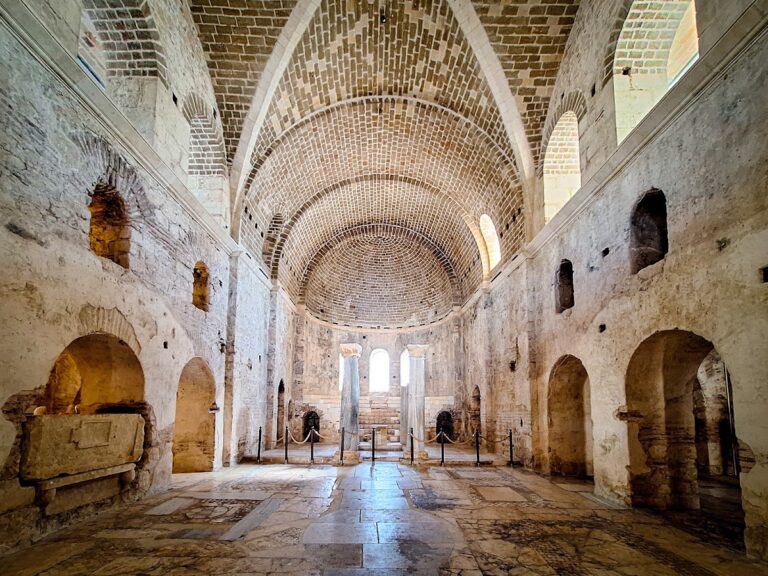
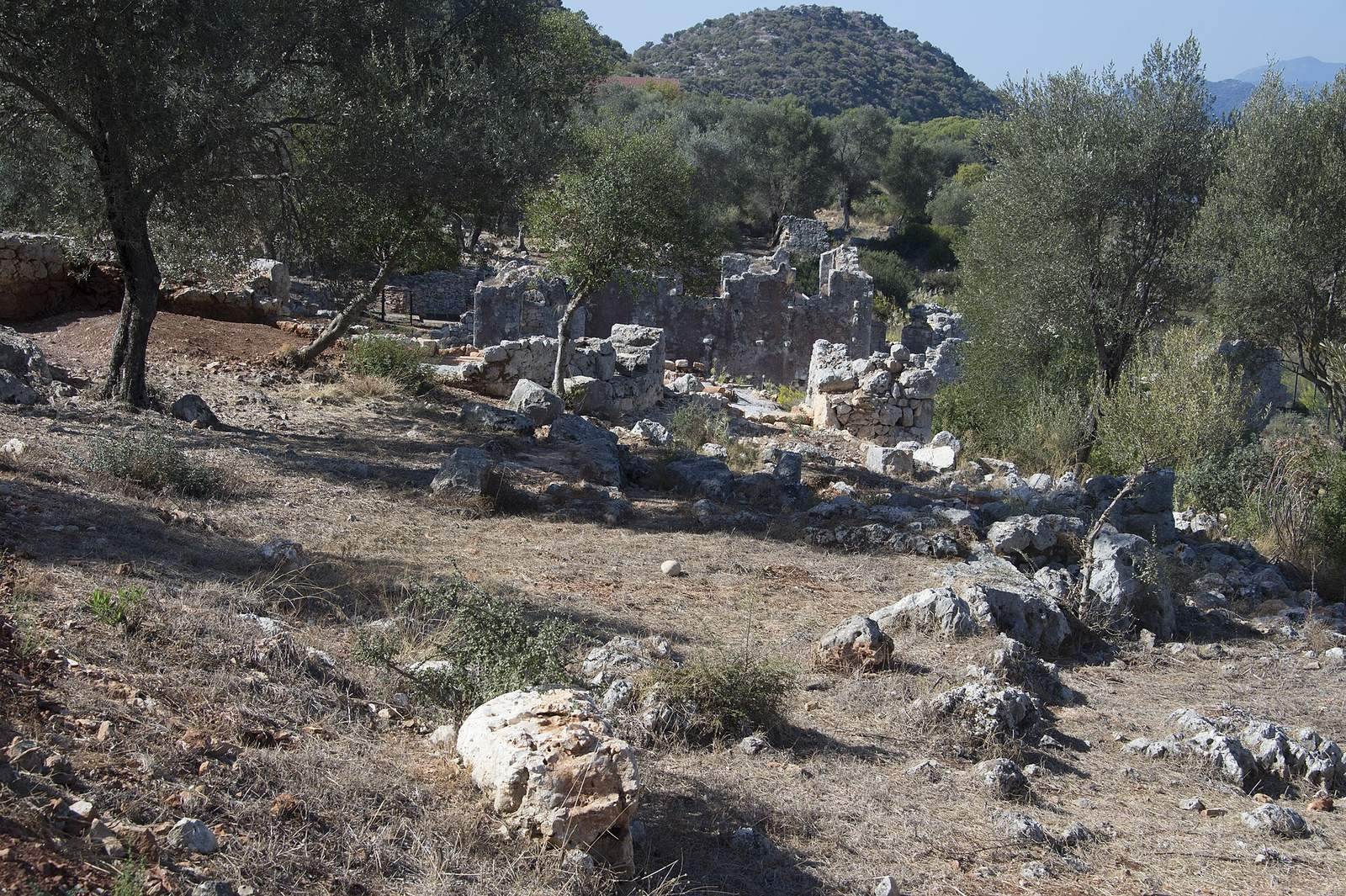
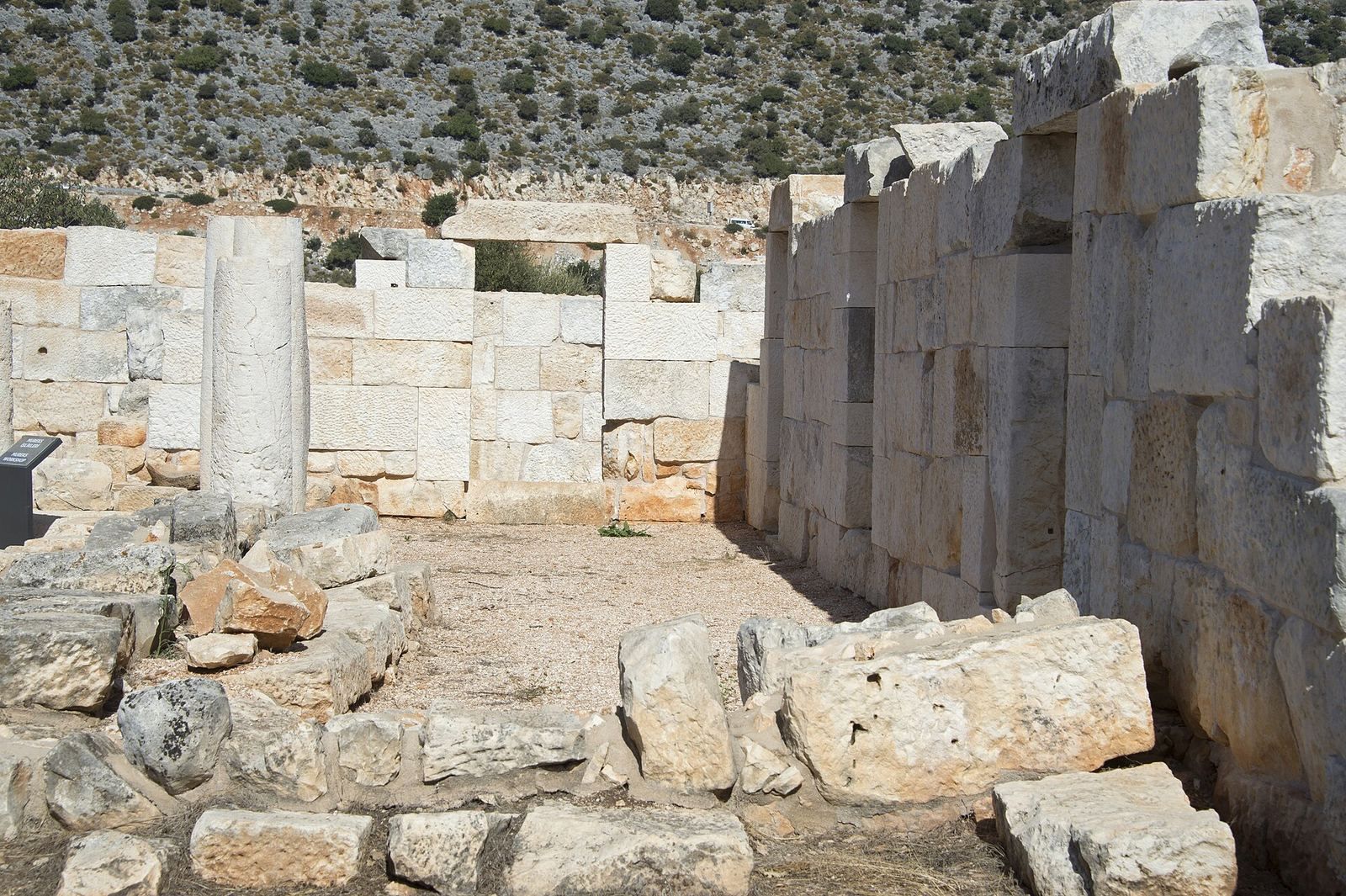
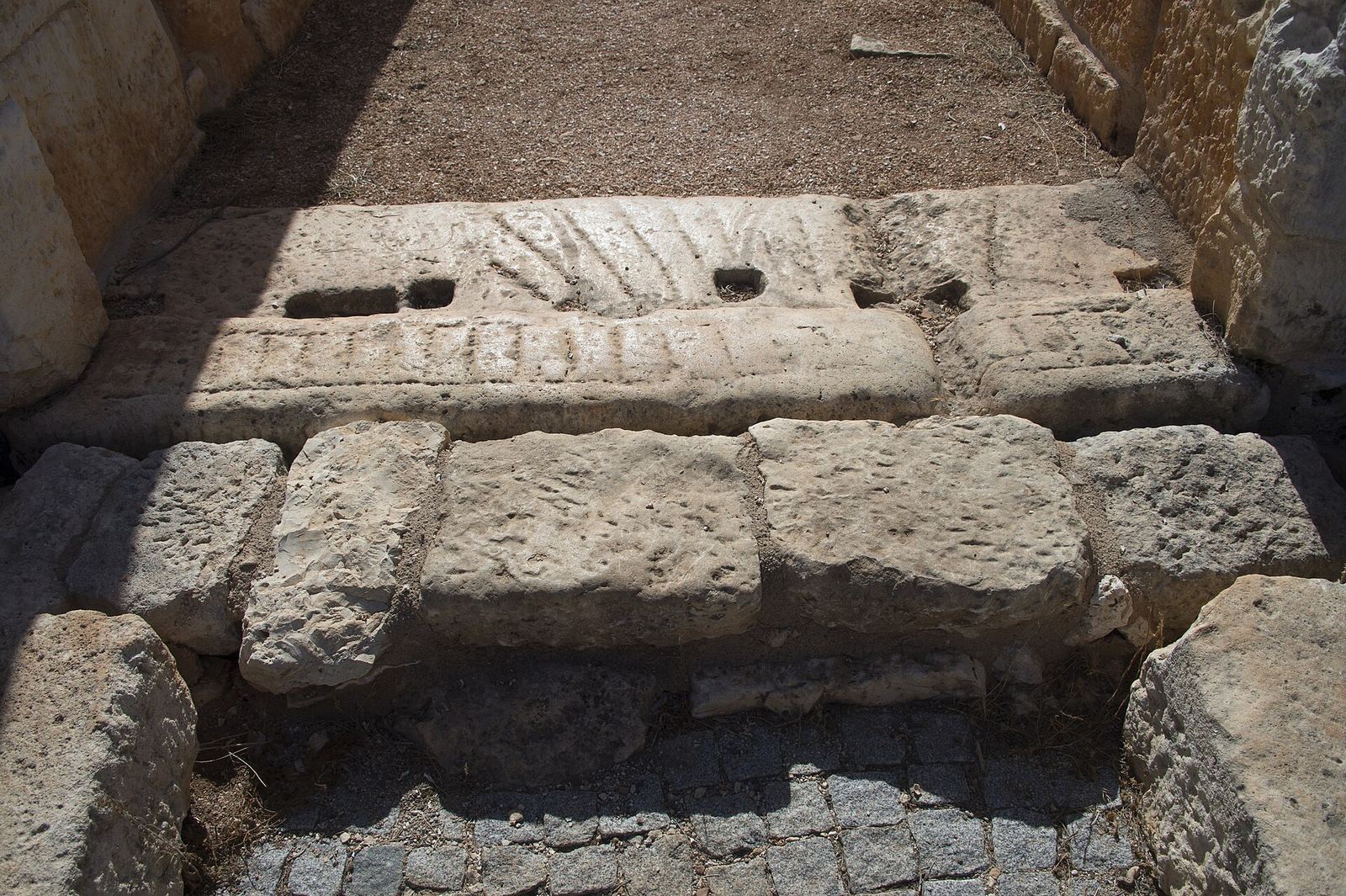
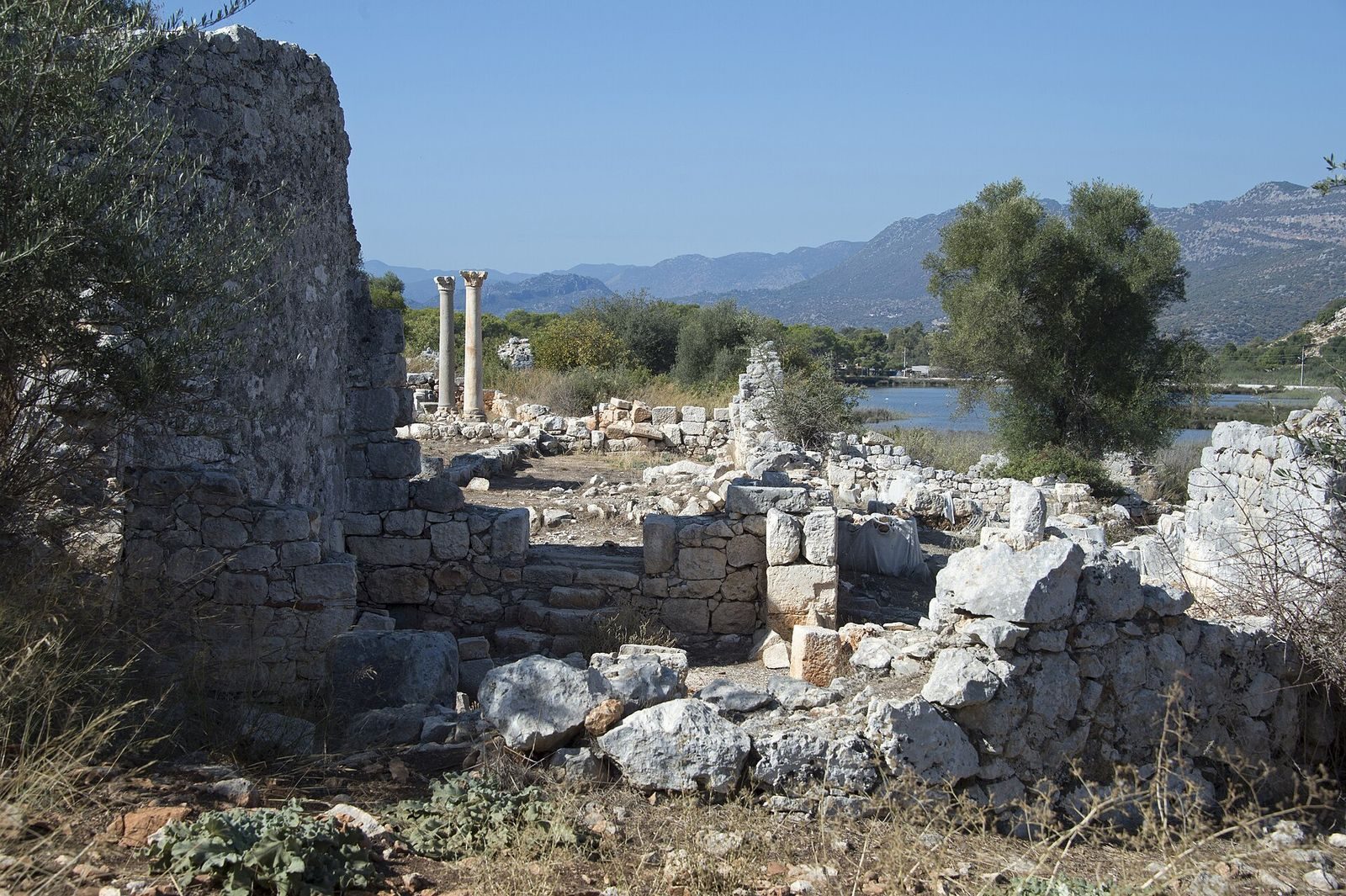
Five early Byzantine churches are identified among the remains, within a group of six large churches built in the sixth century. They were three-aisled basilicas, or long churches divided into three lengthwise spaces, with a semicircular sanctuary end on the east and entrances in the west wall. Four had an entrance hall at the west. Their surviving masonry reaches as high as one storey in rocky, shrub-covered terrain.
Synagogue and votive stones
The site includes the ruins of a synagogue. The Andriake museum also holds a votive stone dedicated to the Twelve Gods and another dedicated to a deity.