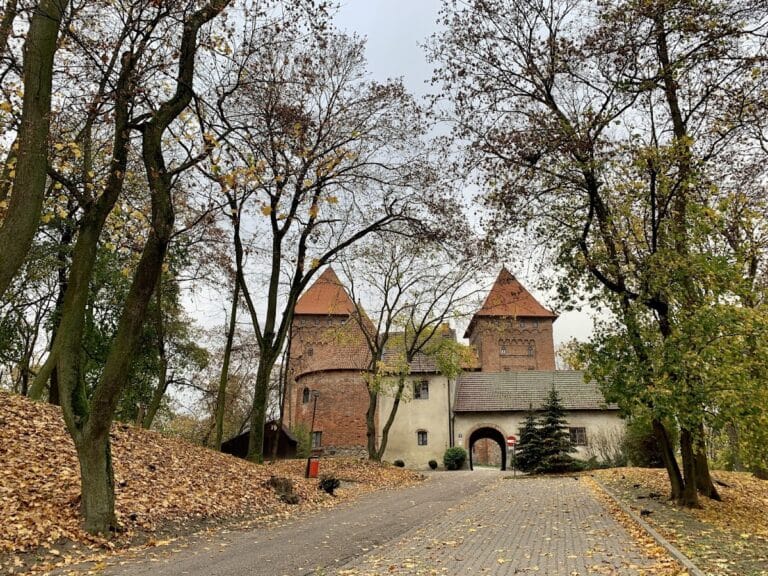
Castle in Lubawa: A Historic Episcopal Stronghold in Poland
Visitor Information
Google Rating: 4.6
Popularity: Low
Official Website: www.lubawamojemiasto.pl
Country: Poland
Civilization: Medieval European
Site type: Military
Remains: Castle
History
The Castle in Lubawa is located in the municipality of Lubawa, Poland. It was originally constructed by the bishops of Chełmno, a religious authority governing the area historically influenced by the Teutonic Order and related medieval powers.
The earliest known fortification on the site was a wooden and earth structure, which was later replaced by a stone castle constructed in the Gothic style between 1302 and 1326. This rebuilding was commissioned by Bishop Arnold, who drew inspiration from the castles of the Teutonic Order, emphasizing the site’s role as an episcopal residence and administrative center within the region of East Prussia.
Significant military upgrades took place before the outbreak of the Thirteen Years’ War (1454–1466). Under Bishop Johann Marienau, the castle was strengthened to withstand artillery assaults, reflecting the changing nature of warfare in the 15th century. Following the Second Peace of Thorn in 1466, which altered regional political boundaries, the castle underwent substantial remodeling that introduced Baroque elements during the early 1600s. Bishops Jakub Zadzik and Jan Lipski led these transformations, which involved refurbishing the chapel, the bishop’s private chambers, and the main halls of the castle. During this time, the northwest tower was heightened and crowned with a characteristic Baroque turret.
In 1545, a destructive fire significantly damaged the castle. Its reconstruction continued the transition toward a more comfortable Baroque residence suited to the bishops’ needs. Despite these renovations, from the mid-18th century onward, the castle’s importance declined as the bishop’s residence was moved elsewhere. By 1826, much of the building had been dismantled, leaving only fragments of the foundations, sections of walls, and possibly one of the two original residential towers still standing.
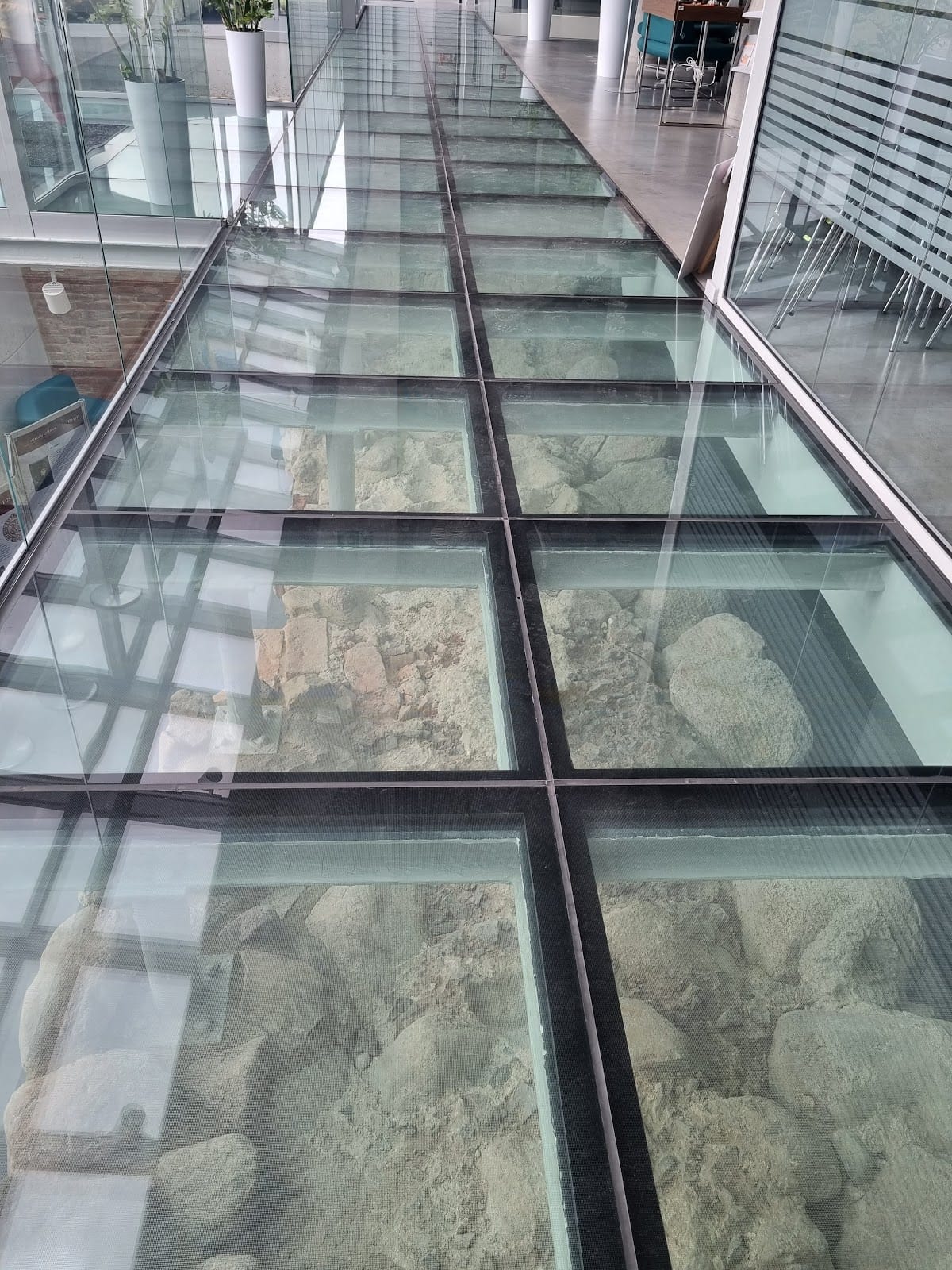
Between 1998 and 2002, archaeological research led by scholars from the University of Łódź investigated the remains, shedding light on the castle’s historical development and architectural evolution.
Remains
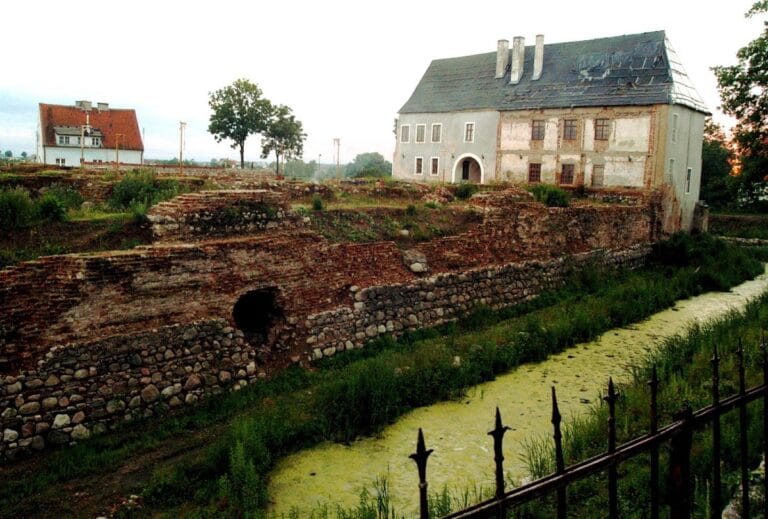
The Castle in Lubawa was originally laid out on a near-square plan approximately 50 meters on each side. Its design incorporated slightly projecting towers at the corners, providing defensive strength. Surrounding the castle was a wet moat, a water-filled ditch that offered additional protection, with a gun bastion—a specialized fortified position for artillery—placed at the northeast corner to defend against attacks.
Entry to the castle was achieved through a gate located in the west wing, which connected the outer bailey, an enclosed courtyard area, to the main castle grounds via a bridge. Inside, a paved courtyard featured a well at its center, serving as a crucial water supply. Around this open space, a two-story wooden gallery ran along the walls, allowing access to the various rooms on each floor.
The castle’s ground floor housed numerous functional rooms essential for daily operations. These included a prison, the apartment of the burgrave (the official responsible for castle management), a bakery, brewery, kitchen, pantry, kitchen master’s chamber, and a servants’ dining room. These spaces are documented in an inventory from 1614, illustrating the castle’s role as a self-sufficient complex.
On the upper floor, particularly in the south and east wings, were the bishop’s living quarters and representative rooms. Important features included the castle chapel with an adjoining sacristy—a room used for storing sacred vessels and vestments—a large and a smaller dining hall (refectory), the library, the marshal’s chamber, a second prison, and the bishop’s chancery, which was the administrative office.
Constructed primarily from masonry, the castle incorporated wooden elements, especially for the courtyard galleries. The northwest tower, distinctively altered in the early 17th century, was raised and topped with a Baroque-style roof structure, signaling the later aesthetic changes imposed during the castle’s remodeling.
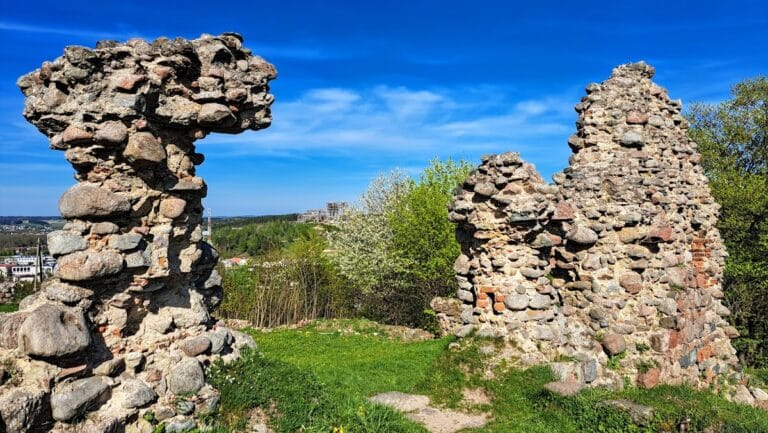
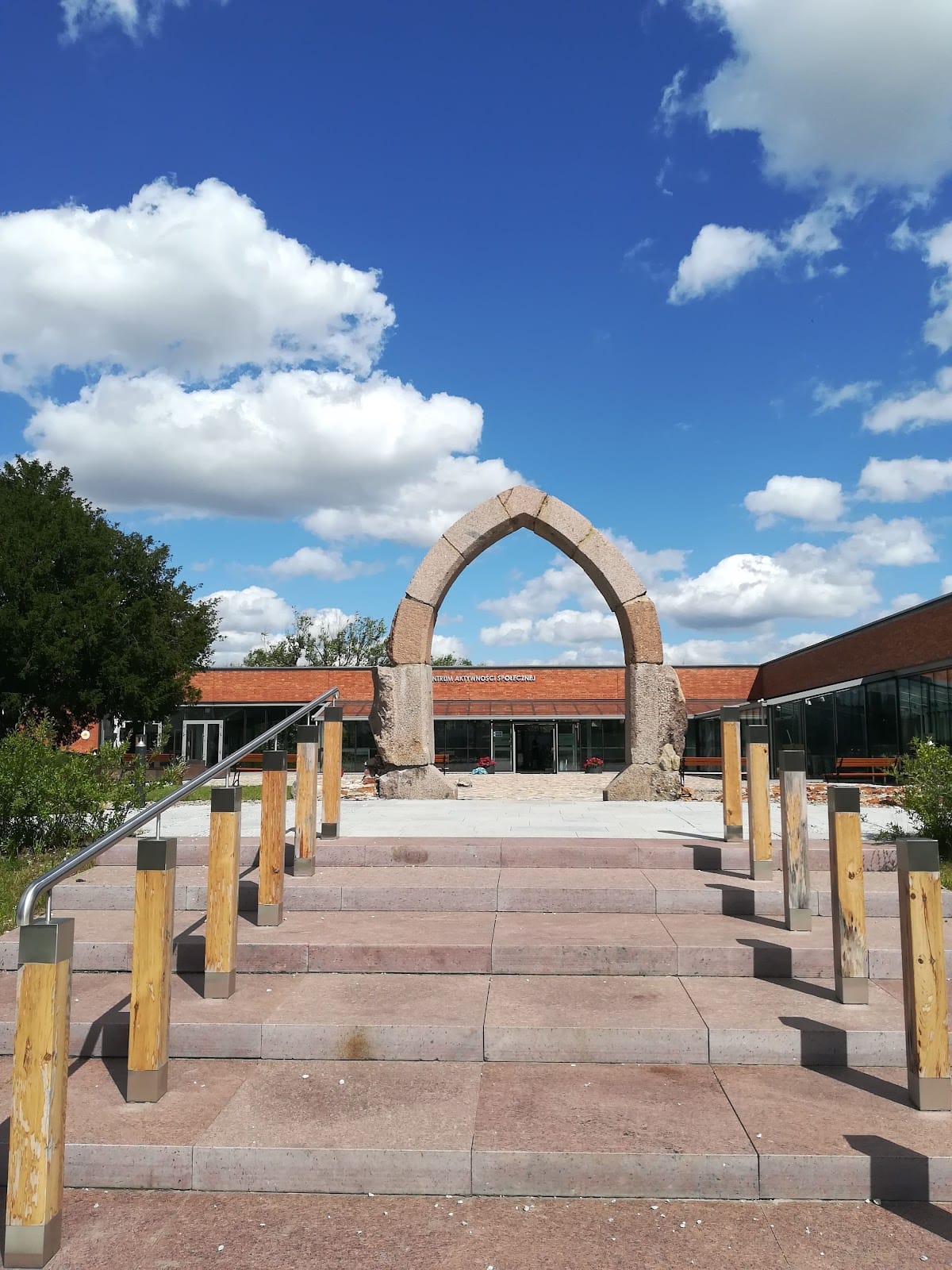
Today, what remains of the castle are limited to fragments of foundations, sections of stone walls, and probably one of the original two residential towers. These ruins rest on a hill in Lubawa, marking the location of a once-prominent episcopal stronghold. The archaeological investigations conducted at the turn of the 21st century have helped preserve knowledge of its layout and historical significance.
Nearby sites