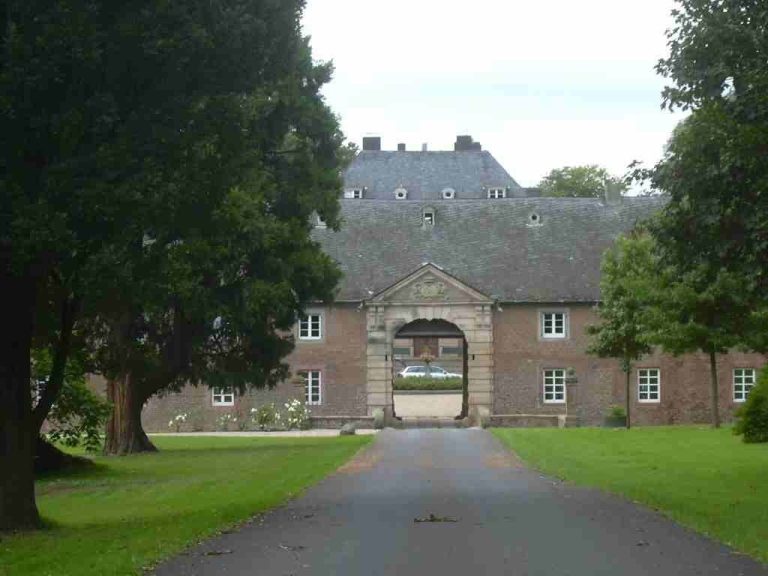
Burg Bubenheim: A Lowland Castle in Germany
Site at a Glance
- Rating
- 4.7
- Popularity
- Low
- Country
- Germany
- Primary era
- Medieval
- External website
- Open
- Eras represented
- Medieval
- Civilizations
- Holy Roman Empire
- Site type
- Military
- Remains
- Castle
On this page9 sections
History
Burg Bubenheim is a lowland castle in Germany near Nörvenich, with a history documented from the thirteenth century. In July 1237, Ingram van Bubenheim sold his estates at Flerzheim, previously held as fiefs of the Count of Jülich. A fief was a holding granted by a superior lord to a dependent vassal in return for service or allegiance. The estates passed to the abbot and convent of Heisterbach, a Cistercian monastery in the Rhineland.
Noble families and changing ownership
From 1355, the castle was associated with two noble families, the von Bubenheim and the Specht von Bubenheim. The Specht von Bubenheim line ended in the seventeenth century. In 1377, the castle was recorded as belonging to the Spies von Büllesheim family, whose branch known as Spies von Büllesheim zu Bubenheim developed from this connection.
In 1699, Philippina Isabella Clara Spies zu Büllesheim and Bubenheim, formerly a canoness of Gerresheim, married Johann Franz von Berghe called Trips. A canoness was a woman belonging to a religious community organized around a collegiate church. Through the marriage, the estate passed to his family. Johann Franz was an ancestor of Wolfgang Graf Berghe von Trips, who later became a Formula One driver.
In 1757, Johann Franz von Berghe called Trips’s son Adolf Karl sold the castle to Zantis, a citizen of Jülich and a red tanner. After several further changes of ownership, the estate passed in 1878 to the barons von Nellessen of Aachen. A baron, or Freiherr, is a noble title traditionally ranking below a count. The Schmitz-Peiffer family has owned Burg Bubenheim since 1935.
Agricultural estate and protected monument
During the twentieth century, Burg Bubenheim was used as an agricultural estate. Agriculture is now a secondary occupation, while rooms and outdoor areas serve social functions and civil wedding ceremonies. A training centre of the Düren District Hunters’ Association was established at the castle in August 2016. The municipality of Nörvenich entered Burg Bubenheim in its monument register on 22 March 1985, under number 68.
Remains
Castle complex and defensive earthworks
Main castle and outer bailey
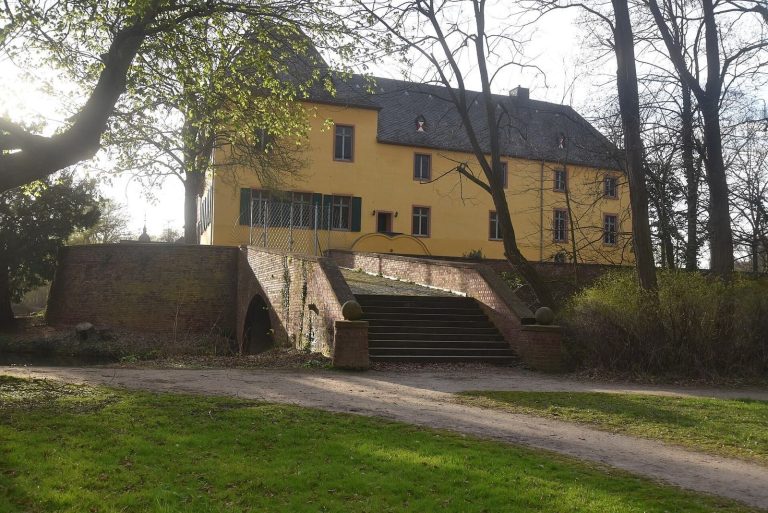
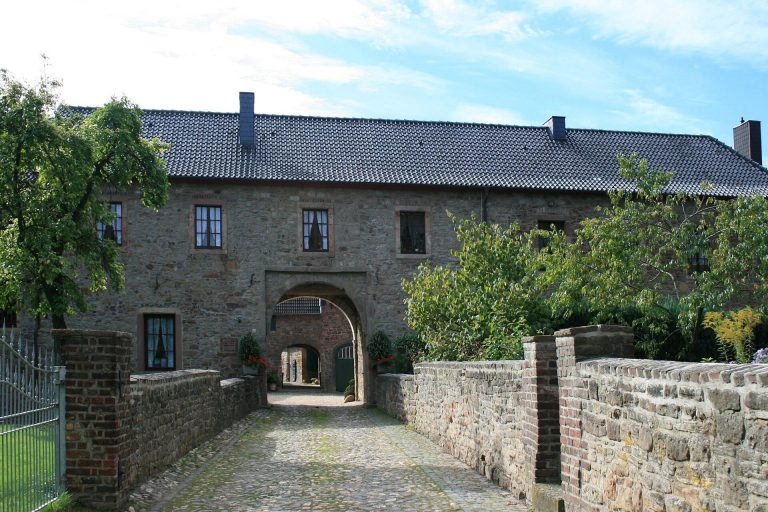
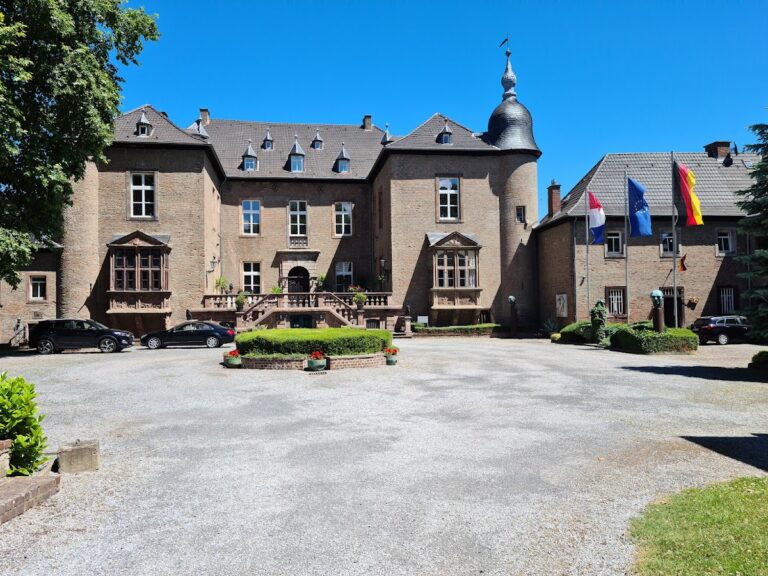
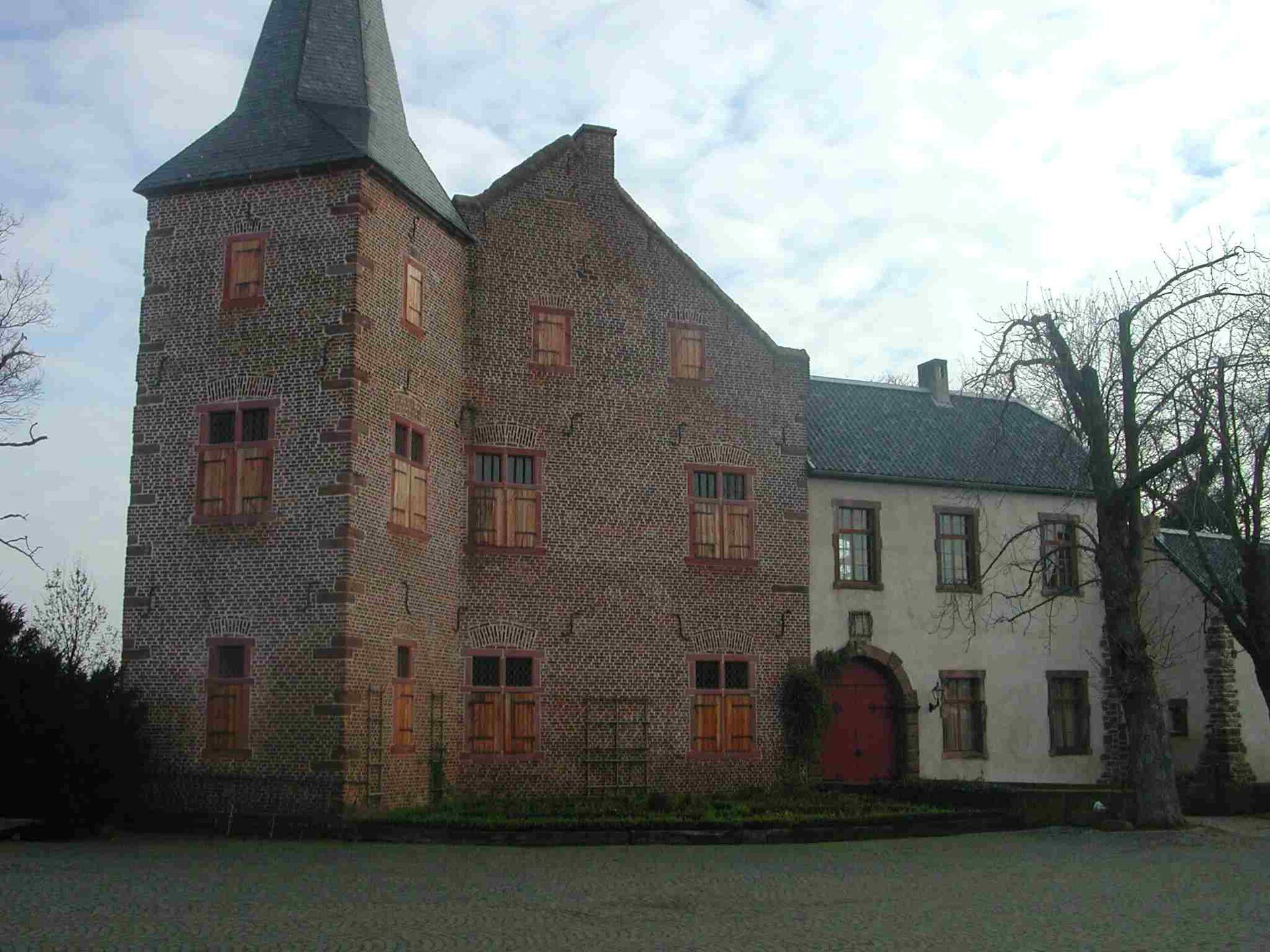
Burg Bubenheim is a lowland castle, meaning a fortified residence built on relatively level ground rather than on a prominent hill or mountain. It stands on a wooded island within the otherwise largely treeless Börde landscape, a broad and fertile agricultural region, approximately one kilometre south of Rommelsheim and close to the historic Aachen–Frankfurt military road. The complex comprises a main castle and a western outer bailey, the enclosed secondary part of a castle outside the principal fortified area. Extensive alterations have made the outer bailey difficult to recognize as a separate part of the complex.
Rampart and water-filled ditches
On the western and northern sides of the former knightly residence, remnants of a rampart survive. The raised defensive bank is approximately ten metres wide and reaches up to 2.6 metres in height. It stood directly in front of water-filled ditches, which surrounded or protected the fortified site.
Former chapel
The castle chapel was dedicated to Saint Nicholas. Its structure had become unsafe, and the chapel was demolished in 1883. It was not rebuilt.
Adjoining estate
The Bubenheim estate adjoins the castle directly to the west and is partly incorporated into the castle’s wooded island. A new residence was built there in 2006. The older adjoining house, probably dating from between 1720 and 1780, was then completely demolished. A carpentry workshop now operates in the courtyard.