Gladbach Castle: A Baroque Water Castle in Germany


Site at a Glance
- Rating
- 4.3
- Popularity
- Very Low
- Country
- Germany
- Primary era
- Early Modern
- Eras represented
- Medieval, Early Modern, Modern
- Civilizations
- Holy Roman Empire
- Site type
- Military
- Remains
- Castle
On this page8 sections
History
Gladbach Castle is a water castle in Gladbach, Germany, a district of Vettweiß, built by the medieval nobility of the region around 1100. It stands beside the Neffelbach and developed from a lowland castle, a fortified residence built on relatively level terrain. Its surviving form reflects medieval origins, Baroque rebuilding, and later alterations.
Medieval Origins and Lordship
The von Gladbach family is recorded in 1102. Related to the Counts of Jülich, the medieval ruling dynasty of the County of Jülich in the Lower Rhine region, the family held the castle and its lordship as a fief. This meant that they possessed the property under the authority of a superior lord in return for obligations and allegiance.
Inheritance later transferred the castle and lordship to Maria von Kronenburg in 1373. Further changes of ownership followed before the water castle and lordship came to the von Palant family. Their male line at Gladbach ended in 1725, after which Franz Kaspar von Hillesheim became the successor.
Fire and Baroque Rebuilding
A major fire damaged the castle in 1688. New construction of the main castle began in 1715 on the medieval foundations, creating a Baroque complex. Baroque architecture was a European style associated with formal planning, elaborate composition, symmetry, and carefully arranged spaces.
Franz Kaspar von Hillesheim began the outer bailey, the separate outer enclosure for service buildings, access facilities, and additional defensive elements, in 1741. After the von Hillesheim family died out, the lordship was confiscated in 1786.
Nineteenth-Century Ownership and Alterations
The castle was sold again in 1806. The families von Coudenhove and Heider owned it successively, followed around 1813 by Francois de Larchet de Chamont, who was then the French town commander of Jülich. After his death, his daughter inherited the estate and sold it to Joseph Rey.
Under later ownership, the castle continued to change. Joseph Rey had the court of honour, a formal forecourt, built over in 1860. Later owners included Heinrich Bollig, Karl Bessenich, and, from 1930, Karl Sieger. Ludwig Sieger died at the castle in November 1952.
Twentieth-Century Preservation
Entrepreneur Victor Rolff acquired Gladbach Castle in 1971 and carried out extensive renovations to the buildings and surrounding lands. During the work on the grounds, approximately 14,000 trees were planted after being moved from areas cleared for the expansion of the Dhünn Reservoir.
Before his death, Rolff established the Victor Rolff Foundation and transferred the castle to it. The foundation has owned the property since then. Gladbach Castle is designated as an architectural heritage monument in North Rhine-Westphalia.
Remains
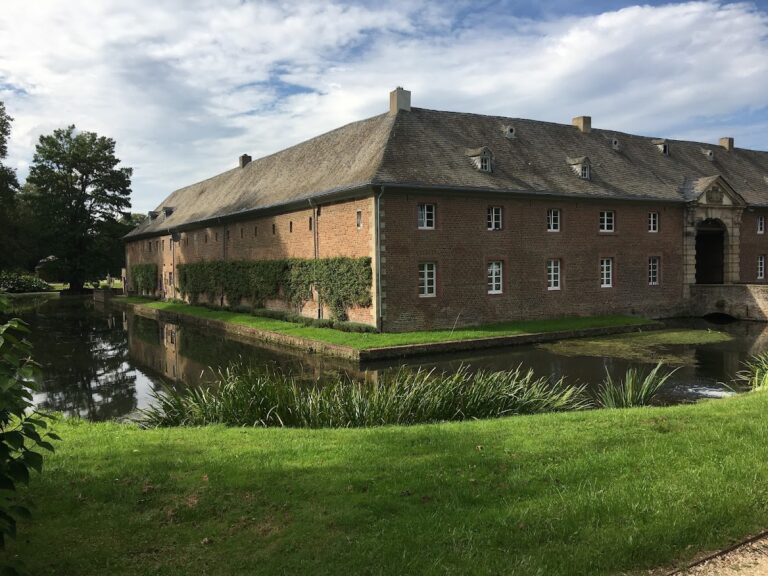
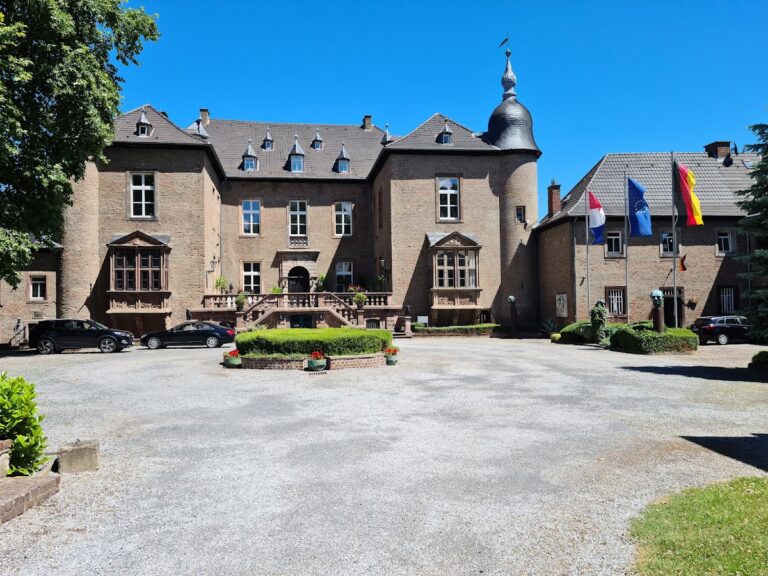
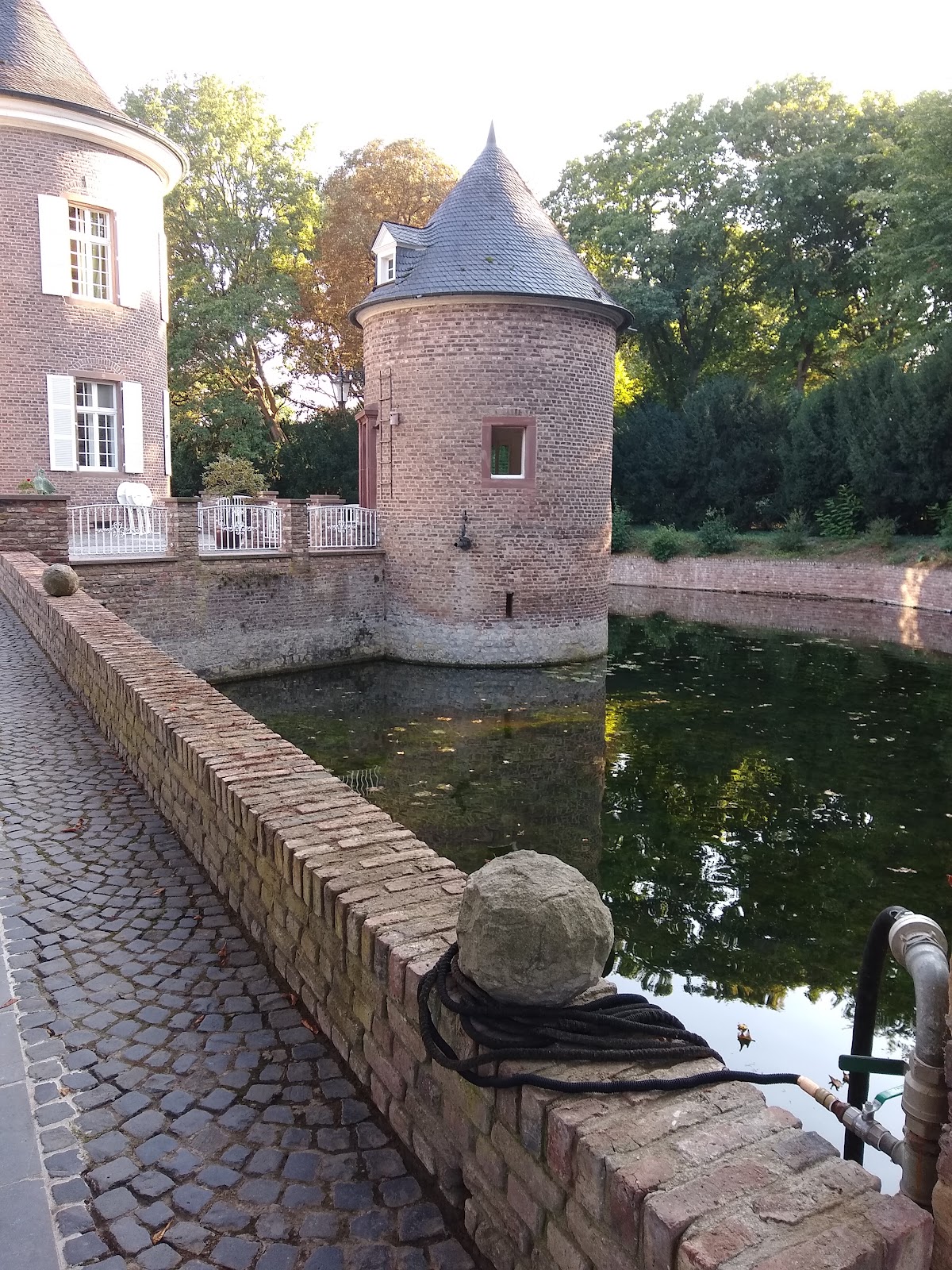
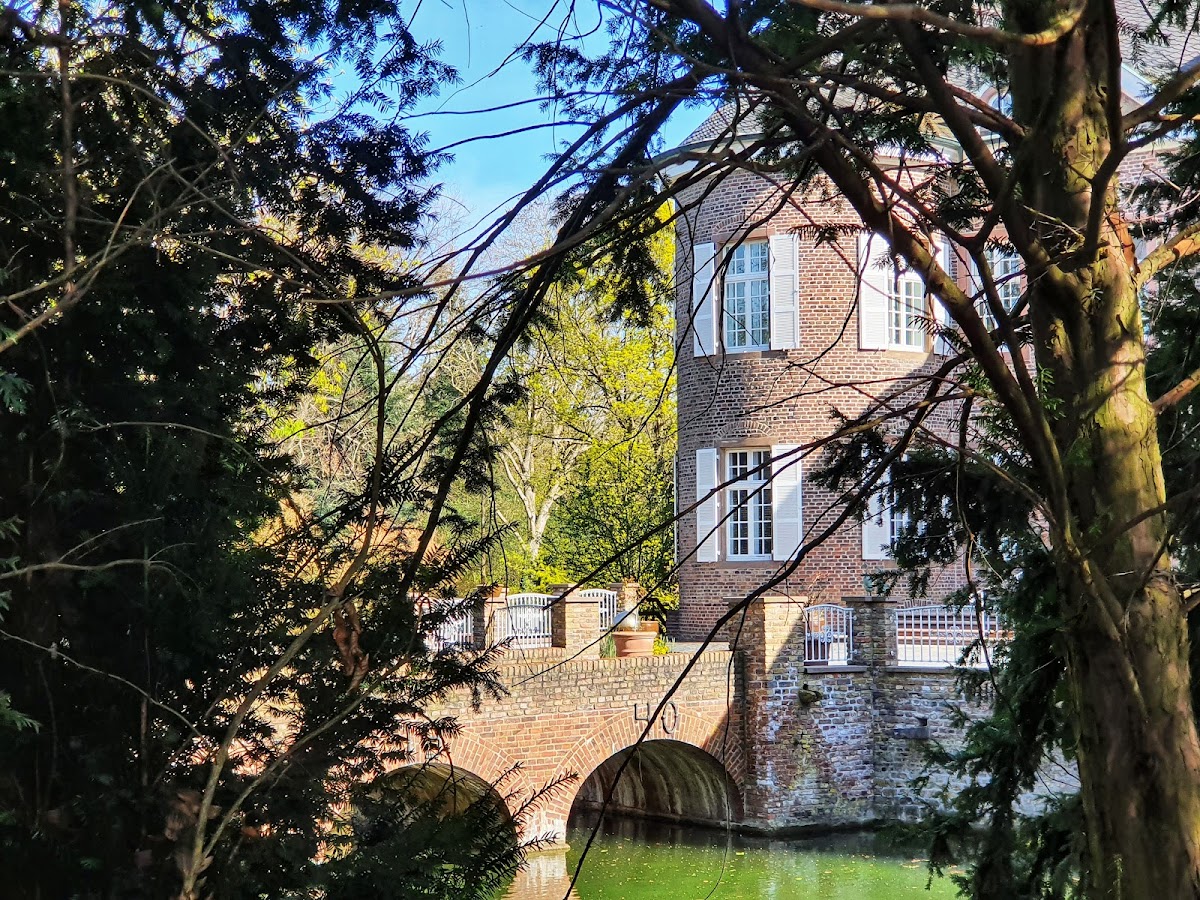
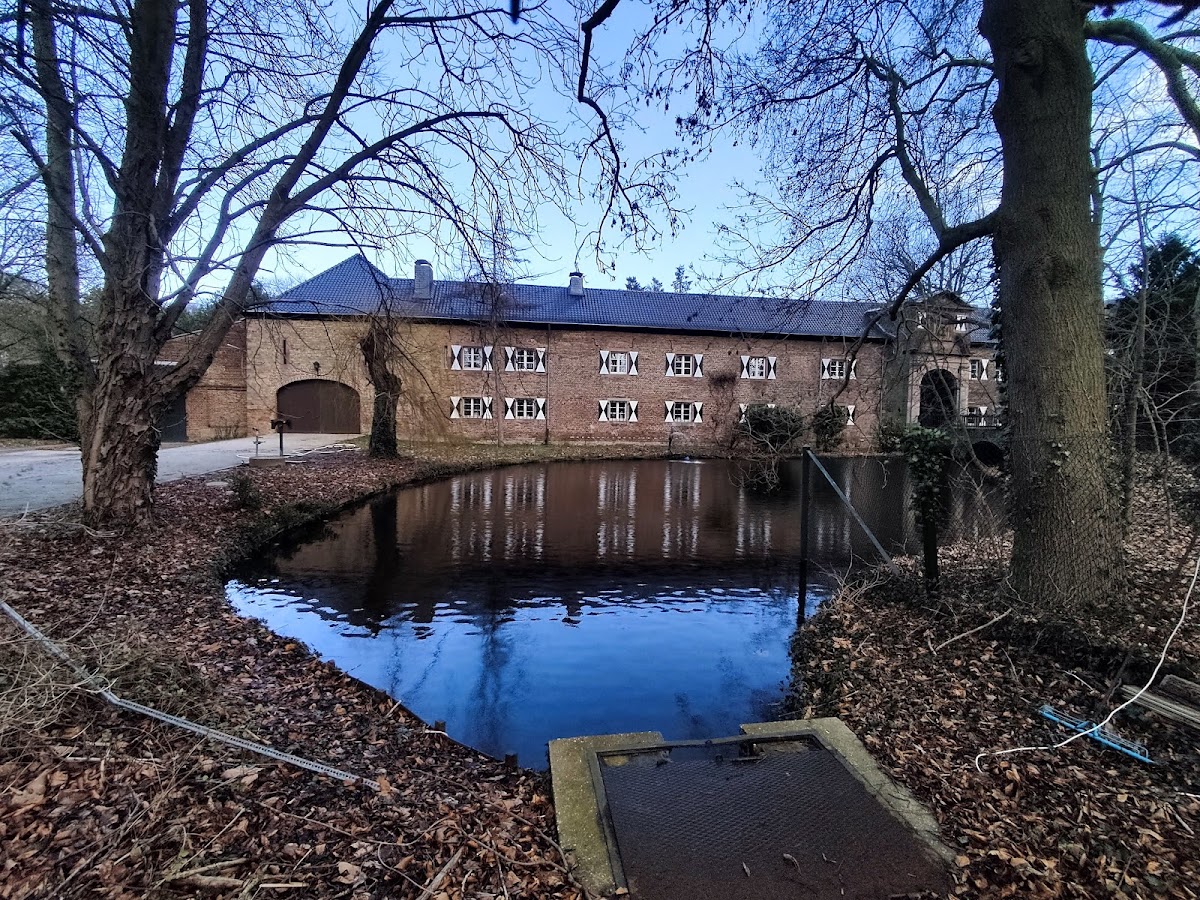
Gladbach Castle survives as a water castle directly beside the Neffelbach. The complex consists of the main castle and a separate outer bailey, with substantial parts of the historic buildings preserved. The principal architectural character comes from the Baroque rebuilding of the inner complex and the later changes made to its arrangement.
Main Castle
The main castle was constructed as a four-wing complex around an elongated courtyard. Its Baroque buildings were raised on medieval foundations, linking the eighteenth-century residence to the earlier castle. In 1823, Francois de Larchet de Chamont changed the arrangement into a three-wing complex and added semicircular terminations in front of the side wings. The court of honour was built over in 1860, altering the space within the main complex.
Outer Bailey and Grounds
The outer bailey forms a four-wing complex with a gate building on its south side. Begun in 1741, it provided a distinct enclosure beside the main castle and remains part of the preserved water-castle layout.
The surrounding lands were extensively renovated in the twentieth century. Approximately 14,000 trees were transplanted there during Victor Rolff’s work on the grounds, creating a landscape shaped by the conservation of trees moved from areas affected by the expansion of the Dhünn Reservoir.