Burg Lichteneck: A Medieval Hilltop Castle in Germany
Site at a Glance
- Rating
- 4.6
- Popularity
- Low
- Country
- Germany
- Primary era
- Medieval
- Eras represented
- Medieval
- Civilizations
- Holy Roman Empire
- Site type
- Military
- Remains
- Castle
On this page9 sections
History
Burg Lichteneck is a high-medieval hilltop castle in Germany, above the Lichteneck district of Rimbach, built during the early thirteenth century. It became the center of a Hofmark, a landed jurisdiction whose noble proprietor exercised local administrative and judicial authority, covering large parts of the present-day municipality.
Medieval Lords and the Hofmark
The castle was recorded in 1301 as castrum in Liehtenek and was probably the seat of Heinrich von Lichtenegg. The Lords of Lichteneck were identified as its owners during the second third of the fourteenth century. The Sattelbogener family is said to have held the castle from 1341 to 1537.
Damage probably occurred during Hussite military action between 1420 and 1430. The Hussites, followers of the Bohemian religious reformer Jan Hus, led military campaigns that affected parts of Central Europe during the fifteenth century.
Destruction and Later Use
Duke Albrecht of Bavaria was named as an owner around 1490, while the Baumgartner family held the castle during the sixteenth century. A fire destroyed the castle sometime between 1527 and 1558, and it had fallen into ruin by the end of the sixteenth century.
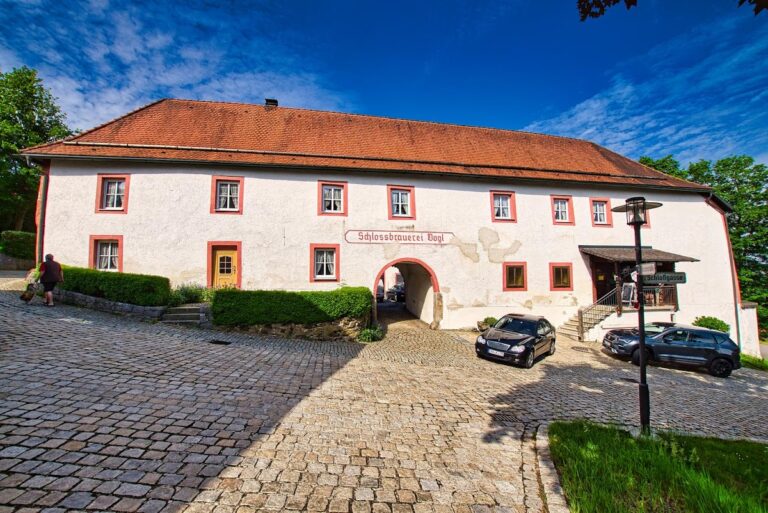
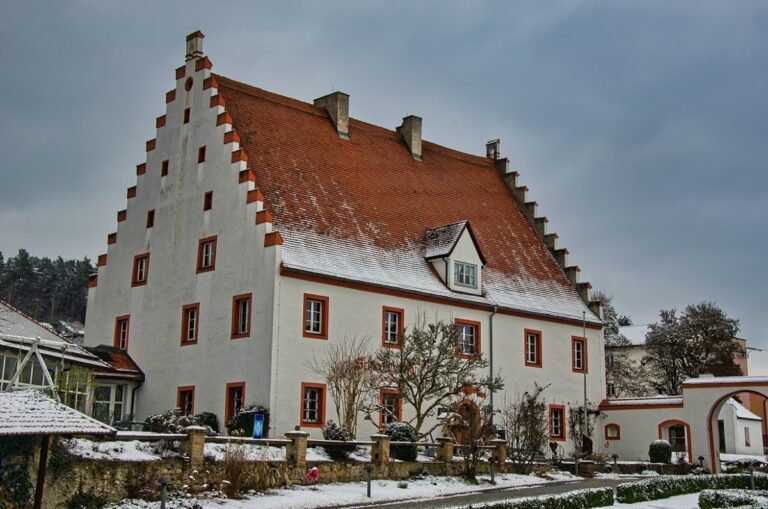
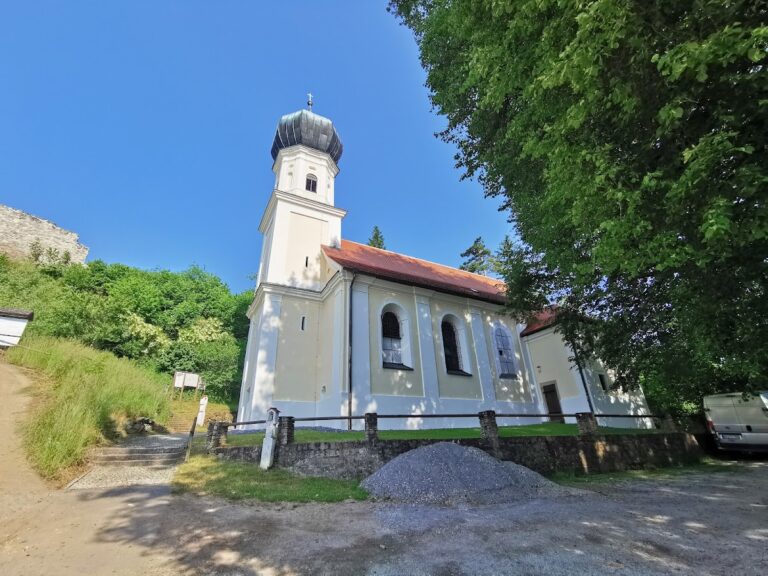
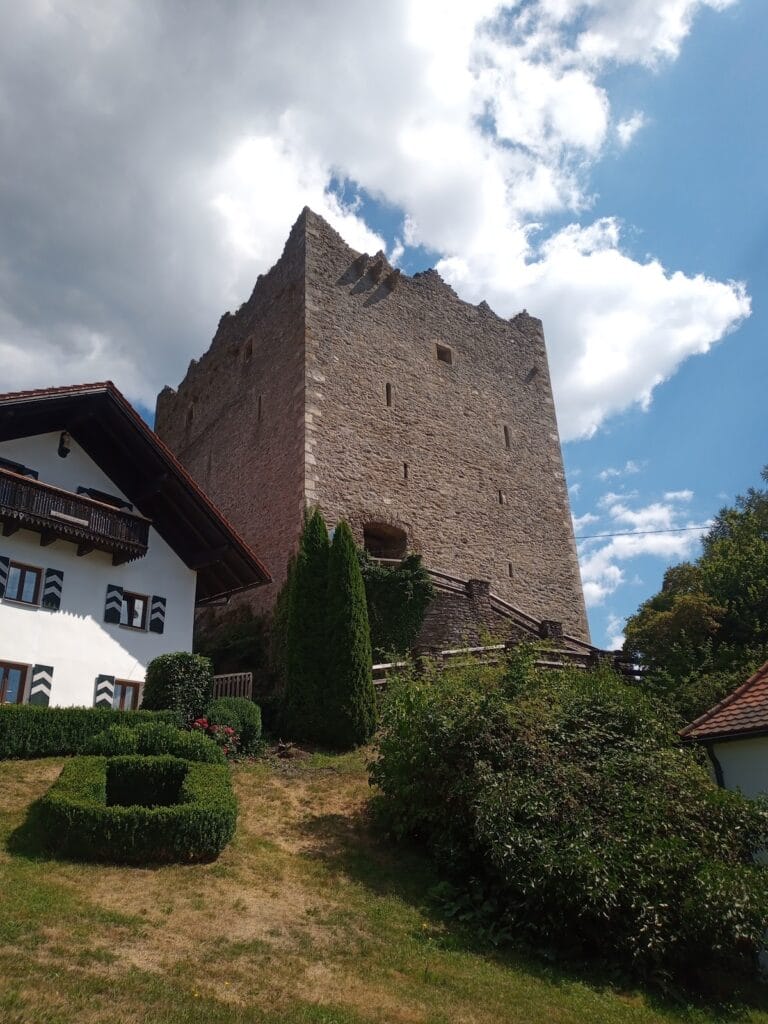
In 1719, the Pelkofen family built a small manor house below the ruin. The local parish church was also built that year. Conservation work on the castle remains took place in 1982, and the site is protected both as an architectural monument and as an archaeological monument, meaning that buried remains, structural traces, and archaeological deposits form part of its legally protected cultural heritage.
Legend of Lichteneck
A local legend describes a long dispute between the knights of Lichteneck and the knights of Hohenbogen. According to the story, the Lichteneck knights invited their rivals to a feast, attacked Hohenbogen Castle while it was underway, burned the castle, and threw its defenders into the dungeon.
The same tradition tells of a castle maiden who secretly became attached to a Bohemian knight. Cursed by her parents, she is said to emerge each night from the ruined gate in a white burial garment, descend into the moat, and comb her hair with a golden comb.
Remains
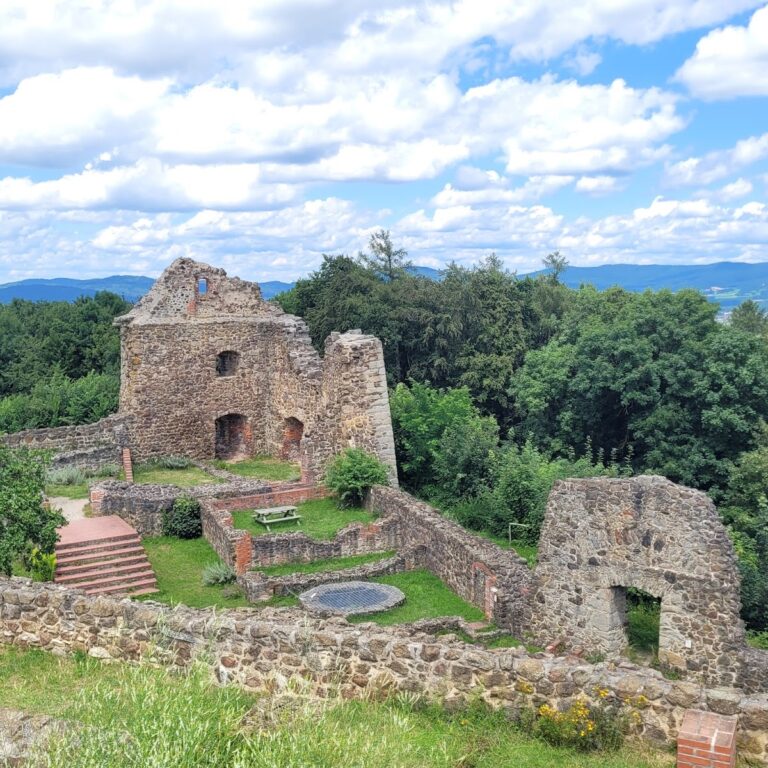
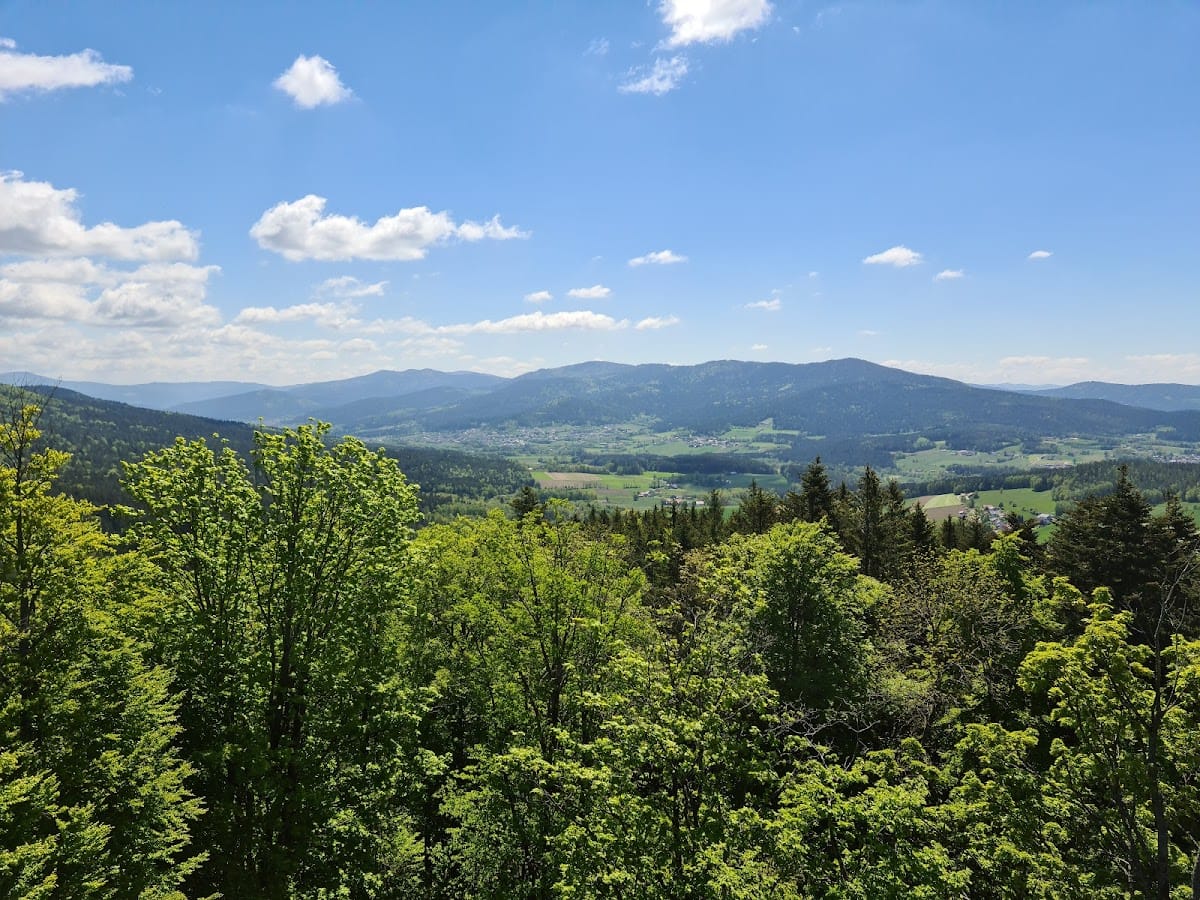
The ruin occupies the summit of Schlossberg, a hill above the Lichteneck district of Rimbach in Bavaria, at an elevation of about 700 metres. Built of rubble masonry, the elongated complex consists of two outer baileys, enclosed areas outside the core castle, and a central castle divided into an upper and a lower section. The core complex measures approximately 50 by 57 metres.
Core Castle
Circular Keep
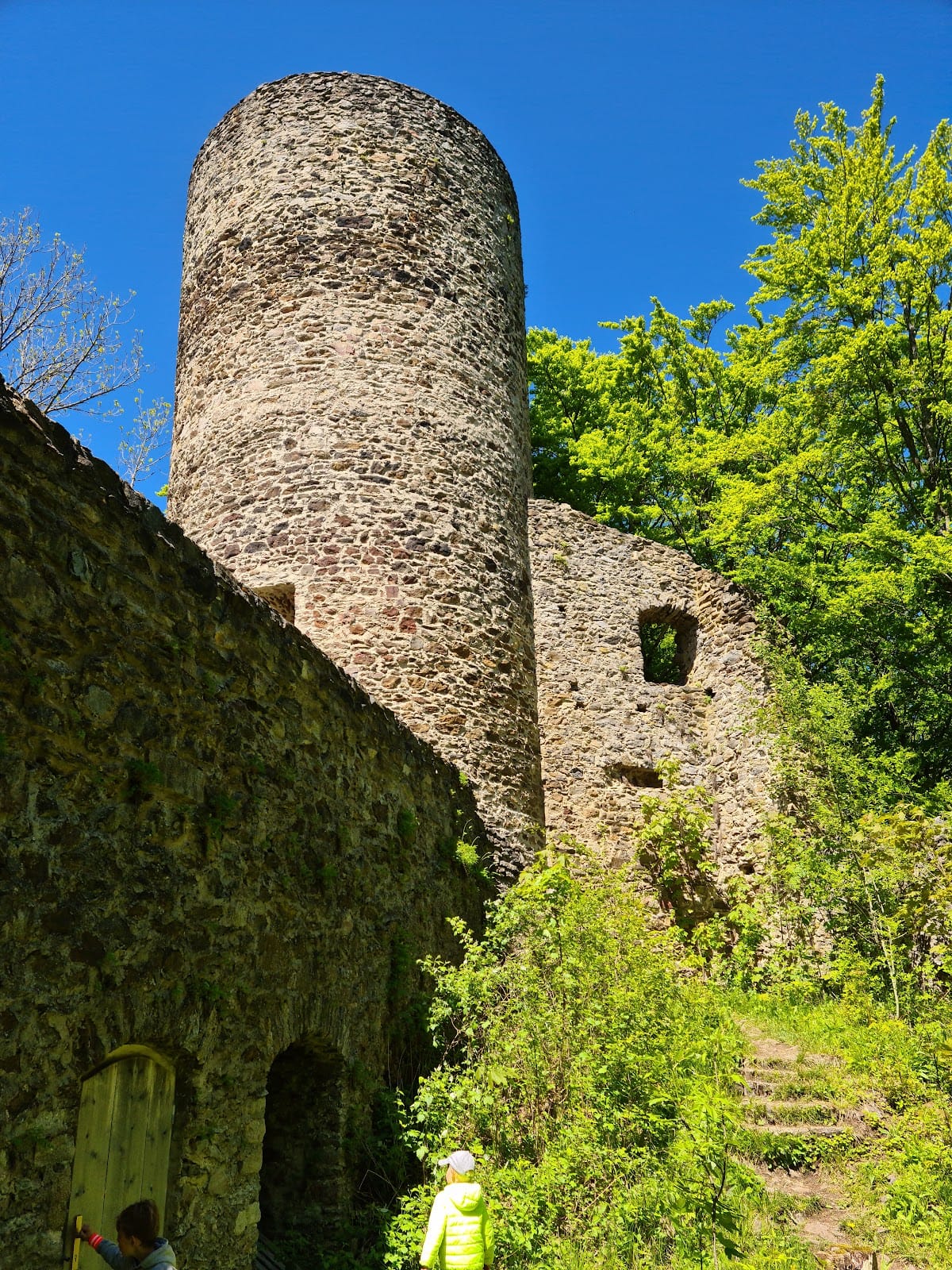
The circular keep, the castle’s principal fortified tower, rises about 20 metres and has a diameter of roughly 7 metres. Its lower walls are approximately 2.1 to 2.2 metres thick. The surviving tower forms the most substantial vertical element of the ruined core castle.
Residential Buildings
Remains of the residential buildings survive within the core complex alongside the keep. Their surviving masonry belongs to the castle’s high-medieval to early-modern development and forms part of the archaeological ground monument.
Castle Chapel
Remains of the former castle chapel were uncovered in 1990. The discovery added archaeological evidence for the religious buildings within the castle complex, whose surviving structures and buried remains are preserved as part of the castle site.