Burg Chameregg: A Medieval Hilltop Castle in Bavaria


Site at a Glance
- Rating
- 4.3
- Popularity
- Very Low
- Country
- Germany
- Primary era
- Medieval
- Eras represented
- Medieval
- Civilizations
- Holy Roman Empire
- Site type
- Military
- Remains
- Castle
On this page9 sections
History
Burg Chameregg is the ruin of a medieval hilltop castle in Germany, in the Cham district of Chammünster. Built between 1193 and 1199, probably during the period of the Diepoldinger dynasty, it is regarded as the oldest masonry in the region. The castle included a residential tower, which combined living quarters with defensive functions, and formed part of the outer defensive ring of nearby Cham Castle.
Medieval lords
The Chamerauer family held Chameregg from 1352 until the fifteenth century. During that century, the influential Pollinger family is recorded as the castle’s lord. The Uttinger family appears in the land register in 1488 and remained associated with Chameregg until 1558. The Pelkofer family held the related lordship in 1570, followed by the Kellner family in the late sixteenth century. The Kagerer family is first recorded there in 1590.
Later ownership and decline
After Endres Kagerer died, his brother-in-law Hans Sebastian von Rain succeeded him in 1636. Rain’s widow married Johann Heinrich Reithorner in 1670, and Reithorner sold the estate to the Schönbrunn family in 1675. The property changed hands again in 1683, when it was sold to the Schrenck von Notzing family.
The Rainer von Rain family was established at Chameregg again during the eighteenth century. Maria Rain sold the property in 1778 to the Collegiate Foundation of St James and St Tiburtius in Straubing, a religious collegiate institution. In the nineteenth century, the estate belonged to the Barons von Hallberg.
The castle’s architectural decline accompanied these successive changes of ownership. Its destruction date is unknown, although a fire is documented. A connection with the Hussite Wars, fifteenth-century Central European conflicts associated with the followers of Jan Hus, remains unproven.
Excavation and protection
Archaeological excavations and measures to secure the ruin took place in 1965 and 1966, followed by further work from 1987 to 1989. The Bavarian Forest Association has owned the ruin since 1900. Burg Chameregg is registered as an architectural monument under Bavarian monument number D-3-72-116-84. Archaeological remains in the area of the medieval ruin, also known as the Ödenturm, are separately registered under number D-3-6742-0008.
Remains
Hilltop structures
Ödenturm
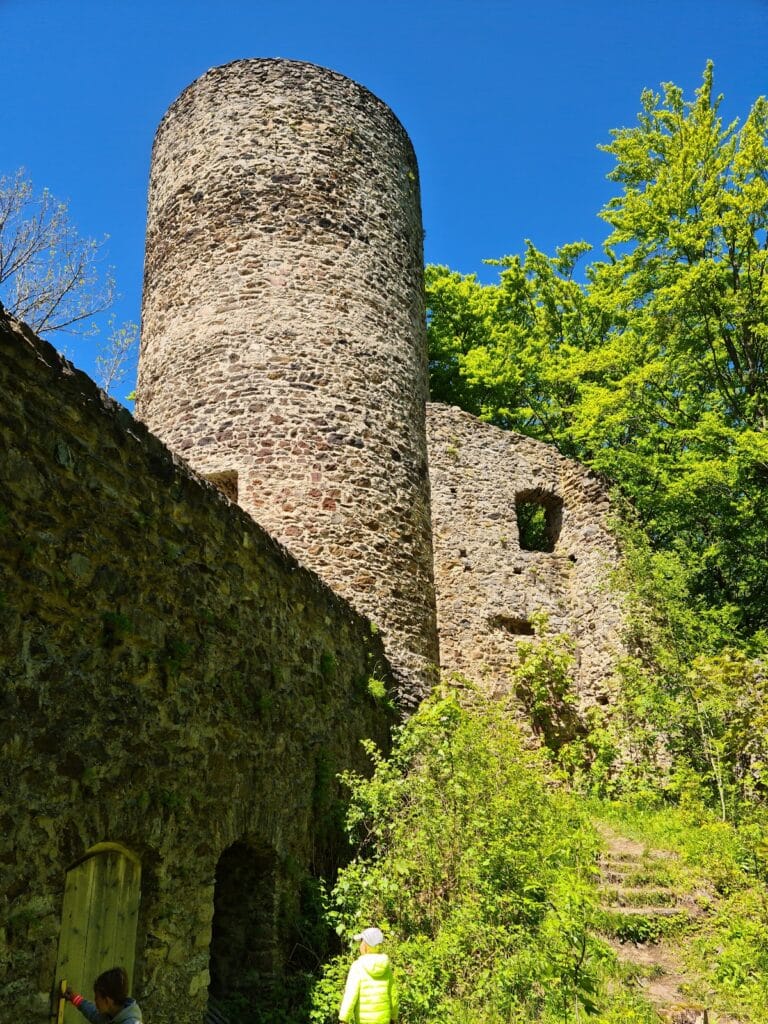
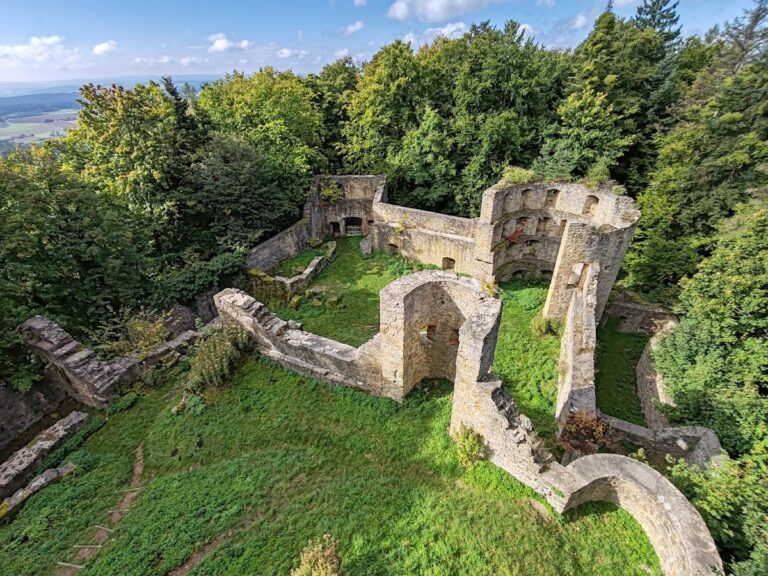
The principal surviving structure is the truncated former fortified tower known as the Ödenturm, also called Eulenturm. It rises 22 metres above the hilltop and has masonry up to three metres thick. At least four storeys can be identified. The tower was built with bossed ashlar masonry, in which the visible faces of the stone blocks project from their dressed edges.
Enclosing defenses
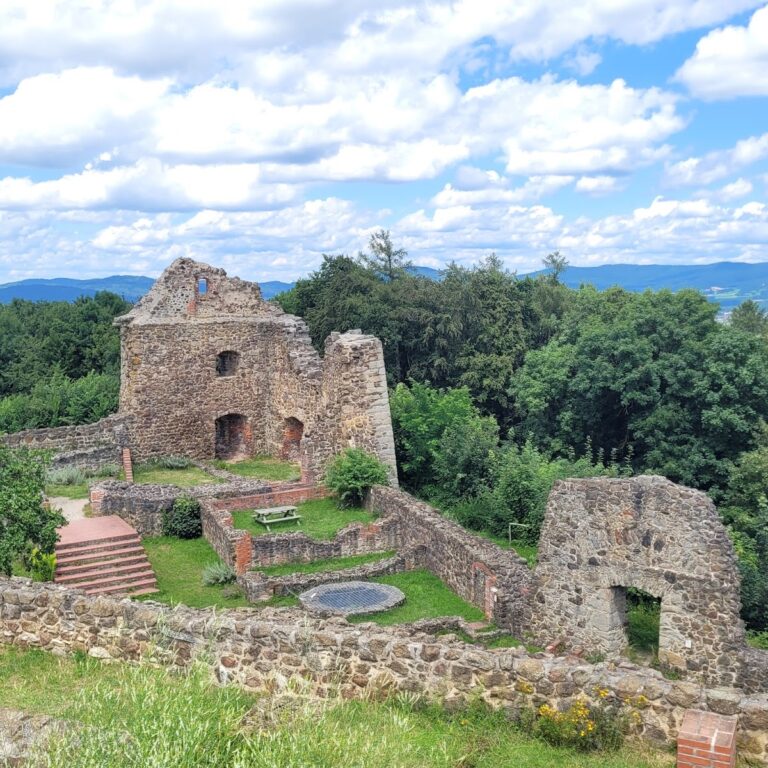
Parts of the castle’s enclosing wall remain recognizable, as does the castle moat. Together with the tower, these fragments preserve the main elements of a hilltop defensive complex. Chameregg lies at approximately 415 metres above sea level in Chameregg, within the city of Cham in Bavaria.
Reused masonry
Some ashlar blocks from the castle are said to have been reused in private houses in the neighbouring settlement of Chammünster. This reuse forms part of the later physical history of the castle’s masonry, while the surviving tower and defensive fragments remain at the medieval site.
Nearby sites