Bernifal Cave: A Prehistoric Cave-Art Site in France
Site at a Glance
- Popularity
- Medium
- Country
- France
- Primary era
- Stone Age
- Eras represented
- Stone Age
- Civilizations
- Unclassified
- Site type
- Civic
- Remains
- Rock Art
On this page13 sections
History
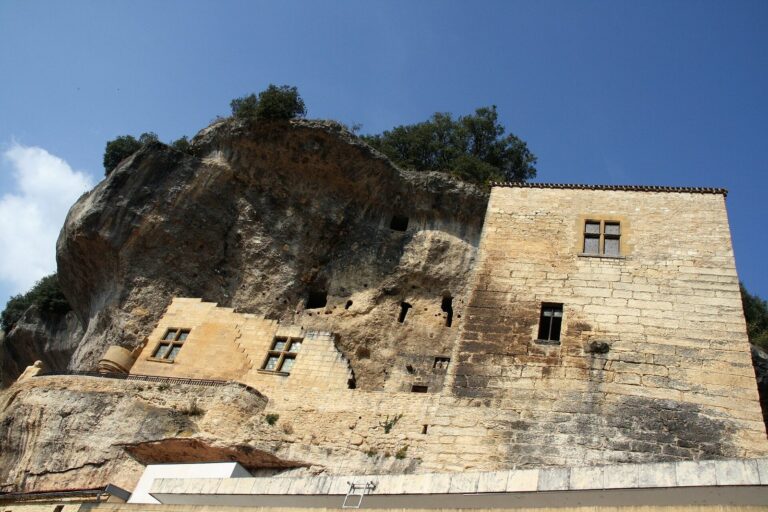
Bernifal Cave is a decorated prehistoric cave at La Petite, near Meyrals, France. People occupied it during the Magdalenian, a cultural period of the European Upper Paleolithic, roughly 15,000 to 10,000 years ago. Its paintings and engravings are generally associated with this period, although they have not been directly dated. A stylistic resemblance between one Bernifal mammoth and an image at Rouffignac, possibly by the same artist, has led to a proposed date in the later Upper Magdalenian, around 12,000 BC.
A roof collapse exposed the cave in 1898. Denis Peyrony entered through the opening in 1902 and drew attention to its images. Graffiti on the walls indicates that people had visited earlier. Peyrony, Louis Capitan, and Henri Breuil produced a preliminary study, published in 1903. Breuil carried out a more detailed study in 1928, followed by work by André Leroi-Gourhan. In 1935, Peyrony cleared the blocked original entrance.
Further investigations took place in the 1970s and 1980s, including work by Chr. and Cl. Archambeau and A. Roussot; Brigitte and Gilles Delluc studied the cave in 1994 and 1995. A mammoth image in a cave shaft was discovered during the 1970s. The privately owned cave has been classified as a French historic monument since 27 May 1904. Since 1979, it has also formed part of the Vézère Valley prehistoric caves’ UNESCO World Heritage property, an international recognition of cultural or natural importance.
Remains
Cave form and layout
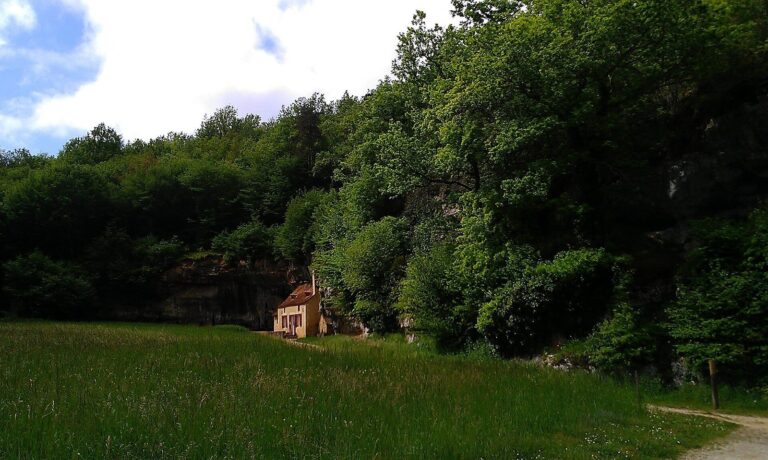
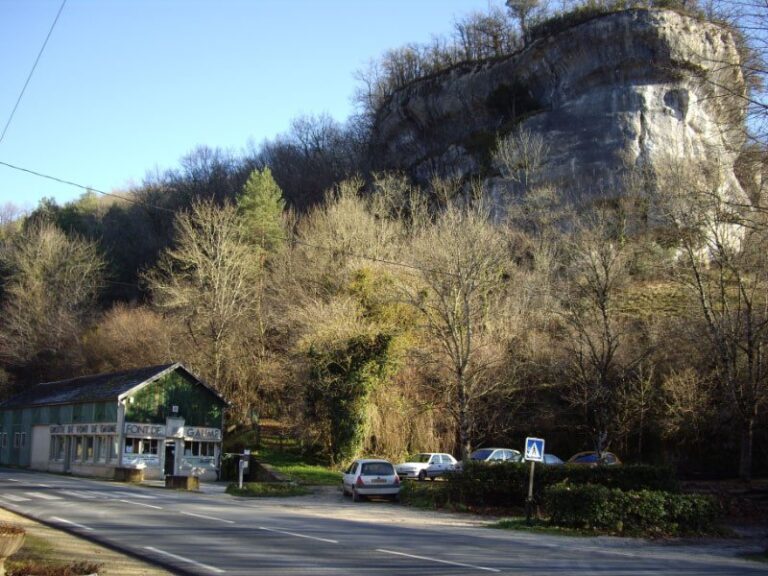
Bernifal is a natural cave formed in flat-lying Coniacian limestone, a rock formation dating to a stage of the Late Cretaceous. It extends about 90 metres in a zigzag plan from northwest to southeast, in a forest on the left-hand slope of the Petite Beune valley, about 20 metres above the valley floor. Three gallery sections connect by passages. The main route includes two large halls linked by a low, narrow passage about one metre wide and one metre high.
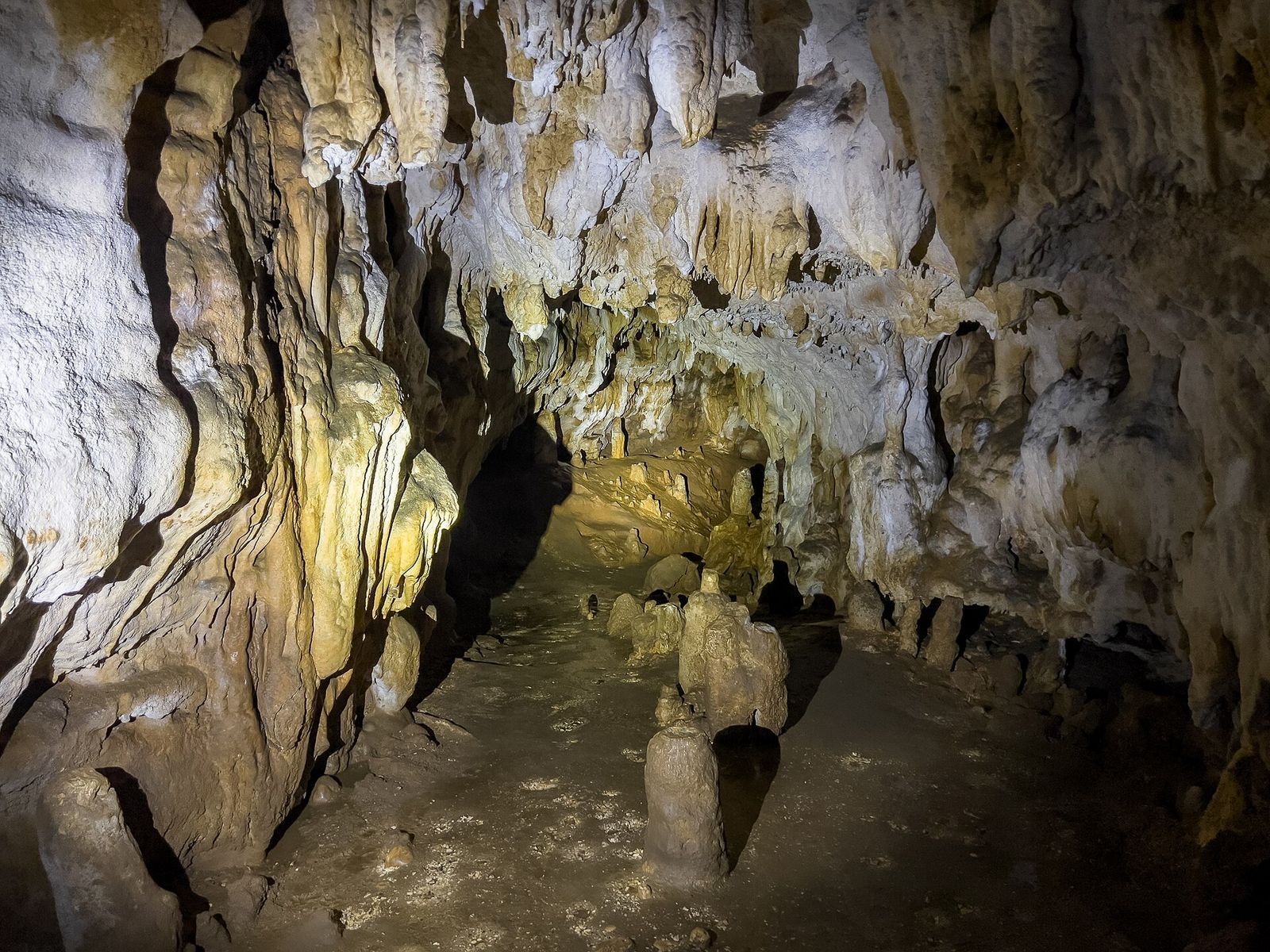
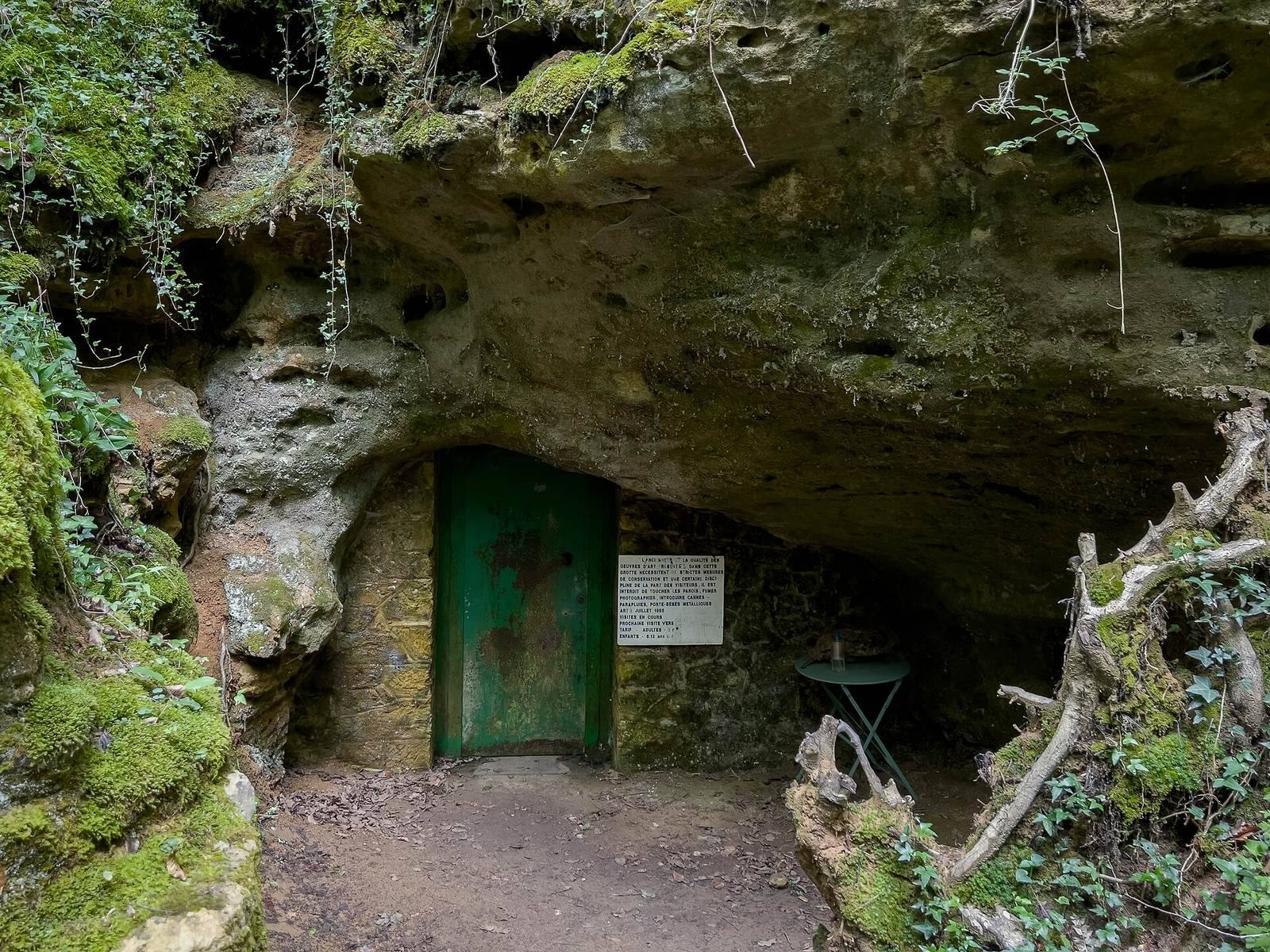
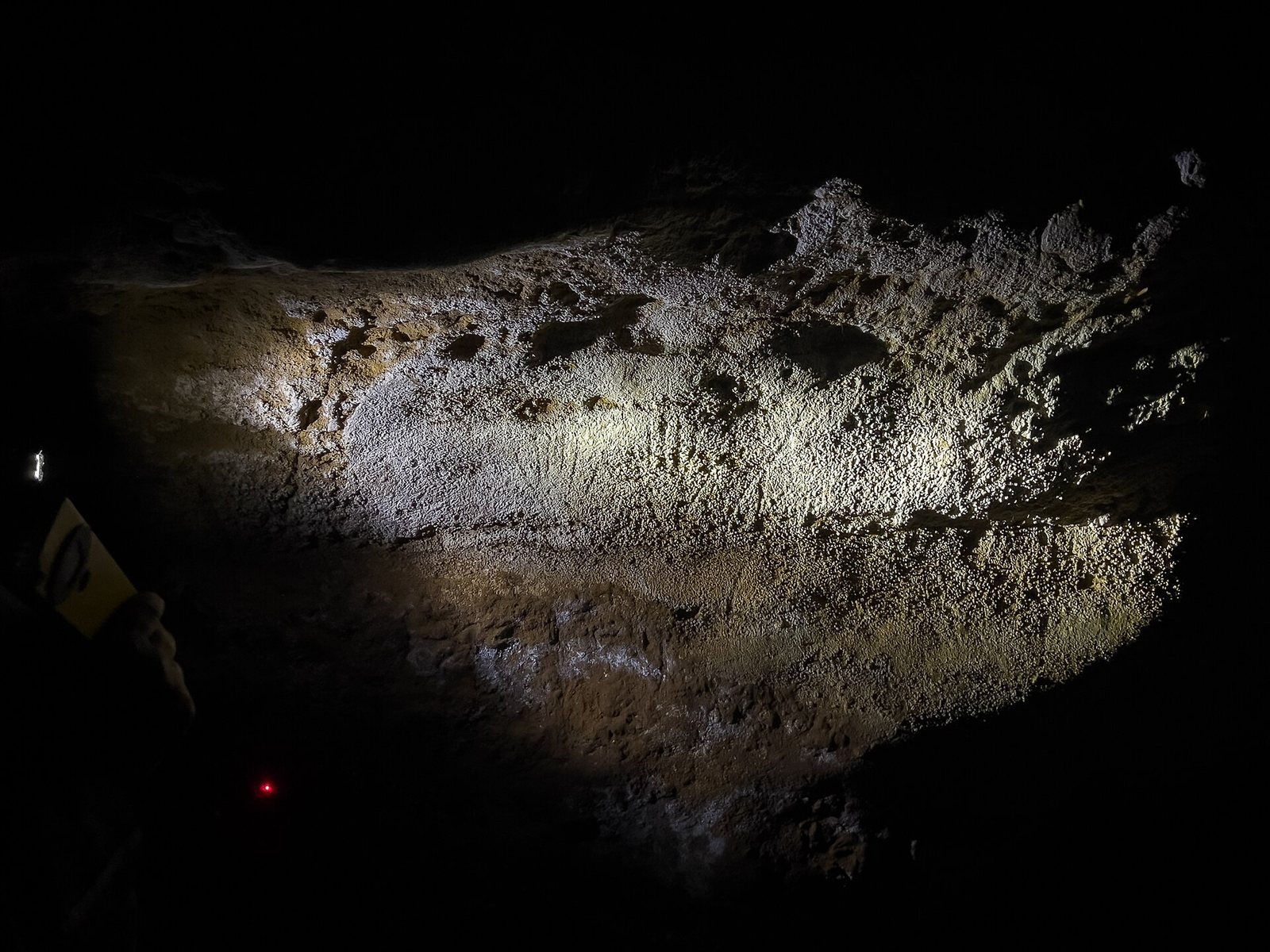
The floor descends gently from the entrance, then drops about three metres in the cave’s final third before flattening near the end. The farthest point is 36 metres below entrance level. Calcite coats the walls, usually beneath the images but covering them in some places; some deposits have turned into soft white moonmilk. Orange, iron-oxide-colored stalactites hang from the ceiling, with some stalagmites growing toward them. The original entrance is secured by a metal door, and the cave has no electric lighting, a measure to protect the paintings.
Hall 1
Hall 1 is about 22 metres long, four to five metres wide, and up to eight metres high.
Hall 2
Hall 2 has a front section about 12 metres long and five metres wide, with a height of five to eight metres. A corridor about 15 metres long and three metres wide connects it to a final section about 20 metres long and six metres wide. Six narrow side passages branch from the hall, which also contains two partly decorated alcoves. Images occur in the side passages as well. One branch is about 10 metres long; it and the terminal passage on Hall 2’s eastern side run approximately northeast to southwest.
Paintings, engravings, and signs
About 110 paintings and engravings in black or red extend along the cave. Most are in the passage, alcoves, and Hall 2, where calcite deposits are less developed. The artists used irregularities in the rock to give some figures a more three-dimensional appearance.
Animal figures
Mammoths are the most common animal subject, with 24 figures. The other identified animals include eight wild horses, one of which may be a donkey; seven bovids, including bison and aurochs; two deer; and nine animals that cannot be identified. A possible saiga antelope is also noted.
The clay mammoth
A mammoth drawn in clay occupies a steep, near-vertical shaft, or cave chimney, several metres above the floor and difficult to reach. The figure partly follows the natural shape of the rock, which may have suggested its form.
Human figures and handprints
A side passage contains a head or face with incised nose, eye, and mouth. Its branching headdress has been interpreted as antlers or horns. The cave also has negative handprints, made by applying pigment around a hand to leave its outline, including one in black. Archaeologist Dean Snow included Bernifal’s handprints in a study of eight prehistoric caves in France and Spain. Across the group, about three-quarters of the colored handprints were attributed to women; the sample also included many prints made by children and adolescents.
Signs
About 51 signs have been identified, including 13 tectiforms (roof- or house-shaped cave signs). Twelve are engraved and one is painted. The engraved examples occur alone, in pairs, or beside mammoths; their meaning is unknown. The painted sign consists of hundreds of tiny red dots, each less than one centimetre across. It is the only known tectiform with this dotted form and is clearly visible in infrared light. Other signs include strokes and dots arranged singly, in bands, or in rows, as well as ovalized triangular forms.
This particular type of tectiform is known in four French caves within eight kilometres of Les Eyzies: Bernifal, Les Combarelles, Font-de-Gaume, and Rouffignac. Similar signs elsewhere have a different structure. The motif is found in cave art rather than on portable objects.
Other archaeological evidence and interpretation
Stone tools
Stone artifacts from Bernifal include numerous burins, chisel-like tools used for engraving or cutting, and blades.
A disputed rock formation
Creationist writers have used a photograph to argue that a natural rock formation depicts a carved mammoth fighting a dinosaur. The shapes are instead attributed to natural rock bulges and mineral deposits, rather than to a carved image.