Font-de-Gaume Cave: A Decorated Paleolithic Cave in France
Site at a Glance
- Country
- France
- Primary era
- Stone Age
- Eras represented
- Stone Age, Medieval
- Civilizations
- Unclassified
- Site type
- Civic
- Remains
- Rock Art
On this page14 sections
History
Paleolithic use and dating
Font-de-Gaume cave is a decorated prehistoric cave near Les Eyzies in France. People visited its entrance area from around 25,000 BC for several millennia, though finds suggest brief visits rather than permanent settlement. Excavated evidence indicates activity chiefly during the Châtelperronian and Aurignacian, and less often during the Mousterian, Solutrean, and Magdalenian, all Paleolithic archaeological cultures or periods.
Before direct dating, stylistic comparisons placed the paintings broadly around 18,000 to 16,000 years before present (BP), the conventional archaeological reference point of 1950, and associated them with the Magdalenian. Radiocarbon dates published in 2026 gave different ages for parts of the art. A bison outline was dated to 13,461–13,162 calibrated years before 1950 (cal BP), while its eye dated to 8,993–8,590 cal BP. On a mask-like figure, the upper lip dated to 15,981–15,121 cal BP and the lower lip to 15,297–14,246 cal BP. The differences point to more than one period of activity and may reflect retouching or separate episodes.
To obtain the dates, researchers used chemical analysis and light-based imaging to identify traces of charcoal in black pigment previously considered entirely mineral. The charcoal allowed carbon-14 dating. The work was the first publication of absolute radiocarbon dates for Paleolithic cave art in the Dordogne.
Discovery and investigation
The cave was known locally before 1901 and had been used as a place for children to play. On 12 September that year, schoolteacher and prehistorian Denis Peyrony, physician and prehistorian Louis Capitan, and prehistorian Henri Breuil identified its prehistoric art. Excavator Armand Pomarel had drawn their attention to the cave. Their discovery brought the first recognized prehistoric cave paintings in the Périgord region to light.
Peyrony and Breuil excavated at the cave. Breuil also made partly colored tracings of the artwork, published in a monograph in 1910. Further excavation was led by François Prat from 1958 to 1964 and again in 1967. In 1966, removing a coating of calcareous clay from a wall exposed a large panel of five bison.
Protection and recognition
France classified Font-de-Gaume as a historic monument in 1902. Since 1979, it has formed part of the UNESCO World Heritage property Prehistoric Sites and Decorated Caves of the Vézère Valley. Measures to protect the paintings have progressively limited the number of people entering the cave. Daily visits, once numbering 1,000 to 2,000, fell to 340 in the 1990s and were capped at 78 from 2013. The limit prevents daily temperature increases from accumulating, and the artworks’ condition has remained stable under it.
Remains
Setting and cave structure
Valley setting
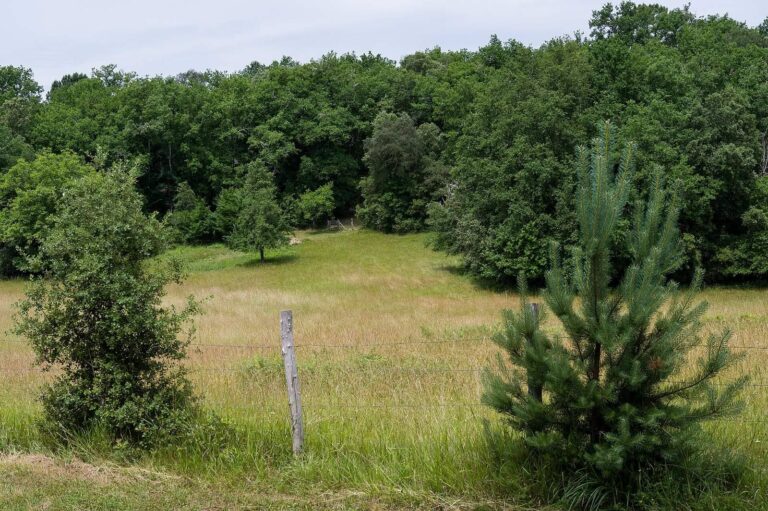
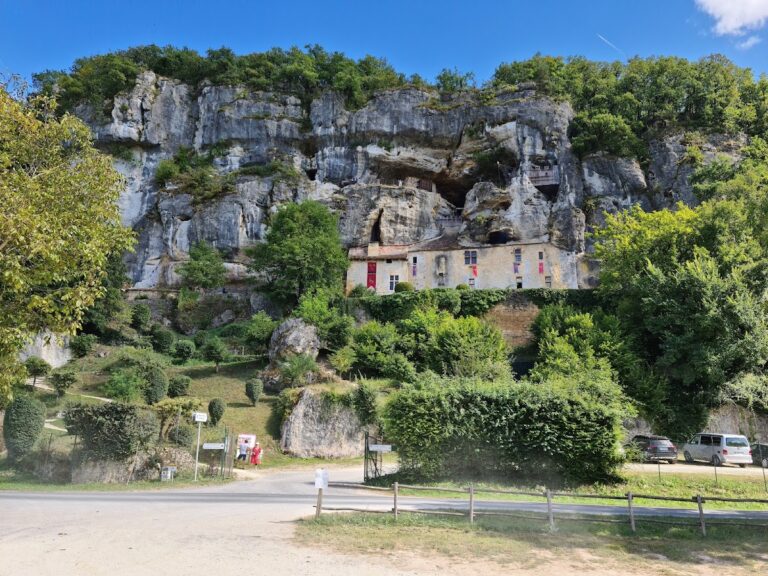
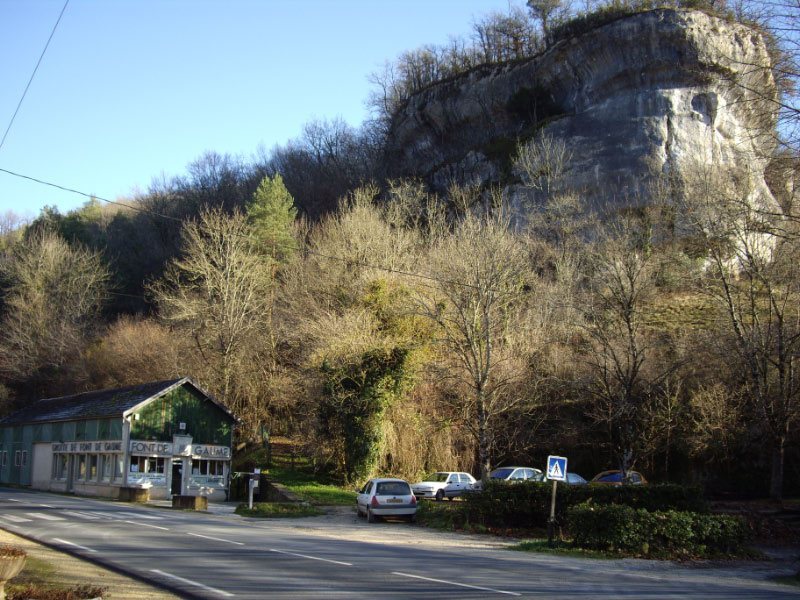
The cave lies about one kilometre east of Les Eyzies, on the right side of a valley of the Beune, shortly before the river joins the Vézère. Its entrance is about 250 metres behind the valley mouth and halfway up the valley wall, on the third debris fan. The cliff extends for approximately 500 metres and rises about 40 metres.
Rock formation
The cave formed in sandy limestone of Coniacian age, overlain by Santonian limestone. These are stages of the Late Cretaceous. Water entered along cracks in the rock and gradually dissolved the limestone, forming a high fissure with mineral concretions. The cave is now relatively dry, although water still seeps along some walls and leaves mineral deposits known as sinter.
Shelter and entrances
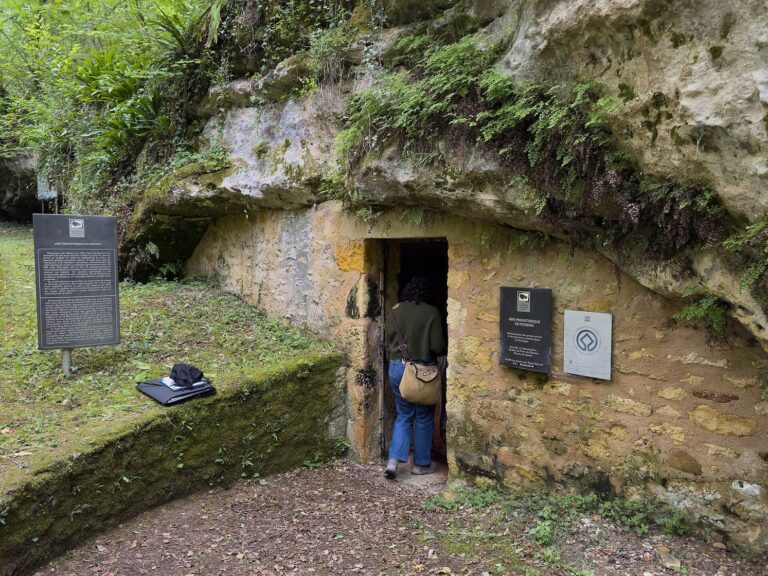
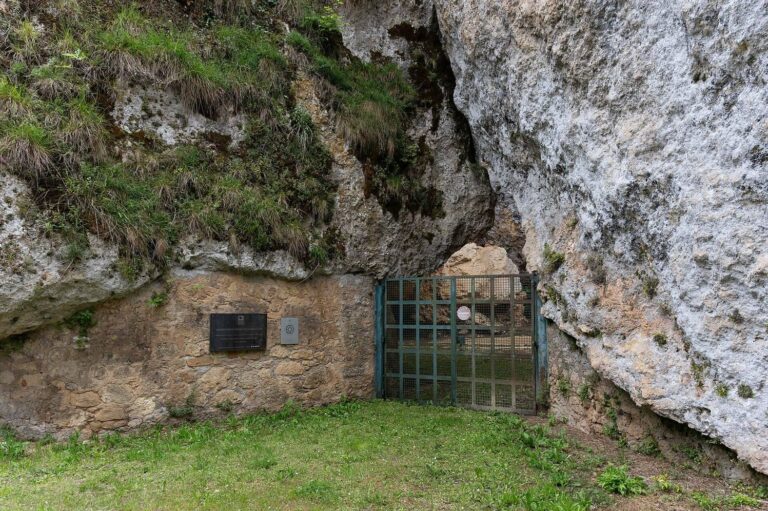
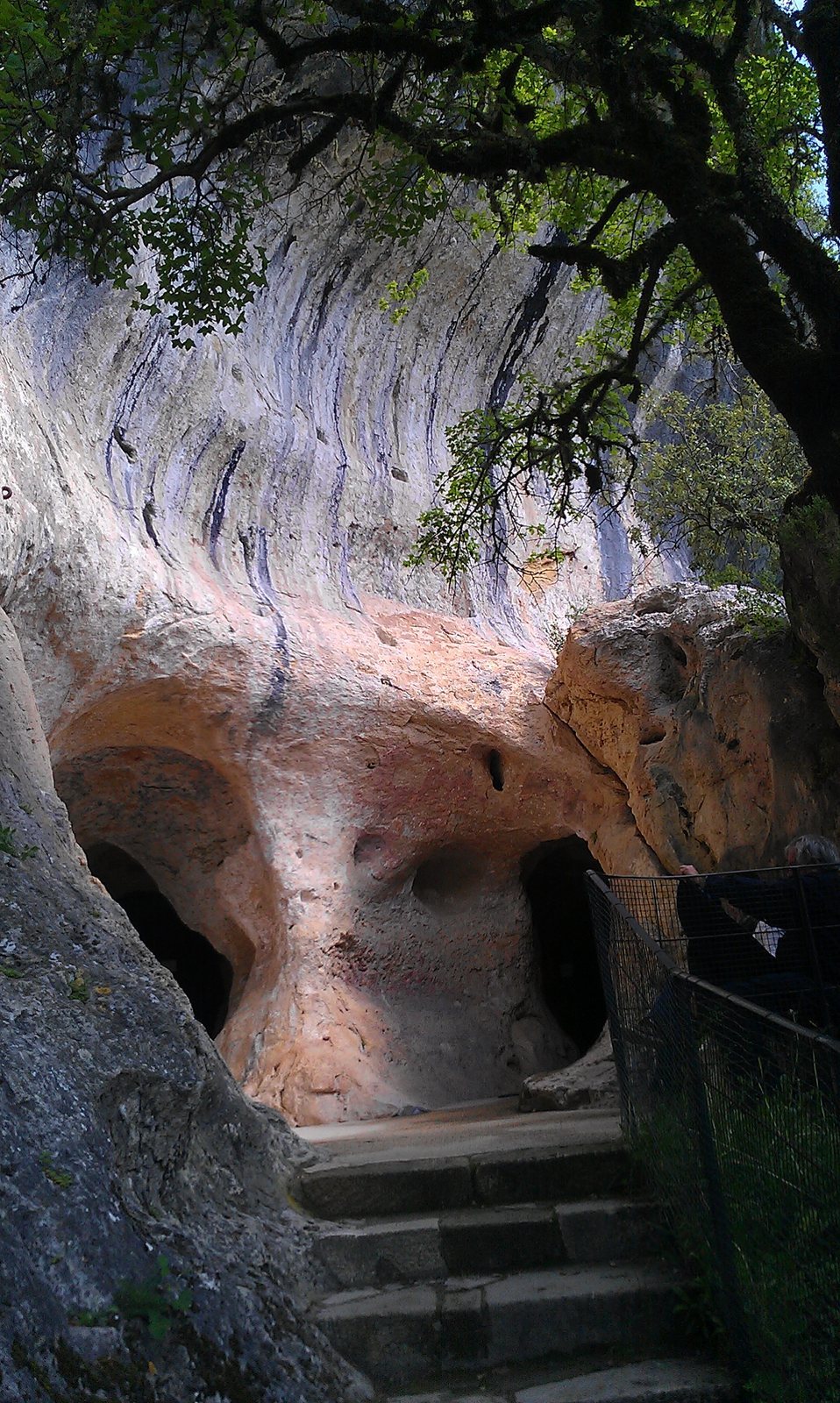
A rock shelter in front of the cave was enlarged during the Middle Ages. Two entrances at the rear of the shelter lead in different directions: the left ends after a few metres, while the right opens into the cave.
Main and side passages
The main passage runs mostly straight toward the east-southeast for about 125 metres. It is 2 to 3 metres wide and reaches up to 8 metres in height. Three passages branch off to the right. The first two are small; the third turns at a right angle and extends about 50 metres. One of the branches leads back outdoors.
Paintings and engravings
Artwork through the cave
The first major concentration of art is about 60 metres from the entrance, beside a narrow passage called the Rubicon. This constriction may have reduced air circulation deeper in the cave and helped protect the inner artwork. Paintings and engravings continue toward the end of the main passage and occur in the second side passage, especially the third. Most traces that may once have been nearer the entrance were erased, leaving a few engravings.
More than 200 paintings and engravings have been identified, representing about 230 figures. The subjects include more than 80 bison, about 40 horses, over 20 mammoths, aurochs, reindeer, a lion, a wolf, and a human-like silhouette; vulva forms also appear. Some figures use more than one color. Abstract designs include 19 house-shaped signs, rectangles, X-shaped marks, and four hand stencils. Animals appear in pairs, lines, and staggered groupings. A wolf is placed high on the wall above the branch leading to the third side passage.
Reindeer scene and artistic methods
One scene combines engraving and painting to show two reindeer facing one another. The standing animal on the left has large brown antlers and appears to lick the forehead of the kneeling animal on the right, which has smaller red antlers. Interpretations differ, and the image may represent a sexual display.
The artists used natural red and black pigments, applying them by dabbing, powdering, or blowing. They generally cut an outline into the rock before adding color, and used uneven surfaces in the stone to give figures a sense of depth. The artwork survives in varied condition, and graffiti marks some paintings.
Excavated objects
Excavations recovered flint tools, chiefly burins, which are chisel-like flint tools, as well as scrapers and blades.